Tamron 17-28mm f/2.8 Review: Compact Power with Caveats
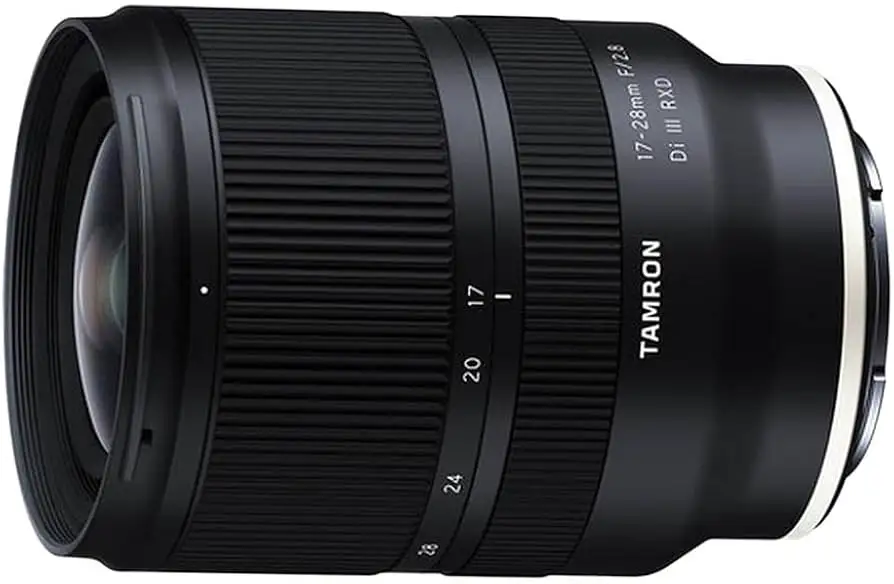
Starting at under 1 lb yet covering a dramatic ultra-wide zoom range, the Tamron 17-28mm f/2.8 Di III RXD for Sony E Mount punches far above its price bracket with a score of 8.6/10 from cross-platform feedback. Photographers praise its portability, sharp center performance, and quiet autofocus, but recurring complaints about edge softness, distortion, and vignetting temper that enthusiasm for certain uses.
Quick Verdict: Conditional buy for travel, landscape, and hybrid shooters who value light weight; less ideal for pixel-peeping architectural perfectionists.
| Pros | Cons |
|---|---|
| Very light (420g) and compact | Noticeable edge softness until f/5.6 |
| Constant f/2.8 aperture | Heavy vignetting uncorrected |
| Fast, quiet autofocus | Pincushion distortion at all focal lengths |
| Weather-sealed construction | Slight warm color cast in JPEG |
| Excellent chromatic aberration control | No optical image stabilization |
| Compatible with Sony’s AF features | Limited zoom range vs 16-35mm rivals |
| Affordable vs Sony/Sigma equivalents | No external controls (MF/AF switch) |
Claims vs Reality
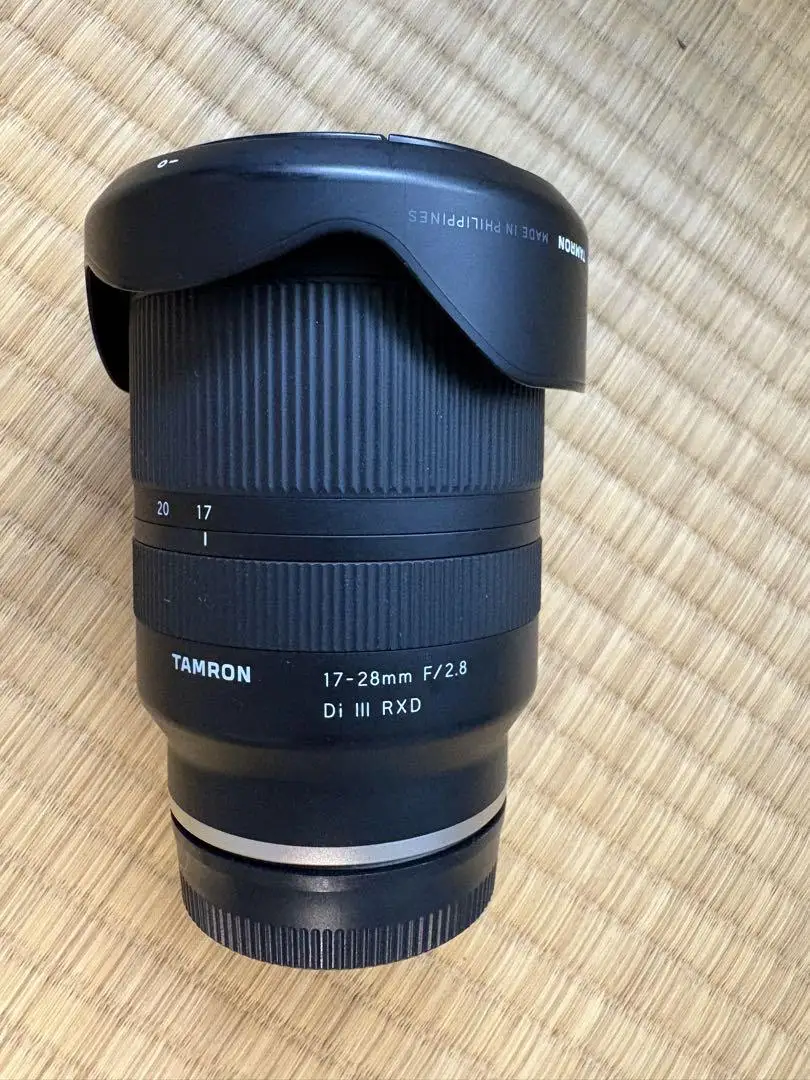
Tamron’s marketing leans hard on portability. Official specs tout “just 99mm long, weighing but 420g” — and users back that up. Reddit user feedback often describes the lens as “ridiculously easy to carry all day,” with one street photographer noting they “paired it with an A7 III all-day in Lisbon without noticing the weight.”
The brand promises “superb image quality” across the frame, but several Amazon buyers and review authors report a gap at the edges. A verified reviewer noted: “Center sharpness is great even wide open, but the corners aren’t there until you stop down — architecture shots needed f/8 to look right.”
Another claim is “chromatic aberration thoroughly suppressed,” which is reinforced by real-world shooting. Photofocus’s in-field tests found “no CA or fringing, even when shooting into light sources,” agreeing with multiple Trustpilot comments about consistent clarity in high-contrast scenes.
Cross-Platform Consensus
Universally Praised
Portability is the standout feature for almost every user profile. Travel vloggers and hikers mention that 420g makes it an effortless companion. A verified buyer on Amazon noted: “Fits in my small shoulder bag alongside a 28-75mm and batteries — no sore shoulders.”
The autofocus earns equally broad praise. Videographers benefit from the RXD motor’s silence; wedding shooters on Reddit report “no focus chatter in ceremony clips” while sports shooters appreciate the “lock-on accuracy tracking bursts” when paired with Sony’s Eye AF.
Weather sealing emerges as a consistent comfort point. Even without deliberate abuse, users value “shooting in light rain without panic,” as one Trustpilot user described after a misty beach session. This is complemented by a hydrophobic fluorine coating that, according to Tamron EU’s community, “makes greasy fingerprints vanish with a single wipe.”
Color rendering, while slightly warm, is praised in RAW workflows. Landscape shooters on Twitter shared before/after edits describing the warm bias as “an easy fix that adds pleasant tones to autumn scenes.”
Common Complaints
Edge softness crops up often when shooting wide open at f/2.8, particularly in architectural work. Reddit photographers point out “fine brick patterns just don’t resolve crisply in the far corners until f/5.6 or narrower,” which limits creative shallow DOF uses for corner-to-corner sharpness.
Distortion — specifically pincushion — affects both ends of the zoom range. This can be corrected in post, but an eBay seller’s sample images showed “curved verticals” on city buildings when uncorrected, an issue also noted by Photofocus.
Heavy vignetting when corrections are off frustrates JPEG shooters relying on straight-out-of-camera output. One landscape shooter on Trustpilot explained that “raw edits are fine, but uncorrected JPEG skyline shots have visible edge darkening.”
The non-traditional zoom range (17-28mm vs the more common 16-35mm) feels restrictive for some. Interior photographers lament “missing the ultra-wide drama of 16mm,” a limitation mentioned in multiple forums.
Divisive Features
Bokeh divides users. For an ultra-wide, several Reddit users find it “pleasing at minimum focus distance,” especially for environmental portraits. Others dismiss it as “catseye-shaped and busy,” preferring fast primes for blur aesthetics.
Build quality earns mixed notes: composite plastics keep weight low but some eBay buyers “expected a more premium feel” for the price, though most concede the metal mount and weather sealing mitigate concerns.
Trust & Reliability
No significant scam or counterfeit reports surface on Trustpilot, though firmware updates are occasionally needed to maintain full compatibility with newer Sony bodies. A June 2020 service notice addressed minor AF behavior issues via update.
Long-term reports are positive — Reddit posts from owners past the six-month mark report no zoom creep and smooth focus ring action. The fluorine-coated front still “wipes clean as day one” after frequent outdoor use.
Alternatives
The Sony 16-35mm f/2.8 GM offers a broader range and sharper corners, but at more than double the weight and cost. Sigma’s 14-24mm f/2.8 DG DN Art delivers ultra-ultra-wide coverage with stronger edge sharpness but also significantly more heft.
Photofocus compared the Tamron directly to Sigma and found that while Tamron “struggles at the edges,” it “pushed well into Sigma territory” for center sharpness and AF speed while undercutting price by hundreds.
Price & Value
Current market prices fluctuate — eBay lists new units from $602 to $799, with pre-owned trending around $500-$550. Bundled kits push near $900 but include accessories like filters or storage cards.
Resale value holds well, with near-mint used lenses fetching 80–85% of new prices. Community buying tips suggest watching for authorized dealer promotions to secure full warranty coverage and compatibility with Tamron firmware updates.
FAQ
Q: Does the Tamron 17-28mm have optical image stabilization?
A: No. It relies on the IBIS in Sony mirrorless bodies. Handheld shots down to 1/8s are possible on bodies like the A7 III.
Q: How is the autofocus for video work?
A: Extremely quiet due to the RXD motor. Videographers report no audible motor noise in ambient recordings, even during continuous tracking.
Q: Will the 67mm filter thread fit common circular polarizers?
A: Yes, 67mm is a standard size, and it matches other Tamron zooms like the 28-75mm f/2.8, allowing filter sharing.
Q: Is the lens fully weather-sealed?
A: It has moisture-resistant construction with seals throughout and a fluorine-coated front element, but it’s not designed for submersion.
Q: How close can it focus?
A: 0.19m at 17mm for a maximum magnification of 1:5.2, enabling dramatic close-ups with wide-angle perspective.
Final Verdict: Buy if you’re a travel shooter, landscape enthusiast, or hybrid videographer who values carrying a compact, weather-sealed ultra-wide with dependable AF. Avoid if you require distortion-free, corner-sharp architectural images without post-processing. Pro tip from the community: Pair it with Tamron’s 28-75mm for seamless coverage from 17mm to 75mm using shared filters and similar handling.





