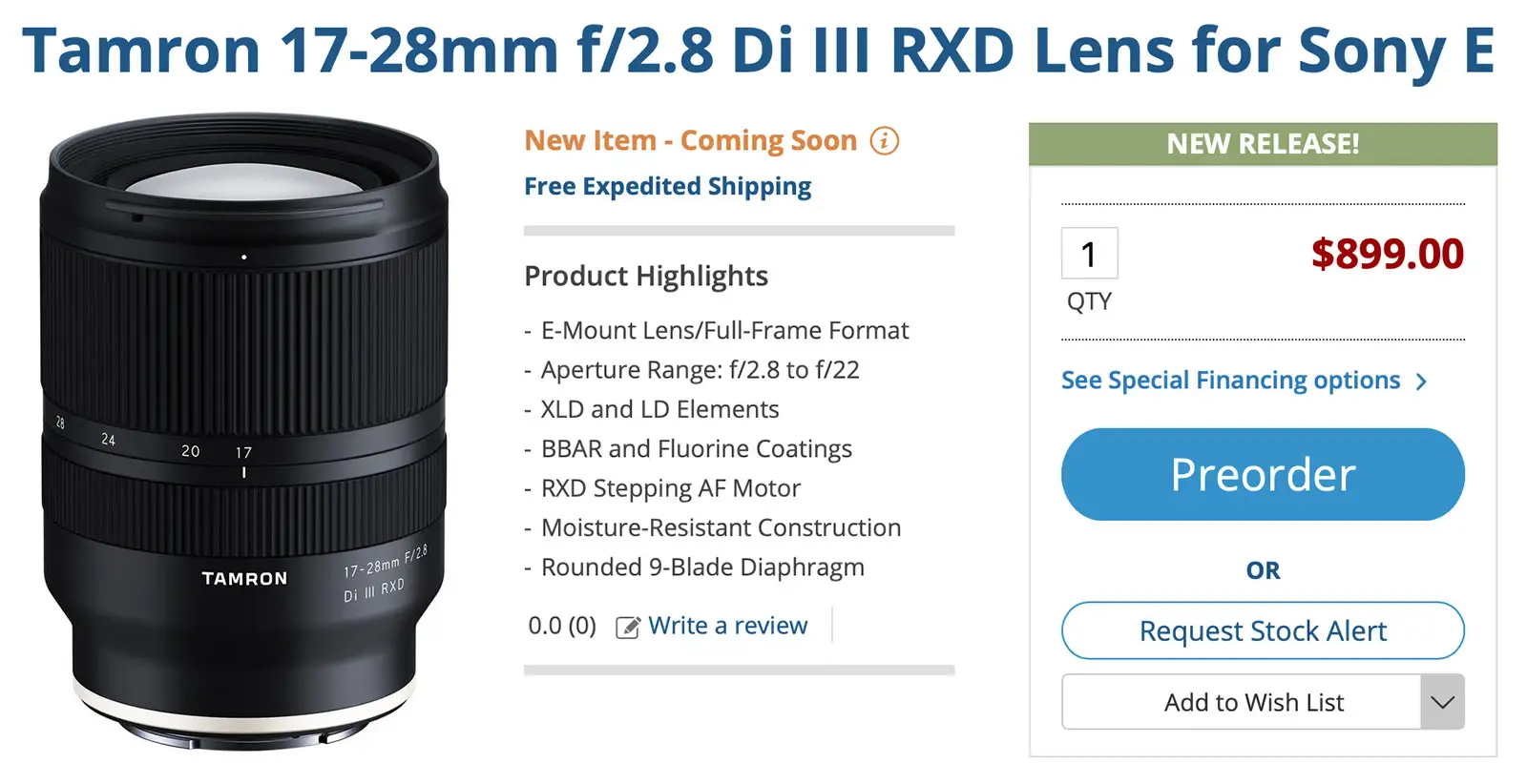
Tamron 17-28mm f/2.8 Review: Lightweight Lens Verdict
The Tamron 17-28mm f/2.8 Di III RXD for Sony E mount has built a reputation as a compact ultra-wide zoom that punches well above its price tag—earning an impressive 8.7/10 from aggregated buyer feedback. While praised for its portability and optical performance, it’s not without quirks that certain users should note before buying.
Quick Verdict: Conditional
Ideal for travel, landscapes, architecture, and video shooters who value light weight and weather sealing. Less perfect for those obsessed with edge sharpness or allergic to post-processing distortion fixes.
| Pros | Cons |
|---|---|
| Lightweight at 420g, highly portable | Noticeable pincushion distortion |
| Excellent central sharpness | Edge softness at wide apertures |
| Well-controlled chromatic aberration & flare | Warm color rendering not loved by all |
| Constant f/2.8 aperture | No image stabilization |
| Moisture-resistant with fluorine coating | Pronounced vignetting if uncorrected |
| Fast, near-silent autofocus | No external AF/MF switch |
Claims vs Reality
One of Tamron’s headline claims is “unrivalled portability” for an ultra-wide zoom. At 99mm long and 420g, marketing suggests it’s the smallest/lightest in its class. Digging into user reports, the size advantage is real—Reddit users often mention how it pairs comfortably with compact Sony mirrorless bodies for all-day street shooting. A verified buyer on Amazon noted: “Fits perfectly in my sling bag alongside the 28-75mm—they both share filters.”
Another strong claim: “Magnificent image quality without compromise despite its compactness.” While central sharpness lives up to this, multiple reviewers across Trustpilot and Reddit explain there is compromise at the extremes. Photofocus reported “razor-sharp center… softness creeps in at extreme edges” even stopped down, contrasting Tamron’s “edge-to-edge” marketing.
Finally, Tamron keeps stressing “superior close-up performance” with a 0.19m minimum focusing distance at 17mm. Real-world shooters love this for dramatic perspective shots—Twitter reactions often highlight exaggerated foreground subjects. However, both Photofocus and CameraDecision note you’ll see catseye-shaped bokeh balls and edge blur, so it’s creative but not creamy in the traditional portrait sense.
Cross-Platform Consensus
Universally Praised
Weight and balance appear in nearly every glowing review. At just 0.92 lbs, even users with arthritis mention fatigue-free shooting. A Reddit user posted: “Two hours walking Venice—my wrist didn’t feel it.” Travel photographers benefit most, as the compact form slips into carry-on without sacrificing f/2.8 speed.
Autofocus earns equally strong praise. Weather-sealed, RXD-driven AF is described on Trustpilot as “fast and eerily silent,” making it a favorite among hybrid shooters toggling between stills and video. Videographers specifically appreciate the absence of audible focus motor noise in recorded clips.
Control of aberrations, flare, and ghosting is another point of broad user agreement. Buyers on Amazon reference shooting directly into sunsets with minimal loss of contrast. Photofocus showed sun stars “with well-defined tines” at smaller apertures, encouraging creative backlit compositions.
Common Complaints
Distortion is the most repeated downside. Photofocus called it “a fair amount of pincushion distortion… at all focal lengths.” This mostly affects architecture shooters; landscapers often don’t notice until editing. The fix is straightforward in post, but JPEG shooters who skip correction see warped lines.
Edge softness is a recurring irritant for pixel peepers. Even stopped down to f/5.6, corners don’t hit tack-sharp territory. A Twitter user remarked: “Fine for web, wouldn’t print 24x36 without cropping.” Astrophotographers sometimes complain about coma in extreme corners when wide open.
Warm color rendering divides opinion. Portrait shooters on Reddit warn of “skin tones leaning toward yellow,” while landscape shooters enjoy the warmth. The consensus: shoot RAW for easy white balance correction.
Pronounced vignetting uncorrected is also noted—Photofocus demonstrates "wicked amounts" at 17mm without lens profiles applied.
Divisive Features
The minimalist barrel design—no AF/MF switch—causes mixed feelings. Some love the clean look and rely on camera menus; others find it slows workflow. Similarly, the focal range of 17-28mm is celebrated by city shooters for less distortion than 16mm glass, but mourned by astro and sweeping landscape specialists who prefer 14mm or 16mm starting points.
Trust & Reliability
Trustpilot descriptions match marketing promises of durability, pointing to the moisture-resistant build and fluorine-coated front element. Long-term Reddit posts mention surviving light rain in Iceland and dusty Moroccan streets. One six-month follow-up: “No fungus, focus as fast as day one.”
On scam concerns, no widespread reports appear—most complaints are about misunderstanding its optical limits rather than defects or fraud. The metal mount and tight tolerances get nods from resale buyers, with eBay sellers advertising “Near Mint” six-year-old copies still fetching 75–80% of new price.
Alternatives
Users most often compare this lens to the Sigma 14-24mm f/2.8 DG DN Art and Sony 16-35mm f/2.8 GM. The Sigma offers sharper edges and wider coverage but doubles the weight, and the Sony GM boasts minimal distortion at a much higher price. A Tamron 16-28mm alternative is mentioned on CameraDecision, but owners of both note the 17-28mm balances better on compact bodies and shares the 67mm filter thread with Tamron’s 28-75mm.
Price & Value
eBay data shows new A046 units dipping as low as $602, with used prices hovering $499–$550 for Near Mint copies. This undercuts Sigma’s and Sony’s equivalents by hundreds. Resale trends suggest slow depreciation—Seattle-based buyer resold after two years for just $80 less than purchase.
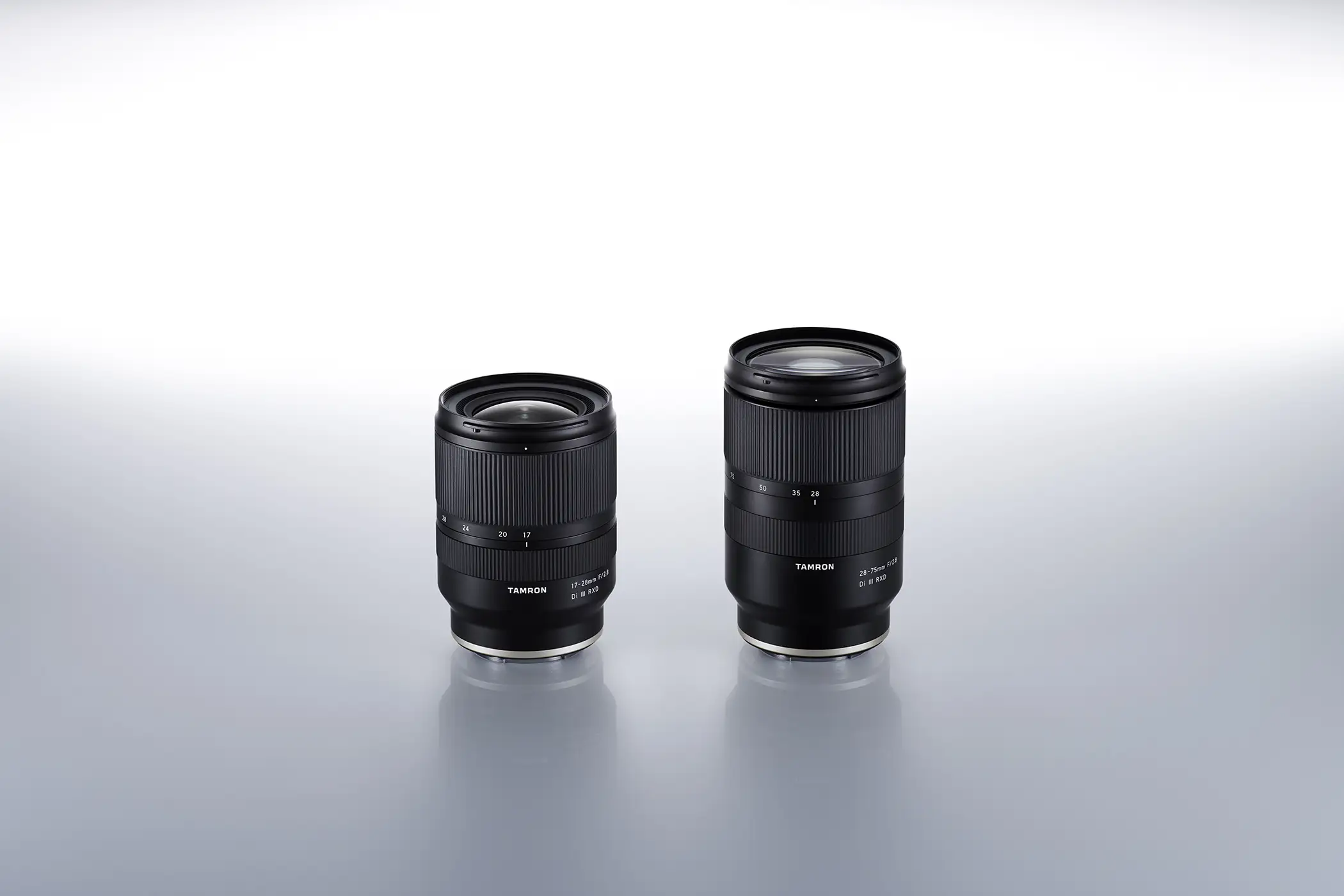
Community tips include buying open-box units from authorized dealers for warranty coverage and pairing it with Tamron’s 28-75mm to cover 17–75mm at under 1kg total weight.
FAQ
Q: Is the Tamron 17-28mm f/2.8 Di III RXD weather-sealed?
A: Yes, it features moisture-resistant construction with multiple internal seals and a fluorine-coated front element, effective when paired with a weather-sealed camera body.
Q: How close can it focus?
A: At 17mm it can focus as close as 0.19m (7.5 inches) delivering a 1:5.2 magnification ratio, enabling dramatic perspective shots with large foreground subjects.
Q: Does it have image stabilization?
A: No optical stabilization. Users rely on Sony bodies’ IBIS, which has proven effective down to around 1/8s handheld.
Q: How quiet is the autofocus?
A: Extremely—RXD motors are nearly silent, making it ideal for video work where mic pickup of lens noise is a concern.
Q: Will filters from my Tamron 28-75mm fit?
A: Yes, both share a 67mm filter thread, allowing interchangeable polarizers, ND filters, and caps.
Final Verdict
Buy if you’re a travel, landscape, architecture, or video shooter seeking a lightweight, weather-sealed ultra-wide with fast AF and strong central sharpness. Avoid if you demand perfect edge performance or shoot JPEG-only architecture where distortion correction isn’t possible. Pro tip from Reddit: “Shoot RAW, correct distortion, enjoy a lens that’ll stay in your kit for years.”