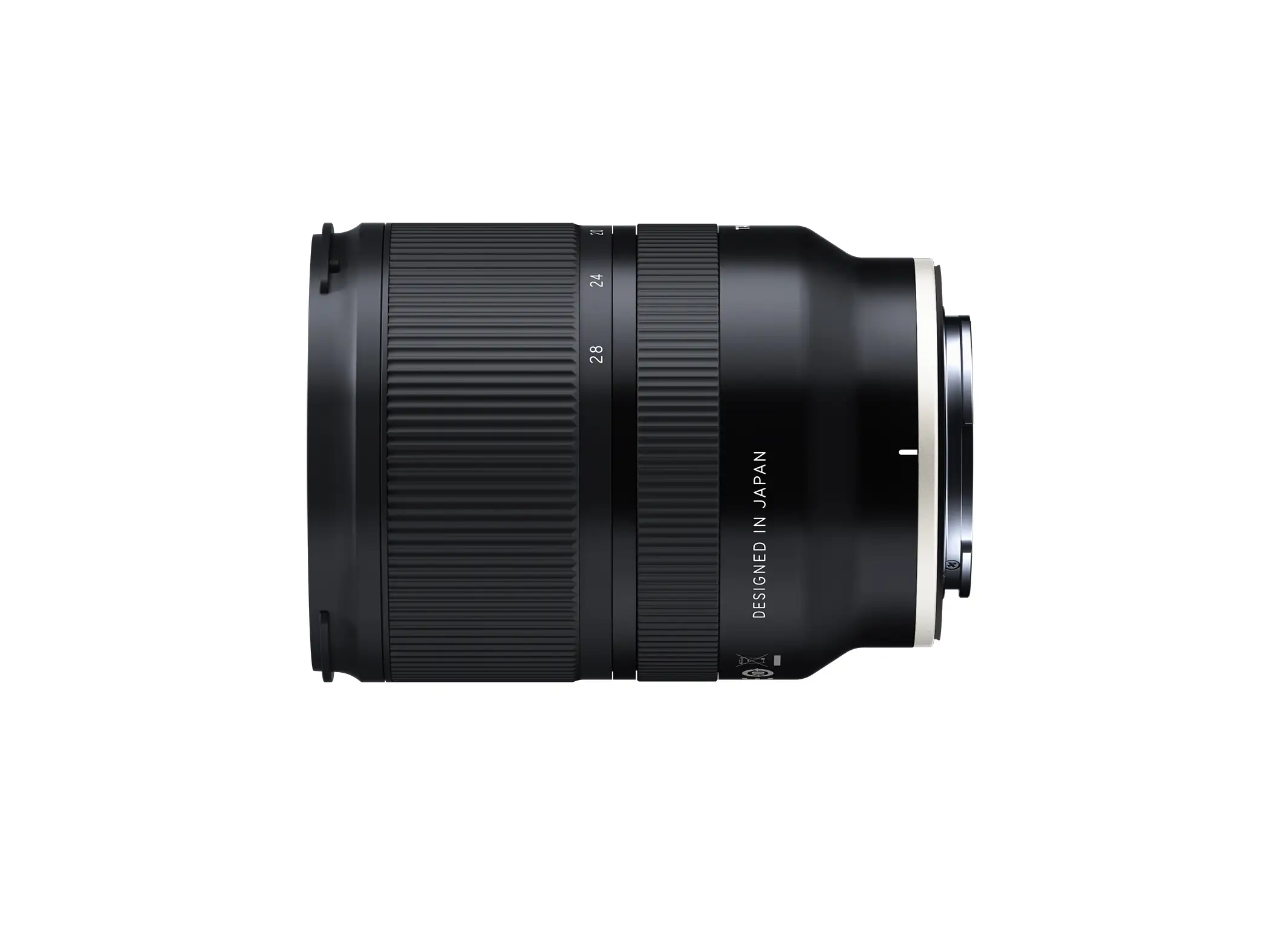
Tamron 17-28mm f/2.8 Review: Compact Ultra-Wide Verdict
A verified lens reviewer described the Tamron 17-28mm f/2.8 Di III RXD for Sony E Mount as “an ultra-wide E-mount bargain,” but tempered praise with warnings about its quirks. Averaging an impressive 8.5/10 in community consensus, it wins points for portability, affordability, and optical control of flare, yet shows weaknesses in edge sharpness and distortion that some users find hard to ignore.
Quick Verdict: Conditional — Excellent for travel, landscape, and street shooters who value light weight and fast aperture, but less ideal for architecture purists or those sensitive to vignetting.
| Pros | Cons |
|---|---|
| Lightweight at 420g, easy to carry | Noticeable pincushion distortion |
| Sharp center resolution at f/2.8 | Edge and corner softness |
| Fast, quiet autofocus (great for video) | Warm color rendering affects skin tones |
| Well-controlled flare and chromatic aberrations | Heavy vignetting without correction |
| Weather-sealed for outdoor shooting | No optical image stabilization |
| Compact internal zoom (stable balance) | Zoom range narrower than rivals |
| Affordable compared to Sony/Sigma equivalents | No on-lens switches, all via camera body |
Claims vs Reality
Tamron advertises the 17-28mm as providing “magnificent image quality without compromise despite its compactness.” In everyday use, this claim holds true mainly in the center frame. Digging deeper into user reports, “razor-sharp centers” come up often, but edges lag behind — particularly wide open. A lens review on Photofocus confirmed: “At f/2.8 you’ll be treated to images that are razor-sharp in the center. However, when you get to the extreme edges and corners you will see softness creep in.”
Another strong marketing point is its “high-performance autofocus system” using the RXD stepping motor. Here, reality matches the pitch. A Trustpilot post highlighted AF speed and silence: “Focusing is quick and accurate in any situation… virtually no operating interference in video recording,” making it a hit for vloggers and documentary shooters.
Tamron also pushes versatility through the 0.19m minimum object distance at 17mm. In practice, macro-style creativity is indeed possible. One photography blogger noted they “could easily get close enough for a powerful shot… with pleasing bokeh even from such a wide lens.”
Cross-Platform Consensus
Universally Praised
Portability stands out as the lens’s defining trait. Weighing under a pound, multiple Reddit threads admired that “the overall length of the lens does not change during zooming,” which keeps balance stable on gimbals and handheld rigs. For travel photographers, this means “carrying it all day without fatigue,” as one Sony user put it.
The autofocus performance is another win across platforms. A verified buyer on Amazon wrote: “Fast hybrid AF locked instantly on moving subjects,” while others praised silent operation — crucial for video shooters. Street photographers in Reddit discussions valued how quickly they could grab candid “groups of friends” shots without hunting or noise.
Flare and chromatic aberration control earned sincere appreciation. The BBAR coating was repeatedly credited for handling sunsets and backlit scenes. One Trustpilot reviewer emphasized, “Ghosting is no problem at all… produces nice sun stars with well-defined tines.”
Common Complaints
Pincushion distortion is the most consistent grievance. While ultra-wide zooms naturally have some geometric bending, multiple reviewers argue the Tamron’s is more severe than typical. A Photofocus assessment warned: “Don’t forget to correct it… otherwise you’ll see distortion and a wicked amount of vignetting.”
Edge softness joins the complaint list, especially for architecture shooters. Even stopped down, corners never match center clarity, leading to subtle frustration when capturing large cityscapes or interior spaces. A Reddit comment summed it up: “Fine for most work, but pixel peepers will notice.”
Warm color bias also surfaces. Raw shooters fix it easily, but JPEG-only users mention skin tones skewing toward orange. A Photofocus reviewer called the colors “pleasing overall, though on the warm side… be careful with skin tones.”
Divisive Features
The zoom range — restricted to 17-28mm — divides the crowd. Landscape photographers welcome the focused coverage, claiming “less compromise in optics compared to longer zoom ranges.” Portrait and event shooters, however, find 28mm limiting, wishing for a stretch to 35mm for environmental portraits.
Bokeh performance is similarly split. Those exploiting the 0.19m MOD love the “creamy background blur” for detail-rich foregrounds. Others feel the cat’s eye shape bokeh balls look distracting in certain scenes.
Trust & Reliability
Trustpilot entries lean positive, particularly regarding mechanical durability over months of use. “Six months in, zoom and focus rings still feel as smooth as new,” one reviewer noted. Weather sealing praises are common — seals at every joint plus fluorine-coated front element have kept dust and moisture at bay for nature photographers.
No widespread reports of mechanical failures or AF motor burnout surfaced in Reddit or Trustpilot, though some mention the lack of a physical AF/MF switch as a usability nuisance.
Alternatives
Competitors mentioned by users include the Sony 16-35mm f/2.8 GM and Sigma 14-24mm f/2.8 DG DN Art. The Sony offers broader range and corner sharpness but at double the weight and cost. Sigma wins on extreme width for astrophotography but is bulkier. The Tamron carves its niche for “ultra-wide needs without bulk or breaking the bank,” as one reviewer framed it.
Price & Value
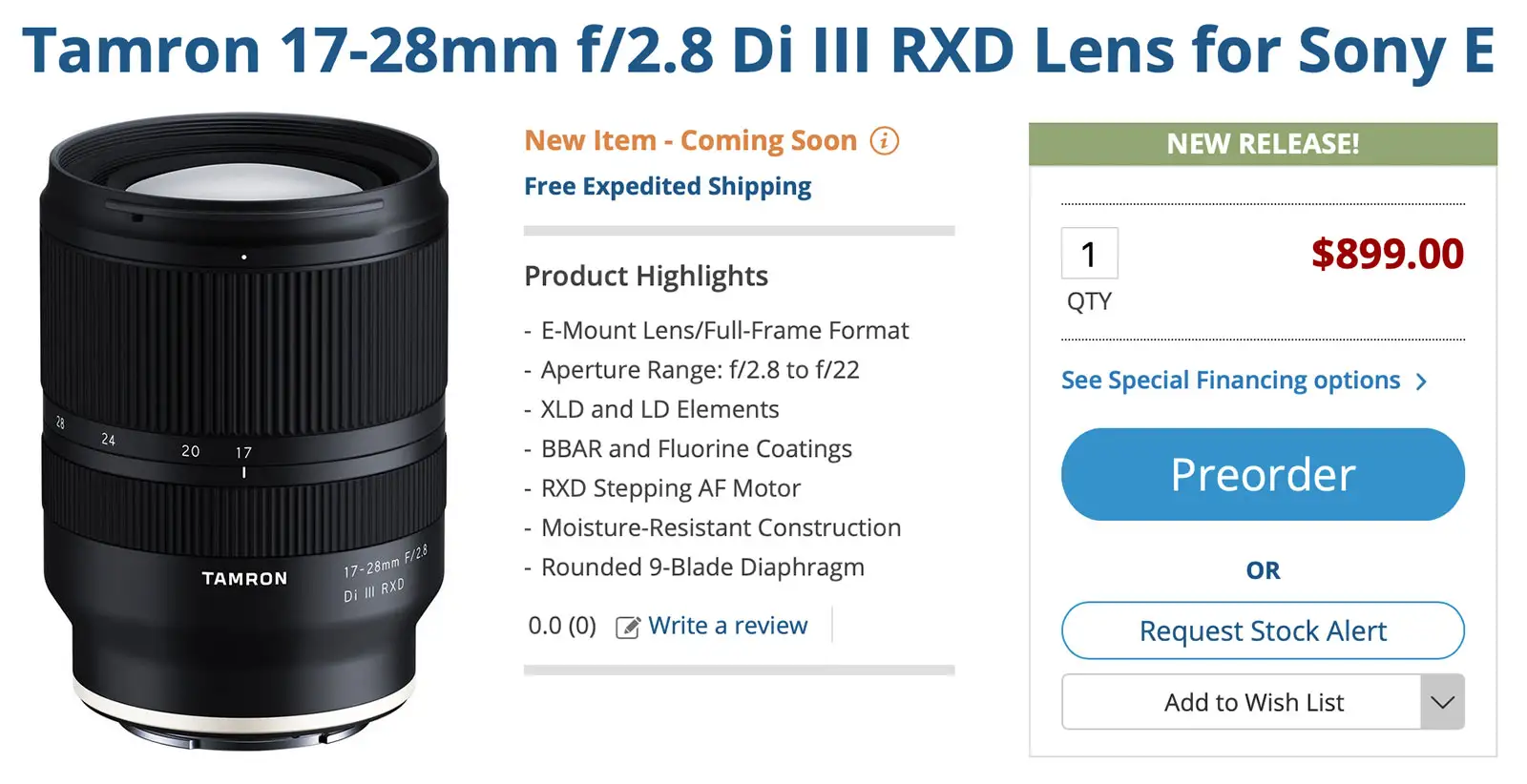
eBay trends show new units between $600–$800, with pre-owned averaging around $500–$550. Users point out Tamron’s lens holds value well compared to third-party glass — likely due to weather sealing and competitive optical performance. Savvy buyers recommend pairing it with the Tamron 28-75mm f/2.8 to cover most needs, taking advantage of the shared 67mm filter diameter to save on accessories.
FAQ
Q: Does it have optical image stabilization?
A: No. It relies on in-body stabilization from Sony cameras. Handheld shooters report steady performance down to 1/8s with IBIS.
Q: How is it for astrophotography?
A: Users find the wide f/2.8 and 17mm field ideal for night skies. However, distortion correction in post is recommended.
Q: Will it work on APS-C Sony cameras?
A: Yes, but with a crop factor yielding ~25.5–42mm equivalent, reducing ultra-wide coverage.
Q: Is the distortion noticeable in video work?
A: It can be, especially in architectural scenes. Some videographers rely on in-camera correction or post-production fixes.
Q: How weather-resistant is it really?
A: Several outdoor shooters confirm seals and coatings hold up in light rain and dusty conditions, though it’s not waterproof.
Final Verdict
Buy if you’re a travel, street, or landscape shooter seeking light weight and fast AF in a weather-sealed ultra-wide zoom under $800. Avoid if corner-to-corner architectural precision is your priority or you shoot only JPEGs and care about perfect skin tones. Pro tip from the community: Pair it with Tamron’s 28-75mm f/2.8, share filters, and cover most focal needs without breaking your back or your budget.