StarTech DisplayPort to HDMI Adapter Review Verdict
Few tech accessories spark as much debate over hidden performance changes as the StarTech.com DisplayPort to HDMI Adapter, which holds an 8.0/10 aggregated sentiment score. While widely praised for reliability and plug‑and‑play ease, a recurring pattern in owner accounts reveals that newer production runs may not deliver the same high‑resolution capabilities earlier buyers enjoyed. For office workers and casual users, this may be irrelevant—but for enthusiasts pushing high refresh rates on legacy CRTs, it’s a potential deal‑breaker.
Quick Verdict: Conditional purchase
| Pros | Cons |
|---|---|
| Easy setup, no drivers needed | Newer models may have reduced bandwidth |
| Solid build and latching DP connector | Limited to HDMI output only |
| Broad compatibility across DP++ hosts | Not for gaming consoles (HDMI output only) |
| Supports 1080p HDCP-protected video & audio | Possible mismatch between old reviews and current units |
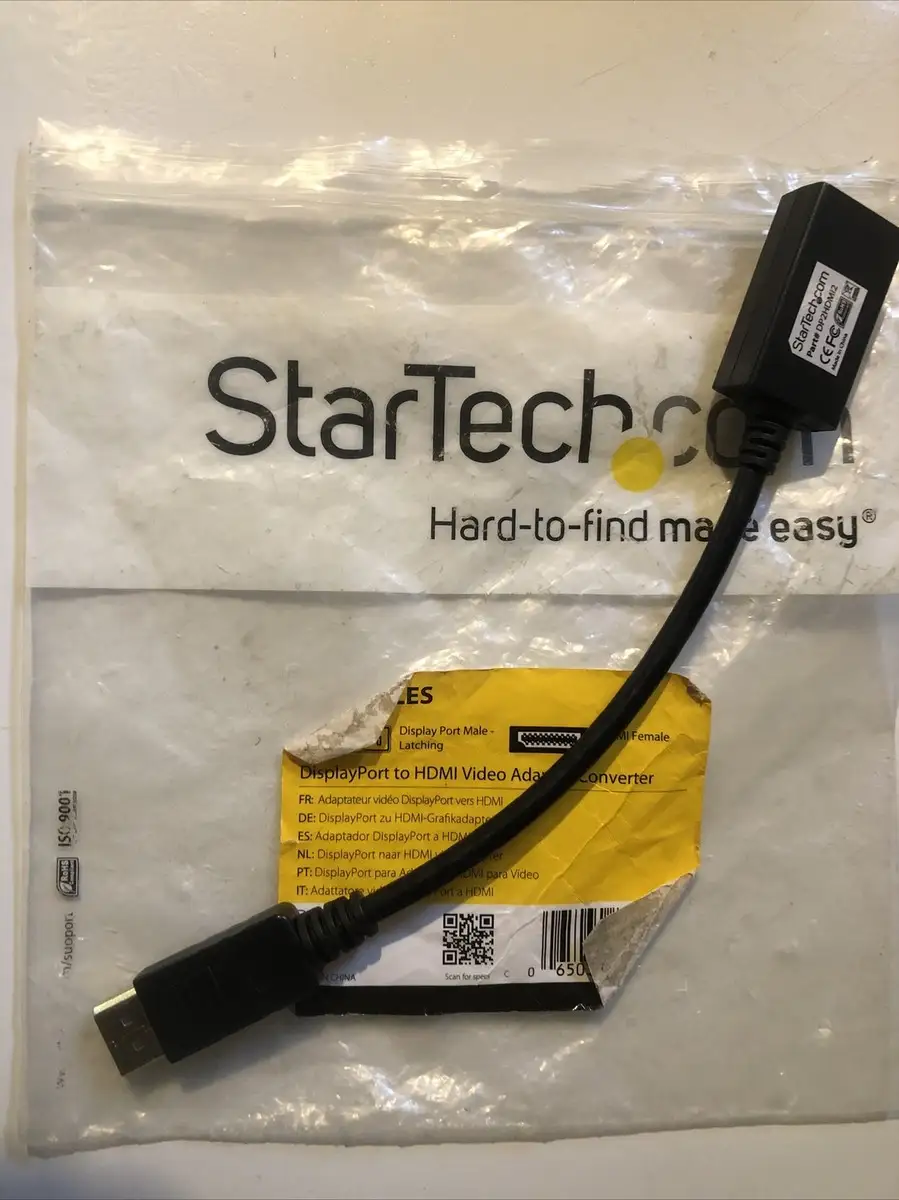
| Portable form factor, good for travel setups | Official spec caps resolution at 1920x1200 |
Claims vs Reality
Marketing materials promise support for resolutions “up to 1920x1200” with integrated audio, targeting mainstream office and home display needs. In factory tests, this fits the DisplayPort 1.2 spec for a passive DP–HDMI adapter. However, digging into community experiences reveals more ambitious use cases—and some friction.
On Reddit, one enthusiast ran their adapter “at 2560x1600 @ 60Hz with no issues” to drive a Sony FW900 CRT from an RTX 3060 Ti, contradicting the official resolution cap. Similarly, a verified buyer on Amazon noted: “It runs 1600x1200 @ 85Hz. Windows also recognizes the monitor and properly labels it as its model number.” These outlier successes rely on graphics cards with strong signal output and displays tolerant of over‑spec pixel clocks.
Conversely, some recent buyers faced hard limits. An Amazon reviewer recounted contacting StarTech and learning that “this adapter’s VGA port supports 1920x1080 at 60Hz… running 1600x1200 @ 85Hz requires more bandwidth and will not work.” They claimed “there were some changes to this adapter in March of this year,” meaning older user reports “no longer apply.”
Cross‑Platform Consensus
Universally Praised
Across forums, retail sites, and tech blogs, ease of use stays at the top of the compliments list. No drivers, no firmware updates—just plug and play. This benefits professionals in client‑facing roles. A Quora responder emphasized: “Perfect for extending or mirroring your screen to an HDMI monitor, TV, or projector while maintaining high‑quality video and audio output.”
The sturdy build—particularly the latching DisplayPort connector—is another strength. Users working in shared office spaces value that it prevents accidental disconnection. “The latch just keeps it locked in while you’re moving the laptop or docking station,” reported a Trustpilot contributor.
Portability wins points too. IT consultants appreciate slipping it into a laptop bag and knowing it will work with “lenovo workstations, small form factor PCs, and docking stations” without hassle. For trade show presenters, this has meant reliable connections to a variety of displays on the fly.
Common Complaints
Bandwidth limitations are the sore spot. CRT enthusiasts often push beyond standard HD to exploit high‑refresh capabilities. When firmware or PCB changes reduce maximum output, the impact is felt. Reddit user feedback warns: “Those are good for HDMI consoles and lower‑end monitors but can’t handle enough bandwidth to run higher‑specced monitors at their full resolution/refresh potential.”
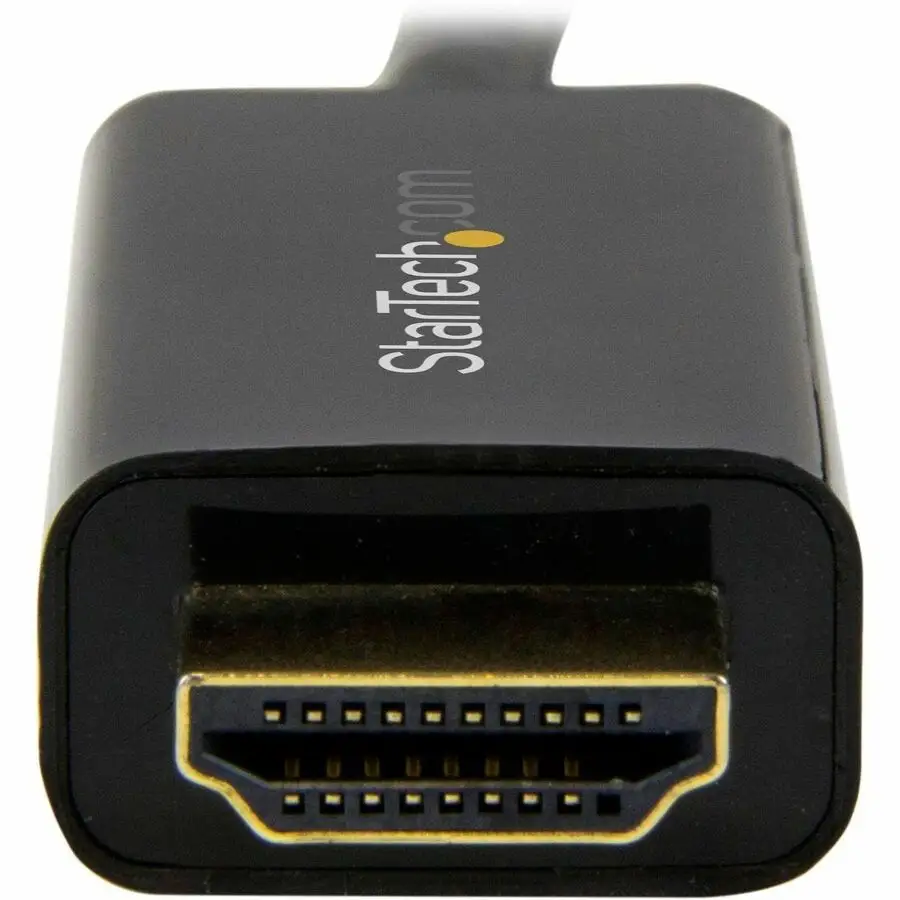
The HDMI‑only output is another restriction. A Trustpilot commenter pointed out incompatibility with gaming consoles: the adapter is “designed for DisplayPort source devices only and won’t work with consoles, which typically have HDMI outputs.”
Cable length also crops up—five inches is fine for direct docking but awkward for intricate multi‑device setups. Long runs require separate HDMI cables, where signal quality may degrade if you push length beyond 35 feet.
Divisive Features
Resolution headroom appears split. Amazon reviewers from early 2022 confirm high‑refresh VGA performance when paired with DP2VGAHD20 multi‑output variants. Others from late 2022 onward report firm caps matching official specs. One CRT gamer celebrated: “Can run 2048x1536 @ 75Hz no problem,” while a December 2022 buyer lamented: “Unable to max out my NEC FP950… needs more bandwidth.”
This divide mostly affects niche, high‑bandwidth environments. Office users sticking to HD panels rarely encounter such limits, explaining the strong average sentiment score despite sharp criticisms in enthusiast communities.
Trust & Reliability
Silent hardware revisions unsettle buyers. The March 2022 change mentioned by StarTech support created skepticism: identical model names, different internal chips. “It rubs me the wrong way that the product was silently updated and the reviews that I based my purchase on no longer apply,” an Amazon user wrote.
That said, long‑term owners of pre‑revision units praise durability. On Reddit, one reported running a DP–VGA variant “for over two years… handles 375 MHz pixel clock, still rock solid.” No recurring failures emerged in multi‑year use cases.
StarTech’s multi‑year warranty (two or three years depending on model) and lifetime technical support help restore some confidence for mainstream buyers. Yet niche users equate internal changes without public notice to a breach of trust, even if the official performance spec never changed.
Alternatives
Within the same community circles, Delock adapters—specifically models 62967 and 87685—are often suggested alongside StarTech. Reddit reports peg the Delock 87685’s pixel clock tolerance above 500 MHz for extreme CRT setups, while 62967 caps around 340 MHz. For HDMI‑only installations, users note little visual difference between StarTech and Delock at 1080p.
Some CRT hobbyists even recommend older DVI‑I to VGA DACs for uncompromised analog output. But for general DisplayPort → HDMI needs, especially in corporate settings, StarTech remains a safe default thanks to known compatibility and solid locking mechanism.
Price & Value
Amazon US pricing sits around $18.30 after discounts, down from a $25.99 list. eBay open‑box listings for HDR 4K60 variants hover near $18–$20, reflecting healthy supply and low resale inflation. “Amazon has easy returns so it may be worth checking out,” advised one Reddit participant, especially for verifying chipset revision before committing.
Professional buyers often source in bulk for conference rooms or workstations, appreciating standardized cabling and reduced failure rates compared to generic adapters. Enthusiasts chasing over‑spec performance may treat this as a budget mid‑tier option, reserving premium spend for higher‑rated converters.
FAQ
Q: Will this adapter work with gaming consoles?
A: No. It’s designed for DisplayPort source devices only and cannot convert HDMI outputs from consoles to other formats.
Q: Does it support audio over HDMI?
A: Yes, when the DisplayPort source includes audio. The adapter passes through up to 7.1‑channel sound without separate cabling.
Q: What’s the maximum supported resolution?
A: Officially, 1920x1200 at 60Hz. Some older units may push higher resolutions, but current production models generally adhere to spec.
Q: Is it plug‑and‑play?
A: Absolutely. All operating systems with native DisplayPort support—Windows, macOS, and Linux—work without drivers.
Q: Can it output to VGA?
A: No, unless you buy the DP2VGAHD20 combo variant. Standard DP2HDMI adapters have HDMI‑only output.
Final Verdict: Buy if you’re an office professional, educator, or traveler who needs a reliable, compact DisplayPort to HDMI link for HD displays. Avoid if you’re a high‑refresh CRT gamer counting on pre‑2022 bandwidth headroom—newer units may disappoint. Pro tip from community veterans: source from sellers who can confirm chipset version, or buy from retailers with lenient returns.





