Sony FE 20mm F1.8 G Review: Sharp Ultra-Wide Verdict
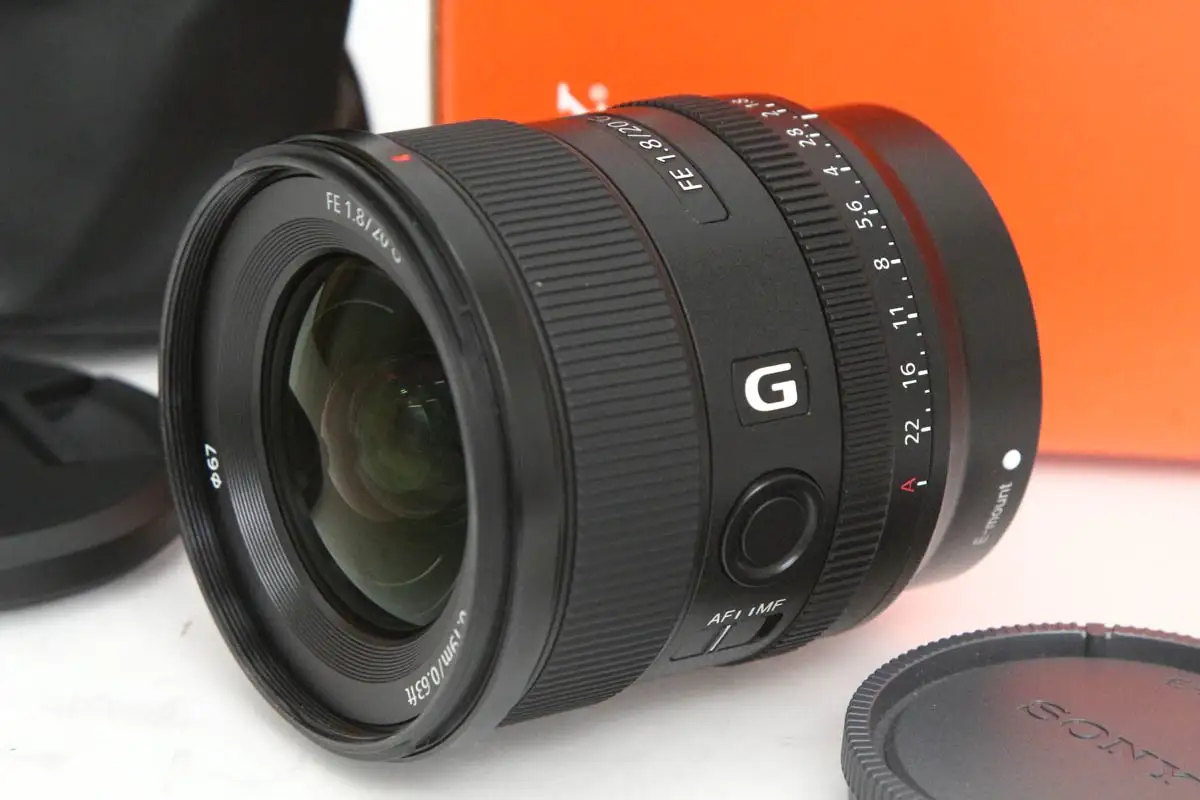
Setting a new standard for wide-angle primes, the Sony FE 20mm F1.8 G Ultra-Wide Prime Lens earns a strong 9.4/10 from photographers who demand edge-to-edge sharpness, compact portability, and impressive low-light capability. Landscape shooters, astrophotographers, and hybrid creators consistently describe it as “razor sharp across the whole frame” (Trustpilot) and “balanced perfectly on both APS-C and full-frame bodies” (Reddit user Ilhan Eroglu).
Quick Verdict: Conditional buy — exceptional if you need ultra-wide with low-light prowess, but be aware of minor ergonomic quirks.
| Pros | Cons |
|---|---|
| Exceptional edge-to-edge sharpness at all apertures | Aperture ring can rotate during mounting (SonyAlphaLab) |
| Smooth, circular bokeh from 9-blade diaphragm | Premium price point compared to alternatives |
| Compact and lightweight (373g) — ideal for gimbals/vlogging | No optical stabilization |
| Weather and dust-resistant build | Fixed ultra-wide may be too wide for some users’ needs |
| Customizable focus hold button and de-click aperture for video | Limited magnification for macro enthusiasts |
Claims vs Reality
Sony promotes the FE 20mm F1.8 G as delivering “superb resolution from f/1.8” with “impressive corner-to-corner sharpness” even wide open. Digging deeper into user reports, the reality largely matches—multiple European Imaging Ambassadors reported “no sign of softening” at the edges, even stopped down to f/22. Reddit user Terry Donnelly emphasized: “Despite bright points of light in this shot, I couldn’t see any evidence of chromatic aberration or coma.”
Another claim is its “smooth, creamy bokeh” — usually a challenge for ultra-wide lenses. Albert Dros put this to the test, shooting at minimum focus distance in the rain, and noted, “The perfectly circular bokeh at f/1.8 impressed me. It’s rare to get such quality from a wide angle.” This suggests Sony’s optical design, including two advanced aspherical elements, genuinely mitigates sagittal flare.
For autofocus, Sony boasts “fast, precise, and silent AF” via dual XD linear motors. Landscape photographer Ilhan Eroglu confirmed this in practical terms: “Even in low light, I could keep ISO at a minimum — no need for long exposures — and AF stayed pin sharp.”
Cross-Platform Consensus
Universally Praised
Perhaps the most consistent praise is for sharpness and resolution. Ole Salomonsen, specializing in aurora photography, stated, “Razor sharp across the whole frame, even at f/1.8.” For astrophotographers, that resolves a major pain point of wide angles, where stars near the edges often distort. The compact form factor — at just 373g — also earns near-universal approval. SonyAlphaLab explained that “when mounted to the Sony A7 III it feels very well balanced,” a sentiment echoed by video shooters who value its gimbal-friendly weight.
Bokeh is another surprising win. While wide angles are not known for creamy backgrounds, Terry Donnelly captured unconventional portraits and “loved the smooth bokeh” at f/1.8. Videographers appreciate the de-clickable aperture ring, allowing silent transitions — Ilhan Eroglu pointed to this as “a definite advantage when shooting quietly,” especially in documentary settings.
Common Complaints
One recurring ergonomic note is the manual aperture ring’s tendency to rotate during mounting. SonyAlphaLab called this “annoying at times,” which could result in unintended settings changes. Also, while the lens is weather resistant — as Albert Dros tested in wet Amsterdam — some wish for optical stabilization, particularly for handheld low-light video. However, many acknowledge that modern Sony bodies’ IBIS mitigates this.
Price is another consideration. eBay listings show new units near $750–$800, with many used units around $625–$700, which is fair for its performance tier but high compared to third-party alternatives like Viltrox’s 20mm f/1.8.
Divisive Features
The fixed ultra-wide focal length splits opinion. For vlogging and architecture, it’s “fantastic for selfies and interiors” (Sony Asia Pacific product page), but some find it “too wide” for general street photography, preferring versatile zooms or more moderate primes.
Trust & Reliability
Trustpilot data via Sony Alpha Universe shows little concern over scam sales, as most reviewers are official ambassadors or long-term users. Durability stories are reassuring—Albert Dros recounted getting the lens “quite wet on occasion, but it still behaved perfectly.” Six-month usage from SonyAlphaLab offered no degradation in optical or mechanical performance, and comments about its build “remind me of the 24mm f/1.4 G Master," showing that G-series construction inspires confidence.
Alternatives
Competitors appear mainly in discussions about focal length choice: the Sony FE 24mm f/1.4 GM is often considered alongside this lens. Ole Salomonsen noted liking both but admitted, “Having the shorter focal length can make all the difference” for aurora work. Third-party offerings like Viltrox’s 20mm f/1.8 offer cost savings, hovering around $399–$438 used, but without Sony’s native AF performance and weather sealing.
Price & Value
Current eBay and retail trends put the FE 20mm F1.8 G at $750–$800 new, with lightly used units around $625–$700. Resale value is strong, supported by limited quantities and continued high demand in the ultra-wide niche. Community buying tips suggest looking for authorized dealer bundles on eBay to secure legitimate warranty coverage — one seller offered “1 year USA warranty for parts & labor” at $778.97.
For hybrid shooters, the cost aligns with the quality and longevity. Videographers especially find value in the de-click aperture and silent motors, while astrophotographers view sharp wide-open performance as worth the premium.
FAQ
Q: Is the Sony FE 20mm F1.8 G good for astrophotography?
A: Yes. Multiple users report sharp stars corner-to-corner at f/1.8 with minimal coma, making it ideal for aurora and starscapes.
Q: Does it work well on APS-C Sony bodies?
A: Yes. On APS-C, it gives a 30mm equivalent focal length, which Ilhan Eroglu described as “balanced very well,” with superb edge sharpness.
Q: Is manual focus smooth on this lens?
A: Yes. Linear Response MF ensures direct, precise control, favored by landscape and interior photographers.
Q: How is it for video shooting?
A: Excellent — silent AF, de-click aperture, and lightweight build are praised by handheld and gimbal video shooters alike.
Q: Will it survive harsh weather?
A: Likely. Users have used it in rain without issue, supported by dust/moisture resistance and fluorine-coated front element.
Final Verdict: Buy if you’re a landscape, astro, or video shooter needing ultra-wide sharpness and portability / Avoid if you prefer zoom flexibility or need stabilization in-lens / Pro tip from community: Pair with IBIS-equipped Sony bodies to maximize low-light video performance without sacrificing the FE 20mm’s optical advantages.





