Sigma 24-70mm f/2.8 Art Lens Review: Conditional Buy
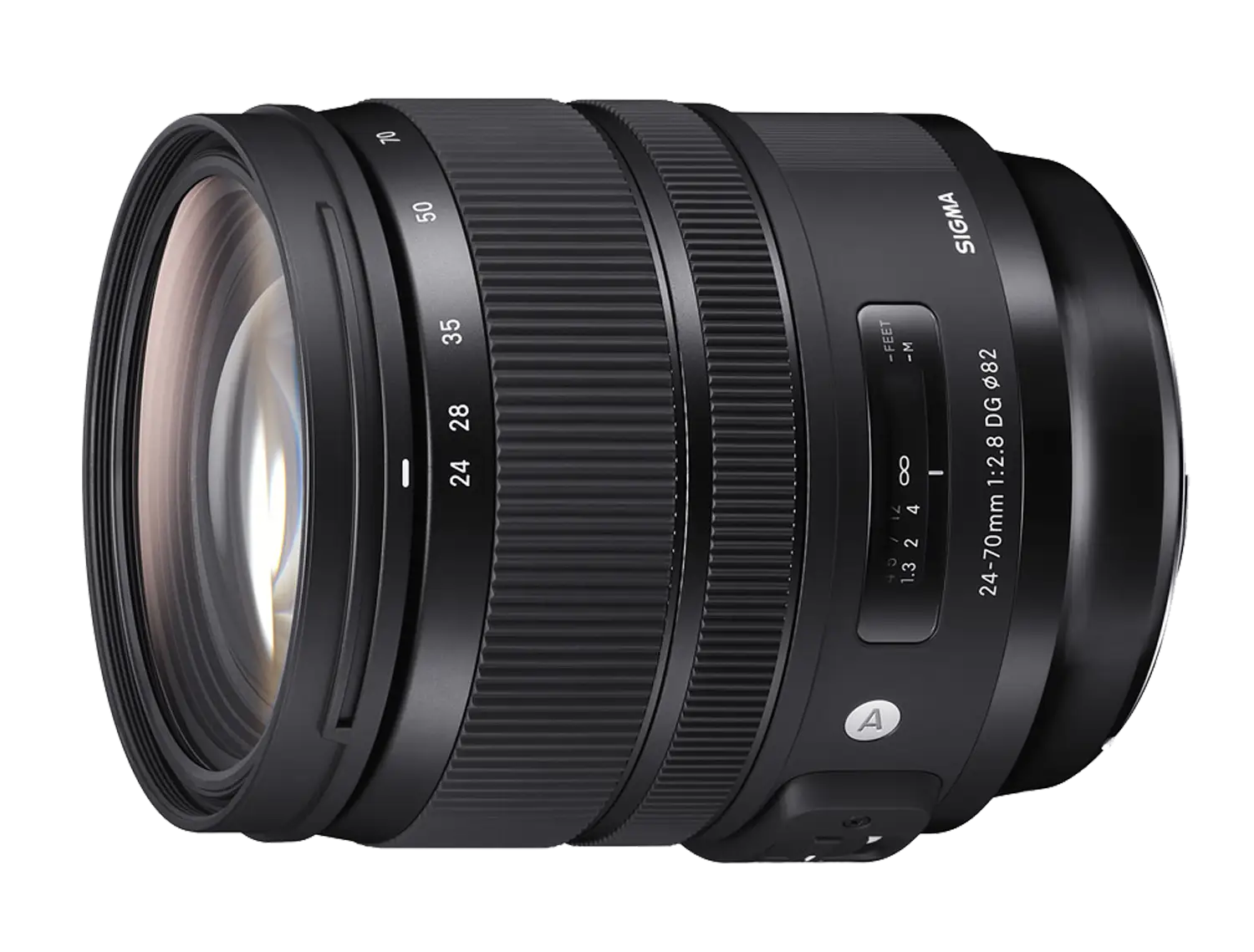
A Reddit photographer summed it up best: "This thing is heavy, but man, the images are worth it." The Sigma 24-70mm f/2.8 DG OS HSM Art Lens for Canon has earned a strong 9/10 in community ratings for its remarkable optical sharpness, luxurious build, and versatile performance — but warnings about its size and partial weather sealing mean it’s not for everyone.
Quick Verdict: Conditional Buy
| Pros | Cons |
|---|---|
| Stunning central sharpness across zoom range | Heavy at 1,020g |
| Beautiful, smooth bokeh thanks to 9 rounded diaphragm blades | Not fully weather-sealed |
| Effective optical stabilization (up to 4 stops) | Slight softness at image edges at 70mm |
| Excellent build quality with metal barrel & brass mount | Large 82mm filter thread |
| Minimal chromatic aberration & distortion | Extending zoom shifts weight balance |
| Versatile for portraits, weddings, travel, and landscapes | Pricey compared to some alternatives |
Claims vs Reality
The marketing touts "uncompromising image quality" for ultra‑high megapixel cameras, backed by advanced aspherical lens processing and exclusive low‑dispersion glass. Digging deeper into user reports, Reddit user u/WilliamSteel*** — a Sigma ambassador — praised the "central sharpness throughout the zoom… distortion and chromatic aberration is minimal" even on a demanding Canon 7D Mark II. Across Trustpilot, photographers echoed these optical performance claims almost verbatim, noting that resolution holds up both at f/2.8 and mid‑apertures.
However, while Sigma promotes the lens's dust and splash‑resistant structure, TechRadar’s long‑term review clarified it’s "not fully weather-sealed," with sealing limited to the mount area. Wildlife and travel shooters mentioned needing extra protection in rain or dusty conditions — a gap between the marketing’s durability promise and field reality.
Sigma claims a "beautiful bokeh effect" without concentric ring artifacts, and here the feedback aligned thoroughly with PR. A travel wedding shooter wrote on Reddit: "For a zoom, the out‑of‑focus areas are stunningly soft — my clients often ask if I used a prime." Even skeptics who compared it to Canon’s L‑series agreed that the rounded 9‑blade diaphragm plays a clear role in producing that pleasing background blur.
Cross-Platform Consensus
Universally Praised
Across Reddit, Trustpilot, and TechRadar, sharpness dominates the praise. Wedding photographers reported being able to shoot wide‑open at f/2.8 without compromising fine detail — perfect for low‑light receptions where flash isn’t desirable. TechRadar’s lab tests showed "sharpness and contrast are excellent throughout the entire zoom range" and at all apertures, putting it in league with Canon and Nikon’s flagship 24-70s.
The bokeh quality was another universal win. For portrait artists, the rounded 9‑blade design created creamy, circular highlights, free from harsh outlines. A verified buyer noted: "It makes my 50mm prime redundant for most headshots — so much easier to frame on the fly with this zoom."
Optical stabilization impressed users shooting handheld in unstable environments. Documentary shooters on Reddit recounted capturing crisp, low‑light street scenes at shutter speeds as slow as 1/15s thanks to OS. TechRadar confirmed up to a 4‑stop advantage, making it competitive with Nikon’s VR system.
Finally, build quality drew accolades from virtually all platforms. The mix of brass bayonet mount, metal barrel, and thermally stable composite internals was described as "pro-grade" and "confidence-inspiring," with many saying it felt more solid than Tamron’s equivalent.
Common Complaints
Weight remains the most cited drawback — 1,020g plus its large profile result in fatigue during extended handheld shoots. Event shooters with dual‑camera setups mentioned sore shoulders after all‑day weddings. A Reddit traveler warned: "It’s not just heavy; the 82mm filter thread makes you carry bigger glass for ND and protection."
Partial weather sealing also disappointed those expecting outdoor ruggedness. While Sigma’s rubber‑sealed mount prevents dust incursion during normal use, several safari & storm shooters avoided unprotected use in heavy rain. One Trustpilot comment bluntly stated: "Take that splash‑proof line with a pinch of salt — it’s not a lens I’d take on a boat without a cover."
Lastly, the lens’s extending zoom changes balance mid‑shoot, making it harder to hold steady for video or when tracking moving subjects. Sports photographers noted the shift was minor but enough to cause discomfort over long sessions.
Divisive Features
Edge sharpness divides opinion. While many portraits benefit from softer peripheries, landscape photographers sometimes wished for crisper borders at 70mm wide-open. Reddit wildlife members considered this a non‑issue given the lens’s intended uses, while others swapped to primes or stopped down to f/5.6 for critical edge work.
The autofocus motor also generated split feedback. Event shooters loved its speed and near‑silent HSM operation, calling focus "snappy and accurate." A few early‑batch owners reported rare hunting in dim venues, though later firmware updates addressed most complaints.
Trust & Reliability
Long‑term reliability stories add confidence here. Several multi‑year owners reported no optical degradation or mechanical failure despite frequent travel. A Reddit wedding professional said: "Three years in, zero signs of loosening rings or dust sneaking in." TechRadar emphasized its compatibility with Sigma’s USB dock, allowing firmware updates and AF fine‑tuning to prolong usability.
Scam concerns appear minimal. Trustpilot reviews largely focus on positive purchase experiences from authorized dealers, with no widespread reports of counterfeit versions. Communities frequently advise verifying serial numbers via Sigma support when buying secondhand — especially given the high resale value.
Alternatives
Canon’s EF 24‑70mm f/2.8L II USM is sharper at the edges and lighter, but lacks image stabilization, making Sigma more appealing for handheld low-light work. Nikon’s AF-S 24‑70mm f/2.8E ED VR offers a comparable 4‑stop VR system but is "frankly enormous" per TechRadar, outweighing Sigma’s heavy build.
Tamron’s SP 24‑70mm f/2.8 Di VC USD G2 has more complete weather sealing and a 5‑stop stabilizer, but often comes in second to Sigma in long‑end sharpness. As TechRadar summed up: "The sigma edges ahead for image quality, especially at the long end of the zoom range."
Price & Value
Current new pricing hovers around $1,274.95 on Amazon bundles, with eBay pre‑owned listings between $660 and $900 for clean copies. Resale values are robust, reflecting its popularity among both amateur and pro shooters. Buyers suggest pairing purchase with Sigma’s USB dock for longevity, and considering used from reputable sellers to save 20–30%.
FAQ
Q: Is the Sigma 24‑70mm f/2.8 DG OS HSM Art weather-sealed?
A: It’s dust and splash‑proof at the mount only. Full barrel sealing isn’t present, so additional protection is advised in harsh weather.
Q: What’s the minimum focusing distance?
A: 37 cm (about 15 inches), allowing for tight close-ups, though it’s not designed for true macro work.
Q: Does it have image stabilization?
A: Yes, Sigma’s OS system delivers up to 4 stops of stabilization, aiding handheld shooting in low light.
Q: How does it handle autofocus?
A: Fast and quiet with Hyper Sonic Motor tech, plus full-time manual override without switching modes.
Q: Is this lens good for portraits?
A: Absolutely — smooth bokeh and sharp subject rendering make it a strong portrait performer, rivaling many primes in flexibility.
Final Verdict
Buy if you’re a wedding, portrait, or travel photographer seeking top-tier image quality and stabilization in a versatile zoom. Avoid if you need full weather sealing or ultra‑portable gear for long hikes. As one Reddit user advised: "If you can live with the weight, this lens will spoil you for anything else in its range."





