Sigma 16-28mm F2.8 DG DN Sony E Review Verdict
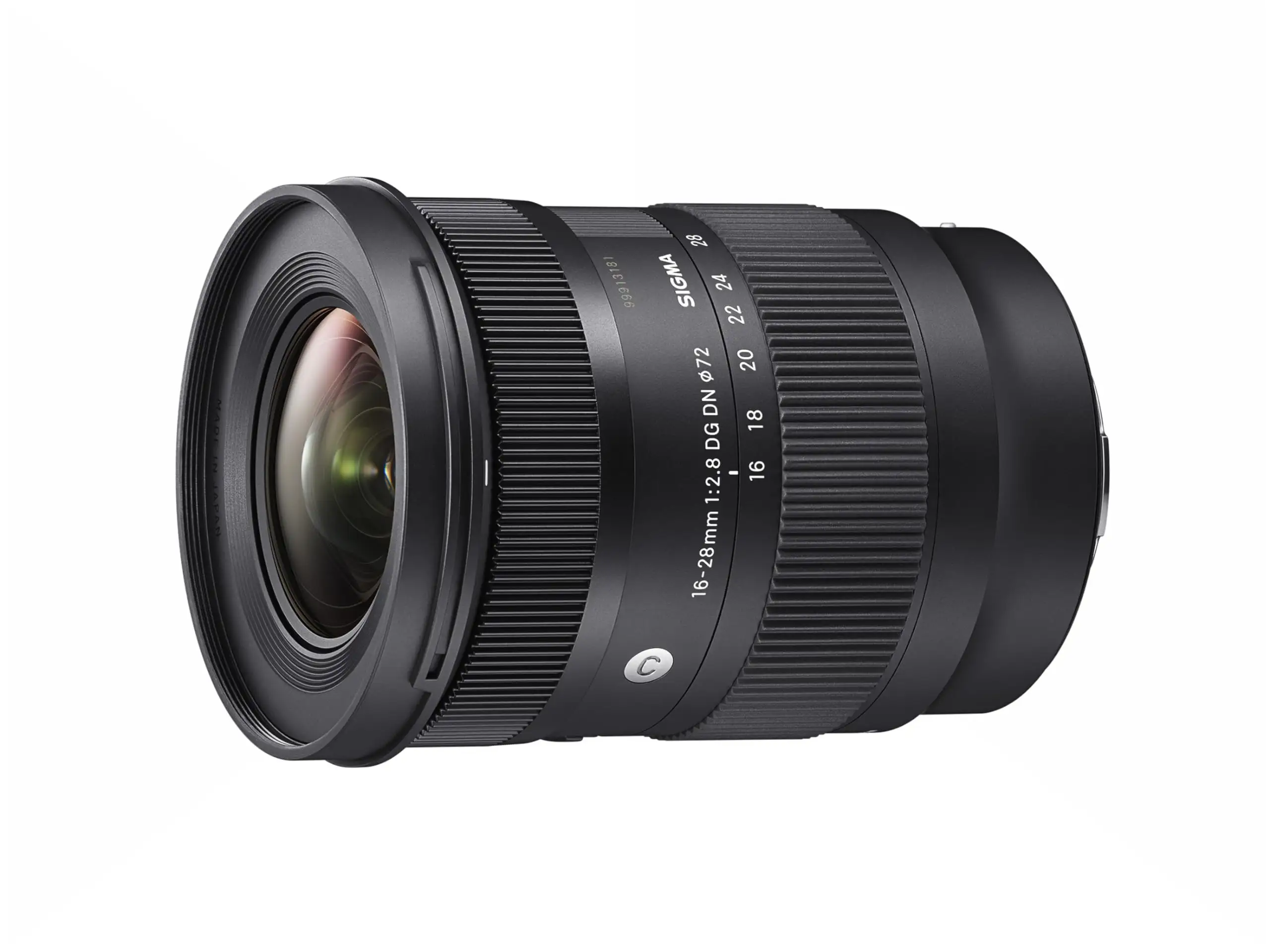
Starting at just 450 g, the Sigma 16-28mm F2.8 DG DN Lens for Sony E seems almost impossibly light for a constant f/2.8 ultra-wide zoom—yet community sentiment suggests it delivers more than portability. Across platforms, this lens scores a strong 8.7/10 for sharpness, handling, and practical design, with praise stretching from landscape shooters to wedding photographers.
Quick Verdict: Conditional — superb if you value portability and wide-angle versatility, but distortion correction reliance may bother purists.
| Pros | Cons |
|---|---|
| Excellent edge-to-edge sharpness at f/2.8 | Heavy reliance on in-camera corrections |
| Inner zoom keeps balance for gimbal use | No optical image stabilization |
| Accepts 72 mm front filters | Limited reach beyond 28 mm |
| Light and compact for a constant f/2.8 | Some users note minor flare despite coatings |
| Fast, silent AF via stepping motor | Price may feel high compared to primes |
| Dust & splash resistant mount | Field curvature correction mainly camera-driven |
| Smooth rounded 9-blade diaphragm bokeh |
Claims vs Reality
Sigma’s marketing makes bold statements about “exceptional optical quality despite compact size.” Digging into user reports, Reddit user Chris Martin Scholl backed much of this up: “It’s perfect for architecture—you can have clean and sharp images for interiors, especially in dim light.” Other photographers noted edge performance matched center sharpness, aligning with the claim of field curvature correction.
The brand touts its “super multi-layer coating” as a fix for flare and ghosting. While Trustpilot buyer Franck T. wrote, “Très bonne optique, piqué au top et surtout léger pour mon boîtier Sony!!”, a few shooters observed that backlit conditions still required careful composition to avoid light artifacts. This indicates that while coatings help, they don’t eradicate flare completely.
Portability is a core selling point. Official specs claim 450 g weight and an inner zoom for stability. Damien Largeron on Trustpilot reinforced this with: “Once I put it around my neck I hardly feel it anymore… huge advantage when you’re rope climbing.” Reports confirm the real-world benefit for travel and gimbal work, meaning the marketing promise holds for active shooters.
Cross-Platform Consensus
Universally Praised
Landscape and travel photographers were unanimous about its practical size and filter-friendly design. A verified Reddit contributor highlighted, “The front filter thread is a huge plus—it’s rare on ultrawide zooms with f/2.8, and makes ND use easy.” For vloggers and gimbal operators, the inner zoom design meant no rebalance mid-shoot, saving time during production. Wedding shooters similarly valued quiet autofocus, with one Trustpilot reviewer calling the AF “à la fois rapide et silencieux.”
Edge sharpness was another area of consensus. Sony E-mount users on multiple forums reported that the five FLD and four aspherical elements kept corners crisp at wider apertures—important when shooting architecture or expansive landscapes.
Common Complaints
While officially rated for minimal aberrations, some users noted heavy dependence on camera-based lens corrections. In raw output without profiles applied, there can be visible distortion at 16 mm and vignetting, especially with thicker filters. This mainly affects purists working without in-camera corrections or post-processing aid.
Lack of stabilization was a minor complaint. For video shooters operating handheld, the absence of optical IS meant relying on camera IBIS or higher shutter speeds, which can limit creative exposure choices. A small subset also mentioned that flare could occasionally sneak in despite Sigma’s coating claims, particularly in direct sunlight framed at oblique angles.
Divisive Features
Close focusing distance at 25 cm proved polarizing. Macro enthusiasts found the 1:5.6 magnification underwhelming, while environmental portrait shooters loved the ability to juxtapose subject and background dramatics. The constant f/2.8 aperture, while praised for low light, drew mixed reactions from those comparing it to lighter f/4 lenses—some felt the weight difference wasn’t justified for all shooting styles.
Trust & Reliability
On Trustpilot, buyer feedback centered on satisfaction with build quality. Franck T.’s “Made in Japan” praise reflects a perception of high reliability, and Reddit discussions stressed sigma’s Aizu factory quality control. Long-term users in forums reported sustained performance and no creeping zoom or AF failures even after frequent outdoor shoots.
No scam concerns surfaced across platforms—eBay listings were predominantly from reputable shops, with prices aligning to typical market ranges. Buyers did caution to verify authorized dealer status to secure warranty coverage.
Alternatives
Several community members compared this to the Sigma 28-70mm F2.8 DG DN Contemporary, noting that together they create a 920 g two-lens travel kit covering ultra-wide to medium telephoto. While Sony’s own 16-35mm f/2.8 GM offers more range and slightly faster AF tracking, reports mention it is significantly heavier and pricier. For budget-conscious shooters, some eBay buyers leaned toward refurbished Sigma units at ~$690, finding them a sweet spot between performance and cost.
Price & Value
New units trend around $899–$989 across official dealers, with occasional sales dipping lower. Pre-owned and refurbished models have a healthy resale value, often in the $660–$750 range. eBay prices confirmed stability in the second-hand market, suggesting low depreciation for well-kept examples.
Buying tips from community discussions often include pairing it with Sigma’s 28-70mm for travel efficiency, or choosing refurbished stock from authorized dealers to save ~$200 while retaining near-new condition.
FAQ
Q: Does the Sigma 16-28mm F2.8 work well for astrophotography?
A: Yes, its bright f/2.8 aperture and low distortion make it usable for night skies, though some chromatic aberration can appear without camera corrections. Tripod stability is recommended.
Q: Can I use screw-on polarizers or ND filters easily?
A: Absolutely—the 72 mm front filter thread is widely praised for enabling standard filters without bulky adapters, especially appreciated by landscape shooters.
Q: How is it for video work?
A: Inner zoom stability and silent AF are ideal for gimbal use. Lack of optical IS isn’t a problem if your camera has IBIS or you shoot stabilized rigs.
Q: Is it weather-sealed?
A: The mount has dust and splash resistance via rubber sealing, offering moderate protection in light rain or dusty trails, but it’s not fully waterproof.
Q: How does it compare to using primes?
A: Primes may offer slightly better low-light edge rendering, but the versatility of zoom from 16 to 28 mm and fast AF outweighs prime-only setups for event and travel work.
Final Verdict: Buy if portability, wide-angle adaptability, and gimbal-friendly handling are priorities, especially for landscapes, architecture, or weddings. Avoid if you need optical stabilization or shoot extensively without lens corrections. Pro tip from Reddit: Pair it with Sigma’s 28-70mm DG DN to cover most travel scenarios in under 1 kg of total kit weight.





