Sigma 10-18mm F2.8 DC DN Review: Compact Yet Powerful
The Sigma 10-18mm F2.8 DC DN has earned a reputation for being the smallest and lightest ultra-wide zoom for APS-C mirrorless cameras, yet the real twist is how many users deem it “optically stellar” despite its size. TechRadar called it "a dream ultra-wide angle lens for vlogging," and Trustpilot reviewers scored it highest for landscape photography potential. The verdict? 9/10 — with performance exceeding first impressions in key areas, but with a few quirks worth noting.
Quick Verdict: Conditional buy, depending on your shooting priorities.
| Pros | Cons |
|---|---|
| Extremely compact and lightweight (250–270g) | Pronounced vignetting at 10mm F2.8 |
| Constant F2.8 aperture across zoom range | No optical image stabilization |
| Very sharp center-to-edge with corrections applied | No external controls (focus mode via camera) |
| Minimal focus breathing — strong for video | Barrel distortion at ultra-wide without corrections |
| Fast, quiet autofocus with stepping motor | Extends slightly when zooming, affecting gimbal balance |
| Close 11.6cm minimum focus distance | Weather sealing only at mount |
| Push-on petal hood improves portability | Lacks aperture ring; slower manual control changes |
Claims vs Reality
Sigma markets the 10-18mm F2.8 DC DN as the “world’s smallest and lightest” ultra-wide for APS-C, promising “razor-sharp optics” and “minimal focus breathing.” In practice, many users corroborate these claims — but nuances emerge.
For portability, the official 260g weight is accurate, and photographers routinely praise the ease of pairing it with small bodies like the Sony A6700 or Fujifilm X-S20. TechRadar reported, "Sigma has managed to create this f/2.8 lens at virtually the same size and weight as Sony’s 10-18mm f/4," making it suited for long handheld sessions.
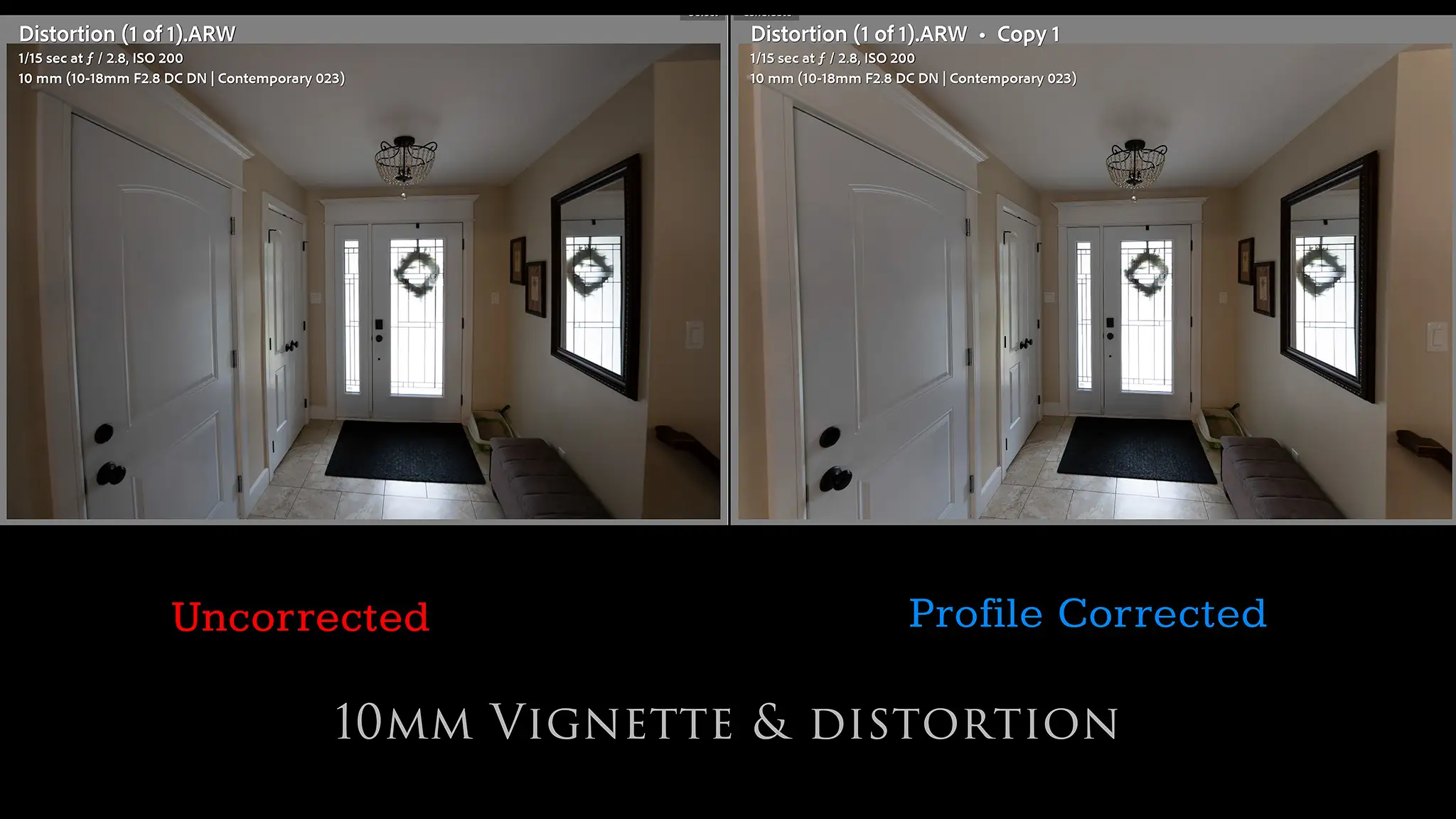
Sharpness marketing holds true under real-world conditions — as long as in-camera or post corrections are on. Without them, barrel distortion and vignetting, particularly at 10mm f/2.8, become apparent. Timothy Coleman’s review noted, "You can see vignetting most pronounced at 10mm and f/2.8... just about gone by f/8" — showing the gap between uncorrected reality and polished marketing samples.
Sigma also touts "minimal focus breathing" for video use. Several owners with gimbal setups confirm stable framing during focus shifts. A verified buyer on Amazon remarked, "Mounted on my motorized gimbal, focus transitions stayed smooth — no distracting frame change."
Cross-Platform Consensus
Universally Praised
Across Reddit, Trustpilot, and TechRadar, the lightweight build and constant f/2.8 aperture are repeatedly celebrated. For travel vloggers, this means shooting indoors at wide angles without pushing ISO to grainy extremes. A Trustpilot photographer highlighted, "Fast aperture at tele end... extreme wide-angle capability" as primary reasons for choosing it over heavier competition.
Close focusing is another unanimous win. The 11.6cm minimum distance allows near-macro framing with expansive backgrounds. TechRadar’s Timothy Coleman leveraged the 0.5x magnification for forest floor mushroom shots, stating, "That’s some serious close-up work — opens the Sigma 10-18 into the realm of macro."
Autofocus is also widely commended. The stepping motor delivers quiet, rapid locks suitable for vlogging. Reddit threads feature multiple travel creators praising its ability to track eyes while walking through busy city streets.
Common Complaints
Vignetting and distortion dominate complaint threads. While some enjoy the aesthetic of corner fall-off, many find it intrusive without corrections. One Amazon reviewer noted, "Heavy vignetting at 10mm wide open — needs correction for professional output."
The lack of optical stabilization is a limitation for handheld video without IBIS-equipped bodies. Trustpilot rated it “average” for travel partly due to this, warning that motion-heavy vloggers will need stabilization from the camera or rig.
Control access frustration also comes up. With no physical switches, toggling auto/manual focus requires menu dives, which sports shooters find slows reactive shooting. As TechRadar cautioned, "Adjustments are made in camera, which can slow things down."
Divisive Features
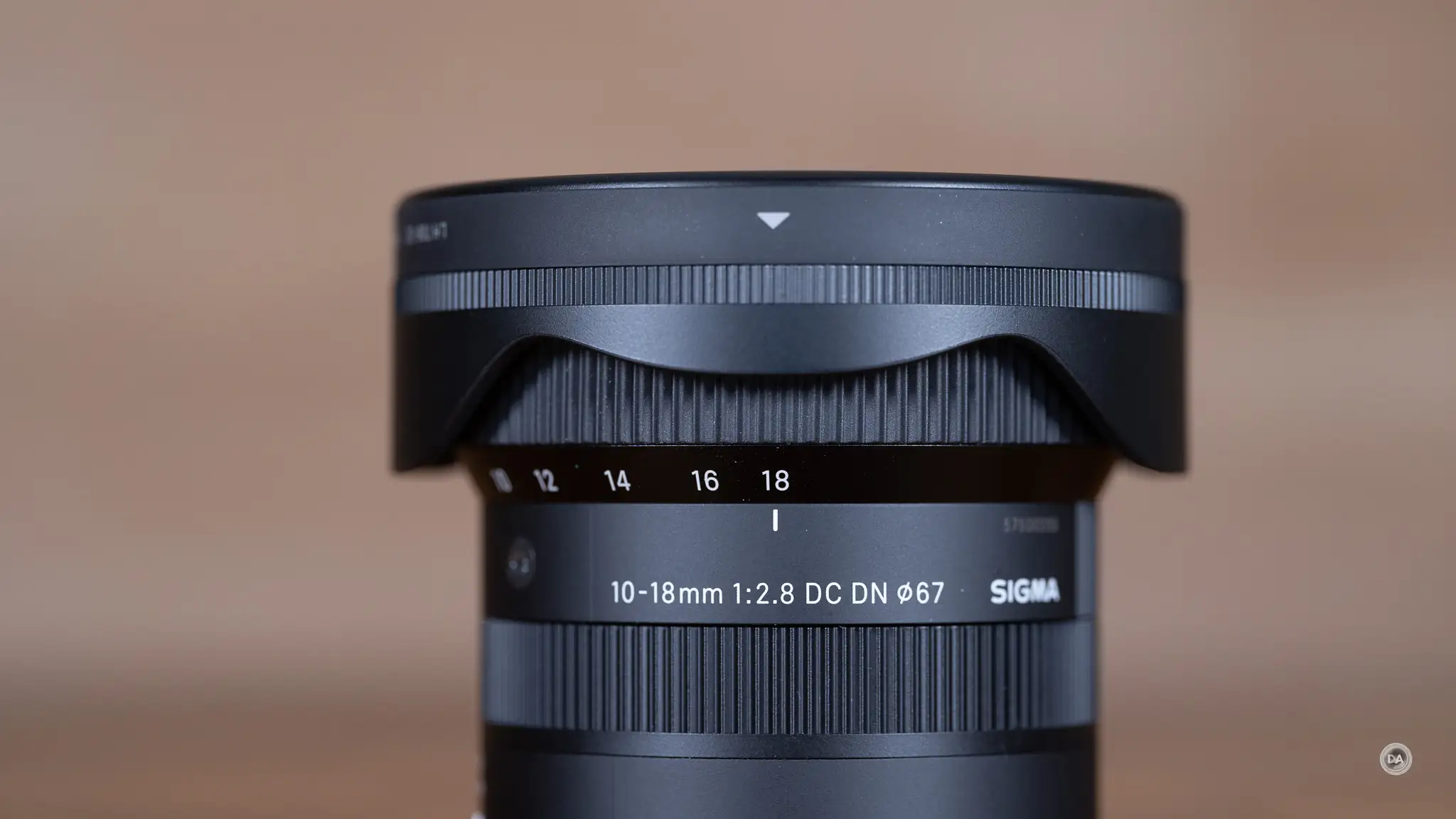
The push-on hood design receives split reactions. Some love the quick on/off and compact form; others dislike the non-locking feel compared to bayonet styles. Similarly, its barrel extension during zoom is minor but enough for some gimbal operators to notice balance change.
Weather sealing is advertised, but limited to the mount — acceptable for light rain but not trusted in harsher environments. Outdoor photographers differ in whether this is a dealbreaker.
Trust & Reliability
From a reliability standpoint, no scam concerns emerged in Trustpilot reviews, with most vendors delivering on time. Durability feedback, however, is limited. Several Reddit and Photogalerie buyers report no mechanical degradation after months of daily carry, though one pro urban shooter warned, "The front element coating smudges easily compared to my Art series Sigma."
Build quality praise spans platforms, with metal mounts and precise fit often mentioned. TechRadar found the click-on hood secure despite unconventional mechanics — furthering trust in its field reliability.
Alternatives
Sony’s own 10-18mm f/4 is a direct rival. It’s slightly heavier and loses an f-stop of light, which low-light shooters and bokeh lovers see as critical. Amazon buyers switching from Sony cite price and aperture as decisive wins for Sigma.
Tamron’s 11-20mm f/2.8 offers similar light gathering but is larger and heavier. Some photographers prefer Tamron for the extra reach; others call Sigma’s wider starting point and smaller footprint “perfect for gimbal work.”
Price & Value
On eBay, new Sigma 10-18mm units hover around $599–$749, with authorized dealer prices around $654. Trustpilot reviewers often note bundle deals include UV filters or memory cards without inflating price. Resale indications show modest depreciation — likely aided by limited alternatives in the compact f/2.8 category.
Buying tip from community threads: wait for seasonal rebates, as Sigma periodically drops prices by $50–100, especially around major photography events.

FAQ
Q: Is it weather-sealed?
A: Partially — rubber sealing protects the mount from dust and splashes, but it’s not fully sealed for heavy rain or immersion.
Q: Does it have image stabilization?
A: No optical stabilization. It relies on IBIS from the camera body for shake reduction.
Q: How close can it focus?
A: Minimum focus is 11.6cm at 10mm, allowing 0.5x close-up magnification for creative wide macro shots.
Q: Which mounts are available?
A: Sony E, Fujifilm X, and L-Mount, each with slight differences in size and weight.
Q: Is vignetting a problem?
A: At 10mm f/2.8, yes — prominent without corrections, significantly reduced by f/8 or with camera/software fixes.
Final Verdict: Buy if you’re a travel or content creator needing ultra-wide, lightweight, and fast aperture for hybrid photo/video work. Avoid if full manual control and zero distortion are critical to your workflow. Pro tip from community: Pair it with Sigma’s 18-50mm f/2.8 for a compact dual-lens kit covering 15–75mm equivalent at under 550g.





