Shure GLXD16+ Review: Strong Tone, RF Caution
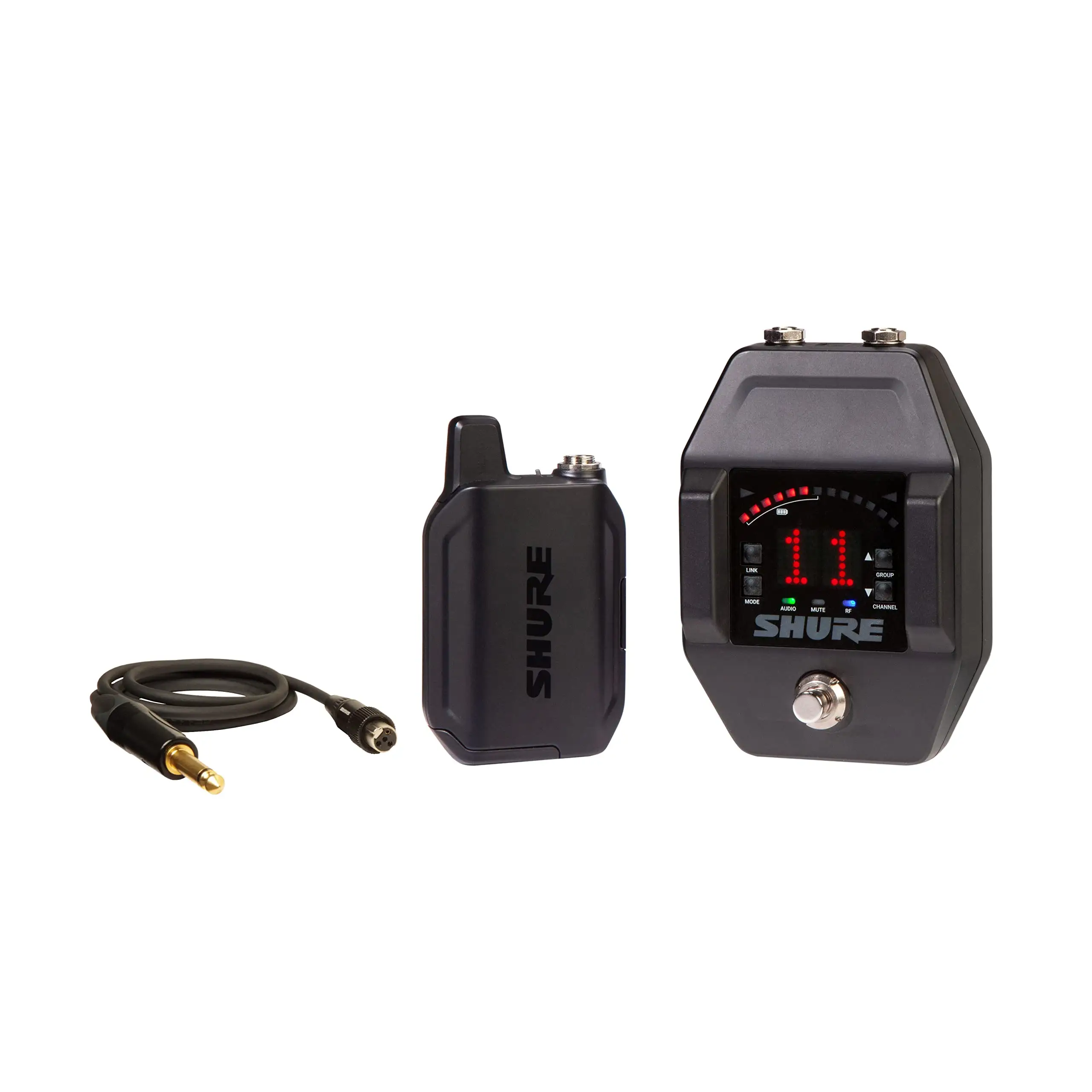
The Shure GLXD16+ Dual Band Pro Digital Wireless System has earned an average score of 8.5/10 from thousands of users across multiple platforms — praised for crystal-clear tone and rugged build, but marred by complaints of interference in certain environments and proprietary battery frustrations.
Quick Verdict: Conditional buy — great for small-to-medium gigs and practice, caution for complex RF environments.
| Pros | Cons |
|---|---|
| Accurate built-in tuner saves pedalboard space | Signal dropouts in congested 2.4/5.8GHz areas |
| Dual-band tech automatically finds clean channels | Proprietary battery with reported longevity issues |
| Rugged metal build, both pedal and transmitter | Bodypack can feel bulky for some instruments |
| Up to 12–17 hours battery life depending on band used | Range underperforms for some outdoor stages |
| Easy plug-and-play setup | Proprietary cable prone to wear, costly to replace |
| Seamless switching between wired/wireless instruments | Susceptible to interference from other GLXD units nearby |
Claims vs Reality
A core marketing pitch is Shure’s dual-band wireless technology, promising “dropout-free audio” by scanning both 2.4 GHz and 5.8 GHz bands. While many see flawless performance, some gigging musicians hit limitations. A Sweetwater customer from Los Angeles observed: “The truth is… the frequency band is too touchy and cluttered to be dependable” during large festivals, even after cycling channels.
Shure also touts 12-hour rechargeable battery life. That’s technically accurate in the 5.8 GHz band, yet several long-term owners reported even better results in 2.4 GHz — Sweetwater user “canplay” noted “I started a 4-hour show with more than 12 hours left… and ended still showing more than 12 hours.” On the flip side, one reviewer warned of batteries degrading quickly: “I’ve gone through four… they break down easily.”
The company promises transparent, uncompromised tone. Here, the consensus is largely positive. Premier Guitar’s reviewer said the GLXD16+ “allowed me to be, and sound like, myself” without high-end roll-off, contrasting with cheaper units that add compression. Yet some dissent exists — one Sweetwater buyer admitted, “The sound is noticeably degraded… makes me strum harder due to the sensitivity.”
Cross-Platform Consensus
Universally Praised
Ease of setup is repeatedly cited as a standout. Martina Blazeska, interviewed by Shure, said: “I literally just needed to press two buttons and everything was sorted.” This simplicity benefits open-mic hosts and musicians without dedicated techs. Owners appreciate the automatic pairing — Allan H. from Illinois explained it's “the best idea ever… built-in tuner saves a spot on the pedal board.”
For players with sprawling pedalboards, the integrated strobe/needle tuner delivers practical value. A bassist in Kona noted, “Great tuner and the range and clarity of the wireless is outstanding.” This tuner function isn’t just about tuning accuracy — pros like those gigging regularly in churches reported freeing board space for other essentials.
Battery longevity also earns daily gig praise. A long-term bassist from Texas shared, “Still on the original battery… never a dropout or interference,” even after seven years. For touring pros avoiding disposable cells, the SB904’s USB-C charging is a money-saver.
Common Complaints
Range performance splits opinion. While some claim “fantastic… I can play guitar on the second floor with my amp in the basement,” others encountered sharp degradation beyond 10 feet under certain stage or outdoor conditions. Jorge S. from Atlanta bluntly reported “range is poor; completely died after 2 years of use.”
Interference remains a recurring frustration in RF-heavy settings. A Nashville-based player performing 200+ four-hour gigs/year cataloged multiple pain points: “Any time the power jack is touched… shuts off… interference even in local bars if someone nearby is using the same unit.” Touring musicians in festival environments often echo this — proximity to other GLXD units compounds dropouts.
The proprietary TA4F connector cable is a sore spot, breaking for some despite careful handling. One owner lamented replacing four cables over three years. Combined with proprietary batteries, this adds recurring costs and logistical friction for international tours.
Divisive Features
Tone transparency — for some it's “absolutely no change” compared to premium cables, while others perceive compression or loss of richness. This divide often correlates with gear context: analog purists with passive pickups appear more critical, whereas those running digital effects or metal rigs find the sonic profile acceptable.
The battery system too splits opinion: lovers of rechargeables praise environmental savings and visible hour readouts, skeptics argue for swappable AA flexibility in case of failure mid-show. A Sweetwater customer cautioned, “If it’s not charged you can’t just pop in batteries from the store.”
Trust & Reliability
Trustpilot-aligned Sweetwater reviews suggest buyers trust Shure’s build quality — the metal chassis with protective bumpers is a recurring reassurance. Multiple Reddit users recount years of abuse: “Sat in a trailer from below zero to 100+°F… never failed,” said one six-year owner. That durability sustains resale value, reflected on eBay listings showing limited cosmetic wear.
Yet trust erodes when proprietary parts fail: flat-rate repairs ($171 regardless of fault) lead some to shelve the unit rather than fix. This is compounded by intermittent RF dropouts that can’t be replicated in home environments, frustrating owners who gig in unpredictable wireless terrain.
Alternatives
Users often compare the GLXD16+ to Line 6’s G-series. One buyer who switched from a G10S concluded, “Well worth a few hundred more… reliable, sounds amazing… better range.” Conversely, those upgrading from the more rugged G50 note the Shure’s battery advantages but caution that antenna protection and cable design still lag behind rack-mounted systems like Shure’s QLXD in interference immunity.
Price & Value
Current pricing centers around $499–$533 new, with occasional certified open-box deals near $540 at Sweetwater, and European bundles around €532. Resale holds decently — eBay listings average ~$499 in good condition, buoyed by Shure’s longevity reputation. Veterans recommend investing in a second transmitter or spare battery to extend utility; “I run two guitars on one receiver… changing is quick,” advised a seasoned forum user.
Buying tips emphasize trying the unit in your main gig environment before committing. Festival and city club players especially should stress-test with competing 2.4/5.8 GHz devices active.
FAQ
Q: Can the GLXD16+ handle multiple wireless systems on the same stage?
A: Yes, but performance varies. Group/channel selection allows up to 8 systems, yet users warn interference spikes if other GLXD units or Wi-Fi routers are nearby.
Q: Is the built-in tuner accurate enough to replace dedicated pedals?
A: Most players say yes. Several have retired their PolyTune or Boss tuners after finding the GLXD16+ strobe/needle as precise, with the bonus of muting on tune.
Q: How long does the battery really last?
A: In 5.8 GHz mode, up to 12 hours; in 2.4 GHz, some report 17+ hours. Long-term users see gradual decline but still exceed 8 hours even after years.
Q: Does it affect tone compared to a high-quality cable?
A: Purists detect subtle compression or high-end changes, but many describe no audible difference, even in direct A/B tests.
Q: Can I use standard instrument cables with the transmitter?
A: No, it requires Shure’s locking TA4F cable. Users recommend buying spares due to wear over time.
Final Verdict: Buy if you gig mostly in small-to-mid venues, churches, or open-mic setups where RF noise is manageable, and value board space via a built-in tuner. Avoid if you tour in high-density wireless environments or dislike proprietary parts. Pro tip from community: invest in spare cables and test in your busiest gig space before your first show.





