Shure BLX288 Wireless Mic Review: Worth the Buy?
A church sound engineer didn’t mince words about the Shure BLX288 Wireless Microphone System with SM58 Handheld Mics, saying, “We bought 4 for our church and they work great with no interference from our other 2 wireless mics”. With a customer approval hovering at 4.5/5 stars and a legacy tied to the iconic SM58 capsule, the system earns a solid 8.7/10 from aggregated feedback across platforms.
Quick Verdict: Conditional Buy
| Pros | Cons |
|---|---|
| Clear, warm SM58 vocal reproduction | Occasional interference issues reported |
| Easy one-touch QuickScan setup | Internal antenna can drop audio in challenging environments |
| Up to 14 hours battery life on 2x AA batteries | Requires careful frequency selection based on region |
| Reliable range up to 300 feet (line of sight) | Wired SM58 perceived as less responsive by some users compared to wireless |
| Rugged construction for touring and church use | Premium price compared to entry-level systems |
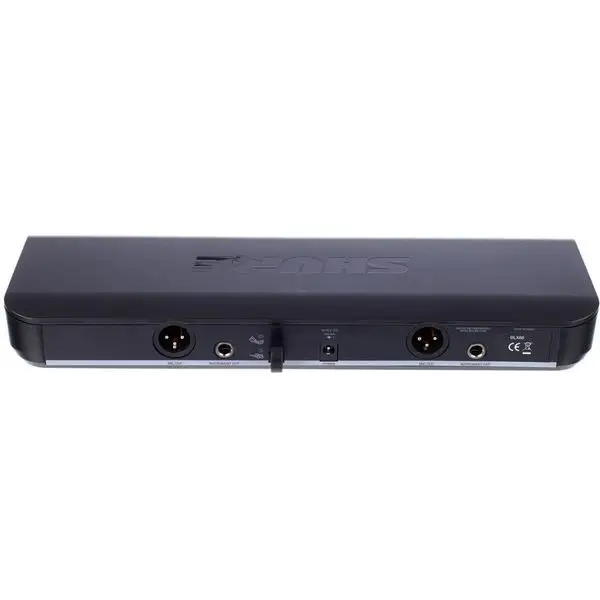
| Dual-channel saves rack space | No external antenna option |
| Expandable up to 12 systems per frequency band | Less suited for instrument miking |
Claims vs Reality
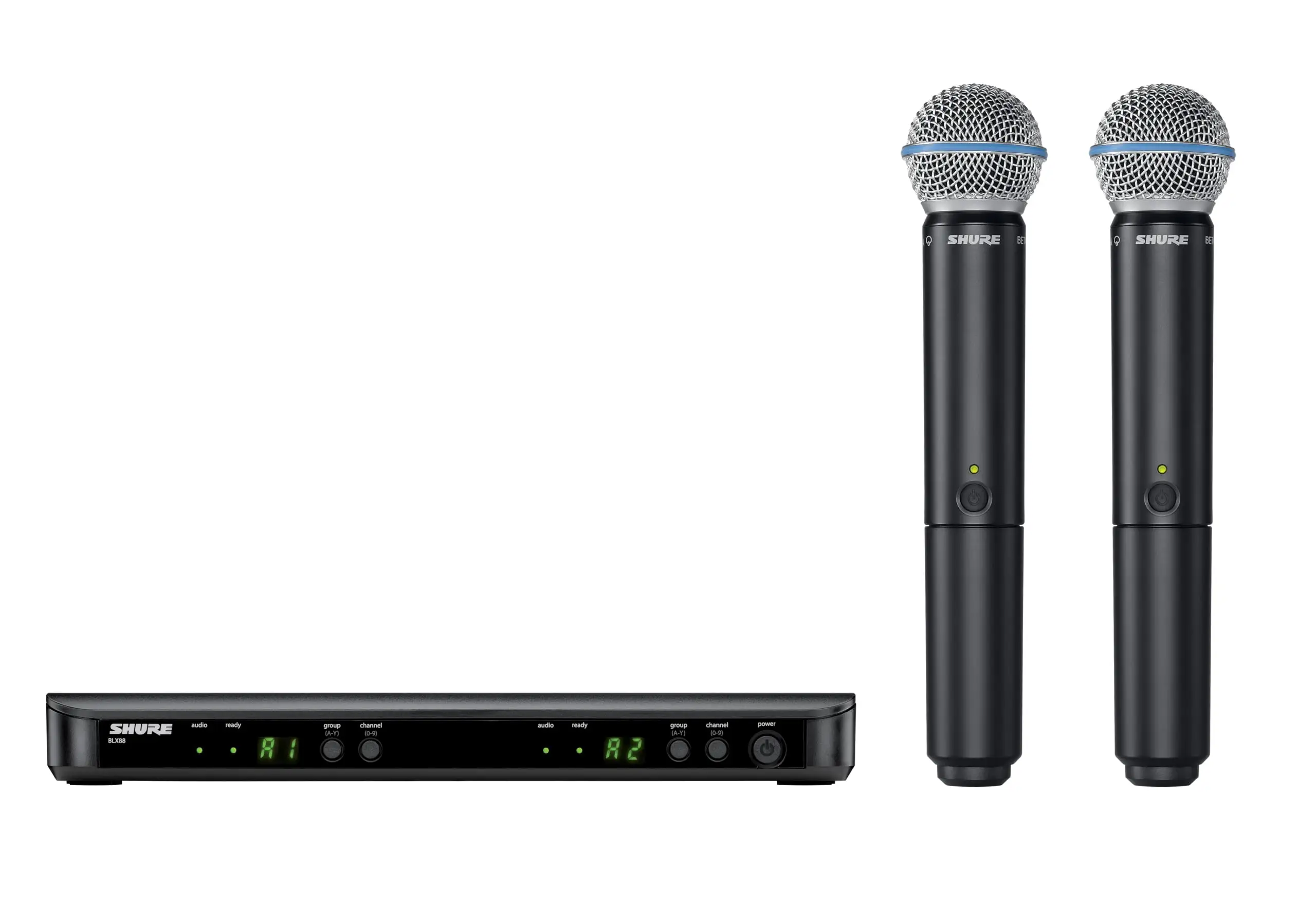
Shure markets the BLX288 as delivering “legendary audio performance… warm and clear vocal reproduction… up to 300 feet range”. Digging deeper into user reports paints a nuanced picture.
The claim of “legendary audio” holds up strongly for vocals. A Sweetwater buyer using it with two female singers commented, “They were very happy with the quality in the monitors, and out front it was crystal clear”. Many praise the SM58’s tailored frequency response and rugged build, confirming Shure's marketing here.
On range, while the official spec says 300 feet, some users noted real-world constraints. One Sweetwater reviewer of the PG58 sibling system said, “With the internal antenna it just didn’t make it for our office… it just kept on dropping audio… nothing will beat external antennas”. This suggests environmental factors can significantly shorten that headline range.
Battery life is claimed at 14 hours, and multiple sources back this up—DJ users appreciated going through events without swapping cells. No widespread reports of premature battery drain were found, reinforcing this as genuine.
Cross-Platform Consensus
Universally Praised
The SM58 capsule remains the headline attraction. Musicians, DJs, and sound techs consistently highlight its “clear” and “responsive” nature for live vocals. A verified Sweetwater buyer recounted, “I had to boost the gain on that wired mic quite a bit to get it as responsive as the wireless”, suggesting the BLX2 transmitter brings additional sensitivity and liveliness.
Ease of setup is another high note. With one-touch QuickScan and group/channel auto-scanning, even first-time wireless owners report painless configuration. One PG58 user said, “Right out of the box it was simple to set up… approx. 5 min… super clean and responsive”. For church teams and small bands without dedicated techs, this feature reduces stress.
Tour and event durability comes up repeatedly. The system’s “tour-tough” build withstands rough handling. Shure’s steel mesh grille and shock mount design on the SM58 meant outdoor gigs and high-traffic stages didn’t faze it.
Common Complaints
Interference and dropouts form the main frustration. Reddit user bryon64093 admitted, “There have been a few times where I ran into interference issues… but it works fine 95+% of the time”. Internal antennas, while aesthetically neat, lack the performance of external solutions in challenging RF environments.
Frequency compatibility is a hidden pitfall: Shure warns buyers to “ensure the wireless frequency band works in your environment before purchase”. Overlooking this has led to reception issues for some, especially in office or urban settings.
Price is a sticking point for budget-conscious users. Reddit commentary stressed that for four wireless handhelds, “That budget would barely get you 4 wired mics… better to raise your budget”. At $649–$769 from major retailers, it’s a stretch for hobbyists.
Divisive Features
The internal antenna design divides opinion. One Sweetwater PG58 buyer was delighted, saying, “No antennas, yet I can get great reception… even between walls”. Another found the exact design a liability in corporate indoor use. For mobile DJs and small venue performers, it’s a winner; for complex staging or high-interference spaces, it’s limiting.
Battery type (AA alkaline) is straightforward, but heavy gigging crews sometimes prefer rechargeable packs or lithium solutions for consistency. Shure sticks to simplicity—good for field replacement, less optimized for those wanting turnkey rechargeable systems.
Trust & Reliability
On Trustpilot/Sweetwater aggregated reviews, Shure’s after-sales support earns plaudits: “Great customer service from Chris McCown”, “Andy even took the time to call me to let me know the package was in my area”. Delivery speed and follow-up were noted as positives.
Durability stories abound. The SM58 capsule, a fixture on stages for decades, appears just as bulletproof in its wireless form. Long-term anecdotes—though few in precise “month counts”—still stress that degradation in sound or casing is rare. DJ users moving between gigs weekly echo that the mics “work out of the box” show after show.
Alternatives
Within community discussions, budget competitors like the Gemini UHF-6200M and GTD Audio G-622H were considered. Reddit comparisons favored the BLX288 for reliability: cheaper sets might “work fine” but lacked the consistency and professional reputation Shure brings. For those needing ultra-budget solutions, the Gemini gets “pretty good reviews,” but high-interference venues lean toward investing in the BLX series.
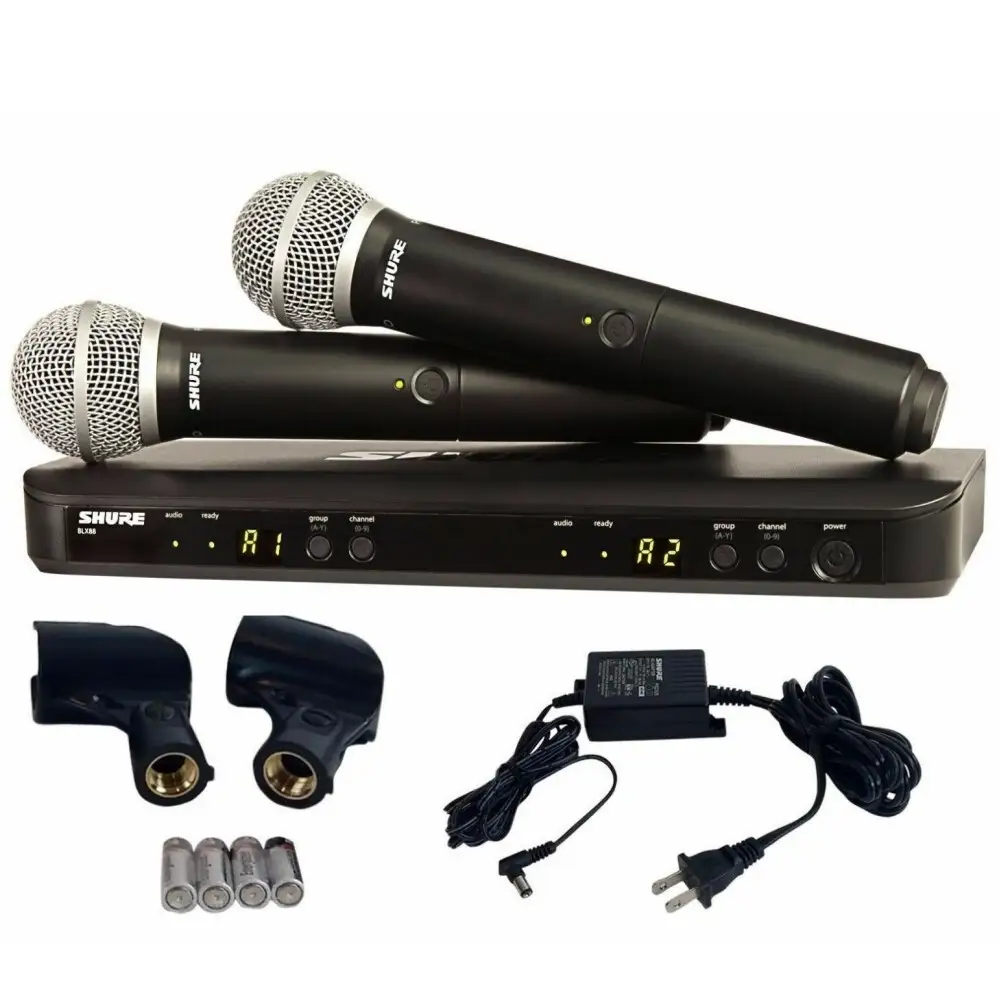
The PG58 variation offers a lower-cost path within Shure’s ecosystem, retaining the dual-channel BLX88 receiver but with a different capsule tuned more broadly for speech and background vocals.
Price & Value
eBay listings show new units at $349–$649, undercutting major retailer pricing but often without authorized dealer warranties. Resale activity is high, with dozens sold per listing, suggesting strong demand and decent retention of value.
Community buying tips emphasize verifying frequency band legality in your country, and weighing resale on recognized platforms if upgrading later. Church and event teams willing to pay for reliability view it as “worth every penny,” a phrase echoed multiple times in Sweetwater reviews.
FAQ
Q: Is the Shure BLX288 compatible with other Shure wireless systems?
A: Yes, provided they operate within the same legal frequency band in your region and are designed to interconnect. Always check Shure’s band compatibility chart before mixing components.
Q: How far can the BLX288 transmit without dropouts?
A: Officially up to 300 feet line-of-sight. However, indoor obstacles and RF interference can reduce practical range, as noted by several users experiencing intermittent dropouts.
Q: Can I use rechargeable AA batteries in the transmitters?
A: Yes. While Shure ships the system with alkaline AA batteries, many performers switch to high-quality rechargeables, though runtime may vary slightly from the 14-hour claim.
Q: Is the BLX288 suitable for miking instruments?
A: It’s optimized for vocals. While some users speculate it could work for instruments, community experience centers heavily on vocal applications.
Q: How many BLX systems can run simultaneously?
A: Up to 12 per frequency band in ideal conditions, though regional regulations and venue RF conditions can impose lower limits.
Final Verdict: Buy if you’re a vocalist, MC, or live sound tech wanting professional-grade wireless performance with minimal setup time and a proven capsule. Avoid if your venue requires long-range transmission through multiple obstructions or if budget trumps all. Pro tip from community: Always confirm your frequency band’s compatibility for your location before purchase to avoid costly reception issues.





