Scotch Self‑Seal Laminating Pouches Review: Conditional Buy
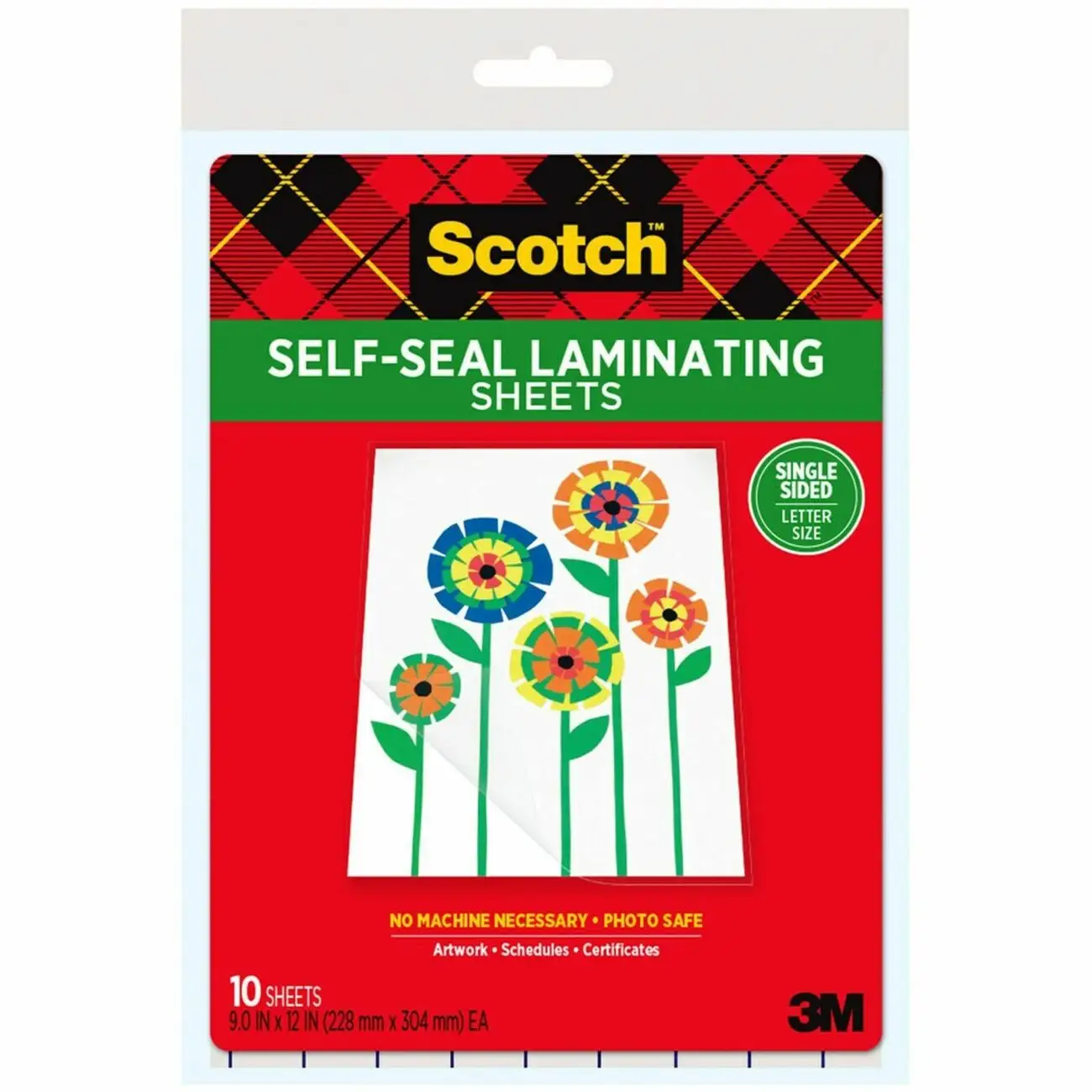
A single Amazon reviewer summed up the appeal in four words: “put it in. seal it. done.”—and that simplicity is the entire case for Scotch Self‑Seal Laminating Pouches, Letter Size, 25‑Pack. Verdict: Conditional buy, 8.2/10. The feedback skews strongly positive on convenience and clarity, but a smaller set of reviewers warns that if you expect “true lamination like with a heat machine,” you may leave disappointed.
Quick Verdict
For quick, heat‑free protection of paper items: Yes. For perfectly flat, machine‑laminated results: Conditional.
| What the feedback points to | Evidence from user feedback (platform) |
|---|---|
| Extremely convenient, no machine | Amazon reviewer: “put it in. seal it. done.” (Amazon customer reviews) |
| Works well for signage/protection | Amazon reviewer: “Worked great for signs to put in our greenhouses and protect from water and dirt.” (Amazon customer reviews) |
| Dry‑erase and reuse use cases show up | Amazon reviewer: “covered Quixx score cards… over a year… with dry‑erase pens.” (Amazon customer reviews) |
| Some struggle with creases/technique | Amazon reviewer: “there are always major creases… can’t quite understand the instructions/diagrams.” (Amazon customer reviews) |
| Expectations mismatch vs heat lamination | Amazon reviewer: “it’s not the real thing… not a true lamination like with a heat machine.” (Amazon customer reviews) |
| Quality consistency mentioned over time | Amazon reviewer: “quality is slipping… little hairs/threads… strip… tear easily… update… much better now.” (Amazon customer reviews) |
Claims vs Reality
The marketing promise is straightforward: instant, permanent lamination “without heat or hassle,” and “no machine needed.” Digging deeper into user reports, that core claim largely holds up for people who want fast protection for everyday paper items and can tolerate (or avoid) minor imperfections. One reviewer framed the experience as effortless: “put it in. seal it. done.” (Amazon customer reviews). Another echoed the low‑friction appeal: “these are great especially if you do not like laminating.” (Amazon customer reviews).
Where the “no hassle” message collides with reality is in the technique sensitivity. A recurring pattern emerged: some users get smooth results, while others fight bubbles or creases and blame either confusing instructions or the product’s limits. One frustrated buyer wrote: “no matter how many times i try, there are always major creases… i’ve studied these instructions but can’t quite understand the instructions/diagrams.” (Amazon customer reviews). That complaint reads less like a total failure and more like a learning‑curve problem—but it still contradicts the idea that it’s always effortless.
Another marketing angle is durability—spill‑proof, tear‑proof, “weatherproof” style protection for frequently handled documents. User stories support that in certain contexts, especially signs. A community‑garden user explained they needed outdoor durability and reported: “the signs have been up for a couple of months and so far they’re doing great,” while advising: “allow a generous margin… so water will not seep through.” (Amazon customer reviews). The reality, per that same account, is that longevity depends on how well you seal around the edges and how much margin you leave.
Cross-Platform Consensus
Universally Praised
The clearest consensus across the feedback is the convenience of heat‑free lamination. For teachers, office admins, or anyone doing one‑off protection without owning a machine, the speed is the feature—not a footnote. One Amazon reviewer described these as ideal when you “do not like laminating,” emphasizing that it matches expectations: “exactly what i needed and expected.” (Amazon customer reviews). The message is consistent: these pouches are for people who want a fast, accessible alternative to a laminator setup.
Another recurring positive theme is real‑world “protected signage” use—especially in messy environments. For greenhouse operators or hobby growers, lamination is less about presentation and more about surviving water, dirt, and handling. A reviewer reported: “Worked great for signs to put in our greenhouses and protect from water and dirt.” (Amazon customer reviews). That kind of story suggests the product’s protective layer meets practical demands where the goal is legibility and resilience, not museum‑flat perfection.
Dry‑erase reuse also emerges as a “hidden” benefit for households and small groups. A user described covering “Quixx score cards” and said they’d been using them “for over a year with dry‑erase pens.” (Amazon customer reviews). For game nights, classroom materials, or recurring checklists, that long‑term reuse story is more persuasive than any generic “spill‑proof” claim—because it ties directly to an outcome: ongoing erasability and durability over time.
Common Complaints
The most pointed complaint is that this isn’t the same as machine lamination—and that mismatch can feel like a product failure if you’re buying it as a substitute for heat‑sealed pouches. One reviewer said it plainly: “it’s not the real thing - not a true lamination like with a heat machine.” (Amazon customer reviews). For users preparing formal certificates, presentation pieces, or anything where “perfectly flat” is non‑negotiable, that feedback frames the core limitation: the method is different, and the look/feel may be different.
Creasing and application difficulty show up as the practical manifestation of that limitation. The same critical reviewer added: “it works sort of… there are always major creases… can’t quite understand the instructions/diagrams,” concluding they’d “get a true laminating machine instead.” (Amazon customer reviews). For high‑volume users or perfectionists, the time saved by skipping a machine can be eaten up by retries, alignment issues, or dissatisfaction with the finish.
Quality consistency across batches also surfaced, which matters most for frequent buyers (schools, offices, clubs) who expect repeatable results. One reviewer noted: “quality is slipping,” describing “little hairs/threads on the edges” and a peel strip that “tends to tear easily,” making it “very tricky” to keep the document straight. (Amazon customer reviews). Importantly, that same reviewer later updated: “the latest batch is much better… upgraded to 5 stars.” (Amazon customer reviews). The complaint isn’t a permanent indictment, but it signals that some buyers have encountered variability.
Divisive Features
The “easy to use” claim is one of the most divisive aspects in the feedback. Some people treat it as foolproof. One Amazon reviewer insisted: “if you just follow the directions… everything comes out perfect. love it!” (Amazon customer reviews). That’s the ideal case—especially for casual home users who want quick protection for photos, lists, or kids’ artwork without equipment.
Others describe the opposite experience: repeated attempts, creases, and confusion with the diagrams. The critical reviewer who called it “a very distant second best” framed the issue as both performance and instructions, not just user error. (Amazon customer reviews). Taken together, the division suggests the product may reward careful alignment and smoothing technique—great for patient DIYers, frustrating for anyone expecting plug‑and‑play consistency.
Trust & Reliability
Scam or counterfeit concerns don’t clearly emerge in the provided Trustpilot data—what appears under “Trustpilot” is Office Depot product information and rating rather than verified user narratives. The reliability discussion, instead, comes through durability anecdotes and quality‑control comments.
On long‑term use, one of the strongest stories is the “over a year” dry‑erase scorecard use case: “covered Quixx score cards… have been using the same ones for over a year with dry‑erase pens.” (Amazon customer reviews). That points to a subset of buyers using these as reusable surfaces, implying the seal and clarity can hold up under repeated handling.
At the same time, the “quality is slipping… update… much better now” arc highlights a different kind of reliability concern: batch‑to‑batch consistency. (Amazon customer reviews). For bulk buyers who need predictable performance, that pattern is worth watching—even though at least one user reports improvement later.
Alternatives
The only explicit alternative repeatedly mentioned in the feedback is a “true laminating machine.” One dissatisfied Amazon reviewer advised: “if you have the space to use/store it, i would get a true laminating machine instead.” (Amazon customer reviews). That’s less a brand recommendation and more a category pivot: heat lamination for users prioritizing a flatter, more traditional laminated look.
The product pages also reference Scotch thermal laminators and thermal pouches as a separate solution type. While those descriptions are marketing copy rather than user testimony, they contextualize why some buyers feel disappointed: the self‑seal pouches aim for convenience, while thermal lamination aims for a different finish and process. The feedback suggests the best “alternative” is choosing based on your tolerance for minor imperfections and your need for machine‑like results.
Price & Value
Pricing across sources places the 25‑pack around the low‑$30 range on Amazon and roughly the low‑$30 range on Walmart for the same count, while Office Depot listings show higher pack pricing. Value perception in user stories is often anchored in avoiding professional printing or equipment. A community‑garden user compared it to professional signage costs: “I checked into having signs made professionally… way over our budget,” and concluded: “these sheets allowed us to make quality homemade signs at a much cheaper price.” (Amazon customer reviews).
That same story also hints at how to maximize value: leave “a generous margin” to keep water out and reduce failures that waste sheets. (Amazon customer reviews). For budget‑conscious organizers—PTAs, clubs, classrooms—that kind of practical tip matters because a few misapplied sheets can erase the savings.
Resale value trends aren’t evidenced in the provided data, and community “buying tips” are mostly technique‑oriented rather than deal‑hunting. Still, the repeated emphasis on “no machine needed” implies a value proposition for occasional users who don’t want to invest in a laminator for a handful of projects.
FAQ
Q: Do these pouches work without a laminating machine?
A: Yes—multiple Amazon reviewers describe them as heat‑free and simple. One wrote: “put it in. seal it. done.” (Amazon customer reviews). The tradeoff is that results can depend on careful placement and smoothing, especially if you’re trying to avoid creases.
Q: Are they good for outdoor or wet environments like greenhouses?
A: Some users report success for signs in wet/dirty settings. One reviewer said they “worked great for signs to put in our greenhouses and protect from water and dirt.” (Amazon customer reviews). Another emphasized leaving “a generous margin” so water doesn’t seep in.
Q: Will the finish look like heat‑laminated documents?
A: Not always. A critical Amazon reviewer warned: “it’s not the real thing - not a true lamination like with a heat machine.” (Amazon customer reviews). If you want the traditional machine‑laminated look and consistently flat results, a thermal laminator may match expectations better.
Q: Can you write on them with dry‑erase markers?
A: Some buyers use them that way. One Amazon reviewer said they “covered Quixx score cards and have been using the same ones for over a year with dry‑erase pens.” (Amazon customer reviews). That suggests the surface can function as a reusable wipe‑off layer for certain applications.
Q: What’s the biggest usability issue people run into?
A: Creases and technique sensitivity. One reviewer said: “no matter how many times i try, there are always major creases… can’t quite understand the instructions/diagrams.” (Amazon customer reviews). Others report the opposite—“everything comes out perfect”—if directions are followed.
Final Verdict
Buy if you’re a teacher, gardener, organizer, or occasional home user who wants quick, heat‑free protection for letter‑size documents and doesn’t want to own a laminating machine—especially for signs and reusable sheets. Avoid if you need “true” heat‑lamination aesthetics or you’ll be bothered by any chance of creases.
Pro tip from the community: “be sure to allow a generous margin of the laminating material around your paper… so water will not seep through.” (Amazon customer reviews)