Sanus Era 300 Stand Review: Conditional Buy (7.8/10)
“Not impressed; as they failed to support the weight of the Era 300’s” is the kind of sentence that stops a buyer mid-scroll—especially when another storefront shows 4.8/5 across 61 reviews. Sanus Height Adjustable Speaker Stand for Sonos Era 300 - White lands as a conditional recommendation, because the praise is loud, but the most serious criticism targets the very reason this model exists: holding a heavy speaker securely. Verdict: Conditional buy, 7.8/10.
Quick Verdict
Sanus Height Adjustable Speaker Stand for Sonos Era 300 - White: Conditional
| What buyers highlight | Evidence (source) | Who it matters to |
|---|---|---|
| “Very sturdy” feel and “solid and stable” base | “Very sturdy and built well” (Best Buy) | Homes with pets/kids; high-traffic rooms |
| Clean look + cable hiding is a major draw | “Hide the wires, look great” (Best Buy) | Living rooms where visible cables are a dealbreaker |
| Assembly is frequently described as easy | “Easy assembly” / “easy to put together” (Best Buy) | Renters and non-DIY users |
| Height needs are personal (fixed vs adjustable confusion shows up) | “The only negative is they are fixed and not adjustable” (Best Buy) | Buyers who specifically need dialed-in ear height |
| Price is a pain point even for interested shoppers | “The price of the stands… is a big issue for me” (Sonos Community) | Budget-conscious Sonos owners |
Claims vs Reality
Sanus markets the height-adjustable Era 300 stand (WSSE3A1) as offering “17 inches of effortless sliding height adjustment” (SANUS product page). Digging deeper into user reports, that promise matters most to people trying to nail Atmos positioning or surround placement without putting speakers on an “end table or similar.” One Sonos Community poster frames the whole category problem bluntly: the Era 300’s “size, weight, and shape… makes it almost impossible to use a generic speaker stand,” and “there just isn’t a ton of options out there right now” (Sonos Community).
But the strongest pushback comes from a user who says they actually bought adjustable Sanus stands and hit a functional failure: Reddit user details weren’t provided in the dataset, but a Sonos Community poster wrote: “Having purchased a set i’m not impressed; as they failed to support the weight of the era 300’s. The slide mechanism didn’t lock into place firmly thus the era 300’s would slip below the adjusted height” (Sonos Community). While marketing claims “effortless sliding height adjustment,” that report suggests the sliding feature can become the weak link for at least some buyers.
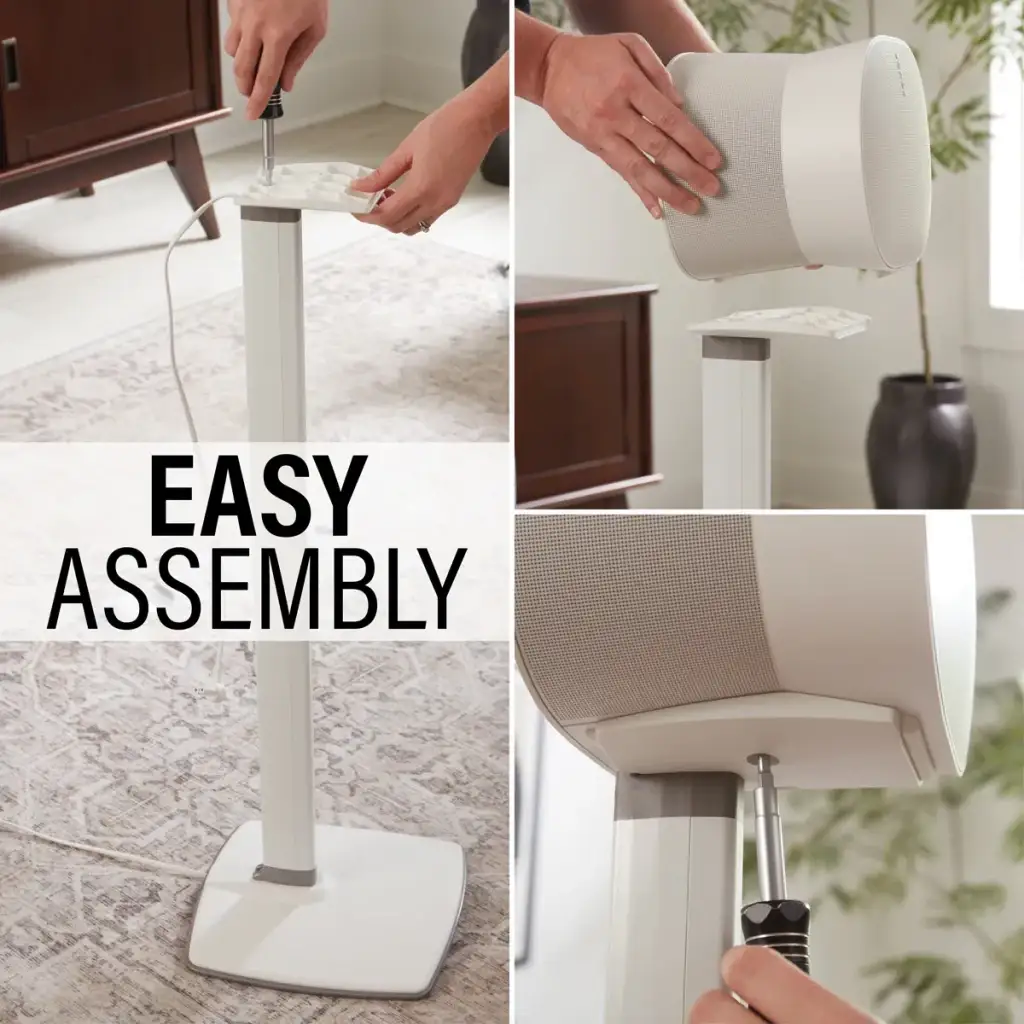
Sanus also positions these stands as a sleek, cable-managed match for the speaker, with “press fit cable management technology” and a “sleek, seamless look” (Amazon specs; SANUS product page). On the retail side, that aesthetic story often matches buyer sentiment. A verified buyer on Best Buy wrote: “Clean aesthetic,” and another said: “Hide the wires, look great with the Sonos 300” (Best Buy). Still, the Sonos Community critique shows that even with good instructions, installing a large Era 300 onto a stand “requires a balancing act unless you have someone to help” (Sonos Community)—a reality check that the clean end result may come with a tense setup moment.
Cross-Platform Consensus
Universally Praised
“Fit and finish is top notch” is a recurring theme in the retail feedback, and it’s not just about looking nice—it’s about confidence. For buyers placing an expensive speaker in the open, perceived build quality is part of safety. A verified buyer on Best Buy said: “Very nice stands. Fit and finish is top notch to go along with easy assembly” (Best Buy). Another echoed the stability angle more directly: “Solid and stable” (Best Buy). For households with kids, pets, or busy walkways, that “solid” feel is the difference between relaxing into a surround setup and constantly worrying about a bump.
The second consistent win is cable management and visual cleanliness. This is the user type that cares as much about the room as the sound: minimal wires, minimal clutter, no awkward speaker perches. A verified buyer on Best Buy wrote: “They are designed specifically to work with them… I like the clean design and small footprint” (Best Buy). Another put it even more simply: “Hide the wires, look great” (Best Buy). The “small footprint” comment is especially telling for apartments or multipurpose rooms, where floor space is precious and a big base can be a dealbreaker.
Ease of assembly shows up again and again, which matters because stands are often bought to avoid wall drilling and complicated installs. A verified buyer on Best Buy said: “Easy to setup… very sturdy and built well” (Best Buy). Another summed the emotional payoff: “Easy to assemble, looks great, perfect height, high quality. what’s not to like?” (Best Buy). For buyers who want “15 minute” assembly claims to be real life, that cluster of comments suggests a lot of people do get a smooth build experience.
Even some sound-related comments—while the stand isn’t changing the drivers—reflect what better placement does for real setups. A verified buyer on Best Buy described their use case: “Excellent sound for dolby atmos… The sound is immersive, when listening to music” (Best Buy). That’s the “optimal listening position” promise in human terms: the stand’s value is enabling correct speaker height and placement, not magically upgrading audio.
Common Complaints
Price pressure is the loudest recurring gripe, especially from community buyers who are already paying premium prices for the Era 300 ecosystem. A Sonos Community poster said: “The price of the stands (era 300) is a big issue for me” (Sonos Community). That frustration isn’t just sticker shock—it’s the sense of being cornered by limited options: “there just isn’t a ton of options out there right now” (Sonos Community). For budget-conscious buyers, the stands feel less like a fun upgrade and more like an “accessory tax” imposed by the speaker’s unusual shape.
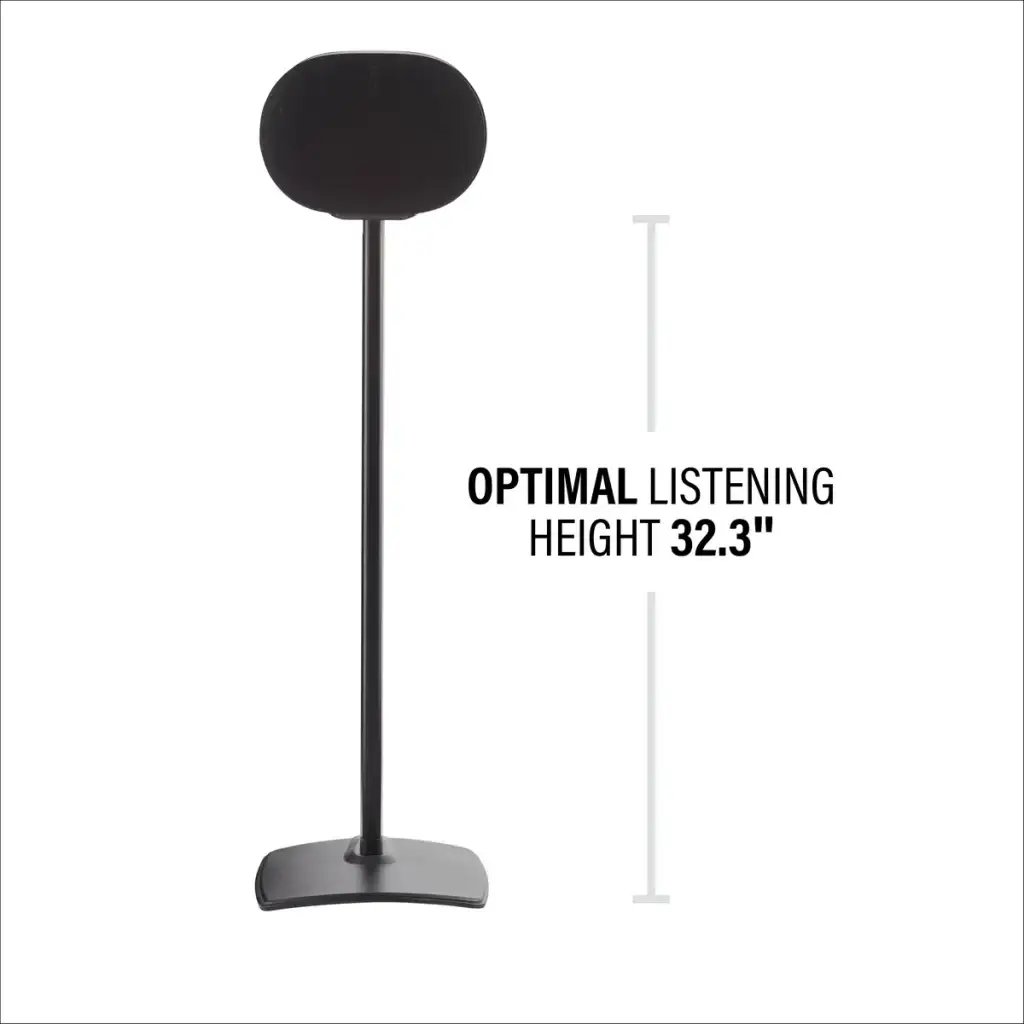
Height is another fault line, and the discourse gets messy because shoppers mix fixed-height and adjustable models in conversation. On Best Buy, one reviewer complained: “Good stand just not adjustable… I could use about another 2 inches” (Best Buy). That review points to a common buyer problem: people discover too late that their ear height, couch height, or surround placement needs don’t match a fixed 32-inch design. In practical terms, this is the buyer who should have been shopping the height-adjustable version—but the pain still reflects how sensitive Era 300 placement is.
The most serious complaint, though, is mechanical: the adjustability itself. A Sonos Community poster wrote that the adjustable Sanus stands “failed to support the weight of the era 300’s,” because “the slide mechanism didn’t lock into place firmly” and the speakers “would slip below the adjusted height” (Sonos Community). For the specific buyer persona who wants height adjustment to dial in Atmos or align surrounds, slippage turns a premium accessory into a constant re-check chore—or worse, a safety risk if it leads to instability.
Finally, setup stress appears in the community narrative. Even if instructions are “quite good,” attaching a large Era 300 can feel precarious. A Sonos Community poster described speaker mounting as “a balancing act unless you have someone to help,” then shared a workaround: “Position the base of the stand under your bed or sofa… if you fumble the speaker… it has a soft landing spot” (Sonos Community). That’s not a complaint about the finished product; it’s a reminder that installation may be physically awkward for solo installers.
Divisive Features
Adjustable height is both the main selling point and the main risk, depending on which user story you believe. Sanus describes “17 inches of effortless sliding height adjustment” (SANUS product page), and many retail reviewers celebrate the practical outcome—proper height, better placement, clean look. A verified buyer on Best Buy wrote: “These leave the speakers at a great height and I like that I can angle them” (Best Buy). But the Sonos Community report about slipping height adjustment paints the opposite reality for at least one buyer: “slide mechanism didn’t lock into place firmly” (Sonos Community).
There’s also a split between “perfect height” and “not tall enough,” reflecting how personal placement is. One verified buyer said: “Perfect height” (Best Buy). Another said they “could use about another 2 inches” (Best Buy). Even within positive sentiment, this implies that couch height, room layout, and whether you’re prioritizing seated listening or surround alignment can flip the verdict from “nailed it” to “almost.”
Trust & Reliability
Across the provided dataset, there isn’t a meaningful pattern of scam warnings or fraud allegations tied to these stands; the most “trust” friction is more about confidence in the mechanism and the buying decision itself. The strongest reliability concern is functional rather than transactional: the Sonos Community report that the adjustable stand “failed to support the weight” due to a “slide mechanism” that didn’t hold position (Sonos Community). That kind of claim, if repeated, would directly undermine long-term trust in the product’s defining feature.
Long-term durability stories are limited in the supplied data—there aren’t clear “six months later” follow-ups. What does appear is a long-running brand trust from some retail buyers. A verified buyer on Best Buy said: “Always a brand i have used for my sonos speakers and think they are very good” (Best Buy). That doesn’t prove longevity for this specific Era 300 adjustable model, but it shows why many shoppers default to Sanus when they want something “designed specifically” for Sonos gear.
Alternatives
Only a few alternatives are explicitly mentioned in the data, and they come with sharp opinions. The most direct competitor is Sonos’s own Era 300 stand. A Sonos Community poster called the Sonos stand “an engineering marvel,” praising the minimalist design and saying the “assembled height is perfect… for the vast majority of installations” (Sonos Community). In that same post, the Sanus fixed-height stands were labeled “a non-starter” for surround height needs, and the adjustable Sanus stands drew the harshest criticism for slippage (Sonos Community). For buyers who value “set it once and forget it,” that community narrative leans toward the Sonos-branded stand—assuming the fixed height fits the room.
Wall-mounting is another path, via the Sanus WSWME31 wall mount that offers tilt and swivel (SANUS product page). That option is for users who want a “sleek, seamless look” and are comfortable drilling. The trade is simple: you gain positioning control (tilt/swivel) but give up the portability and flexibility of floor stands.
Flexson is mentioned as a hoped-for option, but with no product feedback—just a buyer waiting: “Flexson has yet to respond my query if they plan on a release” (Sonos Community). In other words, it’s not a real alternative in the dataset—more of a market gap.
Price & Value
The price conversation is unavoidable because it shapes the entire buying psychology around Era 300 stands. On Amazon, the fixed-height pair WSSE32-W2 is shown at $159.99 (Amazon specs). Sanus lists the height-adjustable WSSE3A1 at $199.99 (SANUS product page). That spread sets up a value question: is adjustability worth paying more, or does it introduce risk?
Community shoppers repeatedly frame price as a burden rather than a luxury choice. A Sonos Community poster said: “The price of the stands… is a big issue for me,” and explained that the Era 300’s form factor limits generic stand options, leaving buyers boxed into premium accessories (Sonos Community). On the retail side, some buyers explicitly justify the cost. A verified buyer on Best Buy wrote: “A little high on price but worth it when paired with the Arc and a pair of Sonos subs” (Best Buy). That’s the “all-in home theater” persona: if the system is already premium, the stand is another premium piece to keep the setup clean and stable.
Resale signals are thin, but there is at least a market price reference: an eBay listing shows $199.99 for a new pair (eBay). That suggests the stands can hold value near MSRP, at least in some listings, which may matter to buyers who upgrade or move frequently.
FAQ
Q: Do these stands actually feel sturdy with the Era 300’s weight?
A: Retail buyers frequently describe them as “solid and stable” and “very sturdy and built well” (Best Buy). However, a Sonos Community poster reported the adjustable version “failed to support the weight” because the “slide mechanism didn’t lock” and the speaker “would slip” (Sonos Community).
Q: Is assembly hard if I’m installing alone?
A: Many buyers say assembly is easy—“easy to setup” and “easy assembly” appear repeatedly (Best Buy). But mounting the Era 300 can be awkward: a Sonos Community poster called it “a balancing act unless you have someone to help” and recommended using a bed/sofa as a safety net (Sonos Community).
Q: Will these help with cable management and a clean look?
A: Yes—this is one of the most consistent positives. Buyers praise a “clean aesthetic,” “small footprint,” and comments like “hide the wires, look great” (Best Buy). Sanus also markets integrated cable management for a “sleek, seamless look” (Amazon specs; SANUS product page).
Q: Are they the right height for surround sound and Dolby Atmos setups?
A: It depends on your room and seating. Some buyers call the height “perfect” (Best Buy), while others wish for “another 2 inches” (Best Buy). Sanus’s adjustable model is designed to solve that by offering a large adjustment range (SANUS product page), but one user reported slippage issues (Sonos Community).
Q: Are they worth the price versus other options?
A: Value perception splits by buyer type. Some accept the premium—“high on price but worth it” in a full Arc/Sub setup (Best Buy). Others feel stuck paying up because “there just isn’t a ton of options out there right now,” making the “price… a big issue” (Sonos Community).
Final Verdict
Buy Sanus Height Adjustable Speaker Stand for Sonos Era 300 - White if you’re the “clean setup” person who prioritizes cable concealment, a matching look, and easy assembly—and you specifically need height tuning for your seated listening position.
Avoid if your main goal is “set-and-forget” height stability and you’re worried about adjustment slippage; the Sonos Community report that the speaker “would slip below the adjusted height” is the clearest red flag in the dataset (Sonos Community).
Pro tip from the community: if you’re installing solo, one Sonos Community poster suggests placing the base under a bed or sofa so the Era 300 has “a soft landing spot” during mounting (Sonos Community).