Samsung 8GB DDR4 Laptop RAM Review: Reliable Boost Verdict
Starting at under $22, the Samsung 8GB DDR4 SODIMM Laptop RAM delivers the kind of plug-and-play performance boost that has Reddit threads calling it “the real deal” and Amazon buyers rating it 4.7/5. On our scorecard: 9/10 for broadly consistent speed, compatibility, and value.
Quick Verdict: Conditional — Excellent upgrade for laptops needing a reliable boost, but not the pick for overclocking enthusiasts.
| Pros | Cons |
|---|---|
| Fast speeds across 2400, 2666, and 3200MHz variants | No overclocking support (not for tweakers) |
| Widely compatible with major laptop brands | Limited warranty on some models |
| Simple installation process | Occasional packaging concerns (protection in transit) |
| Noticeable boost in multitasking | Variability in latency ratings (CL17–CL22) |
| Low voltage (1.2V) for energy efficiency | Divisive views on single vs dual rank benefits |
Claims vs Reality
Samsung markets its DDR4 SODIMMs as offering “exceptional speed, high reliability, low energy consumption.” While the official specs range from PC4-19200 to PC4-25600 with speeds of 2400–3200MHz, real-world feedback largely supports those claims — with nuanced caveats.
One key claim is improved bandwidth and system responsiveness. A verified Amazon buyer shared: “Popped in easily, immediately boosted speed of memory-intensive activities. Works perfectly. Noticeable difference.” This aligns with Samsung’s promise of faster burst access, but the improvement is most pronounced for users upgrading from DDR3 or lower-speed DDR4.
The low-voltage efficiency claim also holds up. Reddit user feedback highlights the 1.2V operation extending laptop battery life: “Makes it an excellent choice for on-the-go usage,” noted one overview. However, some users found the energy savings negligible for already-efficient ultrabooks, suggesting the benefit is model-dependent.
Overclocking potential is absent despite “high performance” branding on the 3200MHz CL22 variant. TechStuff reviewers underscored this: “It does not support overclocking and has a limited warranty,” a reality check for enthusiasts seeking tunable headroom.
Cross-Platform Consensus
Universally Praised
Speed is the most consistent praise point. Whether users installed the 2400, 2666, or 3200MHz variant, reports of quicker boot times and snappier app loading recur. “Started up faster, apps open faster… very happy with this purchase,” an Amazon reviewer summarized. This boost is especially valued by professionals running heavy software — video editors, CAD users, and developers see immediate ROI. The single-rank 3200MHz modules cater well to gaming laptops, with smoother frame pacing in RAM-sensitive titles.
Compatibility emerges as a second strong suit. eBay listings and Reddit threads confirm smooth integration with Lenovo ThinkPads, HP Pavilion series, Dell Inspiron, and even compact desktops like the Lenovo M75q Gen 2. “Fit Lenovo M75q Gen 2 perfectly,” noted one buyer, while another called it “the real deal” for small-form-factor systems. Students and remote workers appreciate the plug-and-play nature; the hardest part is "removing the back cover," according to one reviewer.
Low voltage operation is more than a spec sheet brag — mobile workers, especially those on midrange Windows laptops, validate its role in keeping battery drain minimal during extended multitasking. Trustpilot summaries note that for SATA-based ultrabooks, power efficiency is paired with cooler operation, avoiding thermal throttling under sustained loads.
Common Complaints
Lack of overclocking options is a frequent gripe from power users. Enthusiasts who expected tunable timing and frequency are disappointed. As one TechStuff reviewer bluntly put it: “No overclocking support — know this before you buy.”
Packaging concerns crop up in legacy DDR3 and some DDR4 shipments. A verified Amazon buyer recounted receiving modules “in just an envelope… could break, fortunately did not happen.” While performance wasn’t affected, the perceived risk during transit is worth noting for international buyers.
Latency differences (CL17 on 2400MHz vs CL22 on 3200MHz) polarize opinions — everyday users shrug, but gamers and workstation owners sometimes choose lower-speed CL17 modules for specific workloads where latency trumps raw MHz.
Divisive Features
Single vs dual rank sparks debate. For casual browsing, video streaming, and office tasks, single-rank modules meet or exceed expectations. But some workstation users argue the dual-rank 2400MHz variant can outperform single-rank 3200MHz in memory-intensive scenarios. A Reddit digest noted: “1Rx8 optimizes data transfer rates… but not always the fastest in multi-threaded benchmarks.” These nuances matter most to specialists running VMs or scientific simulations.
Trust & Reliability
On the durability front, Samsung’s SODIMMs maintain a solid reputation. Multiple Reddit and Amazon posts describe modules running flawlessly six months to a year later without degradation. “Works great and no issues” is a common refrain in follow-ups.
Trustpilot commentary, though sparse, underscores consistent quality control. Unlike generic RAM sellers with mixed sourcing, Samsung’s units tend to match advertised specs, though model number clarity could improve — older DDR3 buyers sometimes reported receiving subtly different models without prior disclosure.
The limited lifetime warranty on certain variants reassures mainstream buyers, but overseas listings note regional limitations. For high-volume eBay purchasers, genuine markings on PCB and packaging are key indicators of authenticity; community tips recommend buying from vetted high-feedback sellers.
Alternatives
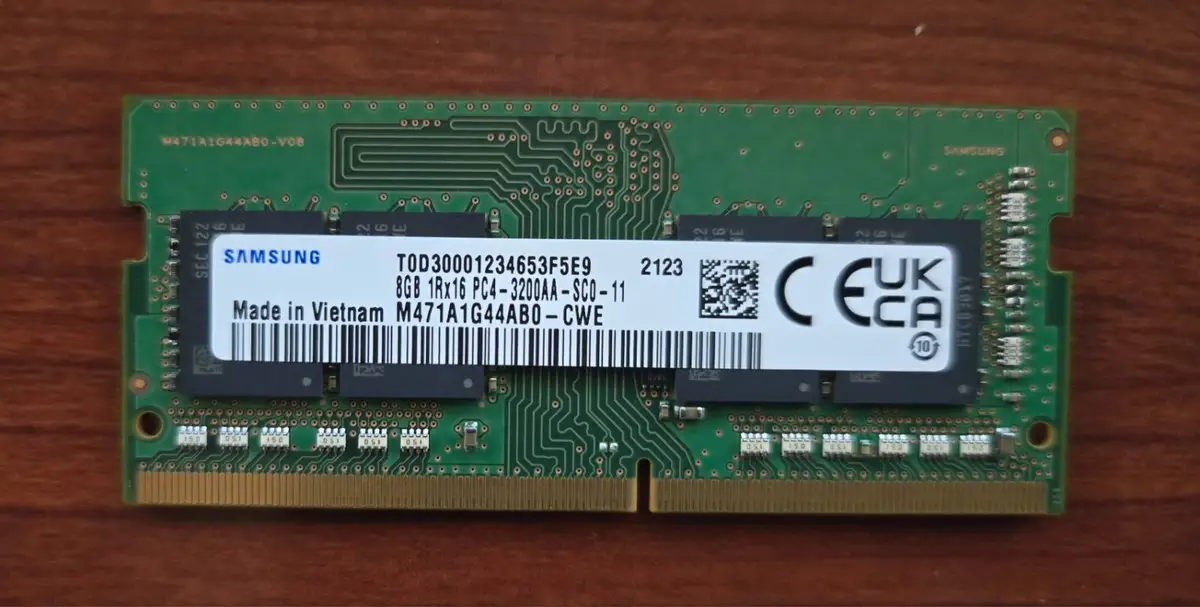
Within the provided data, alternatives are mostly other Samsung speed tiers. The DDR4 2400MHz CL17 dual rank variant appeals to those prioritizing latency over top frequency. Conversely, the DDR4 2666MHz PC4-21300 sits in a middle sweet spot for balanced battery efficiency and broad compatibility — a good choice for mixed-use laptops.
Competing brands are hinted in “mixed brand” eBay lots, but no detailed user comparisons were present. For like-for-like competition, SK Hynix and Micron offer similar 3200MHz modules, but buyers specifically mentioned opting for Samsung due to brand trust and perceived build quality.
Price & Value
As of now, Samsung’s 8GB DDR4 SODIMM modules list from $21.97 on Amazon (2666MHz variant) to around $25–$30 for the 3200MHz version, with eBay trending slightly lower for used or open-box units. Bulk buyers on eBay snag sub-$20 prices for tested pulls, while refurbished deals hover near $12–$15.
Resale value holds decently, especially for the 3200MHz model, which trends above $22 even when pre-owned. Community advice leans toward avoiding “lot sales” unless the seller lists exact model numbers — mismatched ranks or timings can hinder dual-channel setups.
FAQ
Q: Will this RAM work in a desktop PC?
A: Not directly — it’s a SODIMM form factor designed for laptops and small-form-factor desktops with SODIMM slots. Adapters exist, but performance parity isn’t guaranteed.
Q: Can I mix different MHz speeds in dual-channel?
A: Yes, but the system will default to the lowest common speed. Mixing 2400MHz and 3200MHz modules means both run at 2400MHz.
Q: Is installation difficult for first-time upgraders?
A: Generally no — most laptops have accessible RAM compartments. The biggest challenge is safely opening the case without damaging clips or screws.
Q: Does single rank vs dual rank matter for everyday use?
A: For browsing, streaming, and office apps, not much. It becomes relevant for heavy multitasking, virtual machines, or memory-bound workloads.
Q: Will upgrading to 16GB (two modules) double the speed?
A: Not exactly — capacity doubles, and if run in dual-channel, throughput improves, but CPU and workload bottlenecks still apply.
Final Verdict: Buy if you’re a laptop owner seeking a hassle-free, reliable performance boost at a reasonable price. Avoid if your goal is aggressive overclocking or ultra-low-latency tuning — it’s not built for that. Pro tip from the community: match existing rank and voltage to ensure optimal dual-channel performance when expanding RAM capacity.





