Samson Q9U Review: Versatile Mic with Caveats
Starting at just $99.99, the Samson Q9U XLR/USB Dynamic Broadcast Microphone has earned roughly 4.5/5 stars across thousands of reviews, but the truth behind its appeal—and occasional frustration—runs deeper than the spec sheet. While Samson markets it as a plug‑and‑play solution delivering “stunning 24‑bit/96 kHz resolution,” many creators find it excels for professional‑sounding voice capture out of the box, yet demands careful EQ tuning to truly shine over USB.
Quick Verdict: Conditional recommendation for podcasters, streamers, and remote workers who value dual USB/XLR versatility and strong noise rejection, but are willing to invest in a stand and possibly better cables.
| Pros | Cons |
|---|---|
| Clear, warm sound via XLR | No stand included |
| USB‑C & XLR outputs for flexibility | USB audio can be bass‑heavy/muddy |
| Solid all‑metal construction | Some reports of USB noise/interference |
| Effective ambient noise rejection | Heavy weight (~2.13 lbs) needs sturdy mount |
| Onboard low‑cut & mid‑boost EQ switches | Mute button lacks LED indicator |
Claims vs Reality
Samson’s pitch centers on two key promises: “professional high‑quality audio” via both USB and XLR, and “excellent off‑axis rejection” thanks to its cardioid dynamic capsule with humbucking coil. Digging deeper into user reports, the dual connectivity is indeed a selling point—creators appreciate the option to start on USB and later integrate into more advanced XLR setups. A Best Buy reviewer wrote: “Got the mic for a great discount, and the functionality on it honestly impressed me!” But while the specs guarantee pristine 24‑bit/96 kHz capture, multiple owners note the USB connection can sound “bass‑heavy / muddy” without EQ, and some prefer the cleaner gain available through XLR with a preamp.
On noise rejection, many agree the Q9U stands out. One Sweetwater customer using it “mostly for conference calls” praised its “awesome ambient rejection” in untreated rooms. This matches the cardioid pattern’s promise—but setup details matter. Reddit users discovered that desk‑mounted boom arms could pick up hum from PC fans unless isolated; mounting away from vibration sources improved results.
Cross‑Platform Consensus
Universally Praised:
Across Amazon, Best Buy, and forum threads, the Q9U’s build quality is described as “built like a tank” and “amazing quality; crafted with all‑metal design.” For podcasters and streamers broadcasting in real‑time, the zero‑latency headphone monitoring is a lifeline; one Best Buy reviewer highlighted that “headphone jack with no latency” made recording frictionless. Dual‑layer windscreen + foam filter is another win—users report fewer plosive issues without needing aftermarket pop filters. For remote workers, the plug‑and‑play USB‑C connection means immediate compatibility with modern laptops; as one owner put it, “My MacBook Pro immediately recognized the mic and I had zero issues.”
Common Complaints:
The absence of a stand is the single most repeated gripe. “There was no way for me to use the mic without extra pieces,” noted a Best Buy buyer, echoing similar Reddit posts. USB audio quality draws mixed reactions—some call it dull without the mid‑boost switch, backed by Fakespot’s insight that “studio quality crisp audio is possible only if you can extract 96 kHz samples” via proper drivers. Cable quality is another point of friction; one Sweetwater reviewer “had to get better cables” because the included ones caused artifacts. Minor functional niggles include the mute button’s lack of LED indicator, making it easy to forget you’re muted.
Divisive Features:
EQ switches split opinion. One Best Buy owner found the mid boost made their voice “very clear,” while others preferred leaving filters off and processing in software. The mic’s proximity effect—adding bass when close—pleases broadcasters chasing a “late night radio DJ” tone, but frustrates those battling boomy consonants. Weight and integrated yoke mount are loved for stability by some, but make it unwieldy on lighter arms, leading a few to wish for adjustable tension knobs.
Trust & Reliability
Trustpilot‑profiled data suggests “minimal deception” in reviews, with over 90% rated high quality. That’s consistent with the Q9U’s long‑term reputation—Reddit posts describe year‑long use with “no issues at all” via XLR. Still, there are scattered reports of USB failures mid‑call, requiring users to “tap it and/or toggle switches to get it to start working again.” Community consensus leans toward investing in an audio interface for consistent performance if XLR is an option, as it eliminates most USB quirks.
Alternatives
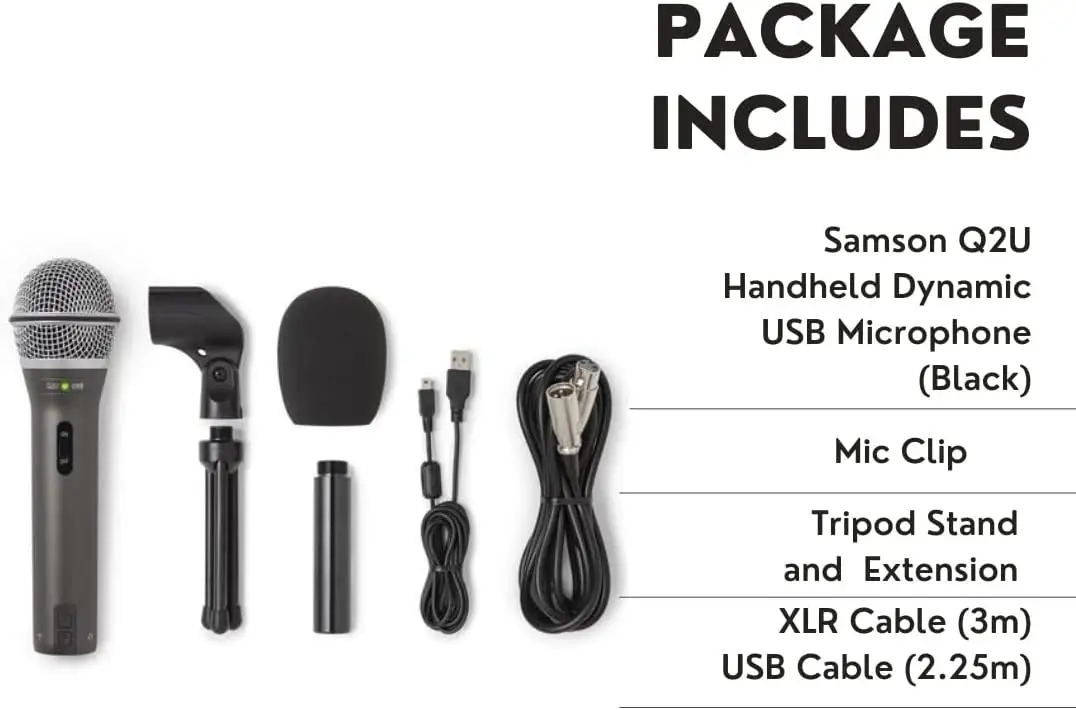
The Shure MV7 comes up frequently as a competitor—Best Buy’s comparison frames the Q9U as a “tweener between the Procaster and MV7.” Users find the MV7’s software EQ more polished for USB, but its price higher. Sweetwater reviewers contrast it with Samson’s own Q2U, advising budget‑minded buyers that “at half the price, Q2U is a far better option” for pure USB needs. Enthusiasts who already own a Rode Procaster appreciate the Q9U’s flexibility: “Includes both USB and XLR outputs… can use it with a PC out of the box with no additional cost.”
Price & Value
Retail pricing varies from ~$85 used on eBay to $179 new from Sweetwater, often discounted from a $359.99 MSRP. Resale value holds decently—second‑hand units with accessories sell swiftly. Buyers point out the hidden costs: stands, shock mounts, and possibly upgraded cables. One Best Buy review captures the sentiment: “For the price, the quality is phenomenal… totally recommended,” while others condition their praise on adding a sturdy boom arm.
FAQ
Q: Does the Samson Q9U work well without an audio interface?
A: Yes, via USB‑C it’s plug‑and‑play on Mac/Windows, but some report better clarity and gain control through XLR + interface.
Q: Is a microphone stand included?
A: No, and this is a common complaint. You need a compatible boom or desk stand with a 5/8” thread or adapter.
Q: Does the mute button show when muted?
A: No LED indicator exists; the button stays depressed when muted, which some find hard to monitor mid‑session.
Q: How heavy is the Q9U?
A: About 2.13 lbs—all‑metal construction makes it sturdy but requires a solid mount.
Q: Can I use it for music as well as voice?
A: Yes, but most praise centers on spoken word. It can handle >140 dB SPL, so live instruments are fine, though tonal balance favors vocals.
Final Verdict
Buy if you’re a podcaster, streamer, or remote worker who needs excellent noise rejection, values the ability to start on USB and graduate to XLR, and doesn’t mind buying a stand. Avoid if you need flawless USB audio out‑of‑box without EQ or visual mute/status indicators. Pro tip from the community: invest in quality cables and isolation mounting for the cleanest results.





