Roku Indoor Camera 360° Review: Budget-Friendly but Flawed
A verified buyer on Amazon summed it up best: “Cool when it works but usually it doesn’t.” The Roku Indoor Camera 360° for Home Security packs 360° panning, smart alerts, two-way audio, and color night vision into an affordable package. Officially rated at 4.5/5 stars on Amazon, user experiences reveal a camera that may be better suited for casual home monitoring than serious security. Based on aggregated feedback, the verdict lands at 6.5/10.
Quick Verdict: Conditional — worth it for casual use or pet/baby monitoring, not for mission-critical security
| Pros | Cons |
|---|---|
| Affordable entry price | Poor video quality despite “Full HD” claims |
| 360° horizontal, 93° vertical motion tracking | Unreliable smart detection of people/events |
| Streams directly to Roku TV or app | Cloud recording frequently cuts out |
| Color night vision | SD card corruption and FAT32 limitations |
| Two-way audio and siren | Connectivity drops even at short distances |
| Easy setup with guided instructions | App playback issues, “video” often just still images |
| Works with Roku Voice, Alexa, Google Assistant | Missed detections and delayed alerts |
Claims vs Reality
Roku’s marketing promises "1080p HD color night vision" with “crystal clear video at all hours.” Digging deeper into user reports, Reddit user feedback paints a different picture. One detailed review explained: "Video quality is very poor... filled with artifacts and blockiness... movement makes the quality even worse." This suggests the compression algorithm sacrifices clarity to reduce file size, and no user-accessible setting exists to improve it.
Another claim—“Smart detection... gives specific alerts for person, pet, or package”—runs into practical hurdles. A Reddit user noted that when set to “person” detection, videos often start only after the subject has entered or even left the scene, missing faces or key details. In their words: "It’s not caching data, so recording starts late... sometimes the video begins after the person is already leaving."
The promise of “instant notifications” also suffers under real-world conditions. Multiple users found that connectivity issues, even with strong Wi-Fi, interrupt cloud recordings and kill alerts mid-event. App-viewable clips frequently “cut off suddenly” or downgrade to single frozen frames.
Cross-Platform Consensus
Universally Praised
Many buyers appreciate the budget-friendly versatility for light-duty monitoring. Parents and pet owners benefit most from pan-and-tilt tracking combined with color night vision. A verified buyer on Amazon noted: “I use it just to keep an eye on my dog when I’m at work—panning to wherever she wanders.” Roku’s integration with its streaming ecosystem also receives applause. Users enjoy calling up the camera feed on their Roku TV with voice commands, eliminating the need to pull out a phone.
For renters and casual users, the setup process is a strong point. The guided step-by-step instructions with photos and videos offer a simple, quick install. One buyer described placing it on a tabletop and being “up and running in minutes without drilling or mounting.”
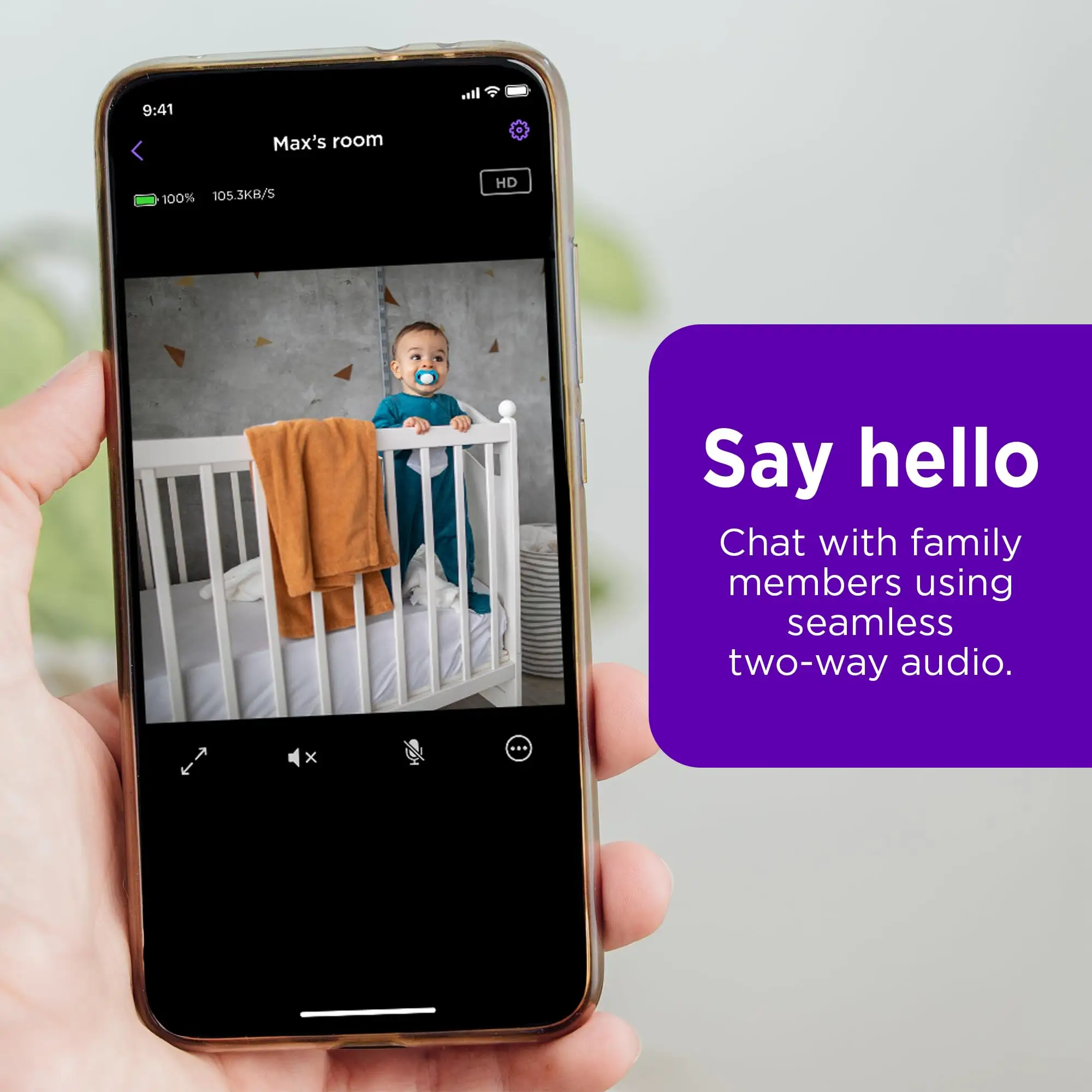
Two-way audio is another highlight for interaction; customers report chatting with family or startling pets off furniture. It even pairs with an 80db siren, which they find “pretty loud” for indoor spaces.
Common Complaints
However, serious security users encounter recurring frustrations. The most widespread complaint is unreliable smart detection and recording accuracy. Roku’s person detection falsely triggered on objects; one Reddit user humorously shared: “It also detected the top of a restaurant soda cup as a person.” This inconsistency undermines its use for identifying intruders.
Connectivity issues rank high in dissatisfaction. Even at 20 feet from the router with max signal strength, cloud recordings often cut mid-scene. When the feed does save, footage on the SD card gets segmented into one-minute clips with time stamps in GMT, forcing manual correction.
Storage reliability is another sore spot—SD cards suffer corruption. Users recount Windows repair prompts failing, and files being dumped into "found.000" folders with the wrong extensions. Despite working fine in the camera afterward, this complicates external review.
Playback within the Roku app often disappoints. Videos labeled as 15 seconds frequently appear as just still frames, often missing the trigger moment. Without download/upload icons, saving these as images requires using device screenshot functions.
Divisive Features
Motion tracking splits opinion. Casual users see novelty in its auto-panning to follow movement, while performance-minded buyers criticize delays and missed frames. Some say it works well for small spaces but loses accuracy through windows due to glare interference.
Color night vision garners mixed reactions. In dim, indoor settings, owners confirm twice-the-light capture as advertised. But compression artifacts persist at night, blunting its utility for identifying faces in low-light security scenarios.
Integration with voice assistants like Alexa and Google Assistant is beneficial for smart home fans, although some consider it non-essential given phone app control.
Trust & Reliability
The camera’s reliability over time raises doubts. Roku Community posts reveal patterns echoing the Reddit review: functions work intermittently, especially for outdoor models. A long-term owner wrote: “Cool when it works but usually it doesn’t… save yourself money and frustration.” Such remarks suggest quality control and connection stability may degrade or remain inconsistent over months.
While no overt scam reports surface, the connection drops and storage corruption problems erode trust—especially if video evidence is critical. Community members advise scanning the market for more dependable brands if security is the primary need.
Alternatives
Interestingly, one Reddit user noted “all the Roku smart home stuff is rebranded Wyze,” hinting that buyers might compare directly with Wyze’s own indoor camera line. Wyze models offer adjustable video quality settings and broader third-party integrations, potentially resolving some compression and storage access issues highlighted here.
Price & Value
Current listings hover around $29.99 to $49.99 for single units, with bundles discounting per-camera cost. eBay resale shows about $20–$40 new, reflecting steady second-hand interest but limited premium value. Buyers seeking bargain surveillance find a sweet spot if expectations are set for monitoring pets, kids, or low-risk spaces rather than securing against determined intruders.
Community buying tips include grabbing sales bundles for multi-room coverage and investing in high-quality SD cards—though FAT32 limitations cap size at 32GB.
FAQ
Q: Does the Roku Indoor Camera 360° record continuously?
A: No. It starts recording when triggered by motion or sound. Continuous recording isn’t supported; for cloud saves of events, the Roku Smart Home subscription is required.
Q: Can it detect motion through a window?
A: Yes, but users report interference from glare and reflections. Accuracy drops in these conditions.
Q: What happens without a subscription?
A: Basic features like live view, alerts, and local SD storage remain free. Subscription adds 14-day cloud storage and advanced smart detection.
Q: Is the video really 1080p HD?
A: Technically yes, but compression significantly reduces visible detail and introduces blocky artifacts in motion scenes.
Q: Will it work with 5GHz Wi-Fi?
A: No. Roku Smart Home devices require a 2.4GHz network connection.
Final Verdict: Buy if you need affordable, easy-to-use coverage for pets, children, or light home monitoring. Avoid if you require reliable, detailed footage for security or evidence collection. Pro tip from community: Use it alongside a more dependable primary security system—think of it as an accessory camera, not your only line of defense.





