Ricoh DB-110 Battery Review: Performance vs Price Verdict
A fully charged Ricoh DB-110 Rechargeable Li-Ion Battery promises up to 200 shots in optimal conditions, but real-world testing reveals shorter runtimes. Reddit user telemach bluntly warned: “Battery life in this camera is terrible… one will last 1 hour depending on usage.” That single hour has sparked a community-wide conversation about whether the original battery’s premium price delivers proportionate value. Across platforms, the DB-110 scores a solid 7.5/10 thanks to reliable performance, but persistent limitations in capacity leave high-volume shooters hunting for spares.
Quick Verdict: Conditional
| Pros | Cons |
|---|---|
| Consistent power delivery | High OEM cost compared to generics |
| Compatible with multiple Ricoh cameras | Real-world runtime often shorter than rated |
| Accurate battery status display | Prone to overheating in hot conditions |
| Compact and lightweight | Generic alternatives may have inconsistent capacity |
| Supports BJ-11 charger and in-camera USB charging | Battery life degrades as pack ages |
| Reliable charging with official gear | No improved capacity version from Ricoh |
| Proven safety compliance | One OEM battery insufficient for heavy shooting |
Claims vs Reality
Marketing highlights its 1350mAh capacity and “long life and consistent power,” touting that it charges without memory effects—ideal for the GR III & GR IIIx. Official specs list 200 images (CIPA), implying comfortable shooting sessions. However, Reddit field reports tell a different story. Multiple users ran practical depletion tests, finding the DB-110 lasted “80–95 minutes” in moderate use before exhaustion.
Another friction point is heat. Telemach noted the GR III’s design lacks vents, making the battery “more prone to overheating” in summer. This contrasts sharply with Ricoh’s emphasis on robustness under “various environmental conditions.” When the camera auto-shuts to protect against heat, swapping batteries becomes the only workaround.
Lastly, Ricoh’s positioning of the DB-110 as a high-value accessory clashes with third-party market realities. While they claim optimal performance, generics from brands like Wasabi, Patona, and DSTE deliver near-par usability at a fraction of the price. On Trustpilot, one verified Wasabi buyer said: “I don’t see a difference compared to the original Ricoh battery… great way to get extras without breaking the bank.”
Cross-Platform Consensus
Universally Praised:
The DB-110’s compatibility range earns applause—supporting GR III, GR IIIx, WG-6, G900, Theta X, and more. This versatility benefits multi-camera owners and corporate users. A verified buyer on Amazon highlighted that it “works in my Ricoh” without triggering warnings, while maintaining correct charge-state display. For travel photographers, the ability to charge in-camera via USB is invaluable. Community posts frame this as the “best friend for photographers on the go” because you can skip lugging a separate charger.
Its accurate battery meter integration is another win. DSTE’s 2000mAh alternative retains this feature, displaying correct remaining times. This precision is vital for event shooters needing predictable depletion patterns.
Safety compliance is also universally noted. Ricoh’s adherence to CE/UL/RoHS standards reassures cautious buyers. The company warns that “damage caused by rechargeable batteries from a third-party manufacturer is not covered by the warranty,” making OEM purchases a peace-of-mind option for professionals working on critical assignments.
Common Complaints:
By far the loudest gripe is short runtime. Multiple Reddit voices compare GR III battery life unfavorably to earlier GR II units, with one user summarizing: “Depending on usage one will last 1 hour.” Frequent LCD use, cold conditions, or on/off cycling accelerate this drain. For concert photographers, that’s disastrous—one UK-based user shared their DB-110 died “before the concert you’re photographing does.”
Heat sensitivity compounds the problem. In hot sun, shooters report premature shutdowns as the battery’s temperature spikes. This especially frustrates street photographers who lose momentum mid-session.
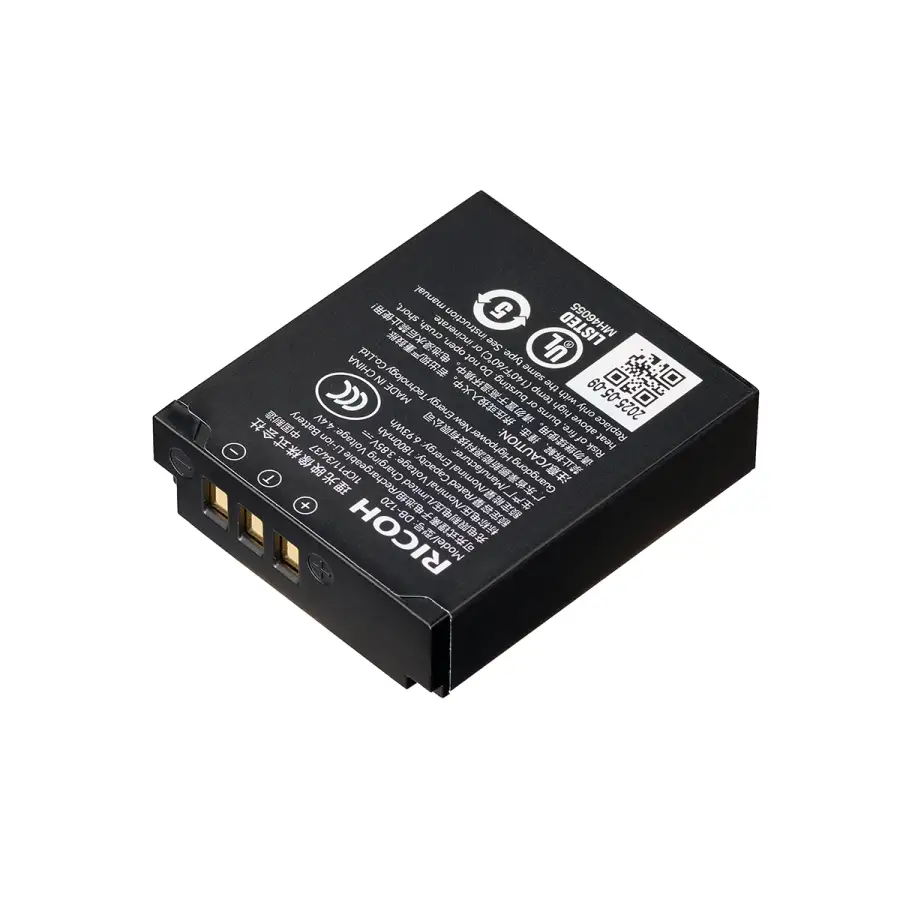
Price-per-unit sparks recurring frustration too. At ~$40 OEM, photographers feel compelled to explore generics like Jupio or Cameron Sino, despite occasional warnings about overheating risk. One pragmatic Reddit user admitted buying a two-battery set with charger “for a quarter the price of one original Ricoh spare” without checking specs.
Divisive Features:
Third-party compatibility splits opinion. While Wasabi and Patona earn praise for value, reliability advocates prefer OEM strictly. A Trustpilot reviewer notes Wasabi keeps “over 90% after a couple weeks” but concedes their charger “gets batteries to about 80%.” Power purists reject the idea of partial charge, while budget-conscious shooters accept it as “enough to get through some shoots.”
Capacity claims are also contested. The OEM’s 1350mAh rating feels modest, prompting the rise of 2000mAh generics. Some users swear by the extended life, while others suspect these ratings are inflated and potentially risky under continuous load.
Trust & Reliability
Concerns about counterfeit or unsafe cells emerge occasionally, but no verified buyer reported actual fire incidents—despite warnings that smoke could appear from low-quality batteries. Long-term OEM users describe sustained performance across months, with the major degradation factor being repeated cycles rather than manufacturing flaws.
Wasabi earns repeated trust mentions: “I’ve used Wasabi batteries for years in Canon APS-C and FF cameras… never had a serious problem.” However, their included charger receives criticism for weak state indication and undercharging, forcing users to complete charging via the camera’s USB.
Alternatives
Cameron Sino (1200mAh) and Jupio (1270mAh) emerge as credible mid-tier substitutes—delivering 67–75 minutes runtime at roughly 70% savings over OEM. Wasabi offers bundles that undercut Ricoh’s price dramatically, with Trustpilot users calling them “better quality than most other third party products.” DSTE’s 2000mAh variant caters to endurance seekers, claiming “longer than the original battery” between charges, albeit without the Ricoh logo.
Price & Value
eBay listings show DB-110 prices ranging widely—from $5 used to ~$70 new, with average street price near Ricoh’s $40 official tag. Export markets push higher; in Australia, it can reach AU$51 before discount. Resale appeal is modest due to wear sensitivity, but unopened units retain strong demand given OEM scarcity in some regions.
Community buying tips emphasize securing at least two spares. For frequent shooters, pairing OEM with a reliable generic fleet balances cost and performance. A Reddit veteran summed it up: “If you care about your wallet, buy Jupio or Cameron Sino… if you can afford, buy as many originals as you can because you will need many.”
FAQ
Q: How many shots does the DB-110 support in real conditions?
A: While Ricoh rates it for 200 shots under CIPA standards, users often see 60–95 minutes of active use depending on shooting style, environment, and screen usage.
Q: Can I charge the DB-110 without the BJ-11 charger?
A: Yes. The GR III and GR IIIx support in-camera USB charging, which is favored by travelers to avoid extra gear.
Q: Do third-party DB-110 replacements work reliably?
A: Many do. Brands like Wasabi, Patona, Jupio offer solid compatibility, though expect slightly reduced runtime or partial charges with certain non-OEM chargers.
Q: Is overheating a common issue?
A: In hot environments, yes. Users report OEM DB-110 can cause auto-shutdown in GR III due to heat, especially during summer street shooting.
Q: Does Ricoh cover damage from third-party batteries under warranty?
A: No. Ricoh explicitly states that issues caused by non-original batteries are excluded from warranty coverage.
Final Verdict: Buy if you’re a GR III/IIIx owner who prioritizes safe, reliable performance over budget, especially in warranty-sensitive work. Avoid if you shoot high-volume sessions without backup batteries—runtime will hold you back. Pro tip from the community: pair one OEM with two reputable generics to maximize uptime without overspending.