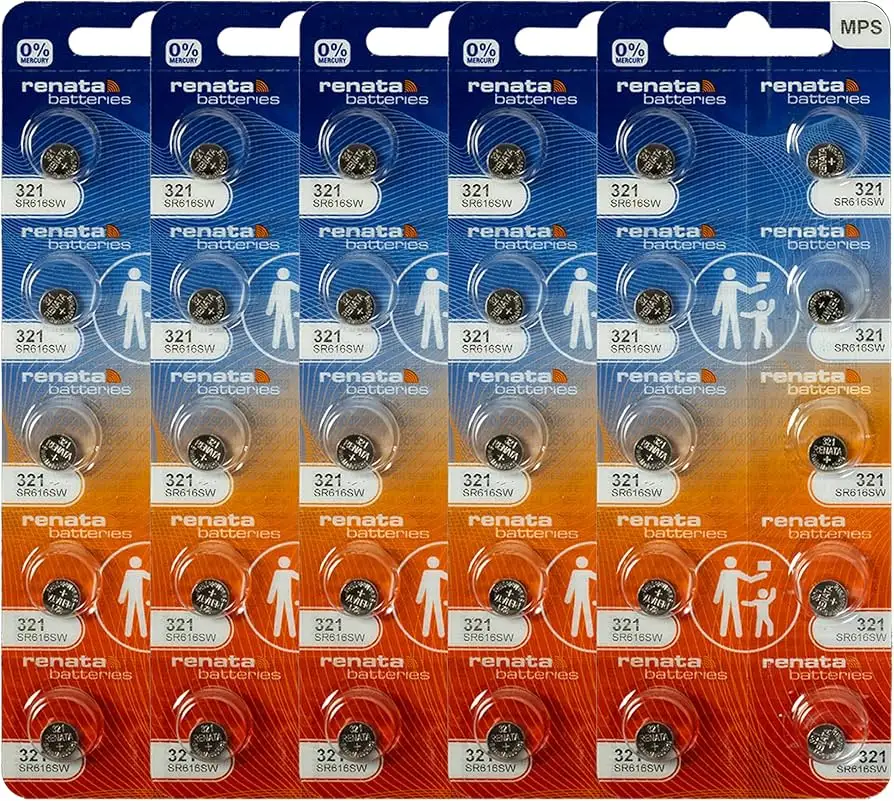
Renata Watch Battery 321 Review: Reliable but Shelf Life Caveats
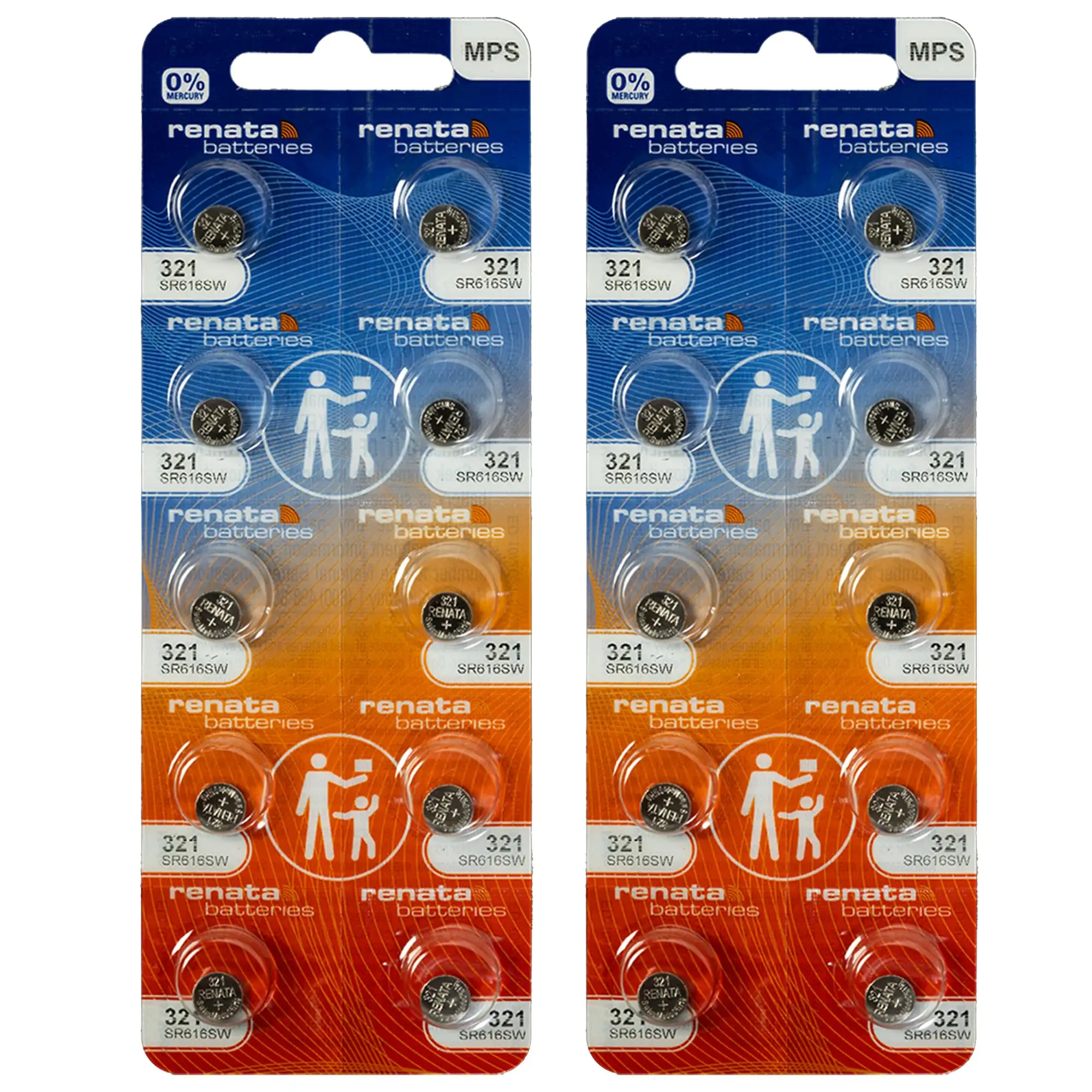
Starting at under $4 for a 2-pack, the Renata Watch Battery 321 (SR616SW) has built a reputation for Swiss precision at bargain prices—and it consistently scores high with users, earning ratings as strong as 4.6/5 on Amazon and 4.7/5 on Etsy. When Reddit users praise it as “the highest quality for the lowest price” with shelf life stretching to 2025, it’s hard to ignore. This battery's appeal lies in the marriage of long-lasting performance and trusted manufacturing heritage, putting it at the top of many watch repair enthusiasts’ lists.
Quick Verdict: Conditional Yes — Excellent choice for watch owners who value reliability and leak resistance, but some reports of shorter-than-expected shelf life mean bulk buyers should plan usage carefully.
| Pros | Cons |
|---|---|
| Swiss-made quality with <1% failure rate | Limited shelf life (~2 years reported by some) |
| 0% mercury, silver oxide—less leak risk | Occasional shorter run-time in isolated cases |
| Widely compatible with watches, calculators, remotes | Longer shipping times for certain sellers |
| Affordable compared to local retailers | Hard to find in brick-and-mortar stores |
| High capacity retention during storage | Minor cases of low charge on delivery |
Claims vs Reality
The marketing promises “superior leakage resistance” and “high capacity retention on storage.” Reddit user comments suggest this isn't just hype: one noted, “Renata contain powder so won’t leak unlike the others which contain liquid… less risk to the internals if there is a leak.” This leak-proof design especially benefits owners of vintage or high-value watches, where internal damage could be costly.
Renata also claims “Swiss quality and consistently great performance, battery after battery.” Many Trustpilot and Amazon buyers back this up, including one verified buyer who said: “Battery was exactly as advertised, and put new life back into a 4-year-old watch of mine that requires this particular battery.” However, digging deeper reveals occasional contradictions, with a Reddit review of the 2-pack cautioning: “Some customers experienced poor performance… delivery time may be longer than expected.”
For longevity, the official capacity (15 mAh) suggests stable run-time, but a Reddit post flagged a “limited shelf life of two years” despite packaging expiring in 2025—indicating real-world storage conditions could affect viability faster than stated.
Cross-Platform Consensus
Universally Praised
Renata’s leak resistance is a standout across sources. Watchmakers on Reddit stress that silver oxide construction and mercury-free makeup help prevent corrosive damage. For collectors with dozens of quartz watches, this makes the battery a safer bet—one Reddit user detailed having “about 80 watch batteries to change… it will be Renata all the way.”
Compatibility impresses too. Amazon reviews highlight smooth installation: “They fit my 2 watches perfectly and worked well… costs a lot less than buying them at retailers.” From calculators to car remotes, Renata’s cross-device versatility is widely appreciated. For hobbyists, the simplicity matters—quicker replacement means less downtime.
Affordability compared to retail prices is another constant praise point. A Trustpilot entry explains: “They last as long as any others at a fraction of the price… Duracell at Walmart is 2-3 times as expensive.”

Common Complaints
Shipping delays crop up often, especially for Amazon Prime buyers expecting faster fulfillment. “The one thing con though—it takes a week to get here even with Prime,” one reviewer admitted. In rare instances, customers received older stock: “Was shipped an old battery… battery they sent to me has 2 years left. Fresh one has 5 or more,” reported an Amazon shopper.
Performance complaints, while limited, are worth noting. Fakespot analysis found “some users have experienced shorter battery life” compared to other brands. This tends to matter most for those using watches with high-drain movements, where replacement frequency can speed up.
Divisive Features
Shelf life creates the biggest split. Enthusiastic buyers believe the 2025–2026 expiration on packaging offers confidence, while others—like a Reddit reviewer warning of “limited shelf life of two years”—suggest labelling doesn’t always match real-world use. This discrepancy affects bulk-buyers most, who risk unused batteries losing charge before deployment.
Trust & Reliability
The Swiss heritage, dating back to 1952, and association with the Swatch Group lends credibility. Trustpilot and Fakespot data both suggest a very low (<1%) failure rate. Review authenticity checks show minimal review manipulation. Long-term durability stories are common: “Battery has lasted for over a year at this point,” noted an Amazon buyer, reinforcing that for standard watch usage, replacement intervals are comfortably spaced.
Reddit’s watch repair forum includes more technical trust points, with users preferring Renata over cheaper Chinese-made alternatives because “silver oxide and powder content reduce risk” of hazardous leaks—a validation from experienced repairers.
Alternatives
Murata’s Japanese 321 counterpart garners praise for “outstanding value” and competitive pricing but has anecdotal reports of compatibility issues even after installation. Maxell’s SR616SW wins admirers for “bringing old watches back to life” with extended expiration dates (2027 in some units), though occasional expired deliveries dent its appeal.
Energizer’s 321 option performs well for standard watch use, praised for “high energy density” but receiving “mixed reviews on durability.” For buyers strictly prioritizing maximum lifespan, Maxell edges ahead; for leak resistance and Swiss heritage, Renata retains the lead.
Price & Value
On eBay US, the Renata 321 ranges from $2.71–$5.95 per unit, often with shipping under $1.20. UK sellers list singles at £1.83–£3.75, with multi-packs offering better unit economics. When compared to brick-and-mortar costs—where individual cells might exceed $4—the online savings are substantial. Amazon buyers regularly highlight DIY replacement savings: “Altogether to replace 2 watches’ batteries only cost me less than $10 (including the wrench).”
The resale market for unopened packs is healthy, particularly for watch repairers reselling to clients. Community tips favor buying smaller packs unless you cycle through watches frequently, to avoid potential shelf-life loss.
FAQ
Q: How long does the Renata 321 typically last in a watch?
A: For standard quartz watches, many users report a lifespan of 12–18 months. Longevity can shorten in high-drain movements or devices under heavy use.
Q: Is it safe to store these batteries for years?
A: While expiry dates may reach 2025+, some users see voltage drop within two years. Store in cool, dry places for best results.
Q: Why choose Renata over generic brands?
A: Experienced watch repairers prefer Renata for leak resistance, consistent sizing, and Swiss QA standards—reducing internal damage risks.
Q: Can it be used in non-watch devices?
A: Yes, it works in calculators, remotes, and small electronics. However, drain characteristics may vary, impacting lifespan.
Q: What shipping delays should I expect?
A: Most orders arrive within a week, but Amazon Prime buyers have noted occasional delays up to 7 days.
Final Verdict:
Buy if you’re a watch collector, repairer, or owner needing reliable, leak-resistant cells at good value. Avoid bulk purchases unless you rotate batteries quickly, due to potential shelf-life drop. Pro tip from the community: Store in climate-controlled conditions and check voltage before use to maximize value.