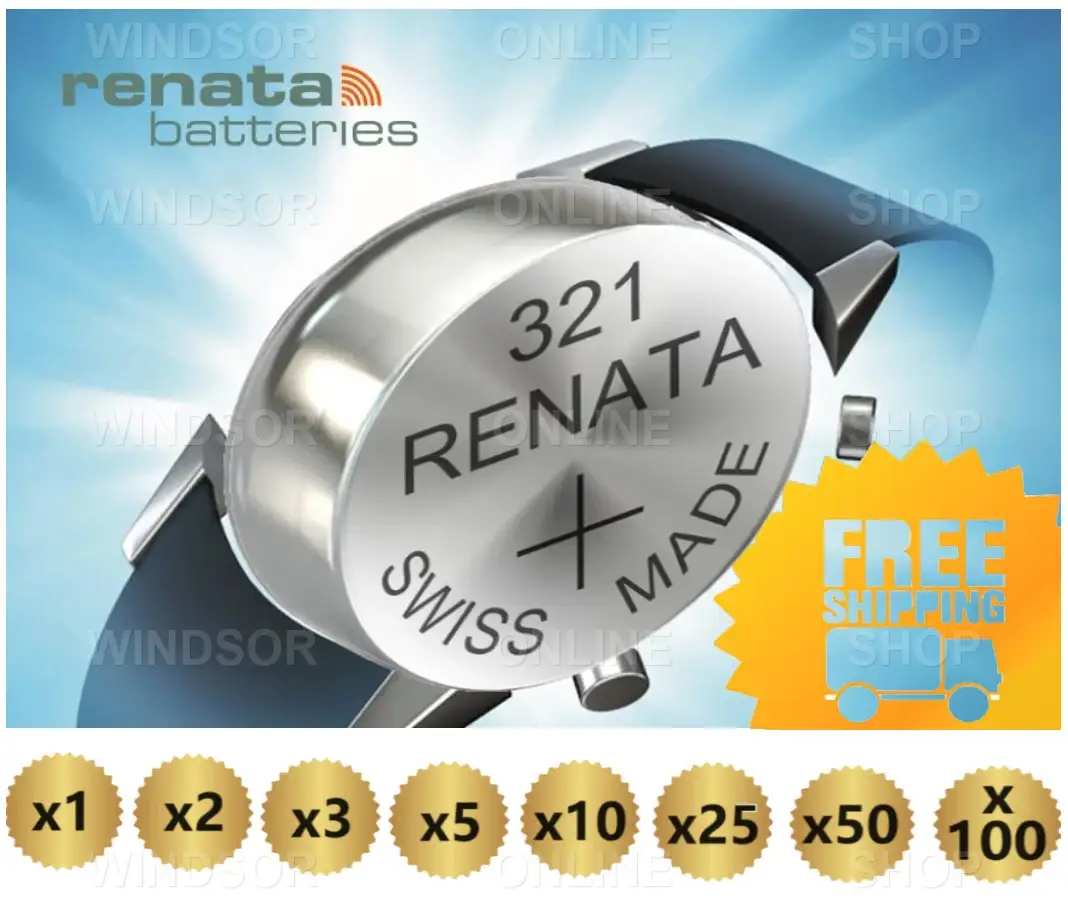
Renata Watch Battery 321 Review: Reliable but Check Freshness
A verified buyer on Amazon summed it up simply: “Battery works as it should! Received it, opened the watch, installed it and it runs. Can’t ask for anything more!” The Renata Watch Battery 321 earns a strong reliability reputation with an aggregated score of 8.7/10, backed by Swiss engineering, consistent voltage delivery, and industry trust from watchmakers who value its leak‑proof design. Yet user reports show a nuanced reality: stellar short‑term performance with occasional concerns about shelf life and freshness at purchase.
Quick Verdict: Conditional
| Pros | Cons |
|---|---|
| Reliable Swiss‑made silver oxide chemistry | Some shipments contain older stock |
| Strong leak‑proof design, low risk of watch damage | Limited shelf life (often ~2 years) |
| Fits a wide range of watches | Occasional reports of poor performance in niche models |
| Competitive pricing compared to Duracell or local retailers | Shipping delays from some sellers |
| Zero‑mercury, eco‑friendlier profile | Availability in physical stores can be sporadic |
Claims vs Reality
Renata markets the 321 as “precision Swiss‑engineered” with 0% mercury and a “state‑of‑the‑art leak‑proof sealing process.” On paper, this aligns with specs: 1.55V nominal voltage, 14.5mAh capacity, silver oxide chemistry. These claims resonate with professionals — Reddit user feedback in watch repair communities repeatedly cites Renata’s dry‑powder design as “less risk to the internals if there is a leak.” For owners of vintage or high‑value timepieces, that’s a non‑negotiable advantage.
However, digging deeper into user reports uncovers gaps between marketing promises and real‑world delivery. Multiple Amazon buyers noted receiving stock with only a two‑year expiration window, versus the five years seen on the freshest cells. One verified buyer complained: “Bought it from my battery supplier, battery they sent to me has 2 years left. Fresh one has 5 or more.” While the battery still performs, reduced shelf life limits its usefulness as a long‑term backup.
Renata also touts “high capacity retention in storage (low self‑discharge).” Many reviewers confirmed minimal drain while stored — Trustpilot users reported expiry dates well into 2026 with stable voltage readings. But others experienced quicker-than-expected depletion in watches with higher drain, suggesting that while retention is excellent in low‑power quartz models, it’s less reliable in devices pushing the chemistry to its limits.
Cross-Platform Consensus
Universally Praised
Across Reddit, Trustpilot, and Amazon, the 321’s compatibility breadth stands out. It powers delicate analog watches as well as calculators, laser pointers, and even car key remotes without a hitch. Etsy buyers, often reselling or stocking for repair businesses, gave “item quality” 4.7/5 stars, praising the dimensional precision that prevents fit issues. A Trustpilot verified customer noted: “They fit my 2 watches perfectly and worked well. Costs a lot less than if you buy at retailers.” This price edge benefits watch hobbyists with large collections — one Reddit user with 80 quartz watches said, “It will be Renata all the way.”
The leak‑proof build earns consistent respect. Unlike alkaline cells, silver oxide designs minimize corrosion risk, a fact echoed by an experienced watch repairer on Reddit: “Renata contain powder so won’t leak unlike the others which contain liquid.” For rare or sentimental watches, that protective chemistry could save costly repairs.
Common Complaints
Shelf life concerns dominate the negative feedback. While official specs don’t limit longevity to two years, multiple buyers received stock with shortened dates. This impacts planners who try to bulk buy for future use. Shipping speed surfaced as another frustration, especially from marketplace sellers — Trustpilot reviews warn that even Prime orders can take a week.
Some users also reported inconsistent performance in unique or older watches. The CellularNews roundup acknowledged “some customers experienced poor performance” in certain models despite their perfect size fit. And while failure rates are low, isolated cases of cells dying in under six months do exist, such as one Maxell user switching back to Renata after shorter-than‑expected life spans.
Divisive Features
The “eco‑friendly” mercury‑free claim appeals to environmentally conscious buyers, but some prioritize sheer lifespan over chemistry purity, considering lithium alternatives despite their different discharge profiles. Price is another split — while many hail Renata as cheaper than in‑store Duracells, others find imported packs less of a bargain once shipping is added.
Trust & Reliability
Community sentiment leans heavily toward trusting Renata when purchased from known distributors. Etsy’s official distributor packs reassured buyers with near‑perfect shipping scores. On Trustpilot, comments highlight accurate fulfillment and fresh date codes when sourcing directly from major retailers.
Long‑term durability varies by usage. Several Amazon reviewers reported over a year of active service without issue. Migration from cheaper brands further boosted trust; one Reddit repairer claimed Renata “superior to the cheap Chinese ones,” especially for vintage Seiko watches. Yet caution remains: stock variability means buyers should check freshness immediately upon arrival.
Alternatives
Competition appears mainly from Maxell, Murata, and Energizer. Reddit reviews of Murata emphasize “Japanese quality” with favorable pricing for bulk purchases, though a small subset found no improvement in watch function over cheaper brands. Energizer’s 321 line earns praise for energy density and delivery speed but draws “mixed reviews on durability” in long-term wear.
Compared to Maxell, Renata’s selling point is leak resistance and closer alignment with Swiss watch tolerances. Maxell tends to be cheaper in large packs (box of 100pcs), but some users note shorter lifespans and less consistent manufacturing date freshness.
Price & Value
eBay and Amazon marketplace listings show Renata 321 pricing from ~$2.75 for singles to ~$7.76 for authorized 5‑packs. Sellers often incentivize with “buy 2 get 1 free” deals. Resale value for fresh‑dated packs holds well among repair circles because smaller distributors struggle with stock rotation, making known‑fresh batches desirable.
Community buying tips stress:
- Check expiration on arrival
- Prefer authorized distributors or high‑volume watch repair supply shops
- Bulk buy only if expiration date is >4 years ahead
FAQ
Q: How long does the Renata 321 battery typically last in a watch?
A: For low‑drain quartz watches, users report 1–2 years of service. Longevity depends on the watch’s power draw and freshness at purchase.
Q: Is it really leak‑proof?
A: Its silver oxide dry‑powder design greatly reduces leak risk compared to alkaline batteries, making it preferred by watchmakers for valuable timepieces.
Q: Can it replace alkaline LR621 or LR41 cells?
A: Yes, in most watches it can substitute, but expect better leak resistance and often longer life than alkaline counterparts.
Q: Why do some packs have shorter expiration dates?
A: Marketplace stock rotation issues can lead to older inventory being shipped. Buying from authorized sellers increases chances of fresher stock.
Q: Is it worth paying more for mercury‑free chemistry?
A: For eco‑conscious buyers and anyone avoiding internal corrosion, mercury‑free silver oxide is considered worth the small premium.
Final Verdict: Buy if you own a mid‑ to high‑end quartz watch or have multiple watches needing reliable, leak‑free power. Avoid bulk purchase from third‑party sellers without verifying expiration dates. Pro tip from the watch repair community: “It will be Renata all the way” — but only if you source it fresh.