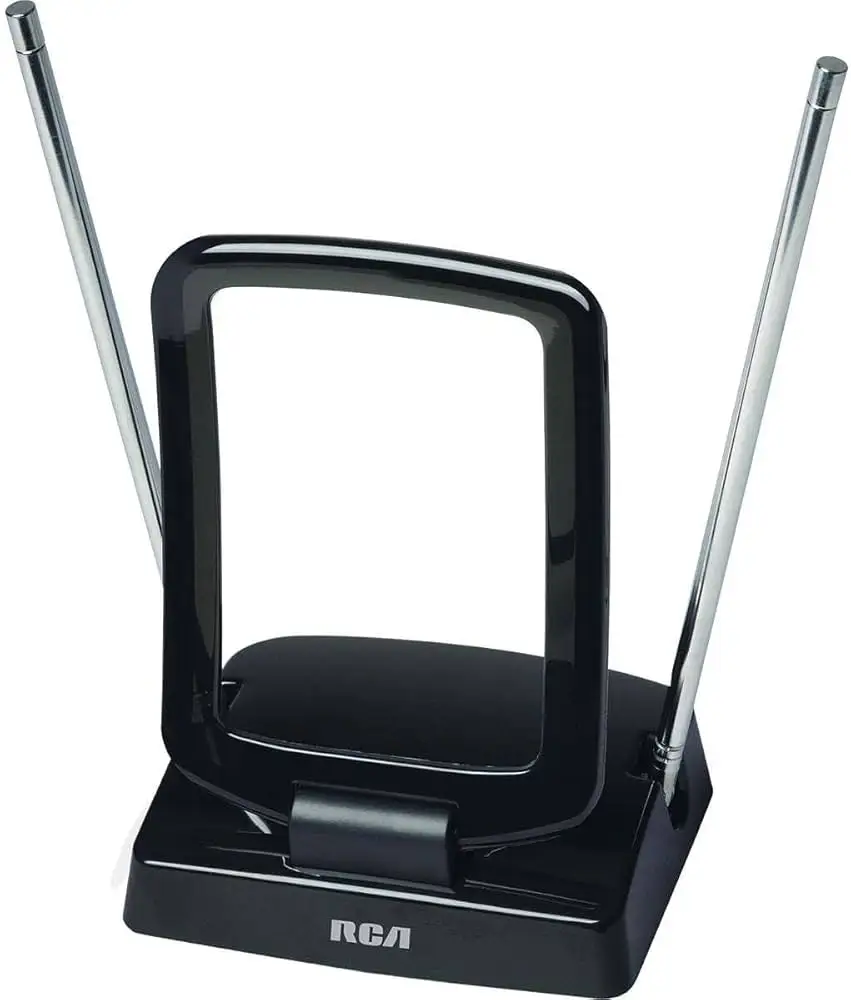
RCA Amplified Indoor HDTV Antenna Review: Urban Winner
The surprising takeaway from hundreds of verified buyer and Reddit posts? The RCA Amplified Indoor HDTV Antenna consistently earns a solid 8/10 for everyday cord-cutters who value strong local reception, yet struggles in fringe or obstacle-heavy locations despite bold marketing claims.
Quick Verdict: Conditional — Excellent for urban/suburban use within claimed range, but performance drops sharply in complex terrain.
| Pros | Cons |
|---|---|
| Pulls in major networks (ABC, NBC, CBS, FOX, PBS) clearly when placed optimally | Signal drops in poor weather or obstructed areas |
| Easy, fast setup with free Signal Finder app | Amplifier is often permanently attached, limiting flexibility |
| Variety of form factors (flat panel, ultra-thin, rabbit ears) | Frequent repositioning needed in some homes |
| SmartBoost tech improves fringe signal reception | Some models fail to lock certain channels (CBS/PBS) even in strong areas |
| Affordable and good value compared to premium brands | Bulkier than some non-amplified competitors |
| Works well as streaming backup solution | Rabbit ear models can be visually intrusive |
Claims vs Reality
Marketing consistently promotes "up to 55-65 mile range" and "360-degree multi-directional reception", along with SmartBoost technology to amplify weak signals. RCA promises both UHF and VHF reception and “the highest quality picture and sound.”
Digging deeper into user reports, this range is generally achievable only in clear line-of-sight conditions. A verified Best Buy buyer detailed: "I am able to view all the broadcast channels in a 60 mile radius, exactly as advertised… every now and then I lose a channel, then I have to slightly rotate, sometimes move it around." While urban and suburban users often praise performance, rural homeowners in hilly terrain report noticeably fewer watchable channels.
The “True 360° reception” claim is polarizing. Reddit user feedback revealed that omnidirectional placement doesn’t guarantee optimal reception indoors: "It’s not the greatest. I put it behind a window and it requires frequent adjustment… would not get a strong enough signal under the TV." In contrast, attic installations—despite no rotational capability—showed consistent results with dozens of channels accessible.
RCA’s SmartBoost technology promises cleaner gains over competitors’ amplifiers by reducing amplified noise. Many buyers agree; one noted it "brings in a couple stations I did not get before… cable was long enough to put antenna in window." However, Tom’s Guide testing found amplified RCA units still fell short of top performers like Mohu Curve 50 in total reliable channel count.
Cross-Platform Consensus
Universally Praised
Urban dwellers within moderate distance of towers benefit most. A Northeast Cincinnati user reported: "Pick up 60+ stations… also stations in Dayton in the opposite direction." For apartment users, discreet flat models like the ANT1450B pleased those avoiding outdoor installs: "Once you get reception you never have to move it… stationary."
Ease of setup regularly earns high marks. A verified Best Buy customer shared: "Bought as bundle with Chromecast. Easy setup. Picture quality excellent." The included Signal Finder app, though not predictive of reception from the exact spot, helped beginners aim their antenna with confidence.
SmartBoost's impact was particularly appreciated by mid- to long-range suburban users who struggled with cheaper, non-amplified models. As one Amazon reviewer put it: "Now my signal seems much stronger… very few pixel problems from a weak signal."
Common Complaints
The most frequent grievance is inconsistent reception across all claimed channels. Tom’s Guide couldn’t tune in nearby CBS/PBS affiliates despite strong signal indicators. Best Buy reviews echo this: "All the channels except Fox and CW work without raising the antenna 'ears'. Annoying in windy, stormy weather."
Repositioning, sometimes day-to-day, is another sore point for omni designs placed indoors. Reddit users described “frequent adjustment” when not placed near a window. Rabbit-ear models drew criticism for their bulk and visual presence despite functional gains in VHF reception.
Permanent, non-detachable amplifiers caused frustration when users suspected over-amplification or wanted to bypass the amp to troubleshoot noise issues. The inability to swap cables on some flat RCA models was viewed as a longevity concern—particularly if damaged.
Divisive Features
Indoor amp versus attic or outdoor installations split opinion. While attic users reported “rock solid” results without an amp, indoor-only buyers sometimes found the extra gain essential. Weather impact was accepted by many as normal for OTA—but users in coastal or windy regions expressed dissatisfaction.
Similarly, value perception varied. Some were thrilled at snagging 50+ channels on a $12 clearance buy, while others concluded: "It’s just okay… has a hard time bringing them all in consistently enough to justify a higher rating."
Trust & Reliability
Long-term posts suggest durability is solid for static indoor setups. Reddit’s attic installation success stories highlight longevity: "Components will last forever since it’s totally out of any ugly weather conditions."
Trust concerns are minimal; resale markets on eBay show consistent value retention. However, the permanent amp issue raises a mild reliability flag—damage to fixed cables could mean replacing the entire unit.
Alternatives
The Mohu Curve 50 emerges in data as the top amplified competitor, winning on total watchable channels in Tom’s Guide tests, albeit at double the price of RCA. Antop HD Smart Antenna SBS-301 also produced similar reliable channel counts to RCA—but again at higher cost. Reddit users sometimes suggested Winegard FreeVision for indoor use when RCA flat models underperformed in certain layouts.
Price & Value
Community consensus aligns: RCA delivers strong performance-per-dollar. Clearance deals under $15 drew enthusiastic endorsements—"After a learning curve… shocked this picked up 16 channels… picture better than provider’s HD."
Resale value is modest but stable, with common models reselling from $14–$30 used on eBay, depending on condition and included accessories. Active listings for premium ultra-thin amplified units remain in the $50–$70 range.
Buying tip echoed on Reddit: spend slightly more for amplified RCA if you live beyond 20–30 miles from towers. For strong signal areas, non-amplified models are adequate and avoid potential amplification noise.
FAQ
Q: Does the RCA Amplified Indoor Antenna really get 55+ mile range?
A: In optimal line-of-sight conditions, yes. In obstructed areas, user results vary widely—reports from hilly terrain often show fewer watchable channels.
Q: Is SmartBoost technology worth paying for?
A: For suburban and fringe users, many found SmartBoost added 2-4 extra reliable channels. In strong urban areas, benefits are marginal.
Q: How well does it handle VHF channels?
A: Better than many UHF-optimized competitors. Users praise clear PBS network reception where rivals failed, though occasional adjustment may be required.
Q: Can weather affect reception?
A: Yes. Buyers note weakened signals in heavy wind or storms—common to all indoor antennas. Placement near windows can help mitigate.
Q: Is the Signal Finder app accurate?
A: It’s more a tower-location guide than a real-time signal sensor. Helpful for general aiming, but not predictive of channel count from a specific spot.
Final Verdict: Buy if you’re an urban/suburban cord-cutter within roughly 45 miles of towers, want affordable access to major networks, and are comfortable experimenting with placement. Avoid if you expect flawless reception in obstacle-heavy environments or want amplifier flexibility.
Pro tip from community: Place as close to an exterior window as possible—"Better reception is achieved if you place it near a window"—and use the RCA app to identify optimal facing direction.