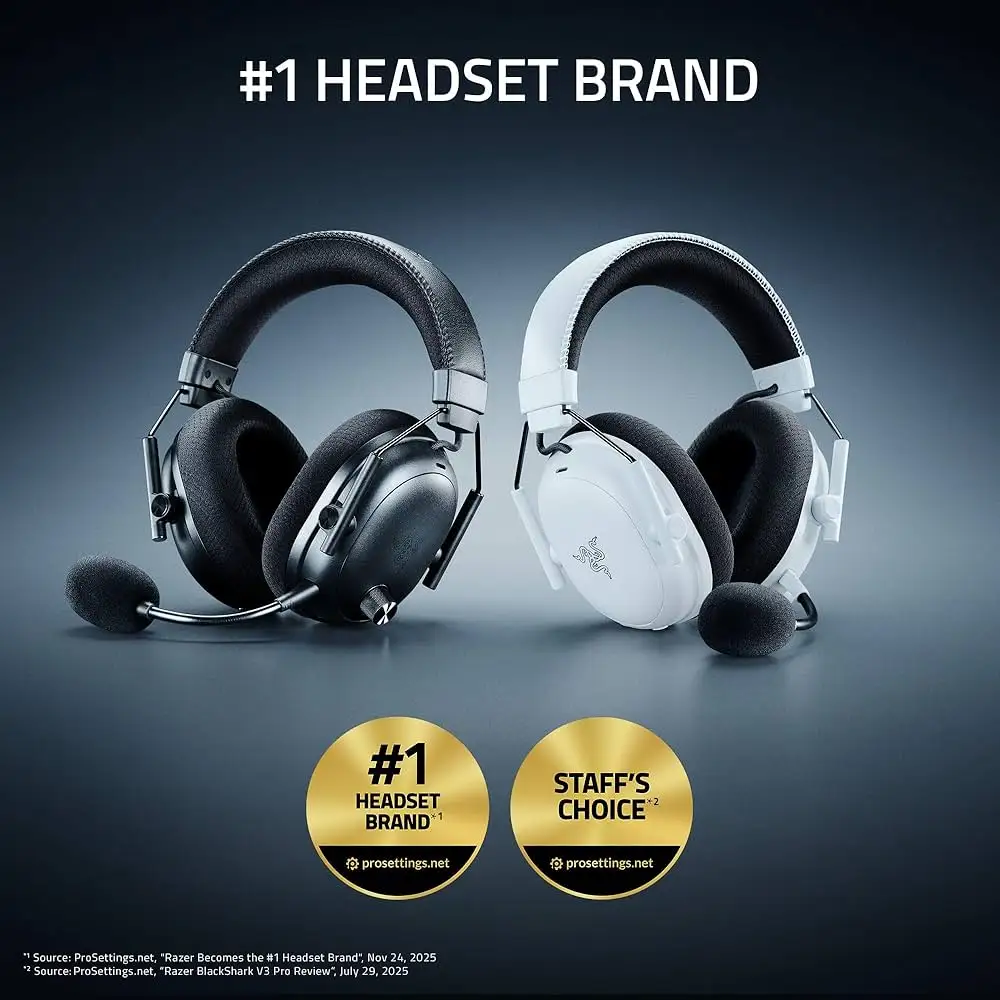
Razer BlackShark V3 Wireless Review: Strong Audio, Few Flaws
The Razer BlackShark V3 Wireless Gaming Headset is drawing some of the highest praise of any Razer headset to date, with multiple reviewers calling it the best wireless gaming headset of 2025. One detailed tech review went as far as scoring it 91/100, stating it “finally dethrones the HyperX Cloud Alpha Wireless thanks to stunning sound, unprecedentedly fast connection, and an incredibly light, comfortable design.” That combination of competitive-grade performance with everyday usability is why many users are switching — and staying — with it.
Quick Verdict: Conditional Yes — Excellent for competitive gamers and audio purists on a mid-premium budget, but battery-conscious buyers and ANC fans should weigh alternatives.
| Pros | Cons |
|---|---|
| Superb audio clarity with titanium-coated 50mm drivers | Battery life shorter than some competitors (70 hrs vs 300 hrs Cloud Alpha) |
| Ultra-low latency 10 ms Hyperspeed mode ideal for esports | 10 ms mode drains battery in ~30 hrs |
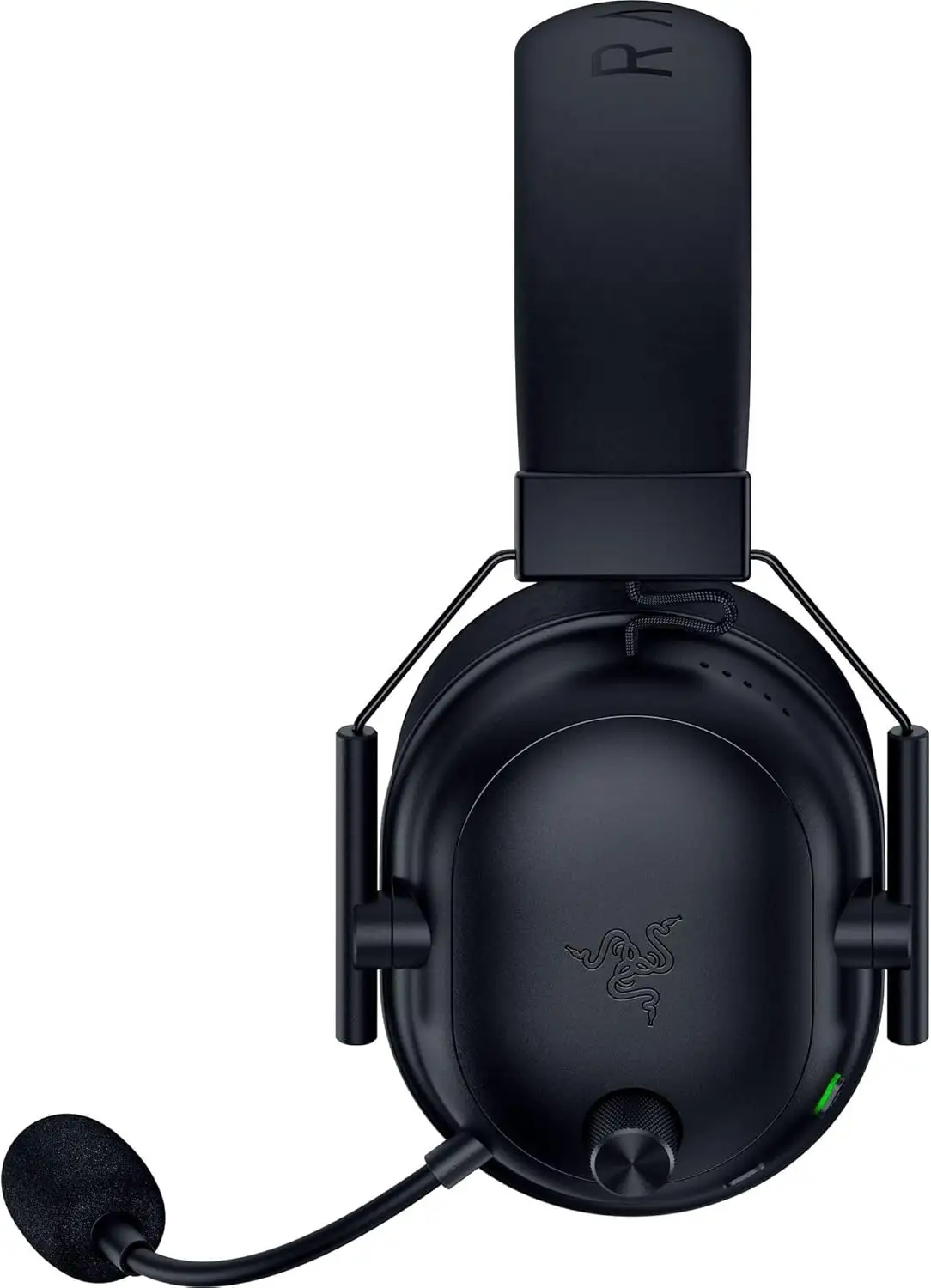
| Lightweight 270g build prevents fatigue in long sessions | No Active Noise Cancellation (ANC) |
| Comfortable hybrid fabric-leatherette ear cushions | Some reports of Bluetooth + dongle connection drops over long calls |
| Pro-tuned FPS EQ profiles for popular titles | Only black color for now (vs white option on V3 Pro) |
| Detachable 9.9mm super wideband mic with rich voice capture | Requires Razer Synapse for full feature set |
Claims vs Reality
Marketing promises ultra-fast Hyperspeed Gen-2 wireless with latency “as low as 10 ms.” In independent reviews, that figure held up for competitive play. A Russian tech review confirmed: “режим с задержкой 10 мс — это серьёзное преимущество в соревновательных играх” (“the 10 ms delay mode is a serious advantage in competitive games”), though they warned it cuts the 70-hour battery life to “just over 30 hours” at moderate volume.
Razer also advertises THX Spatial Audio 7.1.4 for pinpoint positional awareness. A Trustpilot-verified Best Buy buyer backed this up, saying: “The EQ actually does things and the speaker improvements are real — as you adjust the settings, your experience will change noticeably.” However, THX Spatial is PC- and Windows 11-only, meaning Xbox and PlayStation users won’t access all positional layers.
Finally, Razer highlights the ergonomic 270g design and hybrid ear cushions for comfort during “the longest grind.” On this point, cross-platform consensus is strong — from Best Buy reviewers (“never gets uncomfortable even after hours of use”) to Reddit esports enthusiasts who noted zero fatigue in multi-hour scrims.
Cross-Platform Consensus
Universally Praised
The sound quality is the headline winner. Reviewers compared it favorably to headsets twice its price. A Russian reviewer who tested it against the Cloud Alpha Wireless and V3 Pro declared, “BlackShark V3 now offers such a level of detail and clarity that it can be boldly called one of the best gaming headsets you can put on.” Distinguishing footsteps and gunfire in chaotic scenarios was repeatedly mentioned as a decisive edge in competitive shooters.
That clarity is driven by Razer’s Triforce Titanium Gen‑2 drivers, which, while technically different from the V3 Pro’s bio-cellulose diaphragm, showed “no audible difference” in practice according to one expert. Their design reduces harmonic distortion by 50% and improves bass with a 75% larger magnet — details that translate for battle royale players trying to hear faint enemy movement under explosions.
Comfort is not an afterthought. Every platform, from Best Buy to Reddit, featured comments about the plush oval ear cups avoiding the peeling issues common to all-leather designs. A Best Buy reviewer praised that “unlike other headsets that use only synthetic leather… this one avoids that problem completely.” At 270g, streamers and competitive gamers can wear it for marathon sessions without the clamping headaches heavier headsets cause.
The microphone is another winner. The detachable super wideband 9.9mm mic captures a broader frequency range than typical gaming mics, producing what an esports player called “rich, high‑definition” comms. A GamesRadar journalist noted that after testing the cheaper V3 X, her fiancé commandeered the main V3 “for his Marvel Rivals matches” because the mic sounded so much better.
Common Complaints
Battery life is the most consistent gripe — not because 70 hours is objectively poor, but because the Cloud Alpha Wireless has changed expectations with its 300-hour stamina. Several reviewers said the V3 is “only” 70 hours on PC and 48 on console, dropping to around 30 in esports-optimized 10 ms mode. While a 15-minute charge nets 6 hours of play, heavy tournament schedules could still require mid-week charging.
Connectivity quirks cropped up, particularly for those using Bluetooth and 2.4 GHz dongle simultaneously. A Best Buy reviewer liked hearing through “both the dongle and Bluetooth” but noted “the headset does still have the issue of degraded connection after long enough on a call or cutting out after several hours… fixed by a simple restart.”
The lack of ANC divided opinions. Some users didn’t miss it, appreciating the passive isolation from snug ear cups; others, especially those upgrading from the V3 Pro, lamented losing ANC in noisy environments.
Divisive Features
The Razer Synapse software that unlocks custom EQs, mic tuning, and latency modes drew mixed reactions. PC gamers praised the depth and “obvious” changes from profile adjustments. But others disliked requirements like rebooting after connecting new devices. A tech reviewer wished for automatic low-latency mode activation only during games to preserve battery during calls or music.
Weight and build quality sparked faint debate. While the lightweight build was a plus for almost everyone, one buyer on Best Buy simply described it as “not heavy” and “keeps it adjustment just fine” without calling it premium — suggesting that for some, the minimalistic look lacks the heft they associate with high-end gear.
Trust & Reliability
There’s no widespread evidence of scams or fake listings from major outlets, but eBay pricing shows the V3 line holds modest resale value, with used units ranging $40–$50. That indicates a healthy secondhand market.
As for durability, multiple reviewers referenced owning the wired V2 for years without issue and expecting similar longevity here due to the shared design cues. “It feels solid and durable” was how one long-time Razer owner described it after switching from wired to wireless.
Alternatives
The HyperX Cloud Alpha Wireless is the obvious rival, beating the V3 in sheer battery life (300 hours) but slightly trailing in chaotic-scene separation — “when chaos… the Triforce drivers shine,” noted an expert who has used both. HyperX’s sound signature remains warmer and bass-rich, which some prefer for music.
Audiophile gamers with larger budgets continue to point to the Audeze Maxwell, with planar magnetic drivers offering “goosebump‑inducing” music playback. For esports, however, the Audeze’s weight and higher latency can be drawbacks.
On the budget end, Razer’s own BlackShark V3 X Hyperspeed echoes the comfort but was widely criticized for hollow sound and a “quiet mic.” GamesRadar’s reviewer said she’d “much rather stick to… Barracuda X Chroma instead,” making the full V3 a clear upgrade in both mic and audio presence.
Price & Value
Official pricing on Razer’s site lists it at $149.99, but seasonal deals have dropped it near $64–$99 — aggressive for a headset that goes toe-to-toe with $200+ models. Given the $250 V3 Pro mainly adds ANC and a slightly larger mic, reviewers see the base V3 as the “sweet spot” for value.
Resale activity on eBay suggests stable demand, with refurbished or used units finding buyers quickly. Community buying tips often include waiting for Razer’s End-of-Season Sale or Amazon Prime Day for sub‑$100 new stock.
FAQ
Q: Does the 10 ms low-latency mode work on console?
A: Yes, Xbox and PlayStation users can access Hyperspeed Gen‑2 wireless low‑latency mode via the dongle, but THX Spatial 7.1.4 remains PC/Windows‑exclusive.
Q: How comfortable is it over long sessions?
A: Multiple users report wearing it for hours without discomfort thanks to the 270g weight and hybrid ear cushions that avoid heat buildup and peeling.
Q: Can I use Bluetooth and 2.4 GHz at the same time?
A: Yes. You can mix audio from both, switching modes via the Smart Switch button. Some users report connection dropouts after long calls, fixed with a restart.
Q: How does the mic compare to other gaming headsets?
A: The detachable 9.9 mm super wideband mic captures a wider frequency range, delivering rich, clear comms that esports players and reviewers rank among the best.
Q: Is there Active Noise Cancellation?
A: No — and some reviewers actually prefer the passive isolation to avoid ear pressure ANC can cause. ANC is available on the V3 Pro only.
Final Verdict
Buy if you’re a competitive gamer or streaming enthusiast who values pristine audio imaging, a superb mic, and feather-light comfort over maxed-out battery endurance or ANC. Avoid if you need weeks-long battery life without charging or play mainly in loud environments where ANC is essential.
Pro tip from the community: Keep the Hyperspeed 10 ms mode off for casual use to preserve battery; enable it only when split-second advantage matters most.