PYLE Portable Megaphone Review: Loud, But Reliability Risks
A customer summed up the appeal in three words: “be heard loud”—and just as many threads orbit the same worry: will it keep working. PYLE Portable Megaphone Speaker PA Bullhorn lands as a Conditional buy for loud, occasional crowd direction, but reliability and battery/contact quirks show up often enough to matter. Score: 7.2/10.
Quick Verdict
Conditional — strong volume and useful siren features, but plan for battery management and possible reliability issues.
| What buyers care about | What feedback suggests | Evidence (source) |
|---|---|---|
| Loudness / reach | Often described as powerful enough for events and noise | BullhornMegaphone.info; ShopSavvy TLDR |
| Siren usefulness | Consistently framed as attention-grabbing | Amazon specs; BullhornMegaphone.info |
| Ease of use | Simple modes, but some confusion about indicators/controls on related Pyle gear | PyleAudio reviews (PBMSPG50); Pyle Q&A |
| Battery experience | Battery orientation/connection issues appear in Q&A | PyleUSA product Q&A |
| Durability | Some reports of malfunctions “shortly after use” | ShopSavvy TLDR |
| Value | Often positioned as “good for the money” | PyleAudio reviews; ShopSavvy TLDR |
Claims vs Reality
The marketing language leans hard on range and crowd-control authority. For PYLE Portable Megaphone Speaker PA Bullhorn, official listings describe “50 watts” with an “audio projection range” variously stated as “over 1,700’+ yards” (Amazon listing text) and “be heard up to 1200 feet away” (Amazon feature bullets). Digging deeper, that mismatch matters because users and reviewers repeatedly stress conditions: terrain, background noise, and expectations.
On the community side, BullhornMegaphone.info cautions that even an “advertised” long distance is “very dependent on the terrain,” warning not to expect clarity through dense woodland—context that softens the “one mile” style claims found in Pyle’s own PMP50 description (“you’ll be heard up to one mile!” on PyleAudio). A recurring pattern emerged: buyers treat the range figure as a best-case headline, while community write-ups frame it as situational.
The second big claim is convenience: battery operation plus optional DC power. While PyleUSA describes a DC 12V adapter connector, the support Q&A shows friction in real use. One user asked, “how to put in batteries. i’ve tried both ways and it doesn’t work,” and another complained, “does not work with batteries. i just bought new c batteries.” The official responses push “make sure the batteries are in the right orientation,” and “check the orientation of the battery,” suggesting the design is sensitive to correct placement—or that battery contacts can be a failure point.
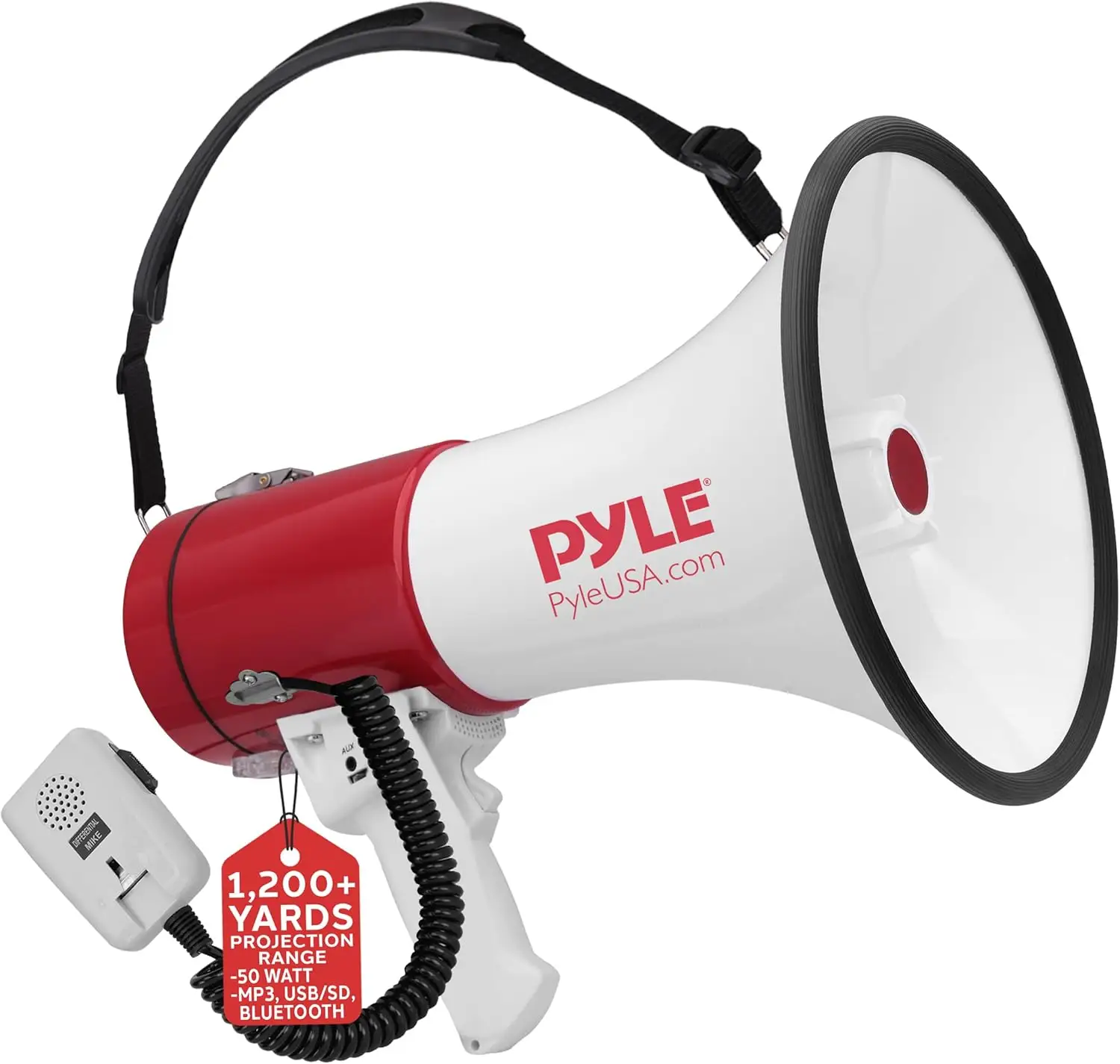
A third claim is reliability and build. BullhornMegaphone.info praises Pyle megaphones as “sturdy” with “solid construction,” including an anecdote: “i have personally dropped a pyle megaphone (it was a pmp 50) on a concrete floor, and was pleased to see it didn’t crack.” But an opposing thread exists in aggregated review summaries: ShopSavvy’s TLDR notes “notable issues regarding durability and reliability, with many customers reporting malfunctions shortly after use.” While marketing emphasizes ergonomics and improved battery life, the feedback suggests performance can be excellent—until it isn’t.
Cross-Platform Consensus
Universally Praised
The strongest through-line across platforms is simple: people buy a bullhorn to cut through chaos, and many accounts describe these Pyle megaphones as doing exactly that. BullhornMegaphone.info’s write-up on the higher-power line describes the voice projection as the real advantage, stating you can “easily make announcements over engine and background noise, and really make yourself heard” (PMP50 Pro article). For event staff, traffic marshals, coaches, or anyone directing movement, that kind of “heard over noise” story is the core promise—more than any spec sheet number.
Another consistently praised element is the siren as a fast attention switch. Amazon’s specs for the PMP53IN explicitly frame it as a way to “get everyone’s attention fast,” and BullhornMegaphone.info echoes that the “built-in siren” is for “immediately attracting attention or signalling the start of an event.” For school drills, safety teams, or sideline coordinators, a single-purpose, unmistakable alarm tone can prevent long explanations when seconds matter.
There’s also recurring approval of portability and handling—at least in concept. Amazon highlights an “ergonomic grip & light weight” and a strap, and BullhornMegaphone.info similarly describes Pyle units as “sturdy” without feeling flimsy like “cheaper import models.” The persona implication is straightforward: for volunteers and staff who carry gear for hours, perceived sturdiness reduces anxiety about accidental drops or rough handling.
After those narratives, the practical takeaways buyers repeat are the basics: loud output, attention-grabbing siren, and a form factor that feels like it belongs in real event work rather than disposable plastic.
- Loudness stories center on being heard “over engine and background noise” (BullhornMegaphone.info).
- Siren mode is repeatedly described as a quick way to “get everyone’s attention fast” (Amazon specs; BullhornMegaphone.info).
- Build perception is often “sturdy” compared with generic imports (BullhornMegaphone.info).
Common Complaints
Digging deeper into user reports, battery behavior is the most concrete friction point because it stops the product from being a product: no power, no projection. The PyleUSA Q&A includes a blunt complaint—“does not work with batteries. i just bought new c batteries”—and another that points to contact issues: “the batteries aren’t connecting to the coils, so there is no charge. how can this be fixed?” The brand response again centers on orientation, implying that correct installation is either non-obvious or unforgiving.
For buyers who need a megaphone for a one-time event (a rally, a tournament weekend, a safety drill), “battery won’t connect” stories are especially damaging because there’s no time to troubleshoot. The impact is highest for teachers, coaches, and volunteer coordinators who pull it out only occasionally—meaning they may discover contact/orientation problems at the worst moment, not during routine daily use.
Reliability and longevity form the second complaint cluster. ShopSavvy’s TLDR summary warns of “malfunctions shortly after use,” framing durability as the main reason the overall score is “moderate” despite “impressive loudness.” That contradiction—strong output vs. inconsistent lifespan—shows up as the core risk tradeoff in the broader narrative.
- Battery/connection issues: “batteries aren’t connecting to the coils” (PyleUSA Q&A).
- Usability under stress: “i’ve tried both ways and it doesn’t work” (PyleUSA Q&A).
- Durability concerns: “malfunctions shortly after use” (ShopSavvy TLDR).
Divisive Features
One divisive area is the “range” story itself. Official materials throw around big distances (Amazon listing text references “over 1,700’+ yards” for the PMP53IN line item; PyleAudio describes being heard “up to one mile” for the PMP50). Community write-ups are less absolute. BullhornMegaphone.info explicitly warns that a quoted yard figure is “very dependent on the terrain,” which can feel like a correction to anyone expecting a guaranteed, clear mile.
Another divisive point is whether you’re “paying for the branding.” BullhornMegaphone.info notes, “many people feel like buying a pyle you are partly paying for the branding,” but the same piece argues it’s “worth paying a bit more for the reliability and build quality.” That’s the tension: some buyers accept the premium for perceived sturdiness; others see it as paying for the name—especially if they run into early malfunctions.
Trust & Reliability
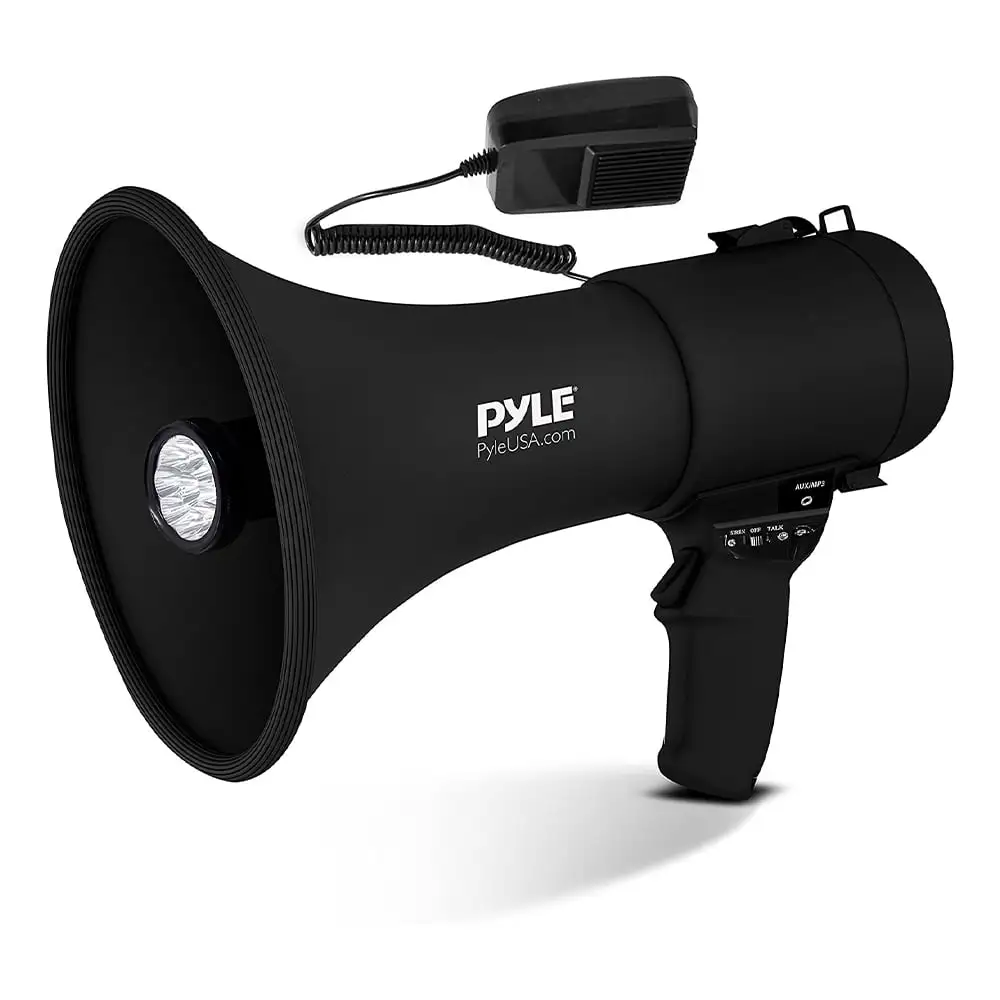
A trust theme emerges less as “scam” and more as “support and consistency.” On Pyle’s own site Q&A, multiple buyers ask for help with batteries, missing parts (“battery sleeves”), and wiring questions. One buyer wrote: “my pmp50 bullhorn came without the battery sleeves. will you send me some—may i purchase some?” and the official response funnels them to email/phone support. That pattern implies buyers should be comfortable with after-purchase troubleshooting and possibly requesting replacement components.
For longer-term reliability stories, the most direct durability anecdote in the provided data is from BullhornMegaphone.info: “i have personally dropped a pyle megaphone… on a concrete floor, and was pleased to see it didn’t crack,” which supports a “physically tough” narrative. But the aggregated consumer summary on ShopSavvy flags the opposite risk: “many customers reporting malfunctions shortly after use.” Taken together, the investigative read is that the casing may survive knocks, but electronics/battery interfaces can still be the weak link.
Alternatives
Only a few competitors are mentioned explicitly in the data, and they’re mostly comparisons to non-branded “generic imports.” BullhornMegaphone.info contrasts Pyle with “cheaper import models” that “feel flimsy and liable to break easily,” even if they “deliver on the specifications on the side of the box.” For buyers choosing between a branded unit and a no-name bullhorn, that’s the primary alternative narrative: similar promised specs, different confidence in construction.
Within Pyle’s own ecosystem, the data also references other Pyle megaphone models (PMP30 at 30W, PMP40 as entry-level, PMP42BT with Bluetooth/USB/SD, and other 50W variants). If you want “less voice throw” and lower power, BullhornMegaphone.info frames Pyle PMP30 as “not the most powerful” but reliable for lighter needs. If you want wireless music streaming, Pyle’s product page for PMP42BT centers on “built-in bluetooth,” but it’s rated “40 watt max” with “wireless range: 30’+ ft,” shifting the tradeoff toward features over raw power.
Price & Value
Pricing signals in the data show wide spread depending on condition and marketplace. On eBay, a used Pyle handheld megaphone listing shows $20.80 with free shipping (used condition), while another “new” megaphone listing shows $27.55 (or best offer). There’s also an auction result at $4.20 for a unit labeled “good condition,” suggesting occasional liquidation deals, but those are less predictable.
For value framing, several PyleAudio review snippets (for PBMSPG50, a different product category) repeat the sentiment “good unit for the money” and “superior sound quality and great battery life,” but those are not megaphone-specific and should be treated as brand-adjacent rather than direct bullhorn validation. ShopSavvy’s TLDR positions the megaphone as “great features for its price” while warning about durability.
Buying tips implied by community/support patterns:
- Expect to supply your own C batteries on many models (“requires (8) x ‘C’ batteries, not included” on Amazon/Pyle specs).
- If buying used, verify missing parts like “battery sleeves” (PyleUSA Q&A complaint).
- If you need DC power, confirm the correct connector and whether it’s included; PyleUSA notes it can be “optional” and “sold separately.”
FAQ
Q: Does this Pyle bullhorn really reach 1,200 yards (or more)?
A: It’s marketed with very large range numbers, but user-oriented write-ups treat that as best-case. BullhornMegaphone.info warns the advertised distance is “very dependent on the terrain,” so expect range to drop with obstacles, wind, or dense areas. Treat it as “loud for events,” not a guaranteed mile.
Q: Why do some people say it doesn’t work with batteries?
A: The PyleUSA Q&A shows repeated battery complaints like “does not work with batteries” and “batteries aren’t connecting to the coils.” Official replies emphasize checking “orientation.” That suggests the battery install is sensitive, and contact alignment may be an issue for some units or setups.
Q: Is the siren actually useful, or just a gimmick?
A: Feedback frames the siren as genuinely functional for grabbing attention. Amazon materials describe it as a way to “get everyone’s attention fast,” and BullhornMegaphone.info notes the built-in siren is useful for “immediately attracting attention” or signaling an event start—especially in drills or noisy outdoor settings.
Q: Is it durable enough for field use?
A: Reports split. BullhornMegaphone.info describes Pyle megaphones as “sturdy,” sharing a drop story where it “didn’t crack.” But ShopSavvy’s TLDR warns of “malfunctions shortly after use.” Physically rugged housing doesn’t always mean consistent electronics over time.
Q: Can you power it from a car or DC adapter?
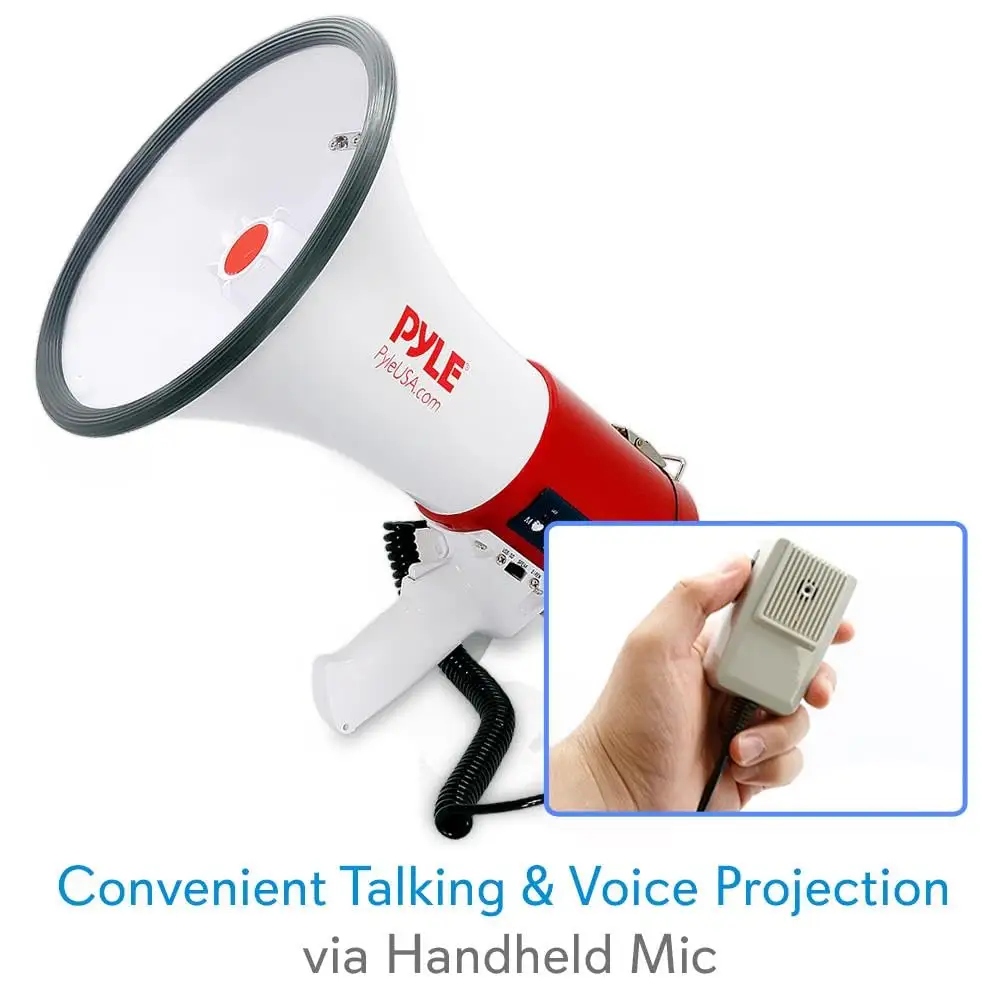
A: Some models list a DC 12V adapter connector. In the PyleUSA Q&A, a user asked about wiring into a car, and the reply suggested using a “dc power pigtail 5.5 mm dc male plug to bare wire.” Another reply says the connector can be “optional… sold separately,” so inclusion varies.
Final Verdict
Buy if you’re a coach, event staffer, or safety coordinator who needs loud voice projection and a siren to cut through crowd noise—and you can test batteries and operation before the day you need it.
Avoid if you can’t tolerate a chance of early failure or battery-contact headaches; ShopSavvy’s TLDR explicitly flags “malfunctions shortly after use,” and PyleUSA support threads show battery installation complaints.
Pro tip from the community: BullhornMegaphone.info’s terrain warning applies—plan your positioning and don’t treat the “800 yards/1,200 yards/one mile” headline as a guaranteed clear-distance promise.