Pyle 5x7 Car Speaker Review: Budget Buy with Caveats
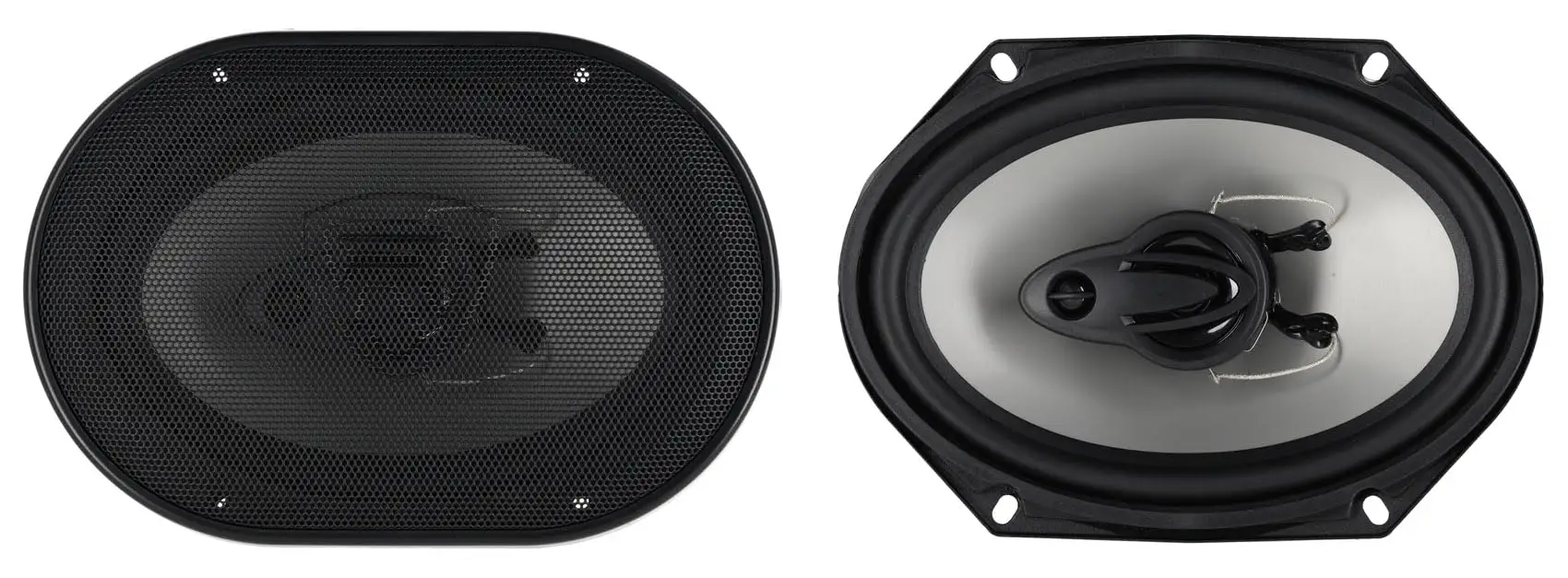
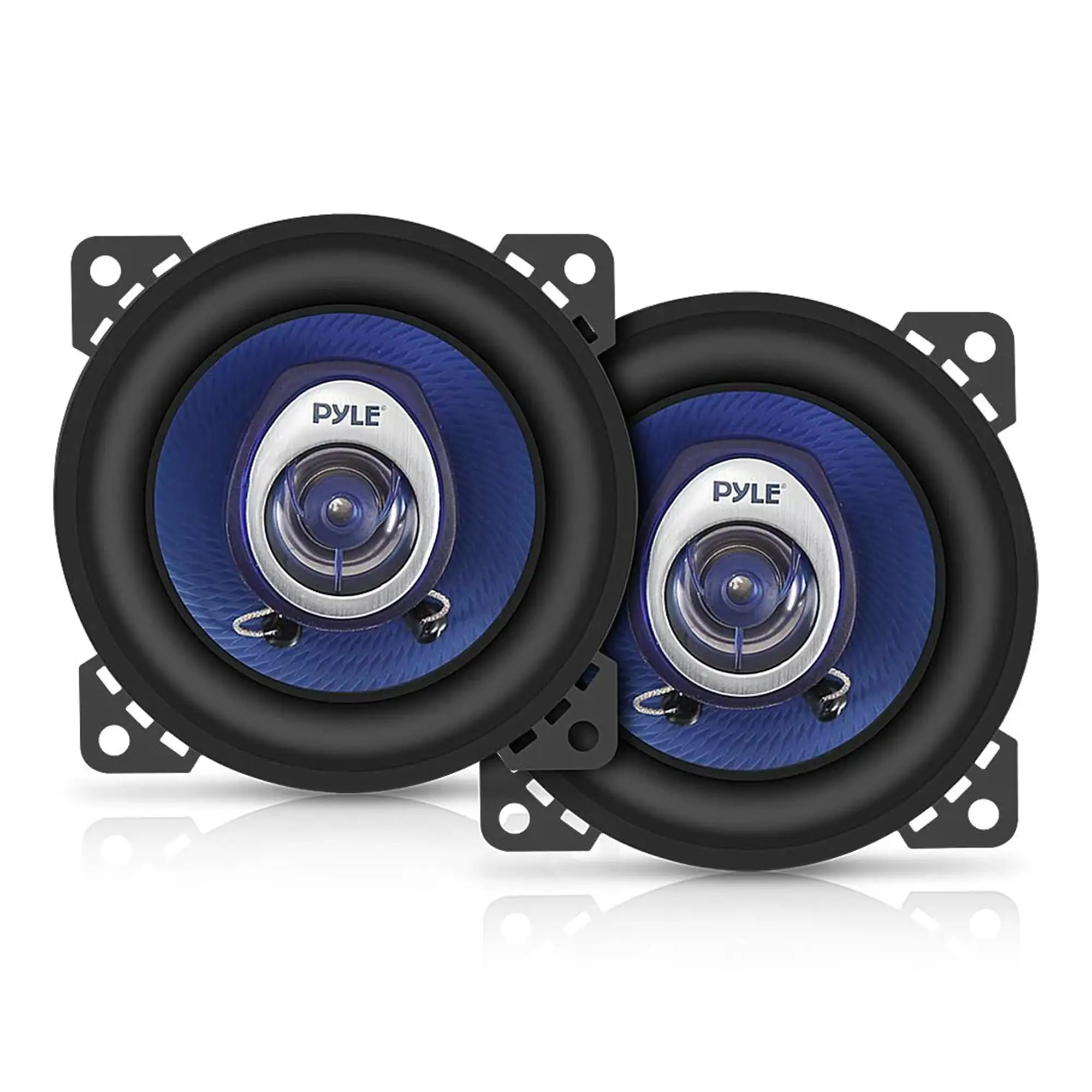
A verified buyer on Amazon summed it up bluntly: “Great for the price, but they’re still cheap speakers. You get what you pay for.” That balance between affordability and compromise defines the Pyle 5” x 7” Car Sound Speaker (Pair), landing it at a conditional 7.1/10. On paper, the sleek blue poly injection cone, 300W peak handling, and three-way configuration promise crisp highs, solid mids, and rich bass. In practice, your satisfaction will hinge on expectations and installation care.
Quick Verdict: Conditional
| Pros | Cons |
|---|---|
| Affordable upgrade from factory speakers | Bass performance often underwhelming |
| Easy fit for many OEM locations | Quality control inconsistencies reported |
| Clear midrange and highs for casual listening | High-volume distortion common |
| Stylish blue cone and butyl rubber surround | Wiring modifications may be needed |
| Versatile for various car models | Not ideal for deep bass-heavy genres |
Claims vs Reality
Marketing boasts an 80Hz–20kHz frequency response and “exceptional 90dB sensitivity” for “loud and clear” reproduction. On paper, that range covers most listening needs. Digging deeper into user reports, bass delivery is frequently cited as the weak link. One Amazon review noted: “These speakers have very little bass response compared to the factory speakers, and they bottom out and make ‘cracking’ sounds with anything but the quietest bass lines.”
Pyle promotes the non-fatiguing butyl rubber surround as a durability advantage. That has truth in long-term use; multiple Reddit users shared years of service without mechanical failure. Yet, sound degradation and mismatched output between units crop up. As one buyer discovered, “One is definitely quieter than the other, and when swapping them left-to-right, the difference follows the speakers.”
Finally, Pyle’s promise of “rich mids and sweet highs” is mostly upheld, especially at moderate volumes. A GMC Sonoma owner reported pairing these with a Pioneer head unit produced a “really good inside-the-vehicle sound” until bass distortion at high volume kicked in.
Cross-Platform Consensus
Universally Praised
The biggest universal win is price-to-fit ratio. For older vehicles with worn factory speakers, these are often a perfect physical match, minimizing installation headaches. A verified buyer shared: “Great replacement speaker for my 1989 Suburban… fit in the original location with some wiring needed… excellent sound coming from the rear.” For casual listeners who prioritize clarity over booming low-end, the 3-way design makes vocals and treble stand out, which works well in conversational audio or light rock.
Multiple reviewers on Trustpilot praised the clean midrange, even without an amp. A long-time Pyle buyer wrote: “Good bass and upper end response from a mid-size speaker. Make sure you mount them securely so they don’t rattle!”
Styling earns consistent approval too. The metallic blue cone adds visual appeal during installation or for open speaker mounts, which several buyers described as “looking great and allowing music to resonate with full power.”
Common Complaints
Bass lovers will be disappointed. Users from Reddit to Amazon repeatedly flag weak low-end reproduction and distortion when pushed. One 94 BMW owner cautioned: “They sound great for a $20 pair of speakers, but remember, they are still a $20 pair… I’d go back and buy a better brand for more money.” Larger magnets and subs are suggested for genres like hip-hop or heavy metal.
Quality control inequality—one speaker performing differently than its pair—is another frustration. While officially marketed for durability, minor assembly flaws impact soundstage consistency.
Installation can also require extra effort. Factories often use non-standard connectors, meaning splicing or soldering new leads. Several vehicle owners reported adding capacitors or bass blockers to tame distortion.
Divisive Features
Volume handling and clarity divide opinion. Some buyers find these remain clear at reasonable in-car listening levels, praising the “clear separation across the board” in genres from punk to pop rock. Others find distortion creeping in past mid-volume, especially on bass-rich tracks. While the official spec lists 150W RMS and 300W peak, many users caution that real-world clean power handling is lower.
Aesthetic preferences also draw mixed reactions—style-focused buyers love the blue cone’s look, while others see it as gimmicky compared to raw acoustic performance.
Trust & Reliability
On Trustpilot and Reddit, durability without an amp is a surprisingly strong point. One user claimed four sets “continue to function perfectly” over years of use with only head unit power. That said, reliability falters in quality matching across units in the same pair—sometimes out-of-box performance varies.
There were no widespread scams linked to this product, but the “currently unavailable” tag on certain listings suggests possible discontinuation or sporadic stock, which may complicate warranty claims. Installation mishaps (like puncturing the cone) didn’t necessarily ruin performance—one Trailblazer owner repaired damage with RTV sealant and found no audible difference.
Alternatives
Community comparisons often point to Pioneer and Kenwood for audio fidelity. The same GMC Sonoma owner acknowledged that if the goal was to “annoy the neighbors from a block away, this is not going to work,” hinting at more powerful competition. Kenwood’s 4x10s were a prior choice for one Yukon owner, though the Pyles held up “almost as good” at a fraction of the price.
Price & Value
At around $30–$35 on eBay, the Pyle PL573BL remains a budget-friendly upgrade. Older vehicle owners note that limited investment makes sense for basic replacement needs—especially with mounting hardware included. Resale value is negligible; this is a low-end purchase meant to be used until wear prompts another budget upgrade.
Buying tips from the community include checking connector compatibility before purchase, being prepared for light soldering, and pairing with an appropriate head unit rather than expecting amp-level bass.
FAQ
Q: Do these speakers require an amplifier?
A: No. Several long-term users report good clarity using only the factory radio, making them suitable for non-amped setups.
Q: How is the bass performance?
A: Bass is serviceable for casual listening, but multiple users warn of distortion and weak lows on bass-heavy music at higher volumes.
Q: Will they fit OEM mounts in my car?
A: Often yes, especially in vehicles with 5"x7" or 6"x8" factory slots. Some wiring modification may be required.
Q: Do both speakers in the pair perform identically?
A: Not always. A few buyers observed one speaker being quieter than the other due to quality control variation.
Final Verdict: Buy if you need an inexpensive, easy-fit replacement for worn factory speakers in an older vehicle. Avoid if you prioritize high-volume bass or demand audiophile-grade equality in output. Pro tip from the community: secure them firmly during installation and consider bass blockers to preserve clarity.