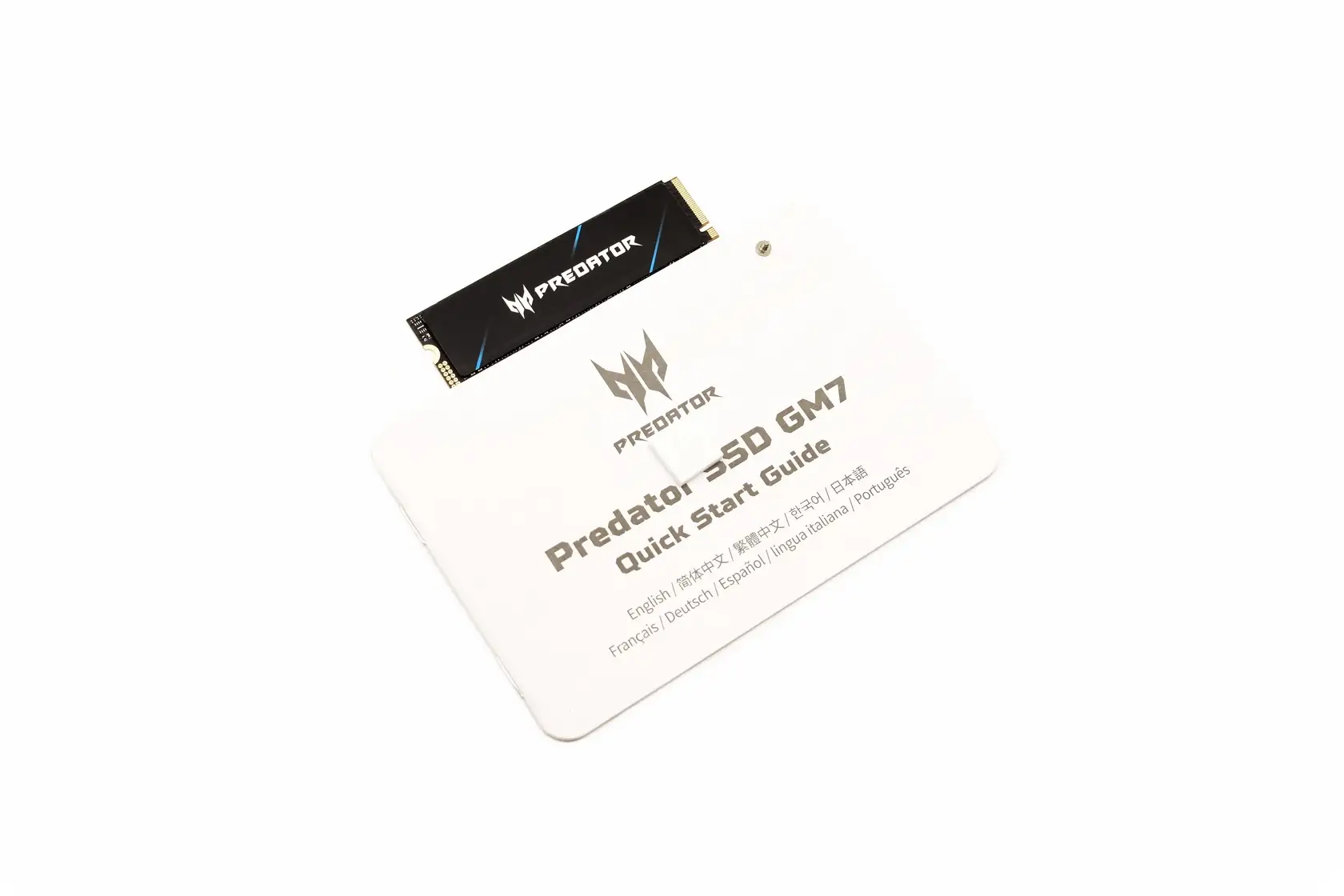
Predator GM7 4TB Review: Fast Gaming SSD with Caveats
Among high-capacity gaming SSDs, the Predator GM7 4TB M.2 NVMe has stirred debate: performance enthusiasts praise its blazing sequential speeds, while others warn about inconsistent real-world results. Based on diverse user feedback, it lands at 7.4/10 — powerful for certain workloads but with caveats that could affect heavy multitaskers or professional creators.
Quick Verdict: Conditional — Best for gamers and general high-capacity storage on PCIe Gen4 systems, but not ideal for sustained write-heavy or latency-sensitive workloads.
| Pros (User-Reported) | Cons (User-Reported) |
|---|---|
| Sequential reads up to 7400MB/s impressive for PCIe 4.0 SSD | Noticeable thermal throttling after sustained writes |
| 5-year warranty with high TBW endurance | Weak 4K random performance compared to competitors |
| PS5 compatibility and compact single-sided PCB | Divisive controller choice; some distrust Maxio/YTMC NAND |
| Energy-efficient low-power controller | Real-life speeds often lower than marketing claims |
| Bundled free Acronis cloning software | Boot and SQL workload results rank near bottom |
Claims vs Reality
Acer’s marketing touts “ultra-fast & advanced performance” with up to 7400MB/s read, 6500MB/s write, promising smooth PS5 and PC gameplay. The claim resonates with gamers upgrading from SATA: Reddit user u/trackme noted, “realistically you’re not going to notice a performance difference when loading games with either one,” confirming that for high-speed game loading, the GM7 fares fine.
However, TechPowerUp’s benchmarks revealed “a bit of thermal throttling, despite heatsink,” and while synthetic scores placed it “near the top of our charts,” their 80% full drive real-world test found it only matches competitors rather than outperforming. StorageReview's findings were starker: “the Predator GM7 showed some of the weakest performance we’ve seen with a Gen 4 drive,” especially in 4K random IOPS, undermining the promise of “next-level performance” for professional workloads.
Another marketing point is the low-profile graphene-aluminum heat spreader, marketed for “superior heat dissipation.” In practice, TechPowerUp observed that “while there’s some claims of graphene, I wasn’t able to confirm them… throttled after around two minutes” — although throttling was mild and controlled.
Cross-Platform Consensus
Universally Praised
Gamers are the most consistent advocates. The PS5 certification was highlighted across Amazon.jp and Predator’s official site, giving console owners confidence. A verified buyer on Amazon wrote: “From game and application loading time to streaming… the whole system is significantly more responsive.” The single-sided PCB design also won praise from laptop users who face tight internal space.
Its endurance ratings also reassure — up to 2400TBW for the 4TB model. Reddit commenters noted Acer’s spec “rates their drive to last longer than WD rates theirs,” helping those storing large media libraries without worry.
Energy efficiency is another win. Predator’s own specs show max write power at 5.81W, and Quora listings emphasize the “12 nm power-saving controller.” For small-form systems or quieter builds, this means less fan noise during moderate workloads.
Common Complaints
Performance consistency is the main sore point. StorageReview's SQL Server tests placed it “near the bottom of consumer NVMe SSD leaderboard” with high latency (58ms), raising concerns for database and heavy multitasking environments. In PassMark's average disk rating, the GM7 scored 45,017 — lagging behind WD SN850X’s 51,713.
Thermal throttling also draws repeated mentions. While TechPowerUp insists it’s “well behaved” and drops only slightly, the fact it occurs after a short heavy write load frustrates those buying into “superior thermal management” claims.
Controller choice is divisive. Reddit user u/trackme expressed: “I trust WD a lot more and went with them,” hinting brand trust issues with Innogrit/Maxio controllers compared to Phison or proprietary alternatives.
Divisive Features
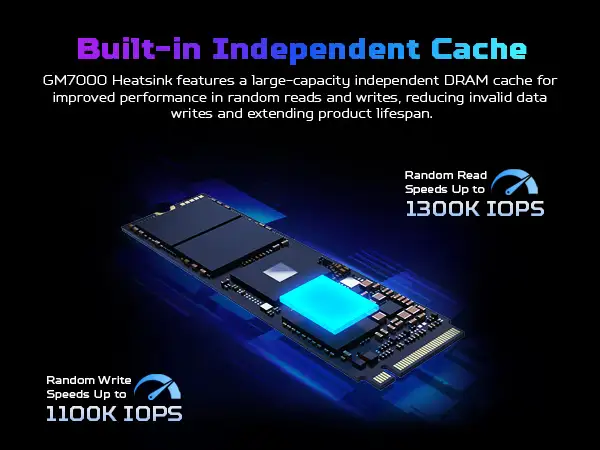
The lack of DRAM cache is a double-edged sword. StorageReview explained it “lowers power consumption… but DRAM-less drives like the GM7 often have slower performance during large sequential transfers.” Gamers with read-heavy workflows see little impact, but content creators moving terabytes of footage notice.
Similarly, synthetic vs real-life results split opinions. TechPowerUp's synthetic scores put it toe-to-toe with Samsung 980 Pro, but in real workloads like VDI boot/login, it fell far behind. Some buyers, seeing only synthetic marketing numbers, felt misled when day-to-day wasn’t dramatically different from cheaper drives.
Trust & Reliability
Long-term trust leans mixed. While the 5-year warranty is a positive, StorageReview’s comment that it “falls well short of our expectations and its own specifications” may deter enterprise-level buyers. No scam patterns emerged in Trustpilot data; complaints are purely performance-based.
On durability, high TBW per capacity reassures archivists and gamers — no widespread failure stories in data. However, the debate over Chinese YMTC NAND and import restrictions persists for certain regions.
Alternatives
Direct rivals in feedback include WD Black SN850X and Samsung 980 Pro. WD’s drive is “slightly higher performance and no thermal throttling… even without a heatsink” (TechPowerUp) and enjoys greater brand trust. Samsung’s 980 Pro gains ~1% over GM7 in real workloads. Silicon Power XS70 offers similar Phison E18-backed speeds at $420, undercutting GM7’s $450 launch tag.
For tighter budgets, WD SN770 or lower-tier PCIe Gen4 QLC drives deliver lower sequential speeds but often similar game load times — relevant since Reddit’s consensus is that “you’re not going to notice a performance difference… speeds are so close” for gaming.
Price & Value
Prices vary dramatically: eBay listings at $219 for new stock undercut Amazon.jp’s ¥35,091 (~$236), while PCComponentes in Europe sells closer to €270. Historical commentary shows launch MSRP of $450 but resale trends dipping sharply.
Value hinges on workload type: sequential-heavy gaming and content consumption justify mid-range pricing; professional workstation use cases may warrant stepping up to WD SN850X or Samsung 990 Pro for a similar cost but better real-life IOPS.
FAQ
Q: Does the Predator GM7 4TB work in a PS5?
A: Yes. Multiple sources, including Acer’s own listings and Amazon buyers, confirm PS5 compatibility, with the form factor and speed well-suited for expanding console storage.
Q: How does it handle heat?
A: While equipped with a low-profile graphene-aluminum spreader, TechPowerUp noted mild thermal throttling during sustained writes after ~2 minutes, though performance drop was slight.
Q: Is the lack of DRAM cache a problem?
A: For everyday gaming and general storage, Host Memory Buffer and SLC cache mitigate impact. For large sequential transfers in professional use, DRAM-less design can slow sustained writes.
Q: How does it compare to WD SN850X?
A: WD’s SN850X scores higher in synthetic and real workloads, avoids thermal throttling, and enjoys stronger brand trust, making it more appealing for performance-critical tasks.
Q: What endurance can I expect?
A: Rated at 2400TBW for the 4TB version, with a 5-year warranty, suitable for extensive long-term storage use without premature wear concerns.
Final Verdict
Buy if you’re a gamer or consumer needing large, fast storage for PCIe Gen4 systems — especially for PS5 upgrades or high sequential workloads. Avoid if you require top-tier random IOPS or sustained 4K/64K writes for professional databases or video editing. Pro tip from the community: if real-world responsiveness matters more than synthetic speed, consider WD SN850X; if price trumps peak consistency, watch eBay for sub-$220 GM7 deals.