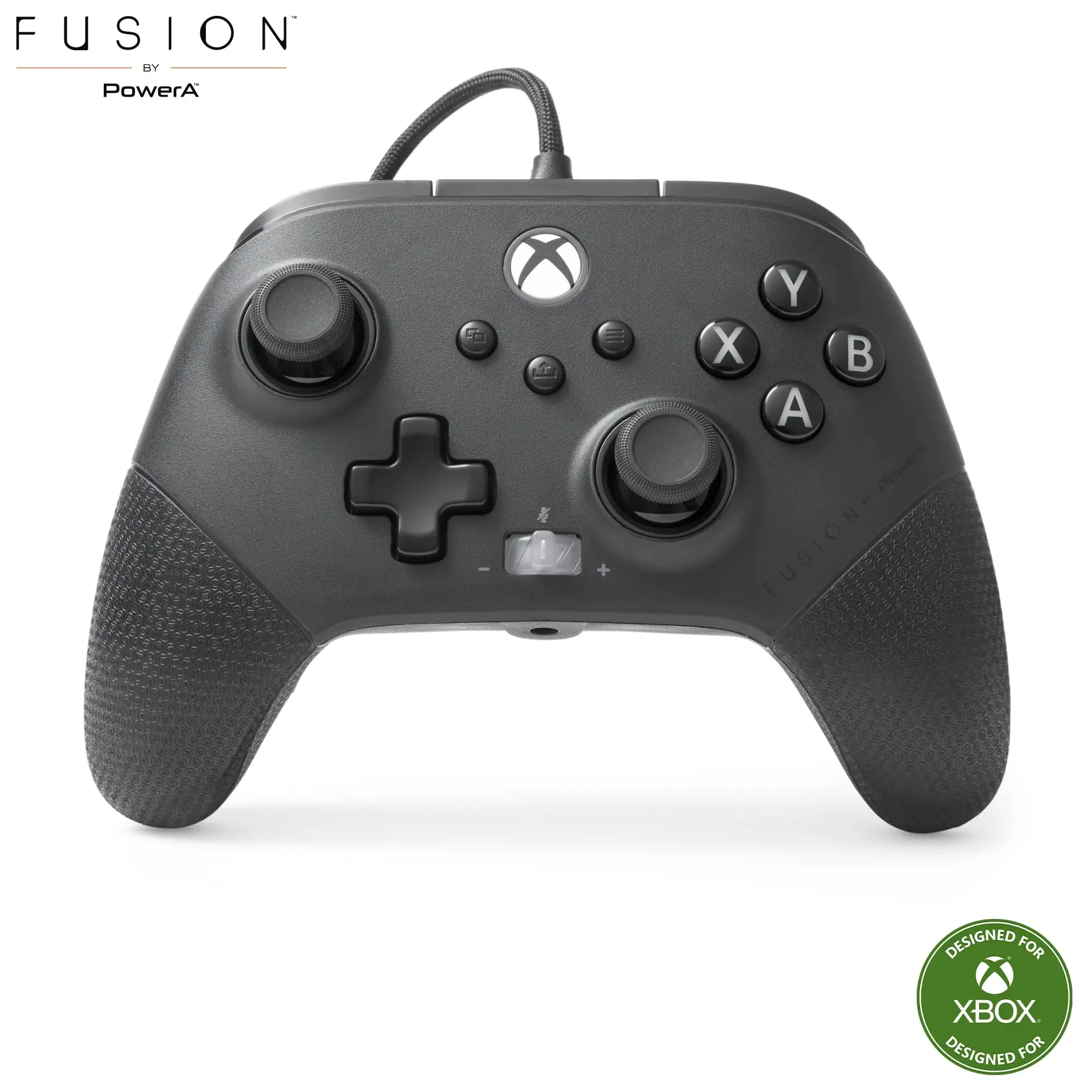
PowerA FUSION Pro 4 Wired Review: Conditional Buy 7.6/10
The “premium wired” controller that still gets called “a little cheaper” in the hands is the story here. PowerA FUSION Pro 4 Wired Controller for Xbox Series X|S earns a conditional recommendation because user-facing standout features (twist-height Hall effect sticks, quick rear-button programming, trigger locks) land well for the right player, while multiple sources also describe a noticeably light, somewhat plastic-y feel. Verdict: Conditional buy — 7.6/10.
Quick Verdict
Yes/No/Conditional: Conditional — best for competitive players who want wired stability plus quick-adjust controls, less ideal for anyone who equates weight with “premium.”
| What matters | What people said (with source) | Who it’s for |
|---|---|---|
| Adjustable thumbsticks | Movies Games and Tech praised a “simple twist-and-go method” that lets you “change your settings as you play.” | FPS/aim-heavy players who tweak stick height |
| Hall effect longevity promise | Rocket Chainsaw framed Hall effect modules as a way to “avoid the stick drift issue… adding to their longevity.” | Drift-wary buyers, long-session players |
| Rear buttons usability | Rocket Chainsaw liked the “easy to program the useful rear buttons.” | Competitive players, sprint/jump remappers |
| Trigger locks impact | Rocket Chainsaw said configurable triggers “did help in making firing feel more immediately responsive.” | FPS players, trigger discipline users |
| Build feel | Rocket Chainsaw warned it’s “so light that it makes the controller feel a little cheaper.” | Anyone sensitive to “premium heft” |
| Impulse triggers support | Movies Games and Tech noted “not every title is designed with this feature in mind.” | Players expecting universal trigger rumble |
Claims vs Reality
PowerA’s marketing leans hard into pro-grade customization: Hall effect modules “to help with precision and longevity,” quick-twist thumbsticks that adjust mid-match, and “4 mappable buttons that you can program on the fly.” Digging deeper into available user-facing commentary, the most consistent “reality check” isn’t that these features fail—it’s that the experience is highly dependent on what you value: mechanical adjustability and wired responsiveness versus premium materials and consistent feature support across games.
Claim #1: “Quick-Twist thumbsticks… no need to swap out parts.”
A recurring pattern emerged across reviews: the twist-height system is not a gimmick; it’s a core differentiator. In Movies Games and Tech, reviewer Daniel Waite described it as “unique analogue stick twist system” and called the “simple twist-and-go method… great as you can change your settings as you play.” For players who often move between fast FPS and slower, precise genres, this matters because it removes the “tooling” friction—no swapping caps, no opening cases—just a mid-session adjustment.
Rocket Chainsaw backed that up with a more tactile description: each height “clicks into place with a little effort, and feels stable once they’re in place,” while admitting it can feel almost wrong to twist sticks that much—“even if you feel like you’re doing something naughty.” That mix of stability plus novelty suggests the mechanism is both noticeable and, for many, confidence-inspiring once it locks.
Claim #2: “Hall effect modules… precision and longevity.”
While officially positioned as a longevity play, user-facing reports frame Hall effect as both drift insurance and feel improvement. Movies Games and Tech tied it directly to drift reduction—“Hall effect analogue sticks reduce stick drift while improving accuracy and fluidity”—and went further with a superlative: “the fluid movement was fantastic and the accuracy is second to none.” Rocket Chainsaw kept it more cautious (“should in theory avoid the stick drift issue”), but still positioned it as a meaningful reason to pick this controller over a standard pad.
That said, none of the provided sources include long-term, months-later failure stories; the “longevity” claim is mostly treated as a logical benefit rather than proven durability in the wild. The gap here isn’t contradiction, it’s evidence depth: strong early confidence, limited long-term proof in the supplied dataset.
Claim #3: “Dual rumble motors and impulse triggers… lifelike tactile details.”
This is where the marketing-to-reality gap becomes more explicit. Movies Games and Tech celebrated immersion—“the dual rumble motors and impulse triggers suck you in”—but immediately flagged inconsistent game support: “not every title is designed with this feature in mind,” and that it was “disappointing whenever the controller feedback lacked this amazing feature.” While the official spec itself warns that “impulse trigger compatibility varies by title,” user commentary shows how that caveat can still sting in day-to-day use—especially for buyers assuming premium features work everywhere.
Cross-Platform Consensus
Universally Praised
The strongest consensus across available sources centers on “control customization without hassle.” Competitive players and tinkerers aren’t just buying a wired controller—they’re buying the ability to adapt on the fly. Movies Games and Tech framed the appeal in genre-hopping terms: “you’ll flit between genres… you want a controller that is suitable for fast-paced FPS or something accurate enough for a strategy title.” For that user type, the free configuration app becomes a practical tool, not a novelty, because it “lets you adjust the rumble settings, audio, dead zones, and much more,” and was described as “easy to navigate.”
The rear button implementation is another repeated win, especially for players chasing ergonomic efficiency. Rocket Chainsaw highlighted how the four programmable buttons can replicate “any face button or trigger, even L3 or R3,” and gave a concrete competitive use case: assigning sprint in Black Ops 6 to a rear control so you don’t have to “squeeze the analogue stick.” For players who hate thumbstick-click sprint (or who worry about wearing it out), the review’s description is essentially a story about reducing strain and improving consistency—“squeezing the grip of the controller for sprinting feels a lot more natural.”
Trigger locks also land as a performance feature rather than marketing fluff, at least for FPS players. Rocket Chainsaw described the three positions (“T1” to “T3”) as a way to reduce travel for faster firing, and reported that in shooter testing “they did help in making firing feel more immediately responsive.” This is the kind of feedback competitive players look for: not “it exists,” but “it changed timing.”
Finally, multiple sources emphasize comfort and general usability. Movies Games and Tech called the pad “lightweight and comfortable to hold,” and praised “textured grips” that “prevent accidents.” Rocket Chainsaw, even while critiquing material feel, still said the controller “does feel comfortable in the hands after playing with it for a few hours,” and that the face buttons “all feel standard” and “held up well during our testing.”
What’s consistently praised (summary):
- Quick-twist height adjustment that stays stable (Movies Games and Tech; Rocket Chainsaw)
- Rear buttons that are genuinely useful and easy to program (Rocket Chainsaw; Movies Games and Tech)
- Trigger locks that can improve FPS responsiveness (Rocket Chainsaw)
- App-based tuning (dead zones, rumble, audio) that feels approachable (Movies Games and Tech; Rocket Chainsaw)
Common Complaints
The most repeated critique isn’t about performance—it’s about perceived build “premium-ness.” Rocket Chainsaw’s report is blunt: without wireless internals and battery, it becomes “very light,” to the point that “it makes the controller feel a little cheaper than the wireless version.” For buyers who associate weight with durability or quality, that subjective “cheap” signal can be decisive, even if functionally the controller performs well.
Material impressions also come up around specific touchpoints. Rocket Chainsaw called the volume knob “translucent (and plastic-y looking),” and noted the grips are “apparently rubberised but feel like hard plastic in use.” That’s a very particular kind of dissatisfaction: not “it slips,” but “it doesn’t feel like what I expected at this price.” This matters most for players shopping by tactile cues—people who want a controller to feel like an Elite-style upgrade the moment they pick it up.
Another complaint pattern is feature trade-offs inherent to the wired model. Rocket Chainsaw’s negatives list includes “no wireless capability,” and frames the wired choice as niche: the main draw is “a handful of unique features that will only appeal to certain enthusiasts.” That’s less an indictment than a warning: if you’re buying it because it’s “premium,” you may be comparing it to a standard controller that already offers wireless convenience.
Finally, immersive features can feel inconsistent depending on game support. Movies Games and Tech described the impulse triggers as “fantastic,” but said it was “disappointing whenever the controller feedback lacked this amazing feature.” For players who mainly play titles without impulse trigger support, the “premium rumble” story becomes sporadic rather than constant.
Commonly raised downsides (summary):
- Light weight can read as “cheap” (Rocket Chainsaw)
- Some surfaces feel plastic-y versus premium expectations (Rocket Chainsaw)
- Wired-only is a dealbreaker for some (Rocket Chainsaw)
- Impulse triggers aren’t universal across games (Movies Games and Tech)
Divisive Features
The same traits that attract one user can push away another. Weight is the clearest example: Rocket Chainsaw calls it “very light in the hands” and flags that as a “cheaper” feel, but also lists “light in the hands, responsive” as a positive. For competitive players who want less fatigue during long sessions—or who like the idea of “zero latency” wired play—lightness becomes a feature. For buyers who want heft and premium tactility, it becomes a red flag.
Rear buttons also split opinions by playstyle. Movies Games and Tech admitted, “I’m not a massive fan of additional buttons,” yet still found them “useful” and “well placed” where “your fingers naturally rest.” Rocket Chainsaw similarly praised their utility but noted: “back buttons might not be for everyone.” Players who already use paddles will likely adapt quickly; players who never remap may see them as clutter.
Trust & Reliability
Digging deeper into the provided dataset, there isn’t meaningful scam-or-counterfeit patterning from Trustpilot or long-term Reddit ownership threads; the “Trustpilot” and “Quora” entries shown here repeat product-page style copy and the same review sources rather than verified buyer narratives. As a result, reliability signals in this dataset come mostly from reviewer observations and the underlying premise of Hall effect longevity rather than months-later breakage reports.
What does emerge consistently is a “trust by design” argument: Rocket Chainsaw points to Hall effect modules that “should in theory avoid the stick drift issue,” while Movies Games and Tech highlights how the twist system reduces “the risk of you losing key parts,” because you’re not swapping caps and storing small accessories. In other words, the reliability story here is about fewer failure points and fewer removable pieces—though the dataset doesn’t include the kind of “6 months later…” Reddit posts that would confirm it over time.
Alternatives
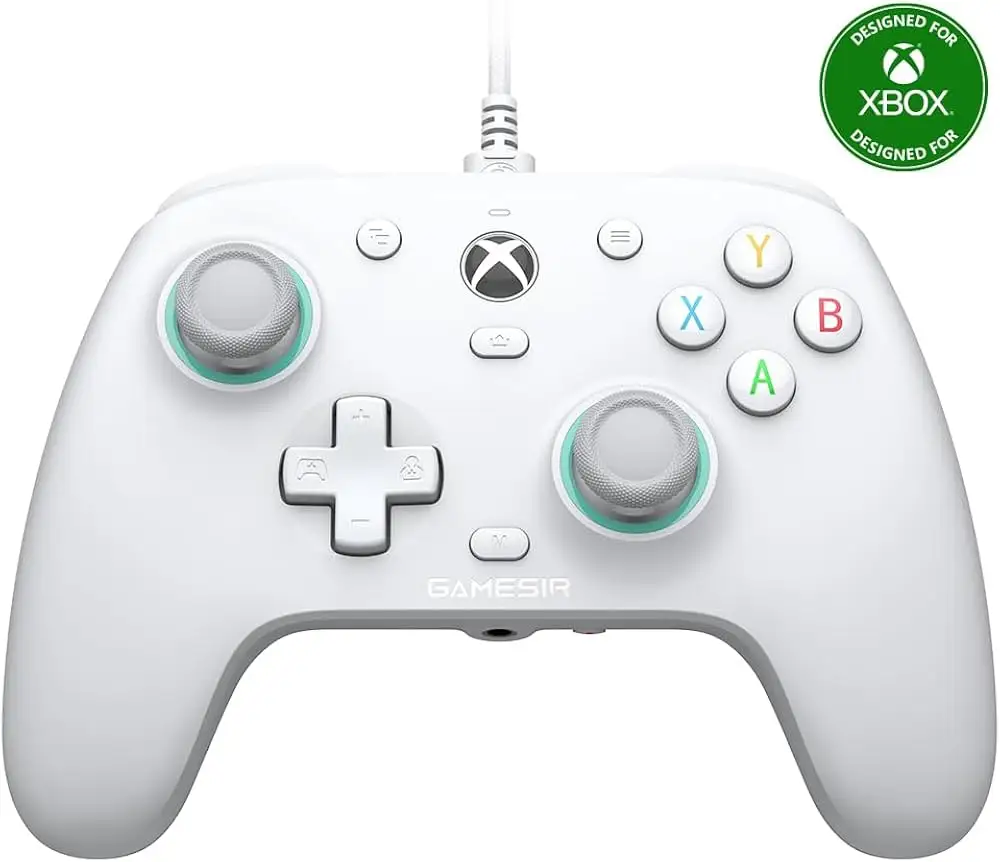
Only one true competitor appears in the provided materials: the Amazon listing image shows GameSir G7 SE Wired Controller alongside the PowerA page content. That sets up a very specific buyer decision: if you’re shopping wired Hall effect controllers for Xbox Series X|S, you’re likely comparing “Hall effect + value” ecosystems rather than chasing wireless.
The dataset doesn’t contain direct user quotes comparing the two models head-to-head, so the safest takeaway is positioning: Rocket Chainsaw frames the PowerA FUSION Pro 4 Wired Controller for Xbox Series X|S as a wired option whose “main draw” is its “unique features” (twisty adjustable sticks, rear buttons, trigger locks) and “zero latency.” If your priority is those particular physical controls—especially the twist-height thumbsticks and four rear buttons—the PowerA is the one explicitly praised for those mechanics in user-facing reviews here. If your priority is simply “wired Hall effect” without the extra customization emphasis, the presence of GameSir in the shopping context suggests it’s a common alternative to consider, but the dataset doesn’t provide community verdicts on it.
Price & Value
The official PowerA listing places the controller at $79.99 MSRP, while a tracked Amazon price in the dataset shows $74.99 current with a $69.00 historical low. Movies Games and Tech argued it “retails for under $70,” calling that “incredible when you consider the amount of tech it contains,” and positioned it as “elite edge without the price tag.” That perspective frames value as feature density: Hall effect sticks, adjustable-height thumbsticks, rear buttons, trigger locks, and an app, all below premium first-party “elite” pricing.
Resale signals are messy but revealing. One auction-style eBay result shows a sale at $7.25 (noted as “auction ended… good condition”), which reads less like stable resale value and more like the volatility of liquidation/auction channels. More broadly, the general eBay search results show many PowerA wired controllers across price points, implying a crowded secondary market where specific model demand matters more than brand name alone.
Buying tips from the available data lean practical: if you’re price-sensitive, watching for the ~$69 floor in tracking data may matter; if you’re feature-sensitive, Rocket Chainsaw’s framing suggests you should only pay the premium over a standard Xbox controller if you actually want “programmable buttons, twisty hall-effect sticks or trigger locks.”
FAQ
Q: Does the PowerA FUSION Pro 4 Wired Controller have Hall effect sticks, and does that stop stick drift?
A: It uses Hall effect modules in the thumbsticks, which reviewers say “should in theory avoid the stick drift issue… adding to their longevity” (Rocket Chainsaw). Movies Games and Tech also credits Hall effect sticks with reducing drift and improving accuracy, but long-term, months-later drift reports aren’t included in this dataset.
Q: Can you change thumbstick height without swapping parts?
A: Yes. Movies Games and Tech describes a “simple twist-and-go method” that lets you “change your settings as you play,” and Rocket Chainsaw says each height level “clicks into place” and feels stable once set. The core benefit is mid-session adjustment without carrying extra caps.
Q: Are the rear buttons easy to program?
A: Reviews indicate they’re straightforward. Rocket Chainsaw calls them “easy to program” by holding the program button, pressing the desired input, then the rear button. They also highlight practical use—mapping sprint (normally L3) to a rear button so it feels more natural during shooters.
Q: Do the trigger locks actually help in FPS games?
A: Rocket Chainsaw reports that testing different trigger lock positions in Black Ops 6 “did help in making firing feel more immediately responsive.” For FPS-focused players, shorter trigger travel can improve reaction consistency, while racing players may prefer full travel for throttle control.
Q: Do impulse triggers work in every game?
A: No. Movies Games and Tech praises the immersion but says “not every title is designed with this feature in mind,” making it “disappointing” when feedback isn’t present. The official product copy also warns that “impulse trigger compatibility varies by title.”
Final Verdict
Buy if you’re a competitive Xbox/PC player who wants a wired controller with “zero latency” appeal, fast rear-button remapping, and the twist-height Hall effect sticks that reviewers call “great” for changing feel mid-game.
Avoid if you want wireless convenience or you equate premium quality with heavier weight and softer materials—Rocket Chainsaw says it’s “so light that it makes the controller feel a little cheaper.”
Pro tip from the community: If you play shooters, consider Rocket Chainsaw’s practical mapping idea—assign sprint (L3) to a rear button because “squeezing the grip… feels a lot more natural,” and experiment with trigger lock positions until firing feels “more immediately responsive.”