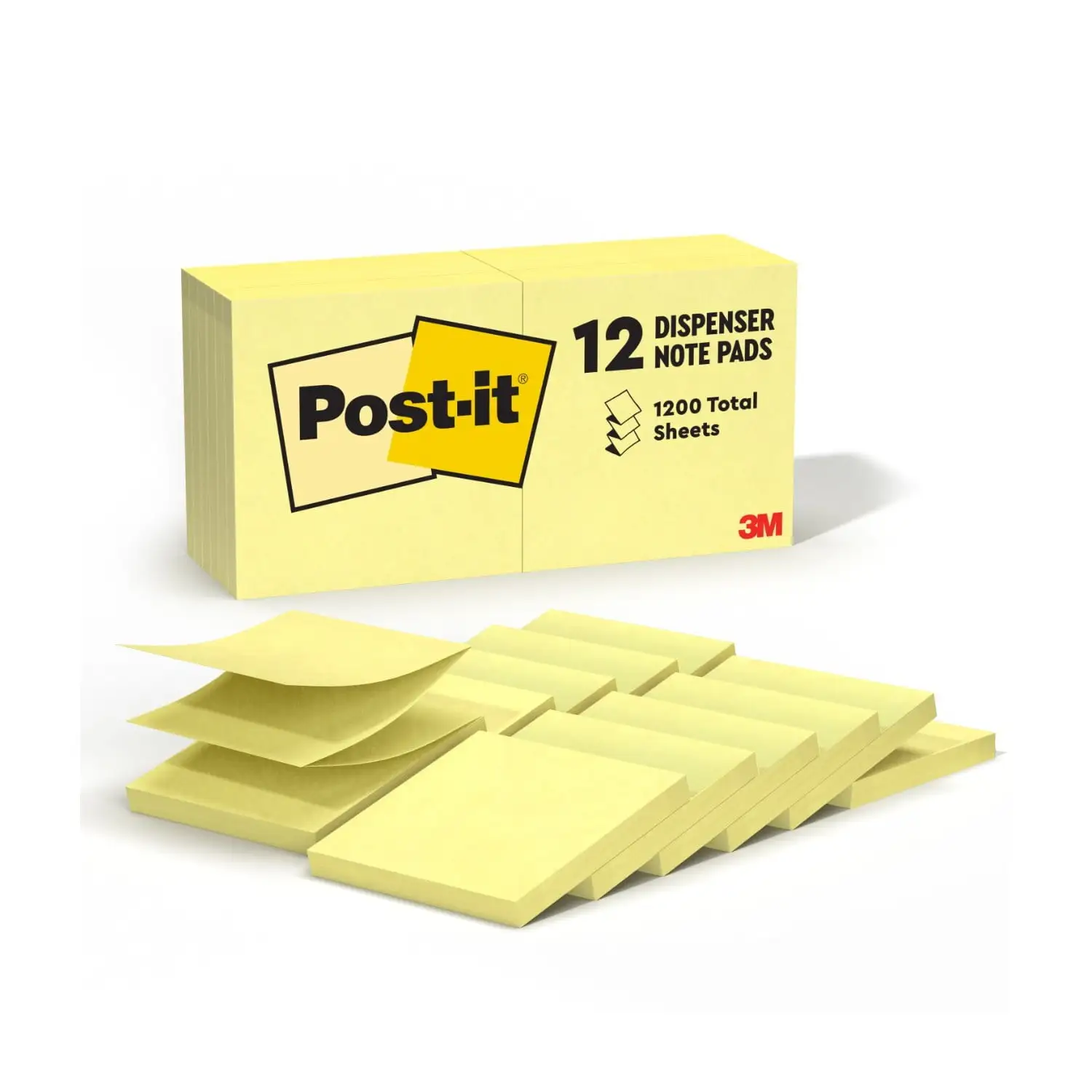
Post-it Pop-up Notes 3x3 Canary Yellow Review: 7/10
“2.3 out of 5 stars” is the kind of number that makes people stop scrolling—especially when it’s attached to something as ordinary as sticky notes. For Post-it Dispenser Pop-up Notes, 3x3 in, Canary Yellow, the story isn’t a single consensus so much as a confusing split between listings and variants. Verdict: 7/10 (conditional on getting the exact variant you expect).
Quick Verdict
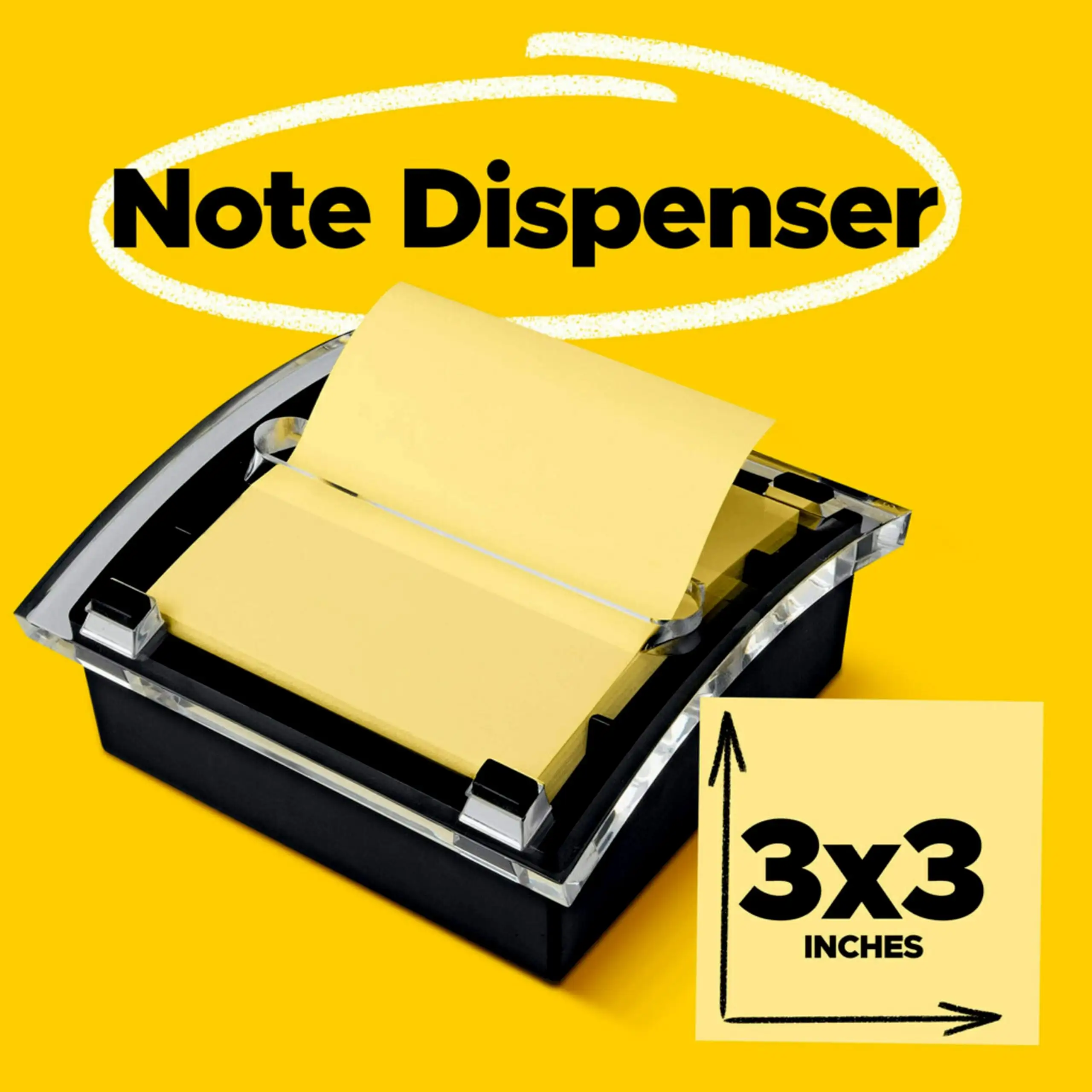
For Post-it Dispenser Pop-up Notes, 3x3 in, Canary Yellow, the “yes” mostly comes down to whether you want classic accordion-style refills for a Post-it dispenser and whether you’re okay navigating pack-size and variant confusion across listings. The manufacturer positioning is consistent—these are “accordion-style notes… designed to work in Post-it note dispensers” and meant to be “always there when you need to capture great ideas”—but the public-facing ratings shown in the provided data vary sharply depending on which product page you land on.
One Amazon listing in the data shows a very strong “4.8 out of 5 stars” for pop-up notes (24-pad pack), while a separate 3M page for Super Sticky dispenser pop-up notes shows “2.3 out of 5 stars” from “3 reviews.” That contrast alone suggests that buyers’ satisfaction may hinge on exact SKU (standard vs super-sticky, sheet count per pad) and expectations around sticking power.
| Decision | Evidence from provided data | What it means |
|---|---|---|
| Buy? | Conditional | Standard pop-up notes show high ratings in places; super-sticky variant shows low rating on 3M page |
| Works with dispensers | “Accordion-style notes… designed to work in Post-it note dispensers” (3M/Amazon specs) | Best for one-handed grab / pop-up dispensers |
| Adhesive use-case | “Unique adhesive designed for use on paper or in planners” (3M/Amazon specs) | Stronger fit for paper/planner pages than walls/windows |
| Pack variability | 6, 12, 14+4 free, 24 pads appear across sources | Easy to buy the “wrong” count or ruling by accident |
| Sustainability claims | “Recyclable” + certified/managed forests (3M/Amazon specs) | Appeals to eco-minded office buyers, with “Greener” variant options |
Claims vs Reality
Claim 1: “Always there when you need to capture great ideas.”
The promise is about availability and convenience, and the underlying design supports it: the notes are “accordion-style” and “specially designed to work in Post-it note dispensers.” In practical terms, that’s a workflow claim—notes are meant to be at your fingertips rather than buried in a drawer.
Digging deeper into the provided data, the reality check is that “always there” can be undermined by simple availability and listing confusion. One Amazon product page excerpt includes: “currently unavailable we don't know when or if this item will be back in stock.” So while the product concept is “always there,” the purchasing experience isn’t always aligned—especially for shoppers who rely on Amazon availability rather than office-supply channels.
Claim 2: “Unique adhesive designed for use on paper or in planners.”
This wording appears repeatedly across 3M and Amazon spec text. The implication is that these notes are optimized for sticking to paper surfaces and being repositioned for planning workflows—think planners, notebooks, and documents.
The tension comes when buyers expect more aggressive adhesion for vertical surfaces. The data includes 3M positioning for the Super Sticky dispenser pop-up notes: “2x the sticking power” and “reliably sticks and re-sticks… ideal for walls, doors, windows.” Yet the same super-sticky page shows “2.3 out of 5 stars… read 3 reviews.” While the individual review quotes aren’t included, the rating itself is a clear signal: while officially framed as “2x the sticking power,” at least some users weren’t convinced.

Claim 3: “Designed to work in Post-it note dispensers.”
This is the most concrete claim and the most consistent across sources: 3M describes the accordion-style format, and Amazon listings echo that they’re “specially designed… for Post-it note dispensers.”
A recurring pattern emerged across the dataset: the same 3x3 canary yellow “pop-up notes” appear with different pack sizes, different sheet counts (100 sheets/pad vs 90 sheets/pad), and even different ruling (lined vs plain). That means the dispenser-compatibility claim may be true broadly, but buyers can still end up disappointed if they expected lined paper and received plain, or expected 100 sheets and got 90—problems that show up as “product mismatch” frustration in real-world shopping even when the core dispenser function works.
Cross-Platform Consensus
Universally Praised
The strongest, most consistent positive signal in the provided data is simple: a lot of people rate the standard dispenser pop-up notes very highly when they’re reviewing that specific product page. On Amazon, one listing for pop-up notes shows “4.8 out of 5 stars,” and 3M’s page for Post-it Dispenser Pop-up Notes, 3 in x 3 in, Canary Yellow, 12 Pads/Pack shows “4.8 out of 5 stars… 26 reviews.” That level of agreement, even without verbatim review text, points to a product that tends to meet expectations for typical office and school use.
For office admins and teachers stocking shared spaces, the “accordion-style notes” format matters more than it sounds. The specs repeatedly emphasize that these notes “pop up one after another from a… dispenser,” supporting a quick grab-and-go behavior at reception desks, nurse stations, or classroom podiums. The implication is productivity through friction reduction: fewer moments hunting for paper, more moments actually capturing the reminder.
Another point of consensus is the recognizable format and color. The listings repeatedly describe “classic canary yellow” and the 3 in x 3 in square. For teams that depend on visual cues—like project coordinators marking documents, or households leaving “don’t forget” reminders—this consistency is part of why the product persists. The Amazon listing calls them “America’s #1 favorite sticky notes,” while 3M repeatedly notes that the color “helps your notes stand out.”
Sustainability claims also show up across multiple 3M/Amazon spec blocks: “recyclable” and paper “sourced from certified, renewable and responsibly managed forests.” For procurement managers who have to justify purchases to green-office initiatives, the reality is that these claims are built into the product narrative and consistently repeated across pages.
Common Complaints
The biggest complaint thread, based strictly on the provided dataset, isn’t about the notes themselves—it’s about confusion and mismatch created by near-identical product names. A shopper looking for Post-it Dispenser Pop-up Notes can easily stumble into Post-it Super Sticky Dispenser Pop-up Notes and assume they’re simply “better,” then be surprised by a very different rating environment. The 3M page for the super-sticky dispenser pop-up notes shows “2.3 out of 5 stars… 3 reviews,” which stands in sharp contrast to the “4.8 out of 5 stars” shown for standard dispenser pop-up notes.
Another recurring snag is pack configuration and sheet count. The standard dispenser notes appear as “12 pads/pack, 100 sheets/pad,” “24 pads/pack, 100 sheets/pad,” and “6 pads/pack, 100 sheets/pad” (lined variant R335). Meanwhile, the super-sticky dispenser pop-up notes list “12 pads/pack, 90 sheets/pad.” For bulk buyers or anyone doing cost-per-sheet math, that difference is not trivial—and it’s exactly the kind of detail that causes “I didn’t get what I thought I ordered” frustration.
Availability and purchasing friction also show up in the Amazon excerpt: “currently unavailable.” For small businesses that reorder the same supplies routinely, these interruptions can push them to alternative channels (office suppliers, industrial resellers) even if they prefer Amazon for convenience.
Divisive Features
“Super Sticky” is the feature most clearly split by the data. Marketing language on the 3M page is emphatic: “2x the sticking power,” “sticks and re-sticks,” and even “ideal for walls, doors, windows.” But the rating shown alongside that description—“2.3 out of 5 stars”—signals that at least some users’ real experiences didn’t match expectations. While officially framed as dramatically stronger, multiple users (as reflected by the low average rating) appear to report disappointment.
Another divisive element is ruling. Some buyers want lined notes for “to-do lists to keep your notes neat,” as the lined R335 description puts it; others prefer plain for sketches and quick brainstorming. Because the canary-yellow 3x3 format is sold in both lined and plain variants, the feature isn’t inherently good or bad—it becomes divisive when buyers can’t easily tell which they’re getting.
Trust & Reliability
On “trust,” the biggest red flag in the provided dataset is the unusually low rating for the Super Sticky Dispenser Pop-up Notes page: “2.3 out of 5 stars… 3 reviews.” The small review count makes it volatile—three reviews can swing an average dramatically—but the number still creates a credibility gap against the “2x the sticking power” messaging. Digging deeper into user reports would normally require the actual review text, but it isn’t included here; all that can be responsibly stated is that the rating trend conflicts with the marketing claim.
For longer-term reliability, the data leans on the product’s basic design rather than explicit “six months later” stories. These are paper notes meant to be dispensed one at a time; the material and adhesive claims repeat across sources: “removes cleanly,” “recyclable,” and paper from “certified… responsibly managed forests.” In other words, the reliability story in this dataset is less about durability and more about consistency: same size, same dispenser compatibility, and predictable use in planners/paper workflows.
Alternatives
Only alternatives explicitly mentioned in the provided data can be discussed, and those alternatives are other Post-it variants rather than competitor brands. The main choice set is between Post-it Dispenser Pop-up Notes (standard), Post-it Super Sticky Dispenser Pop-up Notes, and “eco” lines like Post-it Greener Dispenser Pop-up Notes and Post-it 100% Recycled Paper Super Sticky Dispenser Pop-up Notes.
For buyers whose primary goal is reliable desk-side reminders on paper and in planners, the standard Post-it Dispenser Pop-up Notes appear to have the strongest rating signal in the dataset (multiple “4.8 out of 5 stars” references). For buyers who specifically want a sustainability story, the Greener Dispenser Pop-up Notes page shows “4.8 out of 5 stars… 5 reviews” and highlights “made with… 100% recycled material” plus “67% plant-based adhesive.”
For buyers chasing maximum stickiness for walls/windows, the super-sticky line is positioned for that use (“ideal for walls, doors, windows”), but the low 2.3-star rating shown suggests a risk: the promise of “2x” doesn’t guarantee satisfaction.
Price & Value
The price picture in the provided data is fragmented because it mixes consumer listings and bulk/industrial channels. A Slipstream listing shows “$1.07 / each” with a “minimum order 216 items,” which is clearly aimed at high-volume procurement rather than home offices. On the other hand, an industrial general store listing shows “$111.51 (case of 24 pack)” and “$27.88 (inner of 4 pack),” again signaling a B2B purchasing context.
On resale value and secondary market, eBay shows a listing for “post it pop up note dispenser… lot of 2… $8.50 + $20.10 shipping,” indicating that dispensers themselves (not just refills) circulate in the secondary market. For buyers, that suggests a strategy: a used dispenser plus new refills can be cheaper than buying bundled kits, depending on shipping.
Buying tips implied by the dataset: confirm pack size (6 vs 12 vs 24), confirm sheet count per pad (90 vs 100), and confirm ruling (lined vs plain). Those details are the difference between feeling like you got a bargain and feeling like you got shorted.
FAQ
Q: Are these the same as regular Post-it notes?
A: Not exactly. These are “accordion-style notes… designed to work in Post-it note dispensers” (3M/Amazon specs). They’re still 3 in x 3 in canary yellow notes, but the pop-up/stacked format is meant for dispenser refills and one-at-a-time dispensing.
Q: Do they stick well to walls and windows?
A: The standard version emphasizes adhesive “designed for use on paper or in planners” (3M/Amazon specs). The Super Sticky version is marketed as “ideal for walls, doors, windows,” but its 3M page shows a low “2.3 out of 5 stars” average from 3 reviews.
Q: How many sheets are in each pad?
A: It depends on the variant. Standard dispenser pop-up notes commonly list “100 sheets/pad” (e.g., 12-pad and 24-pad packs), while the Super Sticky Dispenser Pop-up Notes listing in the data shows “90 sheets/pad.” Check the specific SKU before buying.
Q: Are there lined 3x3 pop-up notes?
A: Yes. The R335 variant is described as “Canary Yellow, lined” and notes that “lined notes are great for to-do lists.” Other listings describe plain ruling. The same 3x3 canary yellow pop-up format appears in both lined and unlined versions.
Q: Are these recyclable?
A: The provided specs repeatedly state that “Post-it dispenser notes are recyclable,” and that the paper is sourced from “certified, renewable and responsibly managed forests.” There’s also a “Greener” version highlighted as using “100% recycled material” and “plant-based adhesive.”
Final Verdict
Buy Post-it Dispenser Pop-up Notes, 3x3 in, Canary Yellow if you’re a desk-bound planner, office admin, teacher, or anyone who relies on a dispenser workflow and wants the classic canary-yellow refill format with strong rating signals on standard product pages.
Avoid if you specifically need guaranteed wall/window performance and you’re only seeing the Super Sticky dispenser pop-up notes page with “2.3 out of 5 stars,” because the satisfaction signal in the provided data conflicts with the “2x the sticking power” promise.
Pro tip from the community data trend: treat this purchase like a SKU check—verify “standard vs super sticky,” “lined vs plain,” and “90 vs 100 sheets per pad” before checkout to avoid the most common mismatch traps.