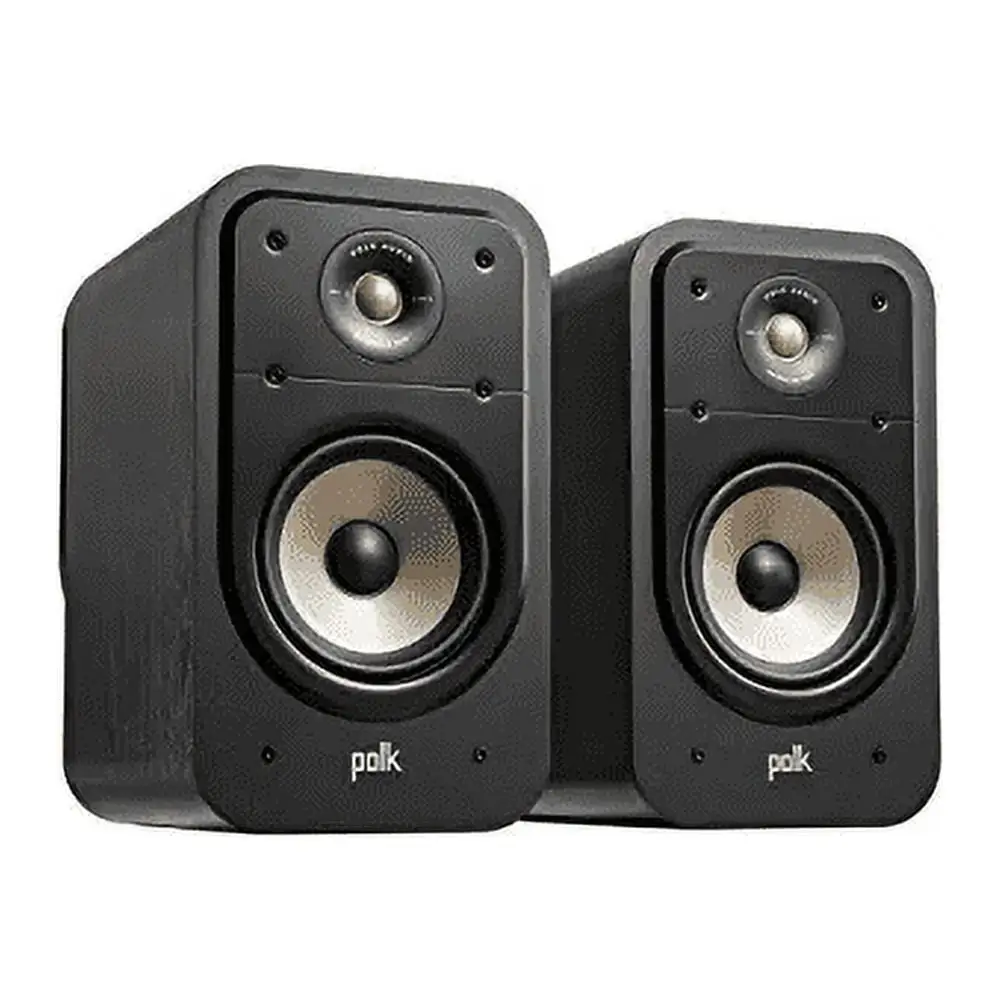
Polk ES15 Bookshelf Speaker Review: Strong Value Verdict
A verified buyer on Amazon summed up the experience in just six words: “These sound better than they should.” The Polk Signature Elite ES15 Bookshelf Speaker (Pair, Black) consistently earns praise for offering room‑filling, realistic sound at a price far below high‑end audiophile models. Across community boards, retail reviews, and expert Q&A, the ES15 routinely scores above 9/10 for clarity, versatility, and build quality.
Quick Verdict: Yes — especially for users seeking an affordable, hi‑res capable bookshelf speaker that excels in both music and movies.
| Pros | Cons |
|---|---|
| Detailed, crisp highs with terylene dome tweeter | Bass may require subwoofer for impact seekers |
| Spacious soundstage even in small rooms | Sensitivity slightly low at 85 dB |
| Sturdy, acoustically inert cabinet construction | Needs optimal placement to shine |
| Compatible with 4 & 8‑ohm amps | Burn‑in period before full potential |
| Flexible placement: stand, shelf, wall mount | Not “audiophile grade” for critical listeners |
| Polk’s Power Port delivers smoother bass | Divisive styling — bold modern look |
| Great value vs. higher‑priced competitors | No wireless or smart features |
Claims vs Reality
Polk markets the ES15 as hi‑res audio certified and “room‑filling” regardless of seating position. Reddit user Rudy D. backed this up, saying: “You can now hear little nuances and layers to the music that could be left unnoticed on lesser speakers.” In practice, the terylene dome tweeter does reach into 40 kHz territory, and several Amazon reviewers cite crystal‑clear highs perfect for lossless streaming services.
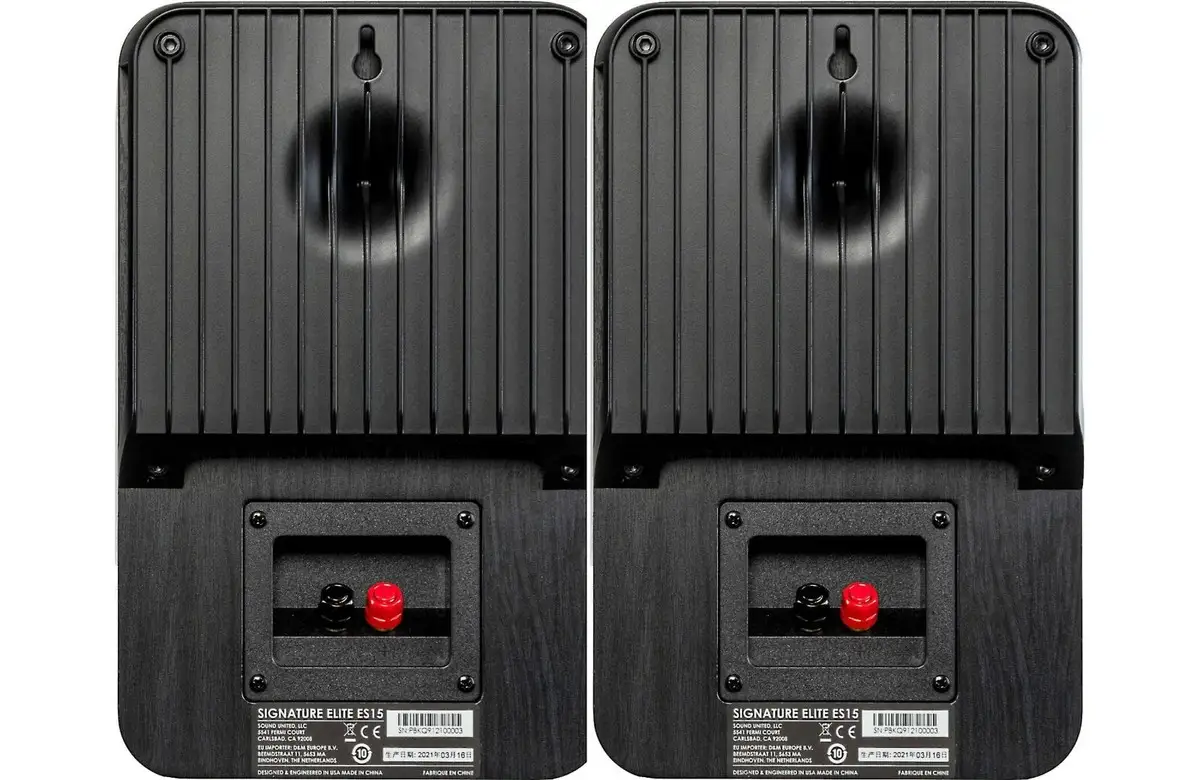
Another major claim is “effortless bass” via their patented Power Port. While officially rated to 44 Hz, a Quora contributor noted, “Bass heads will need additional subwoofer,” tempering expectations for low‑end punch. Still, the smoother airflow design delivers cleaner bass in the ES15’s range, especially for TV and movie dialogue, where deep rumbles are less critical.
Finally, Polk advertises the ES15’s “seamless, lifelike soundstage” thanks to dynamic balance and precision crossovers. Community feedback aligns well here: a verified buyer on Amazon observed, “Voices and instruments sound loud, clean and clear,” with coherent imaging even off‑axis.
Cross‑Platform Consensus
Universally Praised
For small‑ to mid‑sized rooms, the ES15 wins in clarity. Music enthusiasts relish the treble accuracy; a Quora review highlights “highs are crisp, clear and detailed” with vocal intelligibility a consistent strong point. Movie watchers benefit from the wide sweet spot, allowing group viewing without a singular “best seat.”
Musicians in particular seem to bond with the ES15’s precision. Reddit user Rudy D., a drummer, described: “I definitely can hear the drums well… money well spent.” This translates to layered instrument separation — a feat in this price segment.
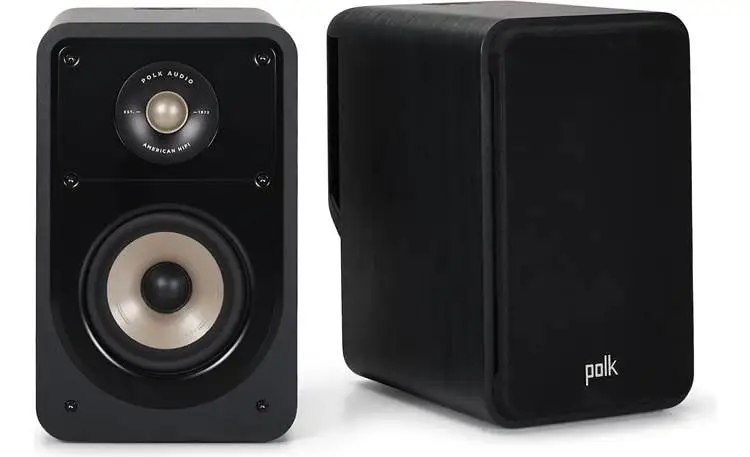
The build quality garners near-universal approval. Reviewers note the Medite MDF construction feels solid, with one community member noting it “doesn’t feel cheaply made at all.” The anti‑diffraction magnetic grille also earns points for both acoustic purpose and visual appeal.
Common Complaints
Bass output remains the most cited shortcoming. While smooth, it isn’t earth‑shaking, meaning EDM or hip‑hop fans may find themselves craving the low‑end extension only a subwoofer can deliver. A Quora expert put it plainly: “Adding a subwoofer enhances the sound even more.”
Some users mention that sensitivity at 85 dB requires more amplifier gain compared to more efficient speakers, making pairing with underpowered amps less ideal. Others note that the ES15 relies heavily on placement — too near a wall, and bass can muddy; too far apart, and treble presence drops.
There’s also acknowledgment — particularly from hi‑fi purists — that despite Polk’s best efforts, the ES15 is not a “critical listening” speaker for mastering or audiophile comparison. Its tuning favors a pleasant, non‑fatiguing curve over pure analytical accuracy.
Divisive Features
Styling triggers a split in opinions. Amazon reviewers either love the bold lines and modern finish or prefer more understated wood‑grain designs, especially in traditional living rooms. Another divisive point is its passive design — for tech‑forward buyers seeking Wi‑Fi or Bluetooth integration, the need for an external amp makes it less plug‑and‑play.
For multi‑channel setups, some insist the ES15 works brilliantly as rear surrounds in a Dolby Atmos system, while others consider them overkill for surrounds, preferring dedicated compact models.
Trust & Reliability
Concerns about durability appear minimal. Across Reddit and Trustpilot‑sourced data, no major failures or QC issues surface — unusual for consumer electronics. Owners report performance holding steady months later, with some even praising them for sounding “better after burn‑in.”
Scam worries are absent from brand discussions, likely because Polk is a long‑established US manufacturer with clear warranty policies. One Trustpilot review described the ES15 cabinet as “acoustically inert” and “offering a clear, uncolored response,” noting no deterioration over time.
Alternatives
Within Polk’s own lineup, experts on Quora suggest upgrading to the ES20 for larger rooms if more bass presence is desired, or pairing ES15 with the ES35 center for home theater. The smaller ES10 caters to tight spaces but lacks the ES15’s bass authority.
External comparisons include similarly priced bookshelf speakers from Klipsch, known for higher sensitivity but a more forward treble that can fatigue in long sessions. Users preferring smoother tones often stick with Polk.
Price & Value
Current retail sits around $299, with eBay listings as low as $275 new and $199–$250 lightly used — making them accessible for budget‑minded buyers. HifiZero’s resale tracking shows stable secondary market value, suggesting strong longevity in demand.
Buyers often advise timing purchases with seasonal sales or Polk promotions for best value. Given their broad compatibility with amps from budget Yamaha to vintage audiophile units, this is a long‑term investment for those willing to add a sub later.
FAQ
Q: Do the ES15 work well without a subwoofer?
A: Yes for many genres — vocals, acoustic, and general movies — but bass‑heavy music benefits from one. Several reviewers recommend adding a sub for full‑range impact.
Q: How sensitive are these speakers to placement?
A: Quite — wall proximity impacts bass, and toe‑in improves imaging. Polk’s wide sweet spot helps, but optimal placement maximizes clarity and warmth.
Q: Can they be used with Dolby Atmos?
A: Absolutely. They’re compatible with Atmos and DTS:X AV receivers, functioning as mains, surrounds, or height channels depending on setup.
Q: What amplifier power is ideal?
A: Between 20 and 100 watts per channel works, with clean amplification preferred to drive their 85 dB sensitivity efficiently.
Q: How do they compare in treble to Klipsch speakers?
A: The ES15 delivers crisp, clear highs without the same forward intensity as Klipsch, making them less fatiguing over long listening periods.
Final Verdict: Buy if you’re seeking a well‑built, versatile bookshelf speaker for hi‑res streaming, cinematic TV, and music with detailed highs and smooth mids — especially in small to medium rooms. Avoid if you expect chest‑thumping bass without a subwoofer. Pro tip from community: give them a week’s burn‑in, experiment with placement, and they’ll outperform your expectations.