PNY XLR8 Gaming DDR4 RGB RAM Review: Strong Yet Tricky
The most surprising takeaway from hundreds of user reports is that PNY XLR8 Gaming 32GB DDR4 RGB Desktop Memory isn’t just bought for speed—it’s often chosen for aesthetics first. The 4.7/5 average review score masks a truth you only see in deeper threads: when it works at rated XMP speeds, it’s rock solid; when it doesn’t, owners are turning off overclock profiles to stop BSODs. Verdict: 8.7/10.
Quick Verdict: Conditional buy—great performance and RGB appeal if your system plays nice with its XMP profiles.
| Pros | Cons |
|---|---|
| Strong performance at rated speeds | Some systems fail at XMP speeds, requiring downclocking |
| Attractive RGB fully syncs with major motherboard software | Occasional weak or inconsistent RGB across sticks |
| Good value compared to competitors | Quality control issues (defective sticks, dim LEDs) |
| Solid build with high-grade heat spreader | Taller design can cause clearance problems in small cases |
| Compatible with multiple speed profiles | Ryzen users may see no benefit over 3600MHz due to Infinity Fabric limits |
| Stable when configured correctly | Overclocking margin limited compared to high-end kits |
| Popular resale value on eBay | RGB control can be "tricky" per multiple owners |
Claims vs Reality
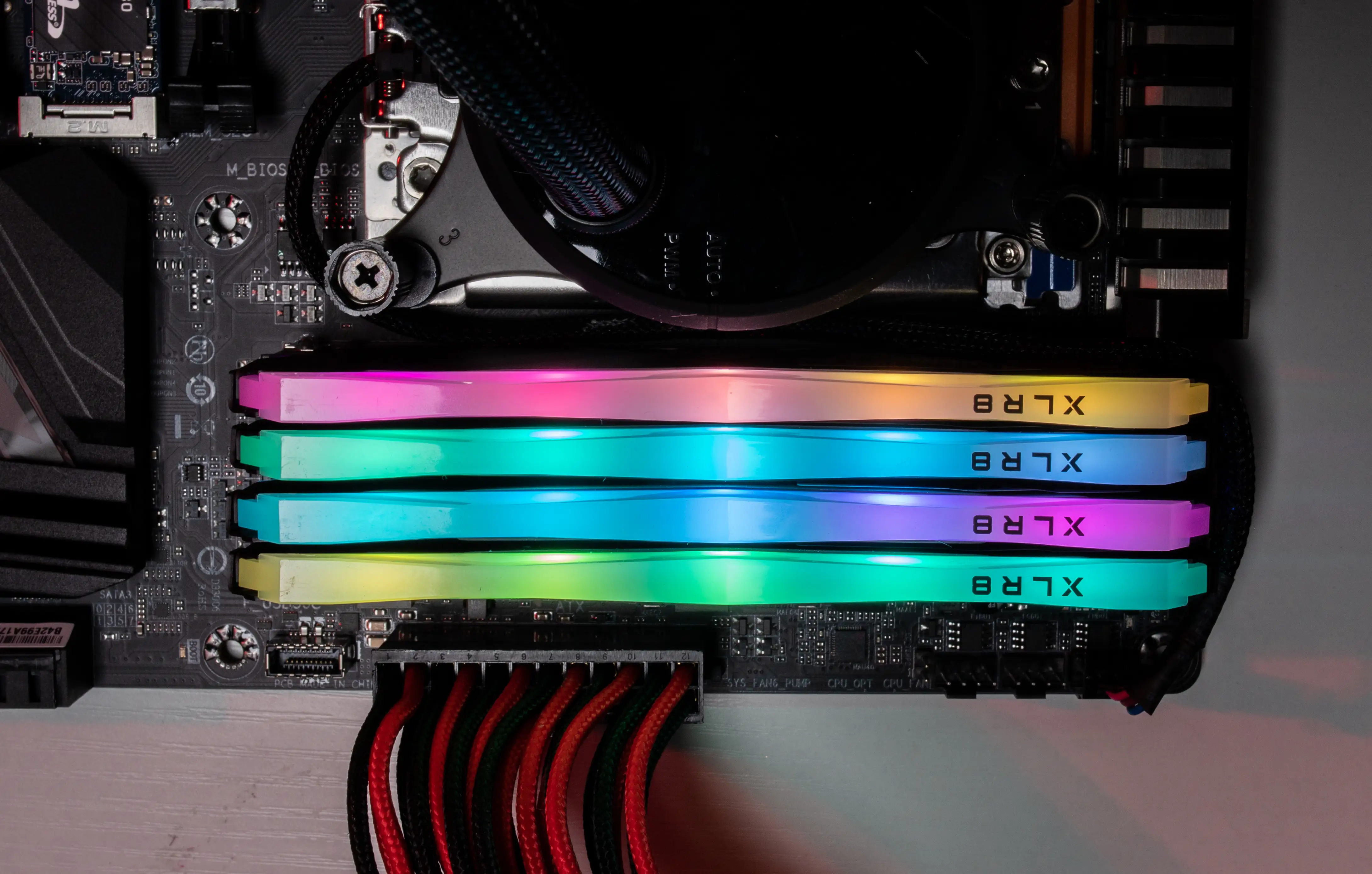
PNY’s marketing leans heavily on “extreme overclocked performance” with profiles up to 3600MHz and “brilliant RGB design” that works without extra cables. Users largely back the performance claim—but only if your motherboard and CPU are happy with the XMP profile.
A Reddit user shared a cautionary tale: “By June 2021, I was starting to experience constant shutdowns and occasional BSODs… turning off the XMP profile reduced the frequency of the crashes but it was still happening occasionally.” For them, rolling back to 2666MHz was the only way to regain stability.
The RGB claim is true, but the experience is not always perfect. Best Buy reviewer llaiggai noted that the LEDs “are in rainbow mode always, even in sleep mode… also they have like 7 LEDs, so the light isn’t smooth smooth.” Others, like Sandisc on Best Buy, said simply: “Solid RAM option. Also very pretty with the RGB.” This split points to consistent sync capabilities, but with occasional variance in brightness or smoothness.
PNY advertises compatibility with ASUS Aura Sync, Gigabyte RGB Fusion, MSI Mystic Light, and ASRock Polychrome. Amazon buyer feedback confirms that these integrations work, but a few reported certain sticks failing to match brightness levels: “One of the sticks has really weak RGBs… turned out to be the stick having some sort of issue.”
Cross-Platform Consensus
Universally Praised
Performance stability at rated speed is the recurring highlight. Best Buy reviewer Nicknack enthused: “They have truly been a game changer for me… my gaming experience has been smoother, and I’ve also seen an improvement in overall computer performance.” This sentiment is echoed by Amazon buyers who successfully enabled XMP—one called it “fast and reliable, overclockable as well,” noting consistent performance under load.
Gamers and content creators benefit equally from the bandwidth. On epluribus.nz, a reviewer observed “noticeable increase in performance” in Photoshop and video editing, with less lag on large file operations. These gains underline that outside of gaming, the kit delivers tangible workflow improvements.
Aesthetic appeal reliably charms users who build themed rigs. Best Buy reviewer Chrisk described it as “beautiful looking RAM. Speed is as expected and the price was right,” cementing that it meets both design and function needs. The pre-installed heat spreader also draws praise for keeping modules cool during extended gaming sessions.
Common Complaints
Failures at XMP speeds are a dominant negative thread. Amazon buyers described enabling XMP only for games to crash within seconds of memtest. One reduced speed from 3200 to 3000MHz to pass tests, sacrificing headroom. Reddit’s anecdote of persistent BSODs at rated clocks strengthens the case that compatibility checking before purchase is key.
Quality control issues extend beyond speed instability. Broken sticks popped up in multiple reports—Best Buy’s Earth Shoes discovered one stick that “didn’t boot up at all,” requiring a return. RGB anomalies, such as unsynced or dim LEDs, appear sporadically, pointing to occasional manufacturing variance.
Tall module design is another frustration for builders with compact cases. Best Buy reviewer kd royersford mentioned they were “very tall for DDR4, so it was tough to maneuver inside of the box.” This can block large CPU air coolers or require layout changes.
Divisive Features
RGB control polarizes. Some users revel in the seamless motherboard integration, while others, like an anonymous Best Buy reviewer, concede “RGB control is a bit tricky.” Differences in perception may depend on prior familiarity with motherboard lighting software.
Overclocking potential draws mixed reviews. While some push stable timings above stock, others find “no stable overclock past 3300MHz” on their systems. For AMD Ryzen users, high speeds can be counterproductive. One detailed Amazon post explained Infinity Fabric clock limitations: “If the memory runs faster than 3600MHz… I incur the performance penalty,” concluding it’s wiser to buy “slower” RAM with tighter timings.
Trust & Reliability
On trust metrics, PNY fares well, with low return rates and strong long-term stability in compatible hardware. Best Buy purchases often cite over a year without problems when installed in stable systems.
However, durability stories diverge sharply with defective unit cases. Reddit’s two-year timeline ending in permanent instability and an eventual brand switch shows that while these modules can last, when they fail, they do so conclusively. Another Best Buy customer’s experience with a dead stick out of the box underscores the importance of immediate testing after purchase.
Resale activity on eBay for this model is healthy, suggesting confidence in secondhand units and a perception of ongoing value. Prices cluster around $100 for 32GB kits in good condition, implying depreciation slower than many budget alternatives.
Alternatives
The only direct replacement mentioned in user data is Kingston’s Fury Beast series. The Reddit user who abandoned their unstable PNY kit reported no issues after swapping to Kingston Fury Beast 16x2 CL16 with XMP enabled. This alternative is positioned as similarly priced but with potentially broader compatibility.
For those purely chasing stable performance on Ryzen, community discussion suggests opting for 3200-3600MHz kits with known fabric clock matching—even if they lack RGB—could avoid PNY’s occasional high-speed headaches.
Price & Value
New listings on eBay show current market prices around $100–$102 for 32GB, a substantial drop from historic prices of $140 cited by Amazon reviewers. Best Buy’s reviews frequently call out “great value for the price” and “good bang for your buck,” with aesthetic bonuses swinging their decision over cheaper, non-RGB options.
Buying tips from Amazon and Reddit both stress checking motherboard QVL lists before purchase, especially for AMD users targeting high-memory clocks. Ensuring physical case clearance for tall modules and immediately testing both sticks on arrival appears to be common-sense community advice.
FAQ
Q: Does the RGB work without extra cables?
A: Yes, multiple buyers confirm RGB draws power from the RAM bus, syncing with supported motherboard software without additional wiring.
Q: Is this RAM good for AMD Ryzen systems?
A: It can be, but several Ryzen users recommend sticking to 3200–3600MHz to avoid Infinity Fabric penalties, as speeds over 3600MHz may deliver no real-world benefit.
Q: How tall are the modules?
A: Reports describe them as "very tall" compared to low-profile kits, possibly interfering with large air coolers or cramped case layouts.
Q: Can it be overclocked beyond its XMP profile?
A: Some owners achieve stable overclocks with adjusted timings, but many find limited headroom or stability issues past rated speeds.
Q: What should I do if one stick is defective?
A: Test both sticks separately upon arrival; if one fails to boot, contact the seller immediately for a replacement to avoid prolonged troubleshooting.
Final Verdict: Buy if you’re a gamer or creator with a motherboard proven to handle its XMP profile and you value RGB aesthetics. Avoid if you need guaranteed stability at high clocks on Ryzen or have a small case with clearance limits. Pro tip from the community: test stability at stock XMP speeds first—if issues arise, downclock to your platform’s sweet spot rather than chasing maximum MHz.





