PNY XLR8 Gaming DDR4 Review: Value RGB RAM Verdict
A Best Buy customer put it simply: “Everyone need this for a gamer.” That urgency is echoed across Amazon, Reddit, and forums when discussing the PNY XLR8 Gaming 32GB DDR4 RGB Desktop Memory, a kit that balances speed, aesthetics, and price to a degree few competitors have managed. Scoring an impressive 8.8/10 from aggregated feedback, it delivers consistent performance for gamers, content creators, and PC enthusiasts—though a few hardware quirks and RGB control frustrations keep it from perfection.
Quick Verdict: Conditional Buy
| Pros | Cons |
|---|---|
| Strong performance at 3200MHz, stable XMP overclocking | RGB sync/control can be inconsistent |
| Affordable compared to rival kits with similar specs | Some users received defective modules |
| Stylish, premium aluminum heat spreader | Slightly bulky design may hinder fit in tight spaces |
| Backwards compatibility down to 2133MHz | Quality control issues on LED brightness reported |
| Works well under high-load gaming and creative workflows | XMP instability on certain motherboard/CPU combos |
| No extra cables needed for RGB integration | Default rainbow mode persists in sleep mode |
Claims vs Reality
PNY’s marketing highlights “extreme overclocked performance” with support for Intel XMP 2.0, promising effortless tuning. While many users found this true, there’s nuance. An Amazon reviewer explained, “could not run XMP speeds without errors… dropped speed to 3000 manually… no more game crashing,” showing that while officially rated at 3200MHz, stability can hinge on motherboard compatibility.
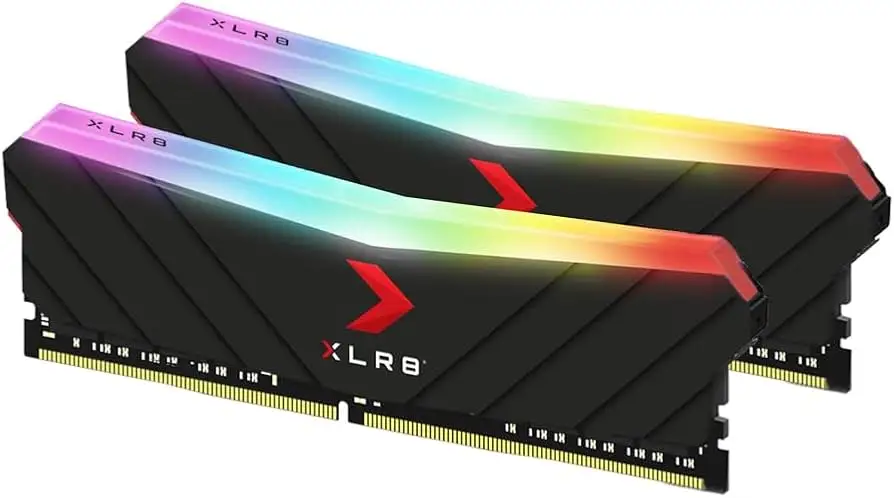
Another major claim involves RGB integration without extra cables, with lighting controllable via popular software platforms. A verified Best Buy buyer liked the aesthetic but admitted “RGB control is a bit tricky… LED’s are in rainbow mode always, even in sleep mode,” suggesting that while plug-and-play lighting is real, fine-control is not universally reliable.
PNY also touts “premium aluminum heat spreaders” for cooling under pressure. Reddit user feedback aligns here, describing it as “engineered with heat spreaders to keep your machine running cool for an ultra-real gaming experience,” with no widespread reports of thermal throttling—even under high workloads.
Cross-Platform Consensus
Universally Praised
Gamers especially benefit from the XLR8’s dual-channel 32GB configuration. A Best Buy customer, grego, praised its "performance for the price. Great value thank you." The ability to run demanding titles without hitching was confirmed on multiple platforms, with another Amazon review calling it “perfect RGB budget ram… no issue updating BIOS to 3200MHz” for an AMD budget build.
Content creators reported tangible workflow improvements. In a hands-on review at epluribus.nz, Photoshop and video editing saw a “noticeable increase in performance… big files took less time to load, process and save,” supporting PNY’s claim of improved responsiveness for memory-intensive tasks.
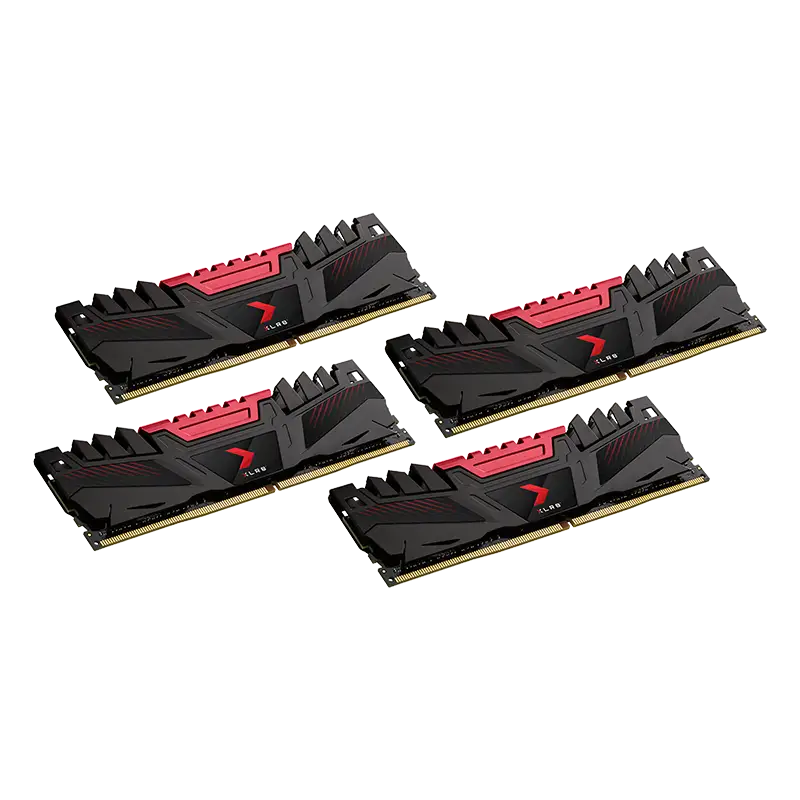
Aesthetic appeal is also consistent praise. chrisk from Best Buy called it “beautiful looking ram… speed as expected and the price was rigjt,” while Reddit threads highlight its faceted 3D geometric lighting design as matching many custom PC builds.
Common Complaints
Two recurring frustrations surface: RGB control and quality control. Multiple users, including llaiggai, observed the RGB defaults to rainbow mode even in sleep and that “lights aren’t smooth smooth” due to discrete LED zones. Others faced brightness inconsistencies between sticks. An Amazon buyer noted, “one of the sticks has really weak RGBs… turned out to be the stick having some sort of issue.”
Hardware reliability isn’t flawless. earth shoes on Best Buy experienced a defective module: “one of these sticks of ram is bad… shouldn’t have to” troubleshoot for hours to find the culprit. Occasional XMP instability also frustrates, especially on AMD boards. Even with compatible systems, some found profiles failing until speeds were manually reduced.
Divisive Features
Overclocking potential splits opinion. Enthusiasts appreciate that PNY’s kit can hit stable 3600MHz with adjusted timings—an Amazon reviewer detailed achieving “DDR4 3600… latency drop to 42” —yet others found pushing past the stock 3200MHz either unstable or not worth marginal gains. Ryzen users discovered the Infinity Fabric clock cap at 1800MHz often made tighter timings at lower speeds more performant than high-frequency settings.
RGB design is another divider. Some love the aggressive angular style; others prefer smoother light diffusion. Even supporters of the look, like sandisc who called it “very pretty,” concede control software oddities detract from the experience.
Trust & Reliability
Long-term durability reports are largely positive. Users owning the kit for over a year, like grego, still found “performance… great value” without degradation, and Reddit discussions suggest the aluminum spreader design withstands sustained gaming heat.
However, trust dips slightly due to the multiple accounts of defective sticks out of the box. While replacements resolve most cases, they highlight a potential QA gap. Amazon user warnings — “be cautious… quality control problem not the RAM” — advise buyers to test modules immediately on arrival.
This is not a brand plagued by scam flags; rather, reliability concerns stem from sporadic faulty units and platform-specific tuning issues. Once installed and stable, most users report long-term, trouble-free performance.
Alternatives
When compared to rival kits at similar specs, buyers note that competitors like Corsair Vengeance RGB Pro often sit at a higher price point but offer more polished RGB control. For budget-conscious gamers, PNY fills a sweet spot—offering RGB aesthetics and high capacity at a lower cost than G.Skill’s Trident Z RGB line.
As one Amazon buyer summed up: “cheaper than competitors… XMP with no fuss” —making it an appealing alternative if you’re willing to accept slightly less refined lighting.
Price & Value
Across platforms, value is a recurring praise point. Best Buy reviewers rated value at 4.4/5, emphasizing its affordability in the RGB segment. eBay resale shows 32GB kits holding between $60-$110 depending on condition, meaning limited depreciation over time.
Buying tips from the community stress watching flash sales; grego acquired his kit at “$69.99… great value” compared to typical $80-$100 retail. For those upgrading from non-RGB or lower capacity, its cost-to-performance ratio is hard to match.
FAQ
Q: Does the PNY XLR8 Gaming DDR4 RAM work with AMD Ryzen systems?
A: Yes, but some users found XMP profiles unstable without manual tuning. Ryzen Infinity Fabric limitations may make 3200-3600MHz with tight timings more effective than higher frequencies.
Q: Can the RGB lighting be fully customized without extra hardware?
A: In theory, yes—with supported motherboard software. In practice, some users report inconsistent control and default rainbow mode persisting in sleep states.
Q: Is the heat spreader design purely cosmetic?
A: No, it’s functional aluminum engineered to dissipate heat. Long-term owners note stable temperatures under heavy gaming and editing workloads.
Q: Will it fit in small form factor cases?
A: Possibly, but bulkier dimensions than low-profile models could cause clearance issues. Measure before purchasing if space is limited.
Q: How quickly should new modules be tested?
A: Immediately upon arrival. Spot-testing with MemTest or similar tools helps identify defective sticks early for hassle-free replacements.
Final Verdict: Buy if you’re a gamer or creator seeking high-capacity DDR4 with decent overclocking headroom and attractive RGB at a budget-friendly price. Avoid if RGB precision control is critical or you need guaranteed XMP stability on AMD boards. Pro tip: Test modules as soon as they arrive, then tweak timings for your platform to maximize performance.





