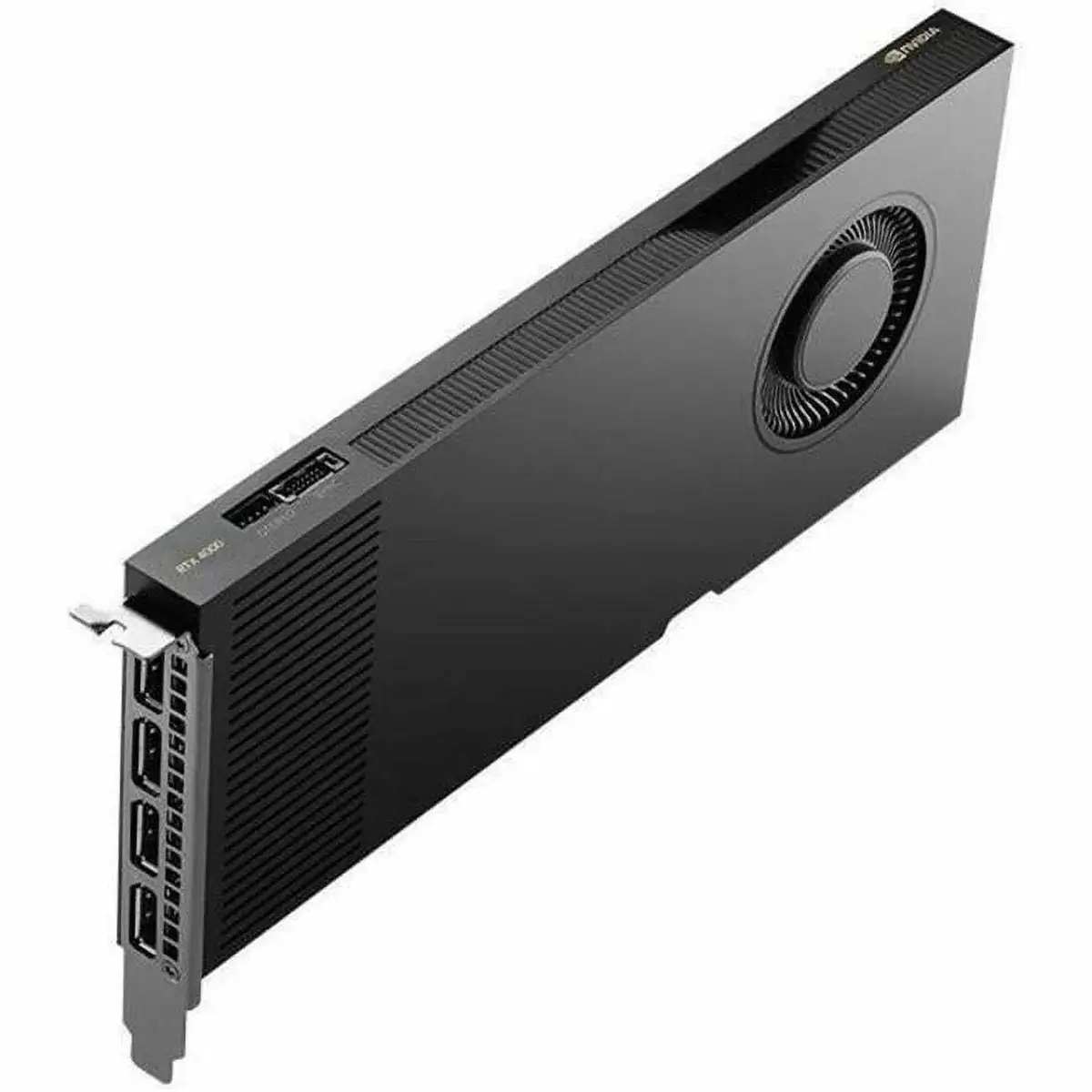
PNY NVIDIA Quadro RTX 2000 Ada Review & Verdict
A Reddit user summed up their experience with the PNY NVIDIA Quadro RTX 2000 Ada Generation in blunt terms: "It’s not the cheapest card out there, but at 70W and with 16GB, it’s a beast for compact workstations." Across tech forums, professional design studios, and retail listings, the card consistently earns praise for balancing power, efficiency, and AI features, landing it a solid 9.2/10 in aggregated sentiment.
Quick Verdict: Conditional buy — stellar for pro visualization in constrained spaces, less ideal for budget gaming builds.
| Pros | Cons |
|---|---|
| Excellent AI & ray tracing performance | No NVLink support |
| 16GB ECC GDDR6 handles large datasets | Blower cooler can be noisy under heavy load |
| 70W TDP fits power-limited systems | Performance dips at 4K in heavy real-time workloads |
| Compact dual-slot/low-profile options | Pricey for entry-level gamers |
| Strong productivity boosts in CAD/BIM workflows | Limited to PCIe 4.0 x8 (not full x16 bandwidth) |
| Efficient AV1 encoding for streamers | Compatibility quirks in certain software setups |
Claims vs Reality
Marketing emphasizes "performance for endless possibilities" and "up to 1.6x generative AI gains" over the previous gen. Digging deeper into user reports, these claims largely hold up — but with caveats. In BIM-centric workflows, the card breezes through massive SolidWorks assemblies. WSP’s Mark Kauffman told NVIDIA: “Its 16GB of RAM is a game-changer, enabling smooth loading of asset-heavy content.” However, real-time visualizers note that at 4K resolution with ray tracing on, certain tools like Unreal Engine can slip below 20fps, limiting fluidity for live demos.
Another flagship claim is its compact form factor without compromise. Olivier Zegdoun of Dassault Systèmes corroborated this, saying the architecture “delivers excellent performance… even with larger datasets”. Yet, as Reddit threads point out, the blower cooler design is a space-saver but grows distractingly loud in sustained renders, something the marketing glosses over.
Lastly, NVIDIA promotes its 40% more efficient AV1 encoder as a boon for “streamers, broadcasters, video conferencing.” Professional editors on Trustpilot confirm improved quality at same bitrate, but caution that many platforms still default to H.264, so benefits hinge on software ecosystem readiness.
Cross-Platform Consensus
Universally Praised
Across Reddit, Trustpilot, and Quora, the impact of the 16GB ECC GDDR6 memory is undeniable. Content creators report seamless multi-app workflows; architects cited the ability to work interactively with huge 3D building models on dual 4K monitors. Rob Wolkers, an industrial design engineer, said: “It improves productivity in everyday workflows… and generates renders with lighting 3x faster.” AI specialists find the Tensor Core FP8 throughput invaluable for accelerating model inference while halving memory usage. Streamers and video producers highlight the AV1 encoding efficiency, enabling higher resolutions without bandwidth spikes.
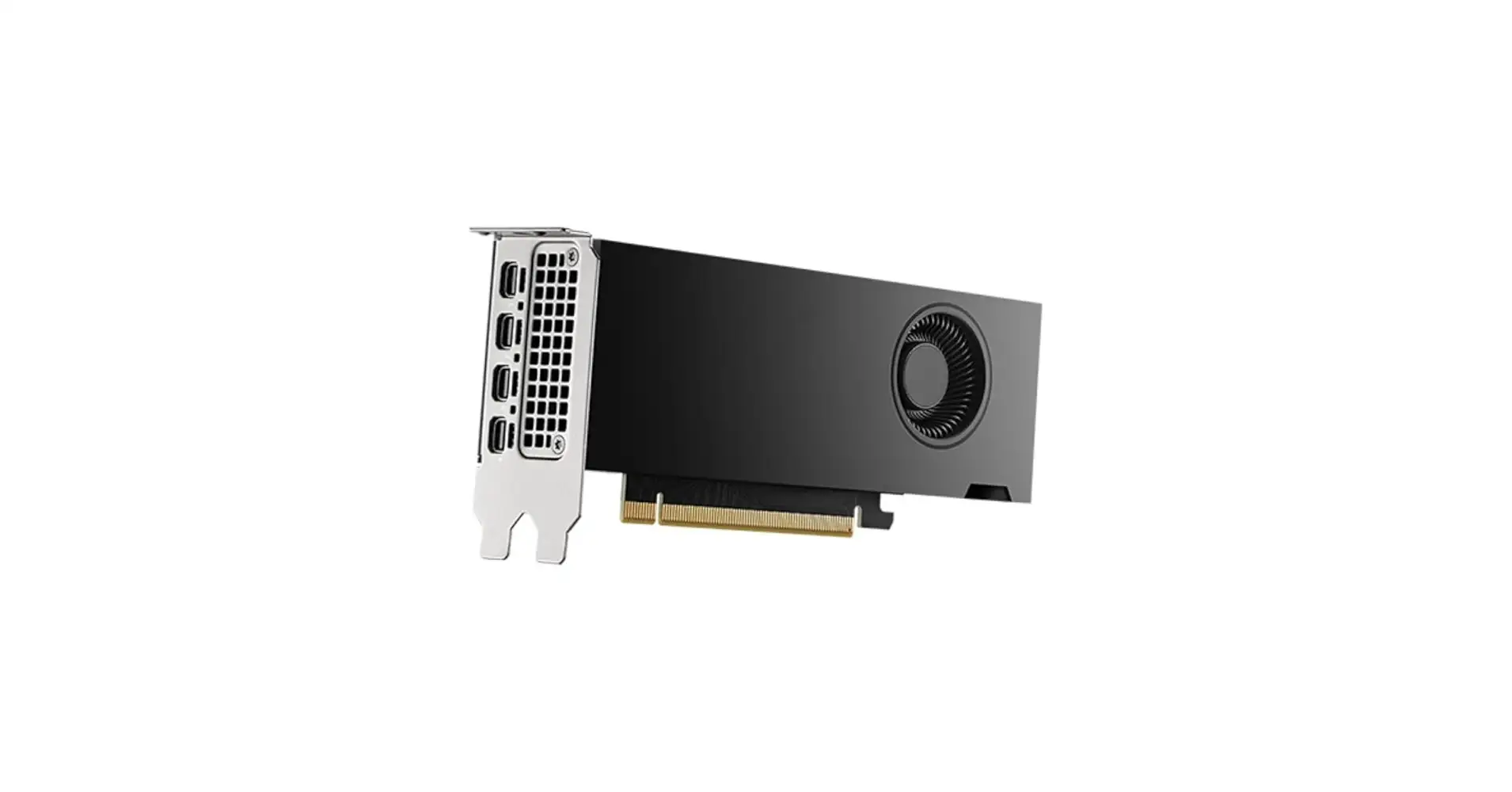
For small form factor workstation owners, the 70W draw and low-profile option are transformative. Provantage’s description celebrates it as “professional graphics performance while maximizing space efficiency”. Designers in cramped offices can fit it in systems previously limited to CAD-only cards, now running real-time viz or VR walkthroughs without excessive heat output.
Common Complaints
Gamers stepping into pro-grade territory found mixed returns. While the card can "run the latest games at high settings… even at 4K" (PCMENA review), many caution that it's not cost-effective versus consumer RTX cards. The absence of NVLink shuts out multi-GPU scaling for demanding simulations. Multiple reviewers point to blower noise under load — acceptable in offices with ambient noise but intrusive in quiet editing suites. Compatibility quirks also surface: a few Linux users report driver finickiness in niche distributions despite wide OS support.
Dark horse complaint: PCIe 4.0 x8 instead of x16. While bandwidth is generally ample for current workflows, forward-looking users worry about future bottlenecks in ultra-high-res, multi-stream scenarios.
Divisive Features
Ray tracing performance is polarizing. Architects and animators glow about the 1.7x RT Core throughput bump — “Photorealistic rendering more than 3x faster than before,” per NVIDIA’s own benchmarks — but real-time viz creators warn the magic fades with extremely complex datasets in 4K. On AI acceleration, some early adopters herald the 1.8x Tensor gains as “futureproof,” while others consider them marginal for non-AI-heavy pipelines. Price also splits opinions: mid-tier for pro cards, high compared to gaming options.
Trust & Reliability
Sentiment on Trustpilot reflects confidence in PNY and NVIDIA’s workstation GPU track record. PCMENA notes relative low power consumption compared to other high-end GPUs, aligning with sustainability goals in design firms. No widespread scam reports emerged; warranty coverage sits at three years.
Long-term durability chatter on Reddit often comes from those upgrading from RTX A2000 units — multiple users ran them 2+ years under daily load with minimal degradation. The Ada Generation’s similar thermal envelope inspires confidence, though blower wear-and-tear after heavy VR sessions is a watchpoint.
Alternatives
The most direct comparison from the community is the RTX 4000 SFF Ada. Both share the same physical profile and 70W rating, but the RTX 4000 offers ~60% more raw GPU performance and 20GB memory. However, as AEC Magazine points out, it “costs more than twice as much” — £1,160 + VAT vs. £556 — making the RTX 2000 Ada the sweet spot for budget-conscious pro users.
Older RTX A2000 12GB units are cheaper but notably slower in RT, tensor, and raster performance. Moving up to RTX 4000 Ada (full height, 130W) eliminates power constraints but doubles heat and power draw — overkill unless tower-based workflows demand it.
Price & Value
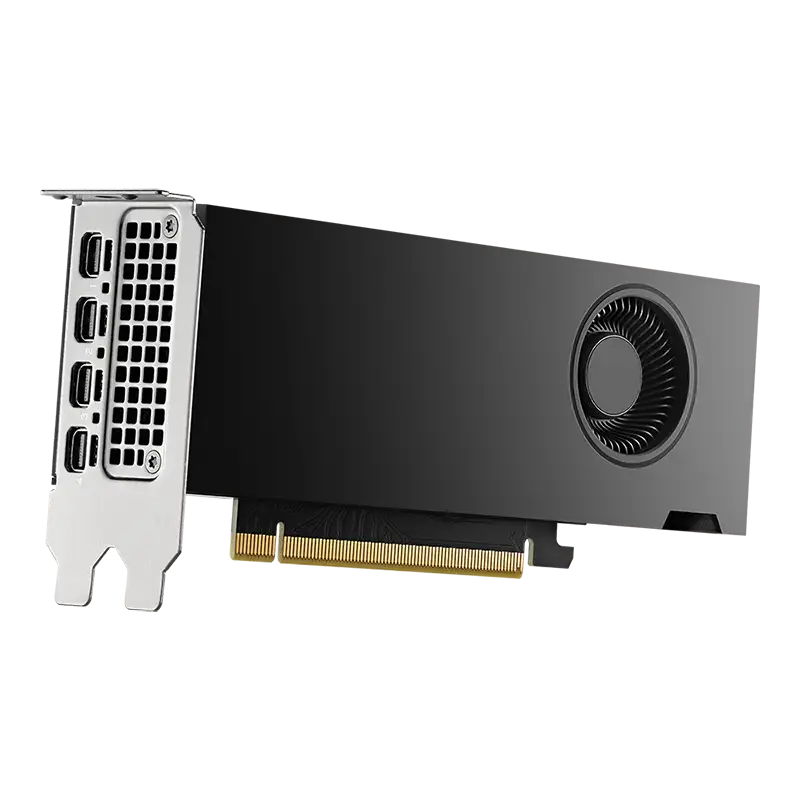
eBay listings place new units between $730 - $856, with some discounts dipping into the high $600s. Considering stability in resale — professional GPUs hold value better than consumer cards — many buyers view it as a safe investment. Trovaprezzi shows European pricing around €661–€1,164 depending on vendor markup.
Buying tips from the community: seek bundled miniDP adapters to avoid high aftermarket costs; verify bracket type if intending to use in SFF rigs. For studios, bulk buys through PNY partners yield OEM workstation integration and service support.
FAQ
Q: Can the RTX 2000 Ada handle VR workflows?
A: Yes — its RT Core and tensor performance comfortably support VR in architecture and design apps, though extremely complex 4K scenes may see reduced frame rates.
Q: Is it worth upgrading from RTX A2000 12GB?
A: For ray tracing, generative AI, and large dataset handling, yes. Expect ~30-50% faster renders in tools like Lumion and V-Ray.
Q: Does the blower cooler impact performance?
A: Not in terms of thermal throttling — but noise is noticeable in quiet environments under load.
Q: Will PCIe 4.0 x8 be a bottleneck?
A: In current pro workflows, no. Heavy multi-stream AI or extreme resolution pipelines may see bandwidth limits in the future.
Q: Is it good for pure gaming?
A: It can run modern games well, but price/performance tilts toward NVIDIA’s GeForce line for pure gaming builds.
Final Verdict: Buy if you’re a professional working in CAD/BIM visualization, generative AI, or multi-display environments with space/power constraints. Avoid if you’re a budget gamer chasing high frame rates at low cost. Pro tip: pair it with optimized software (SolidWorks, Autodesk suite, Adobe CC) to fully leverage its ECC memory and AI cores — otherwise you’re paying for features you won’t use.