Pelican Air 1615 Case Review: Tough Buy, 8.9/10
A suitcase that people actively dare airlines to destroy is a rare kind of endorsement. One Amazon reviewer joked: “my plan is to have delta break it… after a dozen flights delta has only been able to scratch it all up.” For frequent flyers and gear-haulers who treat baggage handling like a contact sport, the Pelican Air 1615 Case lands as a confident yes—provided you accept the trade-offs. Verdict: Yes (conditional) — 8.9/10
Quick Verdict
The Pelican Air 1615 Case is repeatedly described as a “box” for people prioritizing protection over polish. Users praise its toughness, leak resistance, and capacity, while complaining about weight, cosmetic scuffing, and (for some) missing accessories in travel versions.
| Call | Evidence from users | Who it fits best |
|---|---|---|
| Buy if you need protection | Amazon reviewer: “super strong and everything fits in one case.” | Photographers, contractors, firearms owners, expedition travelers |
| Buy if you check bags often | Amazon reviewer logged “27 USA domestic flights… plus 4 international” with “no damage to the contents.” | Frequent flyers, remote work travel |
| Conditional if you hate scuffs | Amazon reviewer: “tends to show more rough handling scars” | Anyone who cares about “looks new” |
| Conditional if you’re weight-limited | Amazon reviewer: “pretty hefty so you hit 40 lbs pretty quick” | Airlines with strict weight rules |
| Conditional if you want a spinner | Amazon reviewer: “if this could be a spinner case… it’s only a pull case” | Urban travel, long terminals |
Claims vs Reality
Pelican marketing leans hard into “maximum airline check-in size,” “watertight,” and “up to 40% lighter.” Digging deeper into user reports, those claims mostly hold—but not always in the way shoppers expect once real-world packing and airline weight limits enter the picture.
Claim #1: “Maximum airline check-in size… without incurring oversize baggage fees.”
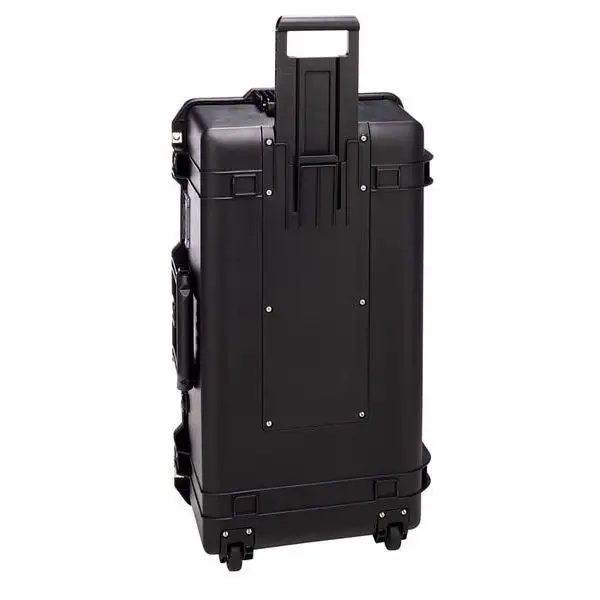
On paper, the exterior dimensions are listed around 32.58" × 18.40" × 11.02" (Pelican official listings). In practice, Amazon buyers repeatedly frame it as built for abuse in checked baggage rather than something that glides through travel like conventional luggage. One Amazon reviewer called it “fantastic as luggage or airline transport” and emphasized that after heavy mileage, it still had “just minor scuffs… and with no damage to the contents.”
But there’s a subtle mismatch in how some people mentally file it: a few third-party review snippets (Trustpilot analysis excerpts) include statements like “fits dimensions of airline carry on,” which clashes with the case’s widely understood identity as a large check-in roller. While the official positioning centers on check-in sizing, scattered user claims suggest some confusion about carry-on viability depending on aircraft and airline policies.
Claim #2: “Watertight… waterproof O-ring seal.”
Water resistance isn’t just marketing fluff in user stories—it’s used as a reason to throw it into bad conditions. A verified buyer on Amazon described it living in rough environments: “rain, snow, mud, and dirt… no worries about your stuff getting wet.” Another Amazon reviewer said: “never had a leak” even after it was “tied to the roof” and shipped through carriers and airlines.
That said, waterproof doesn’t mean “stays pretty.” People treat it like a tool chest, not a fashion bag. The same buyer enthusiasm often comes with acceptance of cosmetic wear: “scrapes and scratches” show up, but users tend to frame them as superficial.
Claim #3: “Lighter… up to 40% lighter.”
Users do echo that it’s lighter than traditional Pelican cases, but “light” becomes relative once you’re working with an empty case that starts in the mid-teens for pounds. A Reddit poster (r/QualityTacticalGear) said: “the case weighs empty at 15 lbs,” and a frequent-travel Amazon reviewer still called weight the main downside: “it’s pretty hefty so you hit 40 lbs pretty quick filling it up.” The story here isn’t that Pelican lied—it’s that “lighter than the old tank” doesn’t translate to “lightweight suitcase” once airline weight caps show up.
Cross-Platform Consensus
Universally Praised
The Pelican Air 1615 Case earns its reputation through narratives of repeat punishment—airline baggage systems, trucks, muddy job sites, and long-haul travel. A recurring pattern emerged across Amazon and community posts: people buy it when they’re done gambling with conventional luggage.
For frequent flyers carrying valuable equipment, the “no damage to contents” theme dominates. A verified buyer on Amazon wrote that baggage handlers took it across “27 USA domestic flights… plus 4 international” with “no damage to the contents.” That same reviewer framed it as Pelican “achieved the perfect balance between cutting weight and yet retaining strength and content protection,” an opinion that resonates with gear-heavy travelers who need both durability and a fighting chance at staying under airline weight thresholds.
For work travelers and contractors, the appeal is less about photo gear and more about survival in uncontrolled transport. One Amazon reviewer described construction travel where the case ends up exposed: “back of the truck… rain, snow, mud, and dirt,” concluding: “no worries about your stuff getting wet.” Another talked about packing breadth—“enough space for clothes, computer, documentation, some tools”—and emphasized real-world logistics: shipped via “fedex and ups,” tossed around by airlines, and still “never had a leak or any damage” beyond scuffs.
Capacity is the other constant. One Amazon buyer’s review headline says it plainly: “massive space,” adding: “everything fits in one case.” The Reddit traveler who uses it for gear transport described a loadout including “1x folded rifle 2x holstered pistols” and more, noting it’s “worked pleasantly well” for “air travel and long-haul drives.” Across use cases—camera rigs, tools, firearms—users keep circling back to the same point: it consolidates a lot into one locked, rolling shell.
After those narratives, the praise tends to compress into a few repeated ideas:
- “Built for abuse” checked-bag travel
- Big interior volume that prevents “multiple bag” chaos
- Water resistance that reduces worry in bad weather
Common Complaints
Complaints don’t usually dispute the core purpose; they highlight the friction that comes with choosing a hard rolling case over a typical suitcase. Digging deeper into user reports, the most consistent downside is weight—especially when airline rules punish heavy packing.
One Amazon reviewer who otherwise loved the case said: “the only downside is the weight… you hit 40 lbs pretty quick filling it up.” Another described it as “a heavy case… in the neighborhood of 16+ pounds” and warned that you “need to be creative in your packaging.” For travelers living under strict checked-bag limits (often 50 lbs), starting at 14–16+ lbs empty changes what “bringing enough gear” looks like.
The second major complaint is cosmetic wear. One Amazon reviewer praised protection but warned: “it tends to show more rough handling scars than other cases.” Another embraced the same reality: “it scratches up pretty fast, but i like patina.” In other words, some buyers want a pristine-looking suitcase; many Pelican buyers accept (or even like) the visual evidence that it’s doing its job.
A smaller but real frustration: missing accessories. A verified buyer on Amazon gave four stars “only marked down because it was missing the packing cubes.” That’s not a complaint about the shell itself, but it matters for shoppers choosing between a bare case, foam, TrekPak, or travel versions with organizers.
After the stories, the repeated pain points look like this:
- Weight makes airline packing harder
- Scratches/scuffs show quickly
- Occasional missing organizer components
Divisive Features
The Pelican Air 1615 Case splits users on mobility and “luggage feel.” Some see it as a smooth-pulling tank; others wish it behaved like modern four-wheel luggage.
On the pro side, a verified buyer on Amazon said: “the case pulls very easily when loaded to 50 pounds total weight,” which is high praise for a two-wheel roller carrying dense gear. But another Amazon reviewer wanted a different wheel system entirely: “if this could be a spinner case… it’s only a pull case.” The implication is clear: if your travel style is long airport walks and tight hotel corridors, a two-wheel pull might feel dated compared to spinner luggage—even if it’s tougher.
The other divisive element is how “utilitarian” it looks. Some buyers love that. One Amazon reviewer framed it against luxury baggage and chose Pelican precisely because it would “stand up to the abuse airlines will put luggage through,” calling it “rugged and utilitarian.” Meanwhile, Trustpilot analysis snippets include a blunt aesthetic trade: “it does not win the beauty pageant… but it serves… well.” If your priority is image, the case’s identity as a protective equipment box can be a feature—or a drawback.
Trust & Reliability
Trustpilot-style review analysis excerpts skew heavily positive on build quality (“built like a tank,” “built like a rock”), but they also surface a recurring skepticism about pricing. One snippet captures it: “pelican makes good, if overpriced stuff.” That theme doesn’t read like a scam warning; it reads like buyers wrestling with the premium cost and deciding whether durability justifies it.
For long-term reliability, the strongest evidence comes from mileage-based stories rather than first impressions. One Amazon reviewer tracked flight distance and time, describing tens of thousands of air miles with only “minor scuffs,” and even cited a friend adding “80,000–100,000” more miles in six months with it “holding up just fine.” On Reddit, a firearms/gear traveler reported years of use and added a practical durability note: when fully loaded, “the retractable trolley handle bends quite a bit,” so they preferred the “top carrying handle” while rolling. That’s not failure, but it’s a real-world stress point when the case hits “50–60 lbs” checked weight.
Alternatives
Competitors aren’t explicitly named in the user-provided data as direct alternatives, but users do compare the Pelican Air 1615 Case to “traditional” and “luxury” rolling suitcases. One Amazon reviewer said they looked at suitcases “upwards of $1500” and still chose Pelican because it was the only one they believed would survive airline abuse. Another praised it as a lighter take versus older Pelican construction methods: “much less weight than their former methods.”
So the practical “alternative” in the dataset is conventional luggage—often more stylish and sometimes lighter, but perceived as fragile under airline handling. The trade is straightforward in user language: Pelican is “rugged and utilitarian,” while standard luggage is easier to live with day-to-day but less trusted when checked with expensive gear inside.
Price & Value
Prices vary sharply across listings. Specs pages show figures like $374 (ColorCase listing for black/red handles) and Pelican official store prices in the $300–$400 range, while an Amazon travel-case listing shows $509.95. That spread fuels the “overpriced” sentiment in aggregated reviews, but the resale market complicates the picture.
On eBay/PicClick, listings show everything from pre-owned deals (examples around the low hundreds) to near-new pricing in the $300–$500 range, suggesting that the case holds value better than typical luggage. For deal-hunters, community behavior hints at a strategy: buy used if cosmetic scuffs don’t matter, because scuffing is expected anyway. For frequent flyers, “best investment” language shows up repeatedly—one Amazon reviewer called it “probably the best investment in travel gear i’ve ever made,” tying value directly to survival over time, not initial cost.
Buying tips that come directly from users are more tactical than financial. One Amazon reviewer recommended removing external branding to reduce theft risk, calling it a “gray man approach,” and even suggested sticker-removal methods. That’s not about price tags—it’s about protecting value by reducing attention during travel.
FAQ
Q: Is the Pelican Air 1615 actually good for airline travel?
A: Yes, especially for checked baggage and fragile gear. A verified buyer on Amazon reported “27 USA domestic flights… plus 4 international” with “no damage to the contents,” and another said it’s the only case they trusted to survive “the abuse airlines will put luggage through.”
Q: Does it scratch easily?
A: Many buyers say yes, cosmetically. A verified buyer on Amazon noted it “tends to show more rough handling scars,” while another accepted it as normal wear: “it scratches up pretty fast, but i like patina.” Most comments frame scratches as superficial, not structural damage.
Q: Is it too heavy to pack under 50 lbs?
A: It can be challenging because the empty case starts around the mid-teens in pounds. An Amazon reviewer warned you “hit 40 lbs pretty quick filling it up,” and another called it “in the neighborhood of 16+ pounds,” recommending “be creative in your packaging.”
Q: Are the wheels and handle reliable when fully loaded?
A: Generally praised, but stress shows at high weights. One Amazon reviewer said it “pulls very easily when loaded to 50 pounds,” while a Reddit user reported the “retractable trolley handle bends quite a bit” when the case is at “50–60 lbs,” choosing to use the top handle instead.
Q: Do you need foam or dividers?
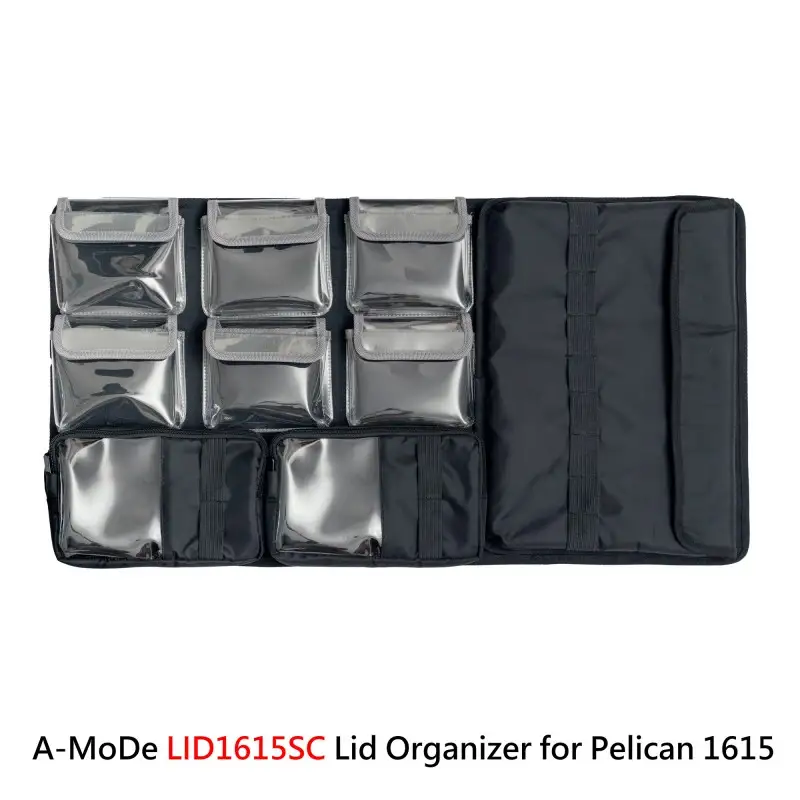
A: It depends on your gear. Users like the ability to customize: Trustpilot analysis snippets mention it’s “great to be able to custom-fit the foam,” though foam can be “surprisingly easy to destroy” if you reconfigure often. Travel-focused buyers also mention add-ons like lid organizers and packing cubes.
Final Verdict
Buy the Pelican Air 1615 Case if you’re a frequent flyer, contractor, photographer, or gear traveler who needs “super strong” protection and is tired of luggage failure—especially when the case may get “tossed around by airlines” and still keep contents safe. Avoid it if you want a lightweight spinner suitcase or you care deeply about staying pristine, because users repeatedly warn it “scratches up pretty fast” and starts heavy.
Pro tip from the community: one experienced Amazon reviewer removes external Pelican stickers to reduce attention, calling it a “gray man approach” for airline transport.