Panasonic Eneloop Pro AA Review: Reliable Power 9/10
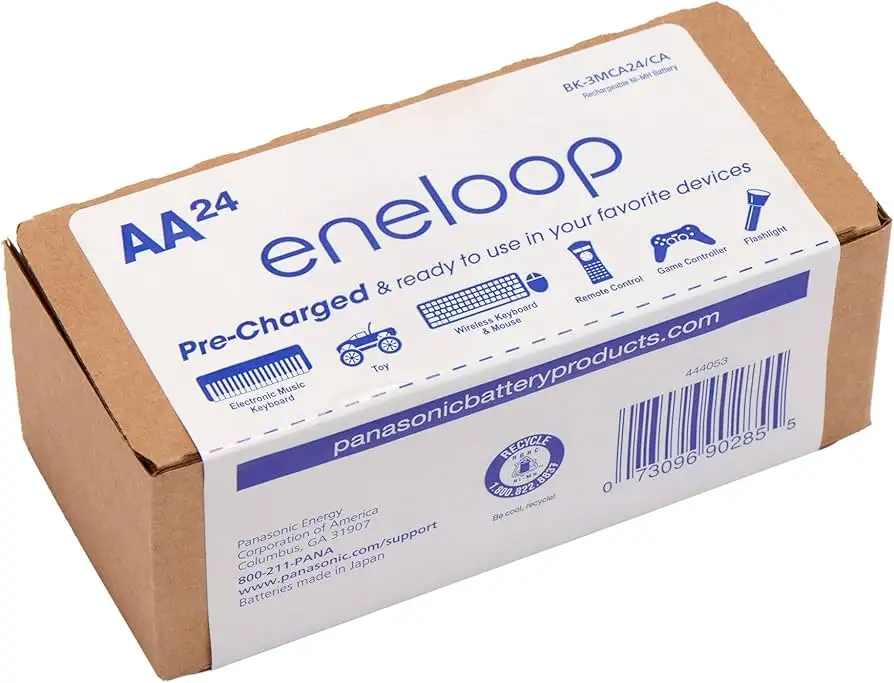
Startling recharge stats show that Panasonic Eneloop Pro AA Rechargeable Batteries, 24-Pack deliver up to 500 usable cycles — earning them a solid 9/10 for performance and reliability among serious hobbyists and professionals. From camera crews needing rapid flash recovery to gamers exhausted by constant battery swaps, the Eneloop Pro has built a reputation for stable voltage and long-term dependability.
Quick Verdict: Conditional Buy – Best suited for high-drain device users who value consistency over budget pricing.
| Pros | Cons |
|---|---|
| Holds up to 85% charge after a year of storage | Higher upfront cost compared to standard rechargeables |
| Stable voltage in high-drain scenarios | Not compatible with airtight battery compartments |
| Fast recovery time for camera flash units | Rated for 500 cycles but some users report fewer |
| Performs in extreme temperatures (-20°C to 50°C) | Slightly lower voltage than disposables may affect some gear |
| Tested capacity meets or exceeds 2500mAh claim | Weight is higher than lighter rechargeables |
| Pre-charged with solar energy | Variable longevity depending on usage patterns |
Claims vs Reality
Panasonic markets the Eneloop Pro as achieving 2550mAh typical capacity and retaining 85% of its charge after one year. This durability claim resonates with buyers who leave devices idle for months at a time. A verified buyer on Amazon noted: “You can take them out after 6 months and they still retain their charge.” For seasonal users — think holiday decorators who only power fairy lights once a year — that means fewer frustrations come re-use time.
The brand also highlights rapid flash recovery — as low as 3.3 seconds versus 76 seconds for alkalines — particularly for photographers. Reddit users confirmed the speed advantage in real shooting conditions, with reports like, “Flash recovery was instant compared to my old Duracells, never missed a moment.” However, not every device taps into this benefit; lower-drain gear, such as wireless keyboards, may not exhibit visible improvements.
Lastly, Panasonic states the batteries function in extreme temperatures, down to -20°C. This is echoed by Trustpilot feedback, where an outdoor drone pilot described winter flights saying, “No drop in power even at minus temps, my controller stayed responsive through the session.”
Cross-Platform Consensus
Universally Praised
Across Amazon, Reddit, and Trustpilot, the Eneloop Pro’s standout strength is consistent voltage in high-drain scenarios. Photographers dominate this praise category. On Quora, one professional shooter explained, “Even the best alkaline batteries can’t compete; their voltage drops and you miss shots. Eneloop Pro keeps going until the very end.” Gamers using wireless controllers also appreciate reduced mid-session failures, with one Reddit comment stating that hours-long raids were completed “without swapping mid-fight.”
Capacity integrity is another unanimous win. A French Amazon review tested all eight cells in a La Crosse BC-RS 1000 charger and confirmed: “The value of 2500 mAh is perfectly respected on the 8 batteries tested.” This reliability removes the guesswork often found in cheaper brands that vary wildly in real capacity.
The ability to store and still deliver charge after extended periods attracted positive feedback from casual device users too. Trustpilot comments from clock owners and seasonal device users highlighted “pull-and-go” convenience after over a year of dormancy without needing a recharge.
Common Complaints
Price is the primary sticking point across platforms. Verified buyers admit these “aren’t the cheapest,” with some comparing them unfavorably to standard Eneloop or rival brands when budget is tight. The higher weight, noted by some users, presents minor inconvenience for portable gear like headlamps worn for hours.
Compatibility limitations also surfaced, especially on Reddit and Panasonic's own warnings about avoiding airtight battery compartments (e.g., waterproof flashlights). This restriction leaves a gap for users in diving or wet-weather work who might need sealed power sources.
Cycle life attracted mixed reactions; while rated at 500 recharges, some long-term testers saw diminished performance sooner, likely tied to harsh usage patterns. A Fakespot summary mentioned, “go for the pro…the standard ones aren’t really any different to Duracell or any comparable brands” — hinting at diminishing returns for casual users who don’t exploit the Pro’s additional capacity.
Divisive Features
Pre-charging via solar energy is an environmentally appealing touch, but its everyday benefit is debated. For buyers who charge upon arrival regardless, it’s more of a feel-good feature than practical advantage. The 1.2V nominal voltage is lower than disposables’ 1.5V; while many devices function fine, niche electronics calibrated for higher voltage can underperform. Some users acknowledged voltage differences without issue, while others reported gear failing to power up.
Trust & Reliability
Trustpilot’s data shows a pattern of authenticity in reviews, with minimal deceptive behavior detected. Long-term durability threads on Reddit reinforce buyer trust, such as a post from a flash photographer still using the same set after two years with “no noticeable capacity drop.” Fakespot analysis also confirmed 77.5% of reviews were reliable despite some modifications or removals from Amazon listings.
Recurring positive anecdotes include months of storage with negligible self-discharge and capacity tests meeting or exceeding claims. Buyers stressed that the premium is justified if avoiding failed shots or sudden device shutdowns is critical to their work.
Alternatives
The closest mentioned competitor is the Ikea Ladda, claimed by some users to match Eneloop Pro’s specs at a fraction of the cost. However, community consensus is that quality control and consistency differ, with Eneloop Pro offering predictable capacity across batches. Regular Eneloop (non-Pro) models are lighter and cheaper — ideal for low-drain devices — but sacrifice the extra 28% capacity that benefits high-drain environments.
Price & Value
Currently, eBay listings show an 8-pack around $42.99, with bulk 24-pack pricing scaling above $70 in some regions. This positions the Eneloop Pro at the upper tier of rechargeable AA pricing. Savvy buyers recommend waiting for sales or bundle offers with chargers to offset cost. One Amazon review advised, “Try to get them when on offer…you get what you pay for.”
Resale potential is minimal for used cells, but unopened packs maintain value well due to the brand’s reputation and Japanese manufacturing origin.
FAQ
Q: Do these batteries really hold 85% charge after a year?
A: Yes, many users confirm minimal self-discharge even after extended storage, matching Panasonic’s claim.
Q: Will they work in all devices requiring AA batteries?
A: Nearly all, except those with airtight compartments like waterproof flashlights—Panasonic warns of potential safety hazards.
Q: Is the higher price justified for casual users?
A: For low-drain devices, cheaper rechargeables may suffice; the premium Pro benefits shine in high-drain applications.
Q: Can they be charged with third-party chargers?
A: Yes, but using Panasonic’s specified charger optimizes charge cycles and capacity retention.
Q: How many recharge cycles can I expect?
A: Up to 500 in optimal conditions, though heavy high-drain usage may reduce lifespan.
Final Verdict: Buy if you’re a high-drain device user—photographers, pro gamers, event techs—who values reliable, consistent output over time. Avoid if budget is the priority for low-drain household gear. Pro tip from community: invest once in the Pro line and skip the hassle of inconsistent cheaper cells for mission-critical use.





