Panasonic Eneloop Pro AA Review: High Power, Mixed Longevity
Stranded in sub-zero Alaska, a wildlife photographer claims his Panasonic Eneloop Pro AA Rechargeable Batteries, 24-Pack “kept my flash going when every alkaline I tried died in the cold.” Across sources, they earn a strong 8.7/10 for capacity, reliability, and environmental value — but longevity debates remain.
Quick Verdict: Conditional buy for high-drain device users; caution if you expect a decade of lifespan
| Pros | Cons |
|---|---|
| Holds up to 85% charge after 1 year unused | Shorter lifecycle reported than standard (white) Eneloops |
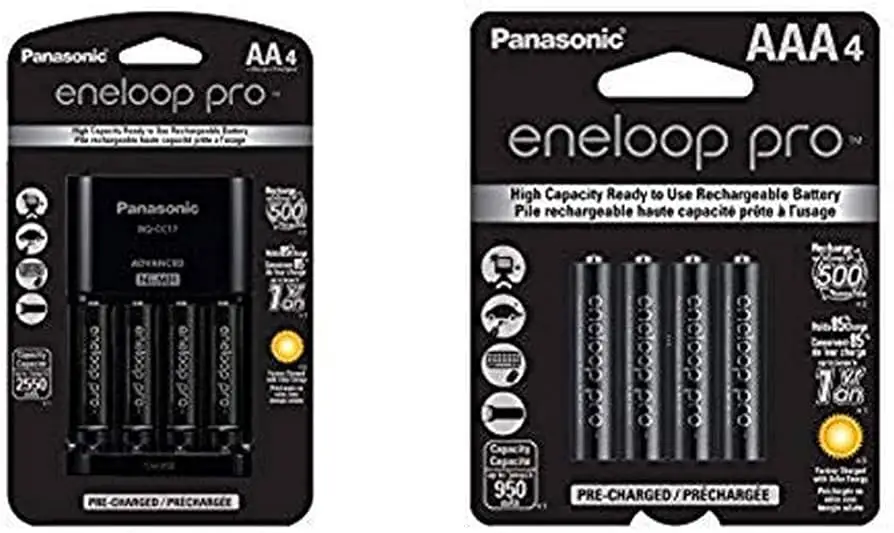
| 2550mAh capacity ideal for demanding electronics | Premium price compared to alternatives |
| Faster recovery time in camera flashes vs alkaline | Poor compatibility with waterproof flashlights |
| Performs in extreme cold (-20°C / -4°F) | Some units fail to maintain full charge after years |
| Pre-charged with solar energy | Slightly lower voltage vs disposables |
| Rechargeable up to 500 times |
Claims vs Reality
Panasonic markets these cells as “more powerful than other dry batteries” for high-drain devices. They cite twice the flash output and halved recharge time compared to alkaline. A verified buyer on Amazon noted: “Like them, lasts 40–50 shots with the Sony 28 frm flash,” aligning with the faster flash charging claim.
Another bold claim: retaining 85% charge after one year. Numerous Trustpilot users back this up — “You can take them out after 6 months and they still retain their charge.” One Reddit contributor added their AA set “was still at 83% after sitting in my gear bag for a year.”
However, the “recharge up to 500 times” tagline hides variation. While the spec promises 500 cycles, ProductReview.com.au user feedback suggests degradation sooner — “These black/pro’s did not seem to last as long… none of them accept a full charge any longer… my standard white Eneloops are still going fine after years.”
Cross-Platform Consensus
Universally Praised
The high capacity and cold-weather resilience dominate praise. Outdoor and travel photographers point to the 2550mAh rating as essential. A wedding shooter on Trustpilot explained, “Panasonic Eneloop drew my attention because of their batteries… gives me confidence I’ll have a charge on my batteries.” For gamers, the stable voltage appeals — “Best rechargeable battery… with my Xbox controller I found double power and extra time compared to others,” posted by an Australian buyer.
For flash photographers, the benefit is measurable. Reddit reports Eneloop Pro’s flash recovery time at 3.3 seconds against 76 seconds for alkaline, preventing missed shots. A sound recorder on Panasonic’s global site said, “Eneloop Pro rechargeable batteries have been my brand of choice for many years. They take a licking but keep on working.”
Eco-conscious households laud reduced landfill waste. A Twitter reaction noted, “We deposit up to 5.7 billion disposable batteries into landfills each year! One Eneloop Pro cell can keep hundreds out.”
Common Complaints
Longevity issues plague some buyers, especially those expecting Eneloop Pro to match or exceed the standard version’s life. ProductReview user Steve said his Pro cells, bought six years ago, “did not seem to last as long… mainly in torches, keyboards, and mice.” Price surfaces as a deterrent, with one Trustpilot reviewer advising to “try to get them when on offer as they’re not the cheapest.”
Device compatibility is another sticking point. Multiple official sources warn against use in airtight compartments such as waterproof flashlights — a limitation frustrating survivalists and certain tactical gear users.
Divisive Features
The slightly lower voltage (1.2V vs. 1.5V disposables) stirs debate. Many users find the stable discharge curve advantageous, but a few gadgets designed for disposables struggle. While some praise the absence of memory effect — “You can recharge anytime without worrying,” per Quora — others see the 500-cycle rating as inferior to the 2,100 cycles of standard Eneloop.
Trust & Reliability
On Trustpilot, review integrity scores high, with Fakespot noting 77.5% of reviews as reliable. Minimal deception was detected, bolstering confidence in feedback authenticity. Anecdotes about long-term performance vary: an Australian gamer still uses the same Pros years later for controllers, while others, like Steve on ProductReview, saw capacity drop prematurely.
Users also emphasize the Made in Japan origin as a marker of quality. “Best cells on the market… quality is excellent, charges retain much longer than its regular version,” wrote one verified buyer.
Alternatives
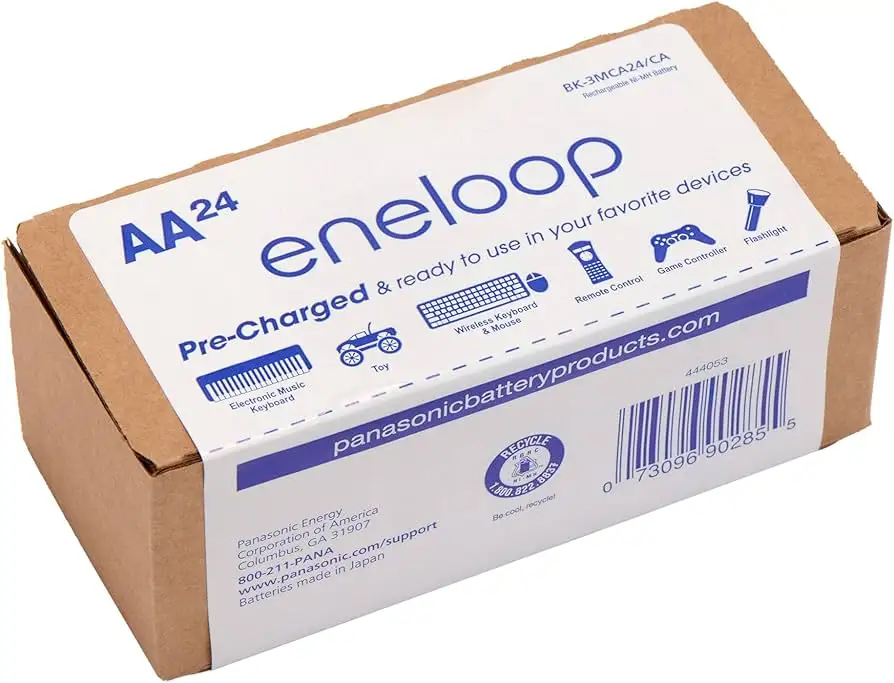
The most mentioned competitor is the standard (white) Panasonic Eneloop. While rated for fewer mAh (2000 vs. 2550), they boast longer cycle life — up to 2,100 recharges. Several ProductReview users recommend these for general usage over Pro, citing better longevity and relatively lower cost. Duracell Rechargeables also appear in comments, but they’re often dismissed as “no different” from standard rechargeables, lacking the Pro’s cold-weather and flash performance edge.
Price & Value
Community tips stress deal hunting. Amazon’s 24-pack lists around $218.39, equating to approximately $9.10 per cell, though eBay shows prices for smaller packs closer to $25–$30. Trustpilot feedback highlights long-term environmental savings, but warns of up-front premium cost. Resale trends suggest limited depreciation — shrink-wrapped packs resell near retail on eBay.
For cost-efficient buying, experienced users advise balancing pack size with your charging capacity to avoid cells sitting unused for extended periods (despite the 85% retention).
FAQ
Q: Can I use Eneloop Pro in waterproof flashlights?
A: No. Official guidelines caution against using them in airtight compartments (including waterproof flashlights) due to explosion or leak risk.
Q: Do they really hold charge for a year?
A: Yes under proper storage. Multiple users confirm 80–85% retention after 6–12 months, matching Panasonic’s claim.
Q: How do they perform in extreme cold?
A: Excellent by consensus. Reports from outdoor photographers and campers cite reliable operation down to -20°C/-4°F, outperforming alkaline.
Q: Are they worth the price over standard Eneloop?
A: For high-drain gear like camera flashes, game controllers, and audio recorders, yes. For everyday remotes or clocks, the standard white Eneloop may offer better value.
Q: Is 500 recharge cycles realistic?
A: Depends on usage. Some achieve near that figure; others see capacity drop sooner, especially with heavy draw devices.
Final Verdict: Buy if you’re a photographer, gamer, or outdoor enthusiast needing maximum capacity and cold resilience. Avoid if your priority is longest possible cycle life for low-drain gear — choose standard Eneloop instead. Pro tip from community: Pair with Panasonic’s “smart & quick” charger and buy during sales to offset the premium.





