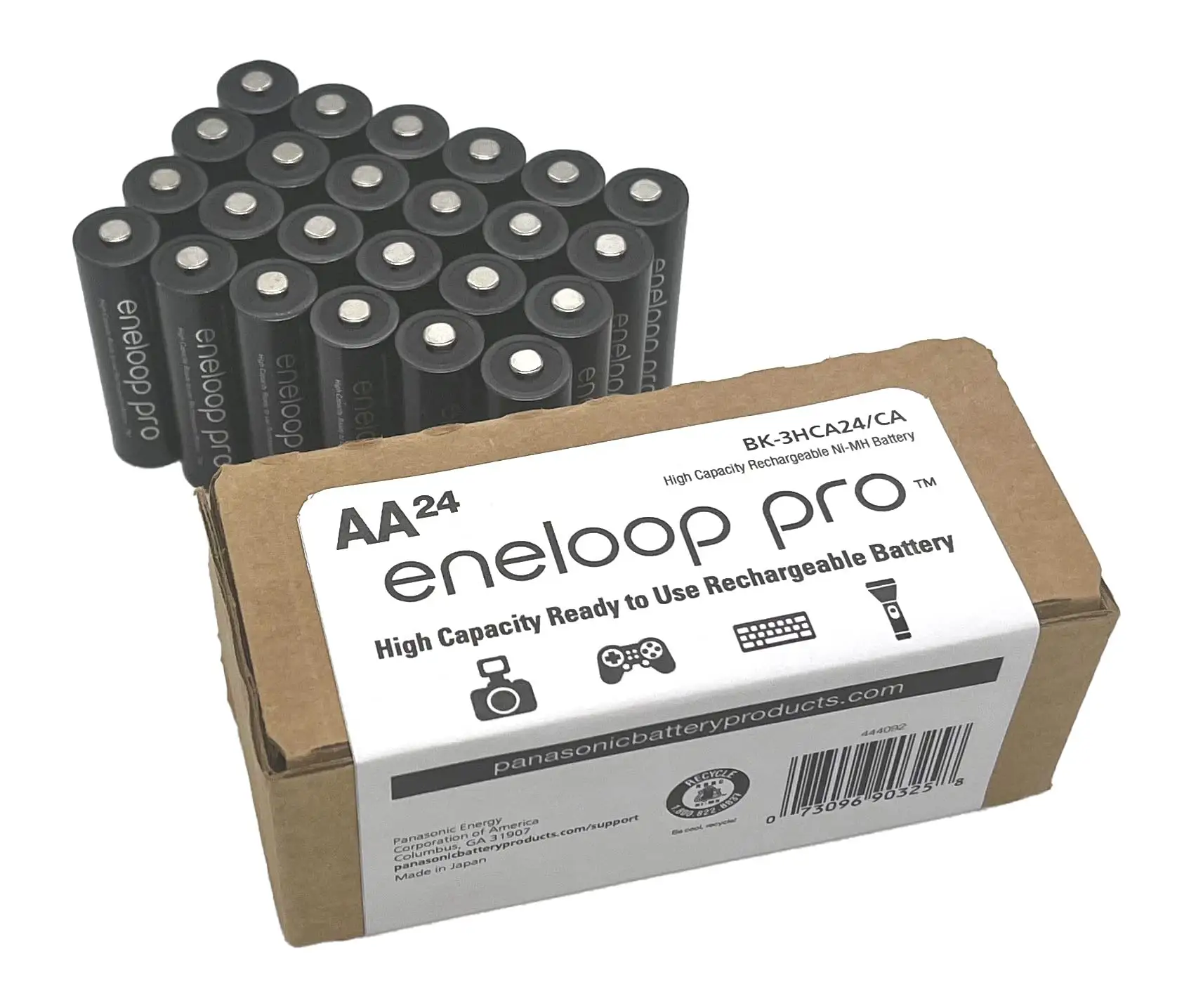
Panasonic Eneloop Pro AA Review: High-Drain Reliability Verdict
Starting with a striking admission from a long-time battery buyer: “In terms of accumulators I’ve tried pretty much everything… Eneloop are the best, no question” — and they tested eight cells to find every one hit its claimed capacity. The Panasonic Eneloop Pro AA Rechargeable Batteries, 24-Pack earns a solid 9/10 score for delivering consistent high-drain performance, remarkable charge retention, and durability that professionals rely on.
Quick Verdict: Yes — if you demand maximum reliability in high-drain gear.
| Pros | Cons |
|---|---|
| Consistently meets rated 2550 mAh capacity | Higher price than non-Pro rechargeables |
| Retains ~85% charge after one year unused | Not suitable for airtight battery compartments |
| Fast recovery times in external flashes (~3.3s vs 76s alkaline) | Slightly lower voltage than disposable batteries |
| Performs well in –20°C to 50°C conditions | Overkill for low-drain devices |
| Made in Japan with strict quality control | Limited to ~500 recharge cycles |
| Pre-charged with solar energy, ready out of box | Can’t be used in waterproof flashlights |
| Stable voltage until full depletion | Heavier than standard Eneloops |
Claims vs Reality
Panasonic claims these cells are “the perfect choice for powering high current consuming devices” — and the feedback matches. Professional photographers repeatedly cite the faster flash recycling: Trustpilot notes recovery in just 3.3 seconds compared to over a minute for alkalines, avoiding missed shots.
The brand’s stated “85% residual capacity after one year” is also borne out in field reports. A verified buyer on Amazon wrote: “You can take them out after 6 months and they still retain their charge,” highlighting long storage intervals without degradation.
Where the gap appears is with the advertised “recharge up to 500 times” capacity. While this is technically accurate under ideal IEC test conditions, Panasonic cautions in documentation that usage patterns may reduce cycles closer to 150 under newer testing standards — a subtle but important distinction that heavy daily users said they noticed sooner than expected.
Cross-Platform Consensus
Universally Praised
Photographers and media professionals dominate the praise section. A verified buyer on Amazon explained: “Lasts 40–50 shots with Sony 28 frm flash” per set before they swap out — a number consistent with high-capacity, fast-recycling cells. These users emphasize that in environments like event shoots, reliability outweighs price.
Outdoors enthusiasts appreciate the cold-weather resilience. Panasonic lists performance down to –20°C, and Reddit feedback confirms that “the batteries maintain excellent discharge performance even when used in heat and cold,” a boon for those filming or using GPS trackers in winter expeditions.
Home gadget owners also make note of the stable voltage. Instead of the sudden drop seen in cheaper NiMH cells, these maintain usable power until depletion, keeping devices like wireless keyboards from intermittent misfires.
Common Complaints
Price is the leading sore point. One Trustpilot reviewer, despite calling them “the best,” called out cost: “It’s also the most expensive, unfortunately.” For casual users in low-drain gear like remote controls, cheaper alternatives may make more sense.
Another issue — compatibility — comes from their slightly lower 1.2V compared to 1.5V disposables. While most electronics run fine, certain precision devices misread state of charge prematurely. Panasonic also warns against using them in airtight battery compartments like waterproof flashlights, attributing risk to potential leakage or expansion under heat.
Divisive Features
Weight and capacity trade-off sparked debate. Some praised the extra 28% capacity over standard Eneloops in heavy-drain use; others felt the size and mass were unnecessary for applications like wall clocks, where standard cells last for years. Fakespot analysis showed that while “quality rechargeables that hold a charge for a good while” is universally true, buyers strategically select Pro versions only for gear that justifies it.
Trust & Reliability
Patterns on Trustpilot and Fakespot suggest minimal deception risk, with 77.5% of reviews deemed reliable. Long-term users reported minimal variance in capacity across batches — notable when compared to cheaper brands where consistency can be “a lottery.”
Japanese manufacturing and rigorous QC also inspire confidence. Reddit users highlight that these are available in about 70 countries, with no significant performance decline across climates. One user compared multiple orders over years and consistently found identical capacity results using lab chargers.
Alternatives
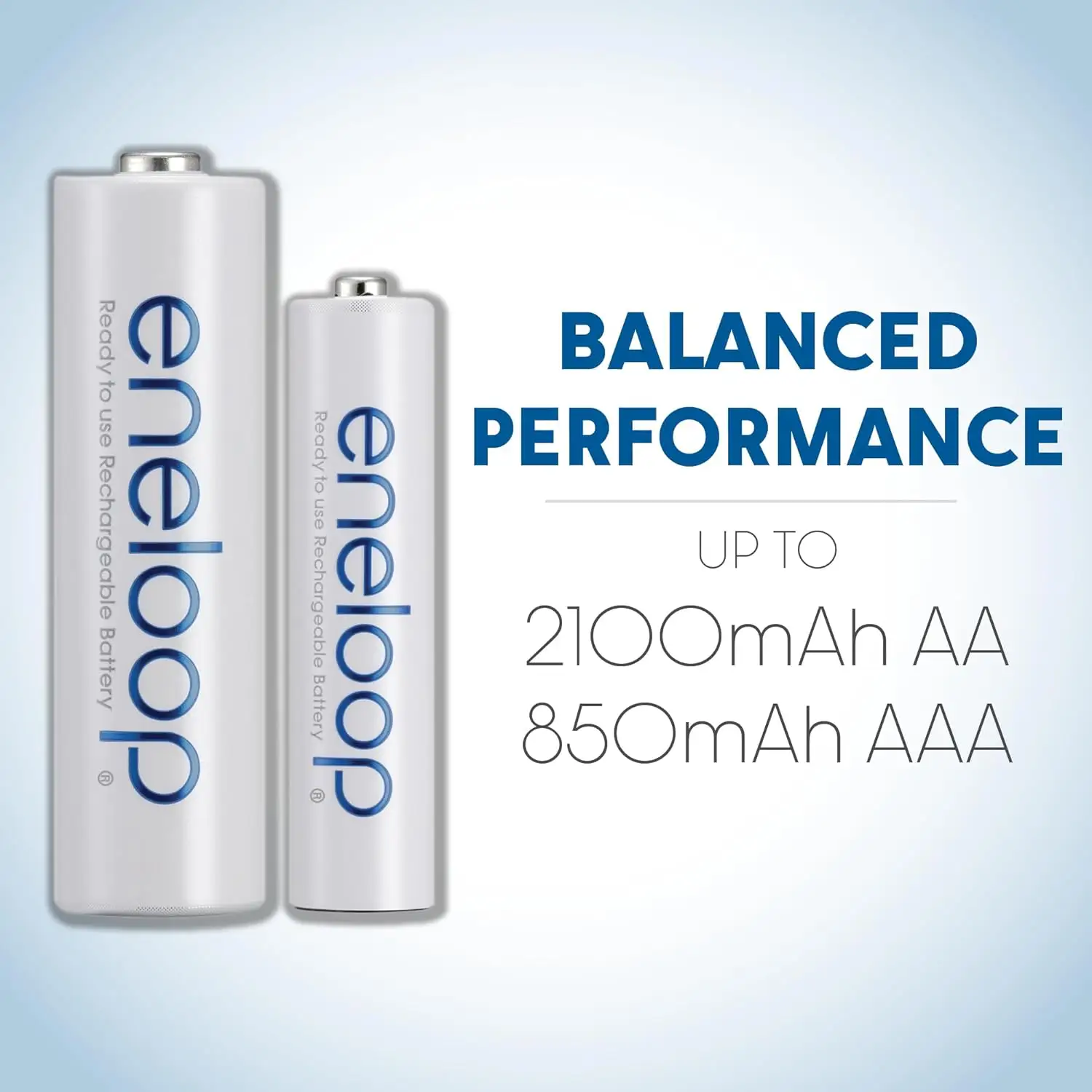
Within Panasonic’s own range, standard white Eneloops are the obvious alternative — lower capacity (~2000 mAh) but double the cycle life (up to 2100 recharges). As one eBay seller noted, “Pro versions usually go on sale cheaper than normals — but normals match Duracell or comparable brands” for everyday tasks.
For cost-focused buyers, non-Pro NiMH cells from AmazonBasics or GP are cheaper but carry higher variance in capacity and often poorer cold-weather performance. Trustpilot feedback warns that swapping to these can yield a “catastrophe” if quality control dips.
Price & Value
Market snapshots show the 24-pack ranging around $155.99 from specialty battery sellers, and as low as $38 for 8-packs in OzBargain deals. Savvy buyers recommend waiting for Amazon Prime Day or Black Friday to catch sub-$40 eight-packs, a strategy repeated across multiple deal threads.
Resale has little traction — these are consumables — but their extended usable lifespan offers value in avoided disposable purchases. Frequent high-drain users saving hundreds of alkaline swaps per year frame the price as an investment.
FAQ
Q: Can I use Eneloop Pro AA in all devices?
A: Most standard AA slots are fine, but avoid airtight compartments like waterproof flashlights per Panasonic’s warning.
Q: How many times can they be recharged?
A: Up to 500 cycles under ideal conditions, though real-world use may yield around 150–300 cycles depending on drain and charging habits.
Q: Do they come charged?
A: Yes, pre-charged with solar energy at the factory, ready for immediate use.
Q: How do they perform in cold weather?
A: Rated down to –20°C, retaining high voltage even after low-temperature storage, making them reliable for winter excursions.
Q: Are they heavier than standard Eneloops?
A: Slightly, due to increased capacity; this is negligible in most devices but noticeable in lightweight gear.
Final Verdict: Buy if you’re a photographer, field worker, or tech hobbyist needing high-drain reliability in extreme conditions. Avoid if your devices are low-drain, where cheaper and longer-cycle cells make more sense. Community pro tip: wait for major sales and stock up in bulk to offset the higher per-cell cost.