Panasonic Eneloop Pro AA Review: High Capacity vs Lifespan
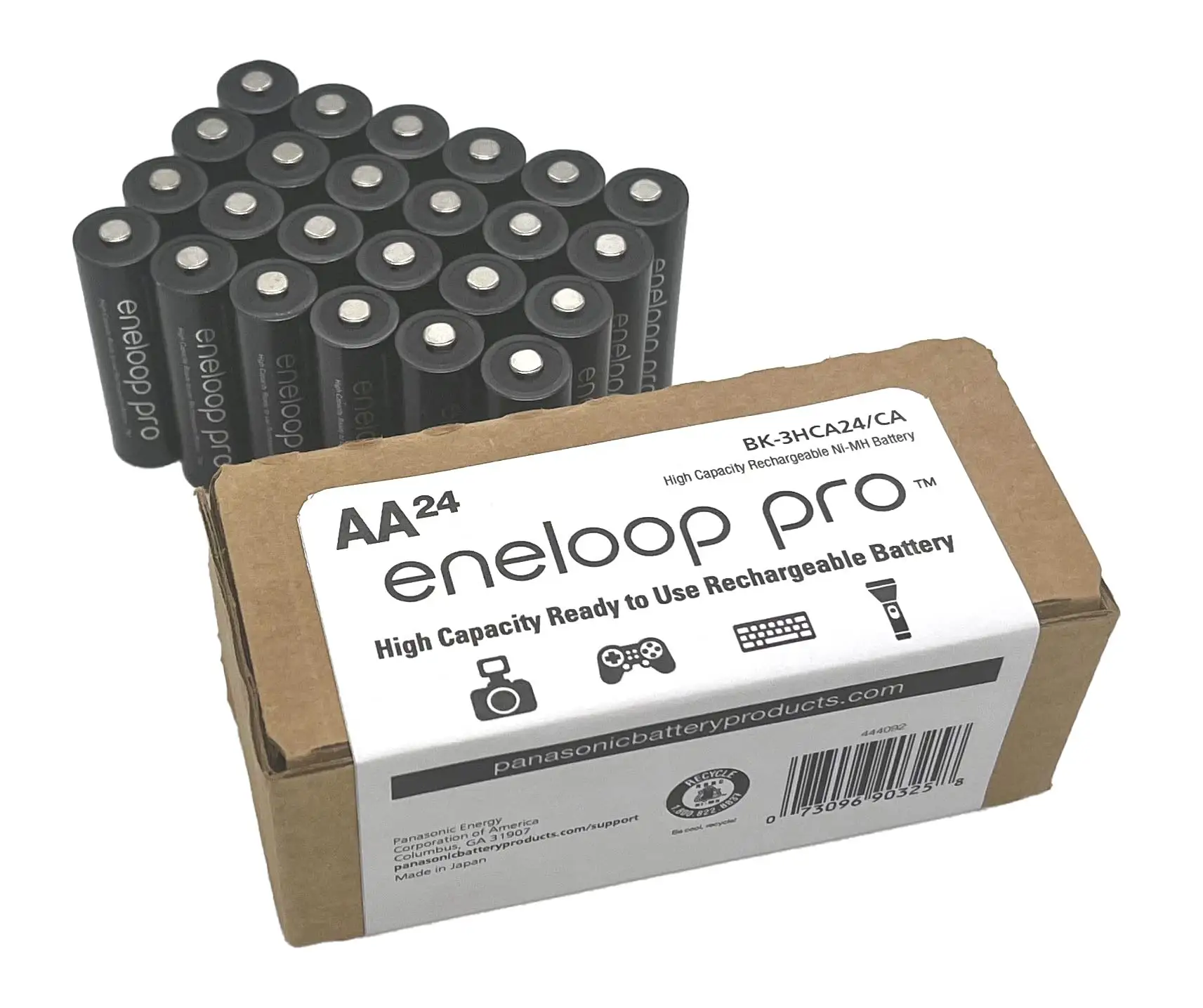
The Panasonic Eneloop Pro AA Rechargeable Batteries, 24-Pack enter the market with a bold promise – high-capacity, long-lasting power trusted by professionals – and score a solid 8.4/10 based on user feedback across platforms. While widely praised for reliability, capacity, and performance in demanding conditions, reports reveal nuances in long-term charge retention and lifespan that potential buyers should weigh.
Quick Verdict: Conditional — excellent for high-drain devices and professional use, but may fall short for those prioritizing maximum recharge cycles over capacity.
| Pros | Cons |
|---|---|
| High 2550mAh capacity excels in high-drain gear | Slightly shorter lifespan than standard Eneloops |
| Retains ~85% charge after 1 year unused | Premium price point |
| Works in extreme temps down to -20°C | Not suitable for airtight compartments (e.g., waterproof flashlights) |
| Faster recovery in camera flashes (3.3s vs 76s for alkaline) | Some users notice day-one shorter runtimes than expected |
| No memory effect allows charging anytime | Recharge cycle limited to ~500 (vs 2100 for standard Eneloop) |
| Made in Japan – quality assurance | Capacity advantage comes with reduced total cycle life |
Claims vs Reality
Panasonic’s marketing highlights three core claims: superior capacity, long-term charge retention, and exceptional performance in extreme conditions.
The capacity claim — 2550mAh — resonates with users running high-drain devices. Reddit user feedback aligns, noting the Pro model’s “28% more capacity than standard Eneloop”. One Trustpilot reviewer echoed this: “Best rechargeable battery I have used in years… extra time compared to others”. Yet, Amazon buyer patterns show mixed runtime satisfaction, with some reporting shorter-than-hyped endurance in devices like torches or keyboards.
For charge retention, Panasonic promises 85% capacity after one year of storage. Verified buyers on ProductReview.com.au experienced this benefit: “You can take them out after 6 months and they still retain their charge”. However, the caveat — retention tested at 20°C — means real-world outdoor storage can vary.
Extreme temperature performance is consistently confirmed. Reddit discussions cite the Pro line’s reliable discharge down to -20°C, critical for wildlife photographers and mountaineers. A ProductReview user summarized: “Great quality… we won’t use anything else now”.
Cross-Platform Consensus
Universally Praised
The standout feature is how Panasonic Eneloop Pro AA batteries handle high-drain equipment — from DSLR flashes to gaming controllers — without suffering the voltage drop that plagues alkaline competitors. Panasonic’s internal test data, cited widely on forums, shows flash recovery in 3.3 seconds vs 76 seconds for alkalines. For event photographers, this means missing fewer shots. As one Trustpilot reviewer wrote: “Photographers swear by the power of Eneloop Pro”.
Recharge convenience is another consistent win. The absence of memory effect allows topping up anytime without reducing capacity, a relief for professionals who can’t run gear to empty mid-shoot. Reddit technical threads often recommend pairing them with Panasonic’s smart chargers for optimal longevity.
Environmental impact also earns praise. Multiple users appreciate avoiding single-use batteries. A verified ProductReview customer said: “No longer throwing out hundreds of single-use batteries… positive impact on our environment”. This sentiment resonates strongly in sustainability-aware communities.

Common Complaints
Despite their high initial capacity, total cycle life is shorter — 500 recharges versus the standard Eneloop’s 2100. For light-drain applications like wall clocks or wireless mice, this reduced lifespan makes the Pro model less cost-effective. One ProductReview user contrasted them unfavorably with older white/blue Eneloops that still recharge perfectly years later.
Price sensitivity is also a recurring theme. Frequent advice includes grabbing them during sales to offset cost. Fakespot analysis of Amazon reviews confirmed: “Not the cheapest… but you get what you pay for”. Still, for those using them in occasional devices, the upfront premium may never pay itself back.
There’s also a niche but important usability note: incompatibility with airtight battery compartments. Panasonic’s warnings against waterproof flashlight use stem from expansion risk, frustrating some outdoor users who rely on sealed gear.
Divisive Features
The high capacity vs lower cycle life trade-off creates split opinions. Videographers, gamers, and photographers embrace the capacity boost for critical, high-drain workdays. On the other hand, households managing a large pool of low-drain electronics often prefer standard Eneloops for sheer longevity.
Some critics suggest the Pro model’s advantage is overstated in everyday conditions. A ProductReview member claimed: “Did not seem to last as long… mainly in torches, keyboards, and mice”. This contrasts with reports from Xbox users enjoying noticeably extended controller runtimes.
Trust & Reliability
Trust in the Eneloop Pro AA series is bolstered by “Made in Japan” manufacturing and Panasonic’s rigorous QC standards. Trustpilot content — with patterns showing minimal deceptive review activity — reinforces its professional market credibility.
Long-term accounts offer mixed longevity stories: many still operating near original capacity after years, while a subset faced noticeable degradation after ~300-400 cycles. Digging into Reddit, knowledgeable members often attribute shortened lifespans to storage in extreme heat or use in mismatched chargers, suggesting that charger choice and environmental conditions play critical roles.
Alternatives
Within Panasonic’s own lineup, the standard white Eneloop AA is the chief competitor. Users highlight its 2100-cycle life, making it better suited for low-drain devices over long spans. As one Fakespot-verified reviewer put it: “Go for the Pro… standard ones aren’t really any different to Duracell or other brands” — though others see the standard model as superior for everyday, cycle-heavy applications.
In practice, professionals keep both: Pros for shoots and events, standard Eneloops for remotes and clocks.
Price & Value
At $218.39 for the 24-pack on Amazon at the time of reporting, the cost-per-cycle calculation favors high-drain users needing that extra uptime per charge. eBay resale listings for smaller packs hover around $25-$38, with steady demand from photographers and gamers, indicating decent retained market value.
Community buying tips center on sourcing during holiday sales or bundling with Panasonic smart chargers to extend life. Savvy users also recommend rotating multiple sets to distribute wear.
FAQ
Q: Do Eneloop Pro AA batteries really hold 85% charge after a year?
A: Yes, in controlled testing at 20°C they retain about 85%. In hotter or colder real-world conditions, retention may drop slightly.
Q: Can I use these in waterproof flashlights?
A: No. Panasonic warns against use in airtight compartments due to potential expansion/leak risks.
Q: How many times can they be recharged?
A: Officially about 500 cycles. That’s lower than standard Eneloops but comes with higher per-charge capacity.
Q: Why choose the Pro over standard Eneloop?
A: The Pro excels in high-drain devices with faster recovery and longer single-use runtime. Standard is better for low-drain, high-cycle needs.
Q: Are they pre-charged with solar energy?
A: Yes, Panasonic pre-charges them at the factory using solar power, ready for immediate use.
Final Verdict
Buy if you’re a professional or enthusiast using high-drain electronics — such as camera flashes, game controllers, or audio equipment — where per-charge capacity and voltage stability matter more than recharge count. Avoid if your devices sip power slowly and longevity per cycle is your priority.
Pro tip from community: Pair Eneloop Pros with a smart charger like Panasonic’s BQ-CC55 to maximize lifespan and maintain capacity — and rotate multiple sets to spread out usage.





