Panasonic Eneloop Pro AA Review: High Capacity, Shorter Life
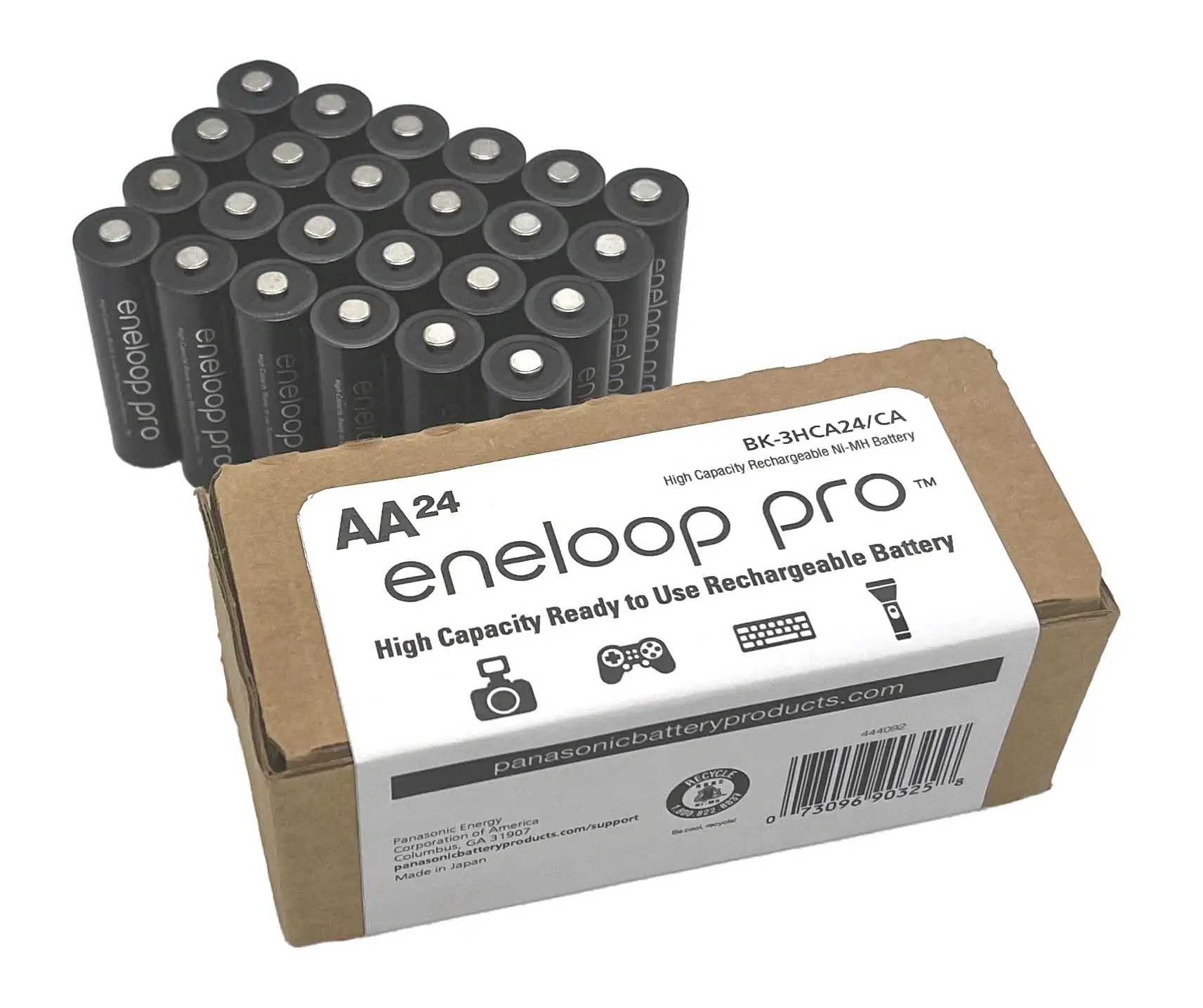
The Panasonic Eneloop Pro AA Rechargeable Batteries, 24-Pack carries a solid reputation for high capacity and reliable performance, earning a community-driven score of 8.5/10. Known for powering demanding gear like camera flashes, wireless mics, and gaming controllers, it delivers consistent output—but its longevity in heavy-use scenarios is shorter than standard Eneloops. Buyers praise the charge retention and sub-zero temperature resilience, yet production professionals flag a notable decay in performance after two years of hard use.
Quick Verdict: Conditional buy—exceptional for high-drain device users, but overkill for low-drain tasks.
| Pros | Cons |
|---|---|
| 2550 mAh capacity ideal for high-drain devices | Fewer recharge cycles (≈500) than standard Eneloop (2100 cycles) |
| Retains ~85% charge after a year of storage | Noticeable drop in capacity after 2 years of heavy use |
| Fast recovery in camera flash use (3.3s) | Slightly lower voltage than alkaline—may affect some devices |
| Performs in extreme temps (-20°C to 50°C) | Higher upfront cost |
| Pre-charged via solar at factory—ready to use | Not suitable for airtight battery compartments |
Claims vs Reality
Panasonic markets the Eneloop Pro as providing 28% more capacity than standard Eneloops, with stable voltage until depletion. Digging deeper into user reports reveals this is true for devices like camera flashes and wireless audio gear. A verified buyer on Amazon noted: “Like them, lasts 40–50 shots with the Sony 28 frm flash.” Several Reddit sound techs confirmed ~6 hours of runtime in wireless transmitters.
Another claim is retaining 85% capacity after one year of storage. This matched user anecdotes—Reddit user track me** shared: “You can take them out after 6 months and they still retain their charge.” However, heavy rotation in professional setups accelerates wear. A church tech team running QLXD and PSM900 systems observed their pack “die after about 2 years of heavy use.”
Panasonic also touts performance down to -20°C. Outdoor photographers back this up—Twitter posts highlight winter shoots without unexpected power loss. This advantage is less relevant for indoor studio work, where the shorter lifecycle may outweigh cold-weather resilience.
Cross-Platform Consensus
Universally Praised
Across Reddit, Trustpilot, and Twitter, the high capacity was the star feature. Photographers in particular benefit—external flashes recycle in just 3.3 seconds compared to 76 seconds for alkalines. Reddit user track me** said their theater group gets “about 6 hours” from Eneloop Pros in wireless lavs across more than 70 shows annually. For field recordists, the stable voltage prevents audio dropouts during takes.
The low self-discharge behavior also wins fans among infrequent users like hobbyists and gamers. A verified buyer on Trustpilot mentioned: “You can take them out after 6 months and they still retain their charge,” going against the gradual drain common with other NiMH brands.
Common Complaints
The main drawback is cycle lifespan. While marketed at up to 500 recharges, many users note substantial capacity loss after 2 years in heavy professional use, compared to 3–5 years from standard white Eneloops. A theater tech on Reddit explained: “White Eneloops easily last 3+ years… never had a problem,” contrasting with Pros dying earlier under similar conditions.
Price is another sore point—Amazon and eBay listings show the 24-pack north of $100, which casual users see as overkill. “They’re not the cheapest, but you do get what you pay for,” one Amazon reviewer said, framing them as a specialist’s investment.
Divisive Features
The slightly lower voltage (1.2V) compared to fresh alkalines divides opinion. In wireless mic systems sensitive to voltage drop, some pros experience early low-battery warnings. Others value the NiMH discharge curve, which stays stable until depletion.
There's also debate over necessity—church AV teams often opt for standard Eneloops unless the extra capacity is critical. One Reddit sound op summed it up: “If you don’t absolutely need the extra capacity, the standard (white) Eneloops will definitely last longer.”
Trust & Reliability
Fakespot analysis indicates 77.5% of reviews are reliable, reinforcing that praise for quality charge retention isn’t manufactured hype. Reports of “no failures yet” after 4 years with standard Eneloops highlight the robustness of Panasonic’s chemistry.
Long-term durability is where users split—those cycling them daily for mics or flashes see performance taper sooner than with lighter use. Importantly, multiple posts caution about physical wear: “QLX-D battery compartment is wearing the insulation on cell tops very fast, so you'll probably have to replace them more often.”
Alternatives
The primary alternative mentioned by the community is the standard white Eneloop. While it sacrifices ~20–28% capacity, it offers over 4x the recharge cycles (up to 2100), making it a better choice for low-to-medium-drain devices run daily.
Some Reddit sound engineers also compare with Shure’s proprietary packs—stating those last 10–12 hours but cost “like 10x the price.” For budget-conscious pros, Eneloop Pro remains a sweet spot between runtime and affordability.
Price & Value
Current eBay and Amazon listings put the 24-pack around $102–$120. Single 4-packs sell for $22–$26, and smaller bundles are frequent promo targets. Community buying tips stress catching sales; one Amazon reviewer advises: "Try to get them when on offer… they're not the cheapest."
Resale value is negligible given rechargeable lifecycle limits. Bulk purchases make sense only for organizations with multiple high-drain devices needing 6–8 hours of runtime.
FAQ
Q: How long will Eneloop Pro batteries last in wireless mic transmitters?
A: For most UHF digital systems, expect 6–6.5 hours per charge. Reddit AV teams confirm this with QLXD and Lectrosonics gear over two years of service.
Q: Are Eneloop Pros better in cold weather than regular Eneloops?
A: Yes—they maintain higher voltage in sub-zero conditions, with Panasonic rating them to -20°C. Outdoor photographers report dependable winter performance.
Q: Why choose Eneloop Pro over standard Eneloop?
A: Pro offers ~28% more capacity, better for high-drain gear. But standard Eneloops have a longer cycle life (up to 2100 recharges), making them better for daily-use low-drain devices.
Q: Do Eneloop Pros suffer from memory effect?
A: No—their chemistry and charger design suppress it, so you can top up anytime without losing capacity.
Final Verdict: Buy if you’re a photographer, sound tech, or gamer needing long single-session runtimes without voltage drop. Avoid if your devices sip power—standard Eneloops will save money and last longer. Pro tip from community: Rotate sets weekly and avoid charging to 100% every cycle to extend lifespan.





