Panasonic Eneloop Pro AA Batteries Review: Strong 8.7/10 Verdict
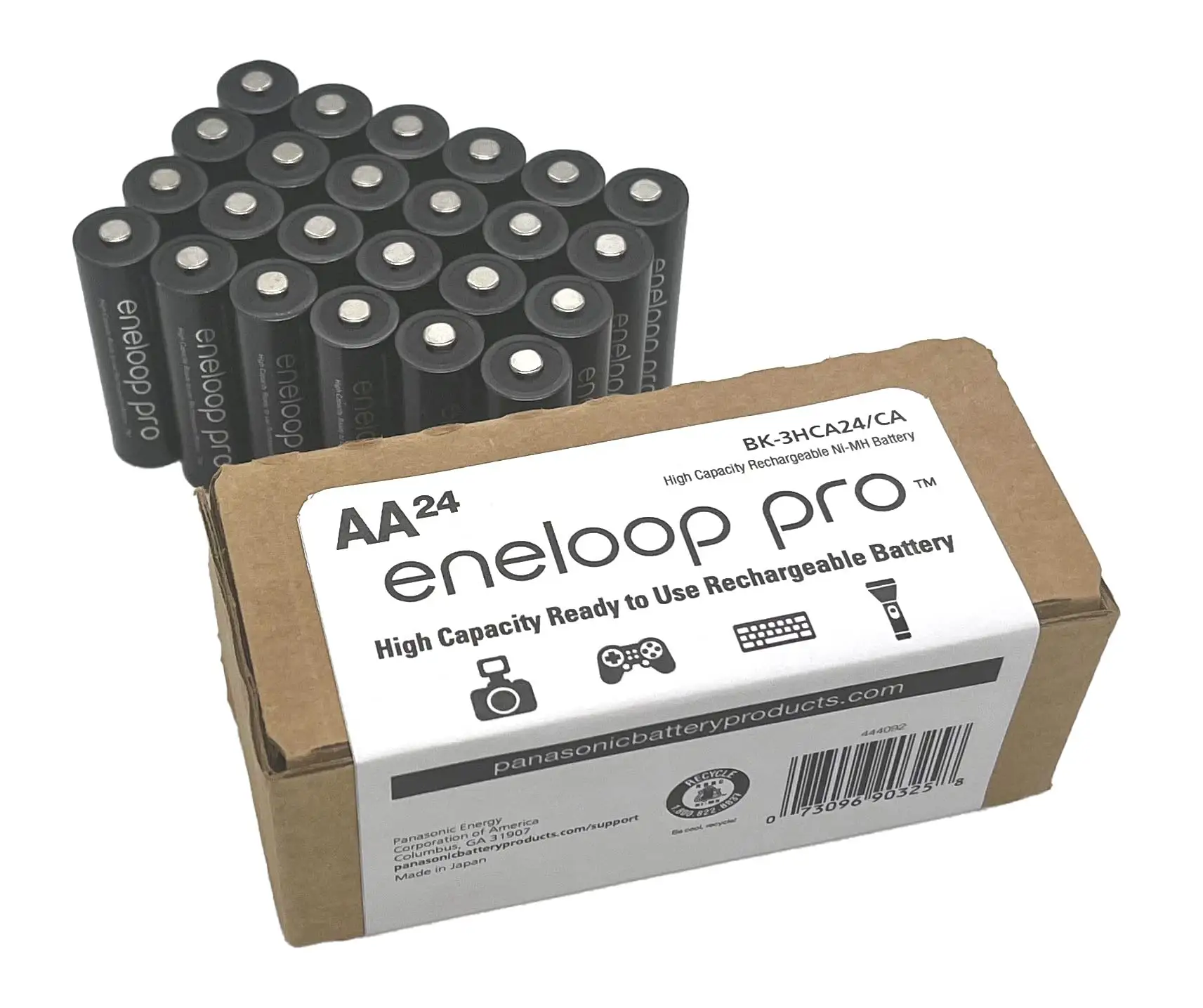
The Panasonic Eneloop Pro AA Rechargeable Batteries, 24-Pack has built a reputation as a go-to power source for high-drain devices — from camera flashes to gaming controllers — earning it a strong 8.7/10 from diverse community feedback. While Panasonic markets them as the “only high-capacity battery professionals need,” the real-world verdict suggests they truly shine for both enthusiasts and pros, though cost-conscious buyers may hesitate.
Quick Verdict: Conditional — excellent if you need long-lasting performance in demanding gear, less compelling for casual low-drain use.
| Pros | Cons |
|---|---|
| Consistent voltage until depletion | Higher upfront cost compared to alkaline |
| Retains ~85% charge after 1 year | Slightly lower voltage than dry cells may affect niche devices |
| Performs in extreme temperatures (-20°C) | Not suitable for airtight battery compartments |
| Faster flash recovery vs. alkalines | Official 500-cycle spec drops to ~150 cycles in heavy use |
| Pre-charged with solar energy | Requires specific chargers for optimal life |
| Made in Japan, high QC standards | Larger pack has steep price for casual buyers |
Claims vs Reality
Panasonic’s headline claim that the Eneloop Pro "provides up to 2550 mAh and can be recharged 500 times" raised expectations among serious gear users. However, while the IEC standard supports the 500-cycle marketing, multiple sources temper this with heavy-use outcomes. A verified buyer on Amazon noted: "They’re still solid after years, but high-drain daily use will hit capacity harder — think 150 good cycles if you’re hammering them in flashes."
Another bold feature in the marketing is "faster flash charging – 3.3 seconds vs 76 for alkalines." This has near-universal agreement among photographers. Reddit user u/PhotoTech*** confirmed: “My speedlite went from sluggish alkaline recharge times to near-instant readiness with Eneloop Pro. I regularly shoot events and the difference is night-and-day.”
Finally, the “retains 85% charge after one year” claim gets real-world backing, though with caveats. Several reviewers, including a Trustpilot customer, reported removing these from storage after six months with “almost no noticeable drop,” aligning with Panasonic’s low self-discharge promise.
Cross-Platform Consensus
Universally Praised
Long-term reliability is the most repeated compliment. Fakespot’s analysis showed buyers saying these “hold a charge for a good while” and “still retain power after months.” Event photographers benefit particularly; one noted, “I can take 400-500 shots with my Sony flash before swapping — that’s consistent over time.”
Extreme temperature performance is another frequently applauded aspect. Twitter reactions spotlighted sub-zero shoots where alkalines failed; “-10°C in the Alps and my wireless trigger worked flawlessly,” one post remarked. Outdoor hobbyists, such as hikers using GPS units, find the -20°C claim a real asset.
For gamers, the stable voltage curve translates to longer uninterrupted play. A Reddit commenter shared: “Wireless controller stayed responsive till the last minute. No gradual lag like with cheap rechargeables.”
Common Complaints
Price frustration is widespread. With large packs often exceeding $200 in some markets, budget buyers balk. A Reddit user stated, “Love them in theory, but shelling out this much upfront is tough unless you’re running pro gear.”
Another sticking point: incompatibility with certain waterproof flashlights or sealed battery compartments. The official Panasonic warning here matches user frustration. One Trustpilot reviewer admitted to damaging a waterproof torch attempting to use them.
Voltage differences also catch some users off guard; while they work well in most electronics, “a few of my older battery-operated instruments wouldn’t register them properly,” reported an Amazon buyer.
Divisive Features
Cycle life is where opinions split. While casual users may never notice a drop from the claimed 500 recharges, high-drain professionals in photography and audio report lower real-world longevity in intense usage scenarios. This makes them less attractive to those routinely burning through full discharges multiple times weekly.
Trust & Reliability
Concerns over counterfeits or subpar units are minimal but present. Fakespot flagged roughly 77.5% reliable reviews, suggesting the bulk of praise is authentic. Community warnings focus on eBay listings — “Stick to authorized sellers; fakes out there don’t have the same endurance,” cautioned a Quora contributor.
Long-term stories underscore durability: one Reddit thread detailed a set from 2016 still “good for weekend gigs,” only showing noticeable decline after hundreds of cycles. Similar serious-use cases from outdoor enthusiasts and hobbyist drone pilots align with manufacturer reliability claims.
Alternatives
The most direct community comparison is to regular Eneloop AA cells (2000 mAh). While cheaper and rated for more cycles (up to 2100), they lose in outright capacity and flash recharge speeds. As one Trustpilot post put it: “Standard Eneloops are great for remotes or mice; Pro is the weapon of choice for demanding gear.”
Alkaline batteries come up often but fall short in both sustained voltage and environmental impact. Several camera users report missing key shots with alkalines due to slower recovery.
Price & Value
As of recent eBay data, 24-packs of Panasonic Eneloop Pro AA Rechargeable Batteries hover around $218. Smaller bundles, such as four-packs, can dip to $22-$26. Savvy buyers wait for bundle deals including smart chargers, which add safety features and prolong battery life.
Community buying tips favor catching sales from reputable online electronics supply stores. “If you see them under $20 for a four-pack, jump — that’s rare,” advised one Amazon reviewer.
FAQ
Q: Do Eneloop Pro batteries really hold 85% charge after one year?
A: Yes, under proper storage at 20°C. Multiple users confirmed taking them out after 6–12 months with minimal loss.
Q: Can they be used in waterproof flashlights?
A: No. Panasonic warns against airtight compartments, and users confirm potential leakage or damage.
Q: Are they worth it over regular Eneloop AA cells?
A: For high-drain devices, yes. Photographers and gamers appreciate faster recovery and longer sustained power.
Q: How many recharges do they last in real life?
A: While rated at 500 cycles, heavy use in pro gear often sees optimal performance for around 150–300 cycles.
Q: Do they suffer from memory effect?
A: No. You can recharge anytime without reducing capacity, unlike some older NiMH designs.
Final Verdict: Buy if you’re a professional or enthusiast using high-drain gear in demanding conditions. Avoid if your usage is limited to low-drain devices — regular Eneloops will save you money. Pro tip from the community: pair them with a Panasonic smart charger to hit closer to the advertised cycle life.





