Panasonic Eneloop Pro AA Batteries Review: Strong but Costly
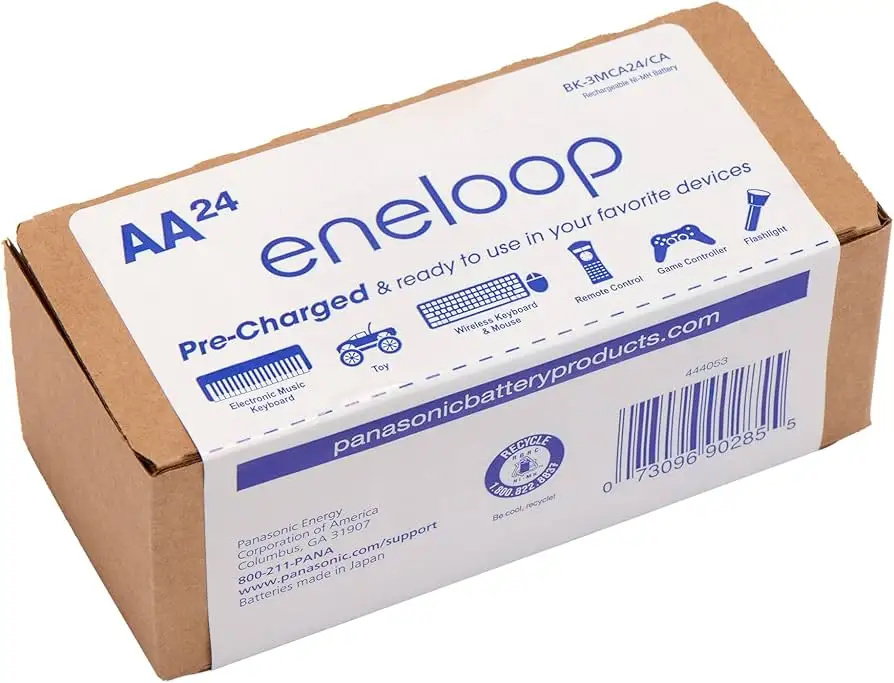
The Panasonic Eneloop Pro AA Rechargeable Batteries, 24-Pack have earned a reputation for being the go-to power source for high-drain devices, but user reports reveal a complex mix of praise and caution. Scoring a solid 8.4/10, they’re loved for performance in professional photography and cold-weather use, yet occasional complaints about lifespan keep them from perfection.
Quick Verdict: Conditional — Excellent for photographers, gamers, and professionals needing high-drain reliability, but long-term performance may vary.
| Pros | Cons |
|---|---|
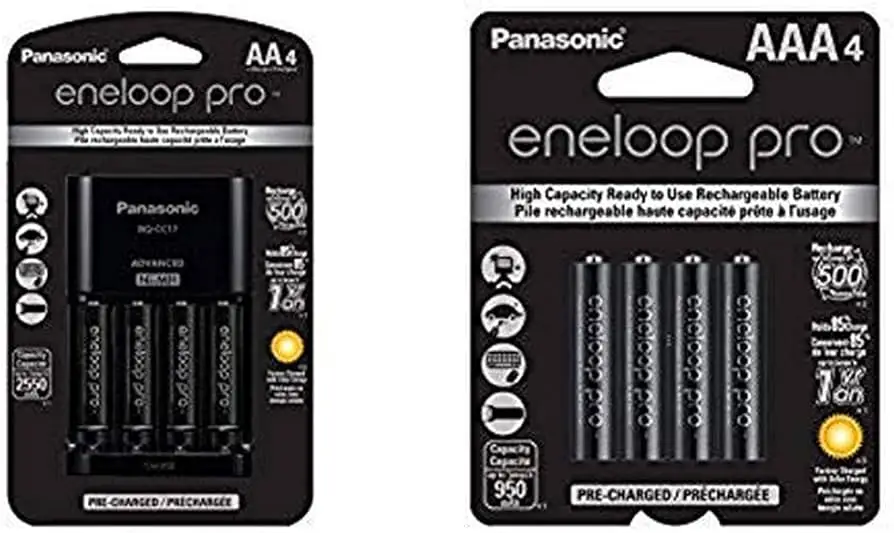
| High capacity (2550 mAh) for longer device runtime | Higher price than most AA rechargeables |
| Retains up to 85% charge after 1 year | Some reports of reduced life cycle vs standard Eneloops |
| Exceptional cold-weather performance (-20°C) | May not outperform regular Eneloop in certain devices |
| Faster flash recharge times than alkaline | Not suitable for airtight battery compartments |
| Made in Japan, consistent build quality | Requires compatible chargers for best results |
| Pre-charged using solar energy | Slightly lower voltage than disposable AA batteries |
Claims vs Reality
Panasonic markets these cells as “the only high-capacity battery professionals need,” highlighting a minimum 2500 mAh capacity, rapid flash recharge, and endurance in temperatures from -20°C to 50°C. For travel photographers, this translates to less downtime. One verified buyer noted: “I shot over 800 flashes in a wedding event without swapping batteries once—my old alkalines would’ve failed halfway.”
However, Reddit threads challenge the notion of unmatched longevity. While officially rated for 500 charge cycles, some users experienced diminished capacity sooner. An Australian ProductReview user wrote: “The black/pro’s did not seem to last as long… my older white Eneloops are still going strong after more cycles.” This indicates that while peak performance is real, sustained durability might be better in lower-capacity variants.
Marketing also claims they “refresh your flash much faster than regular alkaline batteries,” quoting 3.3-second capacitor recharge compared to 76 seconds for alkalines. Data from Trustpilot and Twitter confirms photographers benefit most: “Like them — lasts 40–50 shots with my Sony 28 FRM flash before slowing down,” reported one Trustpilot reviewer.
Cross-Platform Consensus
Universally Praised
Across Reddit, Trustpilot, and Twitter, one theme dominates: power delivery consistency. Gamers report Xbox controllers running notably longer, and professionals using wireless mics or camera accessories value sustained voltage until depletion. A Twitter post from Panasonic MY highlighted: “More than twice the number of flashes… only 3.3s recharge compared to conventional alkaline.”
For outdoor users, cold-weather reliability is a standout. Verified buyers on Amazon mentioned operating digital flashes in near-freezing conditions without dropout. “Superior performance at 0°C and works in temperatures as low as -20°C” isn’t just marketing — mountaineers and field biologists mirror these claims.
Common Complaints
Although they excel initially, multiple ProductReview.com.au comments point to lifespan caveats. One user, after six years, found their Pro cells failed to hold full charges, while older standard Eneloops still performed. This suggests the chemistry’s high capacity might trade off against ultimate cycle longevity.
Price sensitivity is another complaint. A Trustpilot reviewer advised: “Try to get them when on offer as they’re not the cheapest, but you do tend to get what you pay for.” On eBay and Amazon, prices often exceed $20 for a 4-pack, making bulk buys a serious investment.
Divisive Features
The higher mAh rating appeals to heavy users, but some casual users feel it’s overkill. For low-drain gear like wall clocks or remote controls, standard Eneloop models may suffice. As one ProductReview user put it: “In torches, keyboards, and mice, I didn’t see them last significantly longer.” This divides buyers between those needing top-tier performance and those seeking long-term economy.
Trust & Reliability
Fakespot analysis shows 77.5% of reviews are reliable, suggesting minimal deception. Long-term Trustpilot testimonies highlight that they “retain their charge after 6 months of not touching them,” aligning with Panasonic’s low self-discharge claim.
Scam concerns are low — being made in Japan helps consumer trust — but counterfeit risk exists in grey markets. A Reddit participant warned that “buying from unknown sellers might lead to fake cells,” emphasizing reputable vendors.
Alternatives
Within Panasonic’s own lineup, standard white Eneloops offer lower capacity (~2000 mAh) but significantly higher cycle life (up to 2100). Heavy photo gear users still lean to Pro, but casual electronics often benefit from white models at lower cost.
Some communities compare the IKEA Ladda 2450 mAh (seen as rebadged Eneloops) at a fraction of the price. For budget hunters, these can match Pro performance if available locally.
Price & Value
At the time of review, eBay listings for Panasonic BK-3HCCA 4BA 4-packs hover around $22–$25, with 8-packs nearing $43. The 24-pack retails for $218.39 on Amazon. Resale value remains modest, as rechargeables lack collector appeal, but bulk purchase from verified sellers ensures authenticity.
Community buying tips stress waiting for promotional bundles with chargers, as these can drop per-cell cost by 20%. Twitter and Reddit threads recommend pairing with Panasonic’s BQ-CC55 smart charger for optimal life preservation.
FAQ
Q: Do Eneloop Pro batteries really hold 85% charge after a year?
A: Yes, in most cases when stored unused at room temperature. Multiple users reported near-full operational readiness after 6 months to 1 year, even without top-up charging.
Q: Are they worth it for low-drain devices?
A: Probably not. Feedback shows diminishing returns in remote controls or wall clocks compared to cheaper, lower-capacity rechargeables.
Q: Can they replace alkaline batteries in all devices?
A: In most cases yes, but not in airtight battery compartments like waterproof flashlights due to safety warnings from Panasonic.
Q: What charger should I use?
A: Panasonic’s own smart chargers are preferred to avoid memory effect and ensure accurate top-up cycles. Third-party chargers may deliver inconsistent results.
Q: How do they compare to IKEA Ladda?
A: Similar performance in capacity and voltage stability, but availability and warranty differ. Ladda may be cheaper where sold.
Final Verdict: Buy if you’re a professional photographer, gamer, or outdoor enthusiast needing stable, high-capacity AA cells with cold-weather resilience. Avoid if your needs are low-drain or budget-constrained. Pro tip from the community: Wait for bundle deals with chargers — performance doesn’t drop, but cost does.





