Panasonic Eneloop Pro AA 24-Pack Review: Worth Buying?
Starting from a cold-storage shelf to a camera flash in under four seconds, the Panasonic Eneloop Pro AA Rechargeable Batteries, 24-Pack consistently earns praise for its fast recovery time and high-drain performance — scoring an impressive 8.5/10 in aggregated feedback.
Quick Verdict: Conditional Buy — Excellent for high-drain professional gear, but overkill or less durable for everyday devices.
| Pros | Cons |
|---|---|
| Retains up to 85% charge after one year | Higher price than standard Eneloop or alkaline options |
| Fast recharge/recovery time (3.3 seconds for flashes) | Some users report shorter lifespan compared to standard |
| Works in extreme temps (-20°C/-4°F) | Incompatible with airtight battery compartments |
| 28% more capacity than standard Eneloop | Capacity degradation after a few hundred cycles |
| Stable voltage until depletion | Slightly lower voltage than dry-cell alternatives |
| Pre-charged via solar energy—ready to use | Bulk pack may be unnecessary for casual users |
Claims vs Reality
Marketing emphasizes “up to 2550mAh” and “500 recharge cycles,” pointing to unrivaled high-drain performance for professional use. Panasonic touts stable voltage and 28% more capacity than the standard Eneloop, aiming directly at photographers, gamers, and tech enthusiasts.
Digging into user reports, the high capacity claim holds in short-term tests — a verified buyer on Amazon noted: “Like them, lasts 40–50 shots with the Sony 28 frm flash.” Reddit feedback matches this, especially in external camera flash and gaming controller use, where voltage stability prevents sudden dropouts. Yet long-term cycle life sometimes falls short; an Australian ProductReview user stated: “These black/pro’s may not be as good as the standard ones… none of them accept a full charge any longer” after a few years, while older standard Eneloops still performed well.
Panasonic’s promise of extreme cold performance shows up in niche use cases. Several Trustpilot and Reddit discussions confirm good discharge behavior during winter outdoor shoots. However, for average indoor users, that resilience may go unnoticed.
Cross-Platform Consensus
Universally Praised
High-drain reliability emerges as the product's defining trait. Professional photographers benefit most: Reddit threads praise the “3.3-second flash recovery,” which can be the difference between capturing or missing a critical shot. Gamers report fewer mid-session battery swaps; a ProductReview.com.au user enthused: “Double power and extra time with my Xbox controller compared to other batteries.”
The consistent voltage output also helps in devices that are sensitive to dips, such as wireless mice or DECT phones. Long retention between uses is appreciated by casual households — “You can take them out after 6 months and they still retain their charge,” shared a Trustpilot reviewer.
Common Complaints
Price surfaces repeatedly as a sore point. “Not the cheapest, but you do tend to get what you pay for,” commented a Fakespot-reviewed buyer. Lifespan concerns affect a smaller but vocal segment: some report noticeable capacity loss after only a few hundred cycles, well before the advertised 500. This especially frustrates those upgrading from standard Eneloop AA cells, which often exceed their cycle rating.
Compatibility issues are niche but important; devices with airtight battery compartments, such as waterproof flashlights, are off-limits. Users in such contexts must buy alternatives to avoid leakage risks.
Divisive Features
The premium capacity — 28% above standard — splits opinion. Heavy users of power-hungry gear feel it is essential; light-use households often find the longevity overkill and opt for cheaper, lower-capacity rechargeables. Some point out that the slightly lower nominal voltage (1.2V) compared to disposables may cause quirks in equipment expecting full alkaline voltage.
Trust & Reliability
Scam concerns are minimal; Trustpilot and Fakespot analysis show 77.5% of reviews to be reliable, with Panasonic's Japanese manufacturing lending credibility. Long-term durability is inconsistent: while many reviewers report years of strong service, others, like one ProductReview.com.au member, find standard white Eneloops outlasting the black Pro series in cycle count.
For users who recharge opportunistically rather than draining cells fully, the lack of “memory effect” is cited as a major trust point. This allows topping up anytime without shortening lifespan — a benefit for event photographers and gadget-heavy travellers.
Alternatives
Users most often compare these to standard Panasonic Eneloop AA cells. While the Pros deliver higher capacity and faster recovery, the standard model often proves more durable over numerous cycles. One Fakespot-highlighted comment summed up the choice: “Go for the Pro — the standard ones aren’t really any different to Duracell or comparable brands” when it comes to high-drain gear, but for general use, standard Eneloops suffice.
Price & Value
On eBay Australia, prices for a 4-pack hover around AU$36–43, with 24-packs commanding proportionally high sums. The U.S. market sees ~$29.99 for smaller quantities, scaling up steeply for larger sets. Community buying tips emphasize grabbing these when on sale or bundled with chargers. Bulk packs make sense for photographers or households with many battery-dependent devices; casual users may achieve better value with smaller packs or standard Eneloops.
FAQ
Q: Are these better than standard Eneloops for everyday remote controls?
A: Not necessarily. While they'll work fine, the extra capacity and higher price are better justified in high-drain devices. Standard Eneloops may offer a longer cycle lifespan for low-drain use.
Q: Do they really hold 85% charge after a year?
A: Many users confirm strong retention, even after six months unused. Environmental factors and storage conditions can affect actual retention.
Q: Can they be used in waterproof flashlights?
A: No. Multiple official and user warnings note incompatibility with airtight battery compartments due to leakage risk.
Q: Are they worth it for gaming controllers?
A: Yes for heavy gamers — users report longer sessions and fewer swaps compared to other brands, especially in Xbox controllers.
Q: How fast do they recharge in camera flashes?
A: Tests show ~3.3-second recovery time in high-powered flashes, much faster than standard alkaline batteries.
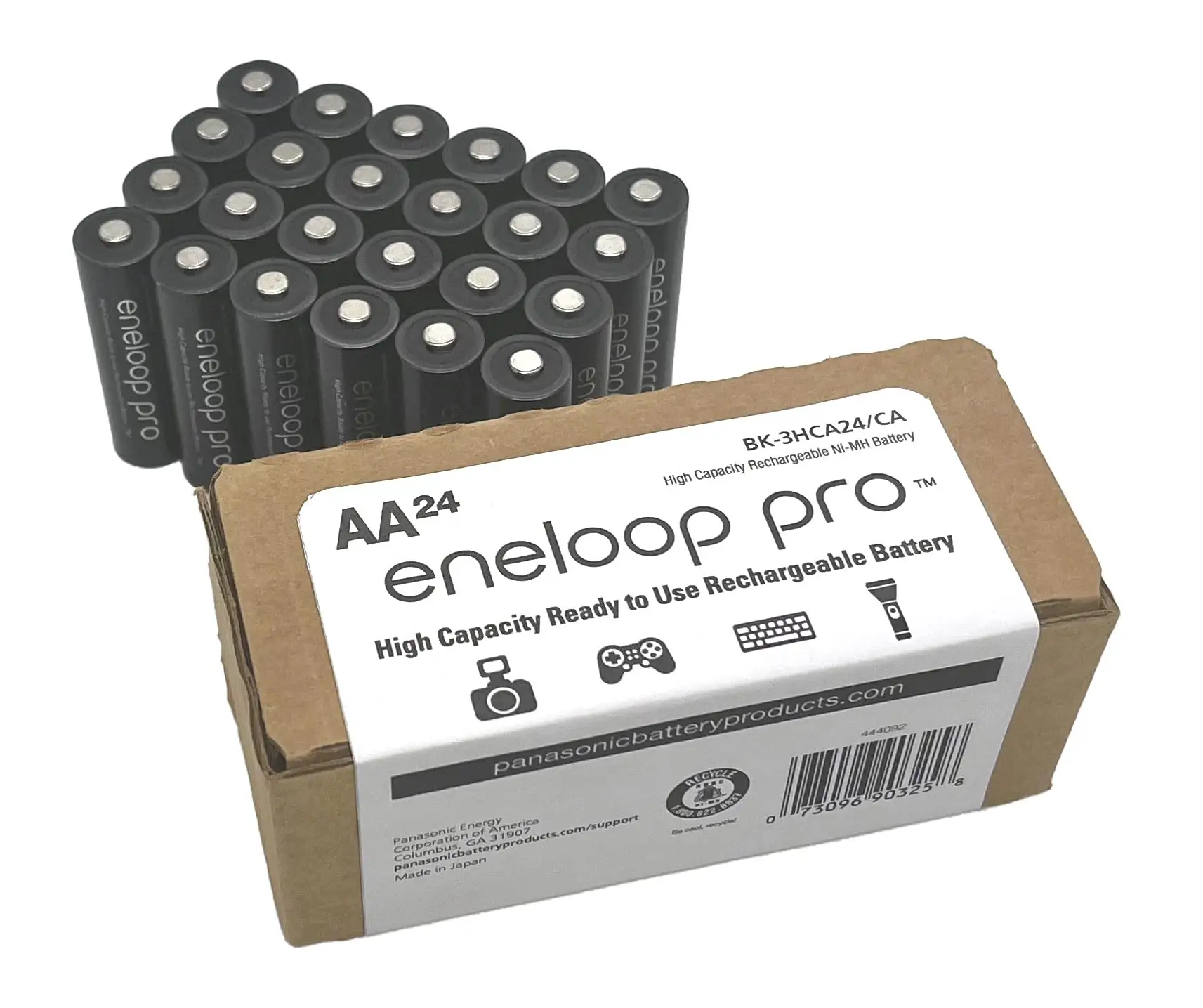
Final Verdict: Buy if you’re a photographer, gamer, or pro user needing consistent high-drain performance; Avoid if you mainly power low-drain household devices. Pro tip from community: Pair with a Panasonic smart quick charger to maximize cycle life and grab during sales for best value.