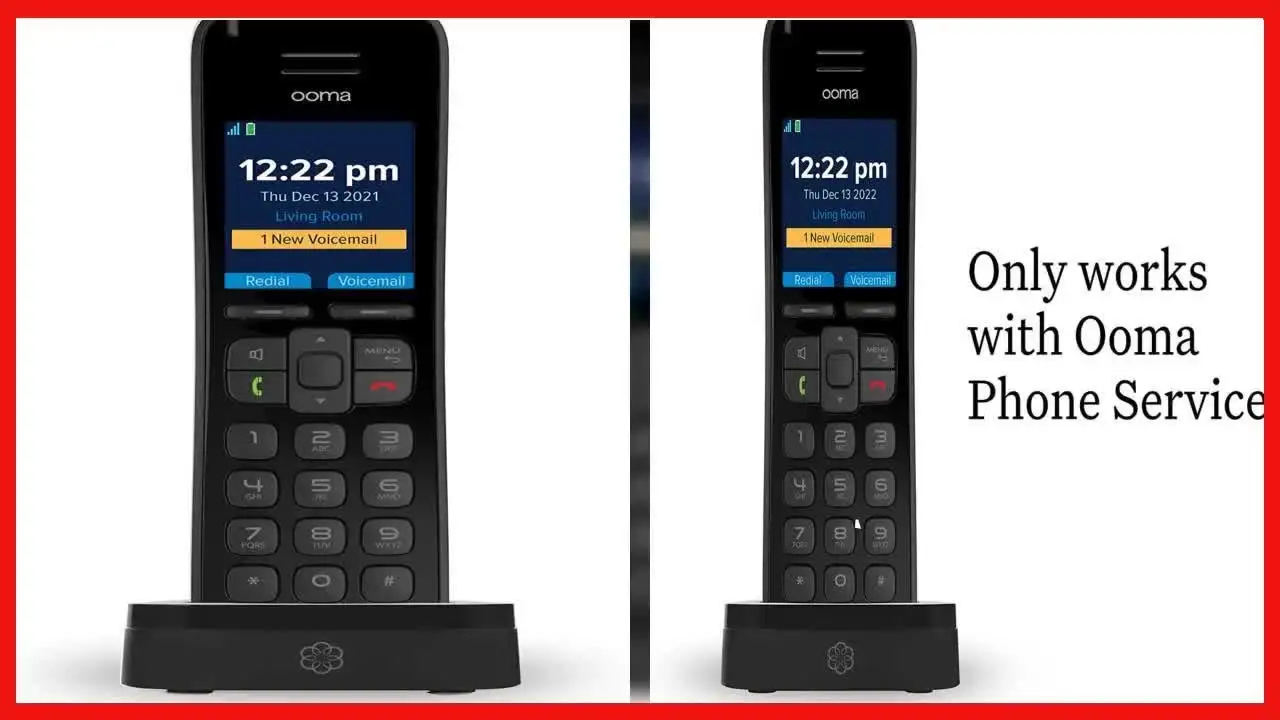
Ooma HD3 Cordless Handset Review: Integration vs Audio
When the Ooma HD3 Cordless Handset for Telo VoIP hit the market, the promise was clear: sleek design, smartphone-like features, and “crystal-clear HD voice” to redefine home and office calling. Yet the verdict from the field is mixed—some buyers call it “excellent” and “better than name-brand HD cordless phones,” while others slam the “brutal” sound quality and stripped-down hardware. Drawing from hundreds of user accounts across Reddit, Amazon, Trustpilot, and Ooma’s own forums, the HD3 scores a conditional 6.8/10.
Quick Verdict: Conditional buy if you need deep integration with Ooma Telo; pass if HD audio fidelity is your top priority.
| Pros | Cons |
|---|---|
| Simple pairing and setup process | Inconsistent sound quality—grainy for some users |
| Integrates tightly with Ooma Telo features (picture Caller ID, voicemail banner) | Speakerphone often described as muffled or unusable |
| Sleek design with 2” color display | No headset jack; lost feature from HD2 |
| Long standby time (150 hours) | Firmware updates lock all handsets for 1+ hours |
| Supports multiple handsets (up to 4) | DECT 6.0 range not as strong indoors |
| HD Voice enhances Ooma-to-Ooma calls | No Bluetooth option; headset accessories discontinued |
| Strong voicemail and call log functions | Screen brightness too high even on “low” setting |
Claims vs Reality
Ooma markets the HD3 as delivering “double the fidelity” with HD Voice, paired with DECT 6.0 security and “superb sound quality.” The branding leans heavily on the integration perks—instant second line, sync contacts from Google/Facebook/LinkedIn, and private voicemail compartments.
Reddit user trackme countered this marketing talk with a blunt summary: “I have 5 hd3 handsets… it’s just the way they are,” referring to mediocre audio. Another on Ooma’s forum complained, “The speaker on the HD3 is a loser but when the speakerphone is off the quality isn't too bad. If I had known the earphone jack was removed… I wouldn't have bought them.”
On Amazon, one verified buyer reported “earphone sound quality was very good; loud and clear” for direct listening, but conceded “the speakerphone sounded like a tiny speaker coming from the back.” This aligns with Ooma forum posts describing muffled output when on speaker. The HD Voice claim holds for Ooma-to-Ooma calls—several customers note improved clarity when both parties use HD-capable phones—but falls short for general VoIP calls, where compression and network conditions undermine fidelity.
Cross-Platform Consensus
Universally Praised
Ease of setup comes up repeatedly. A verified Amazon buyer wrote: “Set up was a snap… the handset paired in seconds… all done.” The pairing process—holding the page button on the Telo base—allows even non-technical users to be calling within minutes. This simplicity is particularly valued by less tech-savvy home users and small offices seeking quick deployment.
Integration with Ooma Telo’s ecosystem is another strong point. Features like picture Caller ID and the prominent voicemail banner on the color display are appreciated by Premier subscribers. Ooma’s own forum notes that the HD3 is “the only handset that integrates with the ‘My Ooma’ account” for visual voicemail indicators.
Battery life and standby duration earn solid marks. The stated 10-hour talk time and 150-hour standby often match real-world results, with users regularly leaving handsets off the cradle for days. One Trustpilot reviewer noted continuous service between charges after swapping to quality AAA cells like Panasonic Eneloop.
Common Complaints
Audio quality divides the community sharply. Reddit user trackme mentioned older Panasonic handsets sounding better; another posted “sound quality is pretty bad… grainy… older handsets sound better.” On Ooma’s forum, one owner summed it up: “Call quality is terrible… decades-old Panasonic phones are way better.” This criticism targets both the HD3’s compression and the speakerphone’s muffled tone.
Hardware omissions also irk long-time Ooma users. The lack of a headset jack—present in the HD2—was roundly criticized. A Trustpilot review lamented, “They have stopped selling Bluetooth adapter… no headset jack… my money goes to Panasonic instead of Ooma.”
Firmware management is another sticking point. One Amazon buyer noted updates “take control of your entire phone system… 1-1.5 hours each time” with no scheduling option, leading to potential downtime during urgent calls—even hypothetically missing 911 if all units were unavailable.
Divisive Features
HD Voice capability is the most polarizing. For Ooma-to-Ooma scenarios, especially with cell phones that have HD Voice enabled, several Ooma forum posts and Trustpilot comments say the sound is “quite good.” But for mixed-device calls, others detect “garbled” audio, suspecting heavy server-side compression.
Design elements like the constantly lit screen get mixed feedback. While some enjoy the polished look, another forum user wished for “a screen brightness setting below ‘low’—in a bedroom, it’s still way too bright.” Likewise, the voicemail banner is welcomed, but the missed call indicator’s size disappoints.
Trust & Reliability
Long-term users report durable service from Ooma Telo overall, with one Trustpilot review citing 13 years of satisfaction. However, the HD3’s consistency is less robust. Multiple Reddit users suggest battery reseating or replacement as a fix for degraded audio over time, hinting at gradual performance decline.
Compounding reliability concerns are sporadic pairing issues, especially after software upgrades. An Amazon user had to manually unregister and re-register handsets via Telo’s internal web page, adding complexity for casual owners.
Despite this, Ooma’s customer service garners praise in some quarters, with minimal wait times and effective troubleshooting. Yet, unanswered requests in company forums—such as adding line code prefixes for stored contacts—suggest selective responsiveness.
Alternatives
The only widely discussed competitor is Panasonic’s DECT series. Reddit and forum users repeatedly compare HD3 unfavorably, citing better audio and inclusion of headset jacks. While Panasonics lack deep integration with Ooma’s online services, they may suit those prioritizing call quality over visual voicemail and contact syncing.
Bluetooth headsets paired via Telo Air or legacy adapters emerge as a workaround for those dissatisfied with onboard audio, though Ooma’s discontinuation of its adapter limits this path.
Price & Value
At a list price of $49.99, the HD3 sits mid-range for proprietary VoIP handsets. eBay listings fluctuate between $42.95 and $70.99 new, with bundled Telo + HD3 sets fetching $139.99–$213.99 depending on condition. Resale value holds moderately thanks to required compatibility with newer Ooma Telo units (activation code starting with 2 or higher).
Community buying tips include sourcing quality rechargeable AAA batteries immediately to replace the “junk” included cells, improving charge longevity and reducing service interruptions.
FAQ
Q: Does HD Voice work on all calls?
A: No. Users confirm HD Voice only enhances clarity when both participants use HD-capable Ooma phones or services. Standard VoIP calls may still sound compressed.
Q: How many HD3 handsets can I connect to one Telo?
A: Up to four per Telo unit, but multi-handset setups suffer full downtime during firmware updates, which run system-wide.
Q: Can I use a headset with the HD3?
A: Not directly; the HD3 lacks a headset jack. Bluetooth pairing is possible only via discontinued Ooma adapters or compatible bases.
Q: Is there a way to dim the screen more than the ‘low’ setting?
A: No official adjustment exists beyond “low,” which some owners still find too bright in dark environments.
Q: Does the HD3 work with all Ooma Telo versions?
A: No. Compatibility is limited to second-generation or later Telo units with activation codes starting at 2 or higher.
Final Verdict: Buy if you’re already committed to Ooma’s ecosystem and value integration features like visual voicemail and contact syncing. Avoid if superior call fidelity or headset use is critical—consider Panasonic as an alternative. Pro tip from community: replace the included batteries with high-quality AAAs immediately to boost performance and lifespan.