Nvidia 3080 FE Renewed Review: Power with Thermal Caveats
Coming out of multiple benchmark suites and long-term user trials, the Nvidia 3080 Founders Edition (Renewed) has established itself as a formidable 4K and 1440p performer despite its launch dating back to 2020. Average community sentiment lands it around a 9/10 for raw performance, edging close to the RTX 3090 in many workloads while undercutting its price. However, concerns over thermals, limited VRAM for certain ray tracing workloads, and high resale prices temper some of the enthusiasm.
Quick Verdict: Conditional buy — brilliant if your focus is 1440p/4K high refresh gaming and you can manage the thermals.
| Pros | Cons |
|---|---|
| Near-flagship performance at lower price than RTX 3090 | Runs hot (often 80°C+) without optimized fan curves |
| DLSS significantly extends lifespan for AAA gaming | 10GB VRAM cap limits some heavy RT 4K titles |
| Founders Edition compact size fits tighter builds | Power draw ~320W, needs strong PSU (750W+) |
| Innovative dual-flow cooling is quiet when tuned | Coil whine present for some owners |
| Gorgeous industrial design | Prices inflated well above $699 MSRP in current market |
| Renewed units offer entry point under full retail | Limited overclocking headroom |
| Handles 4K60 in most modern titles | Thermal pad quality criticized in FE model |
Claims vs Reality
Nvidia marketed the RTX 3080 FE as delivering "the ultimate play" with twice the performance of the RTX 2080, powered by its Ampere architecture. While the theoretical CUDA core count doubled, NotebookCheck’s synthesis of 70+ reviews showed an average uplift closer to 39% over the RTX 2080 FE and 24% over the RTX 2080 Ti across mixed resolutions. “Battlefield V tests were cherry-picked without ray tracing because RT requires more than 10 GB VRAM in 4K,” their report noted, hinting at selective benchmarking in official demos.
Another claim centered on the dual axial flow-through cooling design as “exceptionally cool and quiet.” Digging deeper into user reports, temperatures vary wildly—some PCPartPicker reviewers say with custom fan curves, core temps stay under 70°C, while others hit 80°C+ with VRAM/hotspot readings in the 90s. Reddit user feedback often praised its acoustics, but mentioned “bad thermal pads” that, when replaced, dropped temps by 20°C.
Finally, the promise of 4K gaming without compromises holds mostly true—with caveats. At launch price and in modern titles with DLSS, the FE delivers 4K60 in demanding games like Doom Eternal and Death Stranding. But without DLSS, heavy RT loads can cause dips below target framerates, and new AAA titles with higher VRAM demands may expose limitations in memory capacity.
Cross-Platform Consensus
Universally Praised
For gamers targeting 1440p ultra-wide performance, the FE is frequently called “brilliant.” Reddit user descriptions like “got mine at MSRP shortly after release… basically a cut-down 3090” capture the feeling of scoring near-flagship power. DLSS support is universally lauded; one Redditor reflected, “Nearly 3 years of using the 3080 and I don’t feel like it’s missing any performance whatsoever, thanks to DLSS.”
Streamers and creators benefit from NVENC’s next-gen encoding quality. The Trustpilot review from PCMag called it “the new king of 4K gaming and the next great step in GPU evolution,” highlighting its strong broadcast suite, from background noise removal to virtual green screens. Competitive players using Nvidia Reflex note measurable improvements—PCMag’s Valorant test saw headshot accuracy rise by nearly 30% for the reviewer.
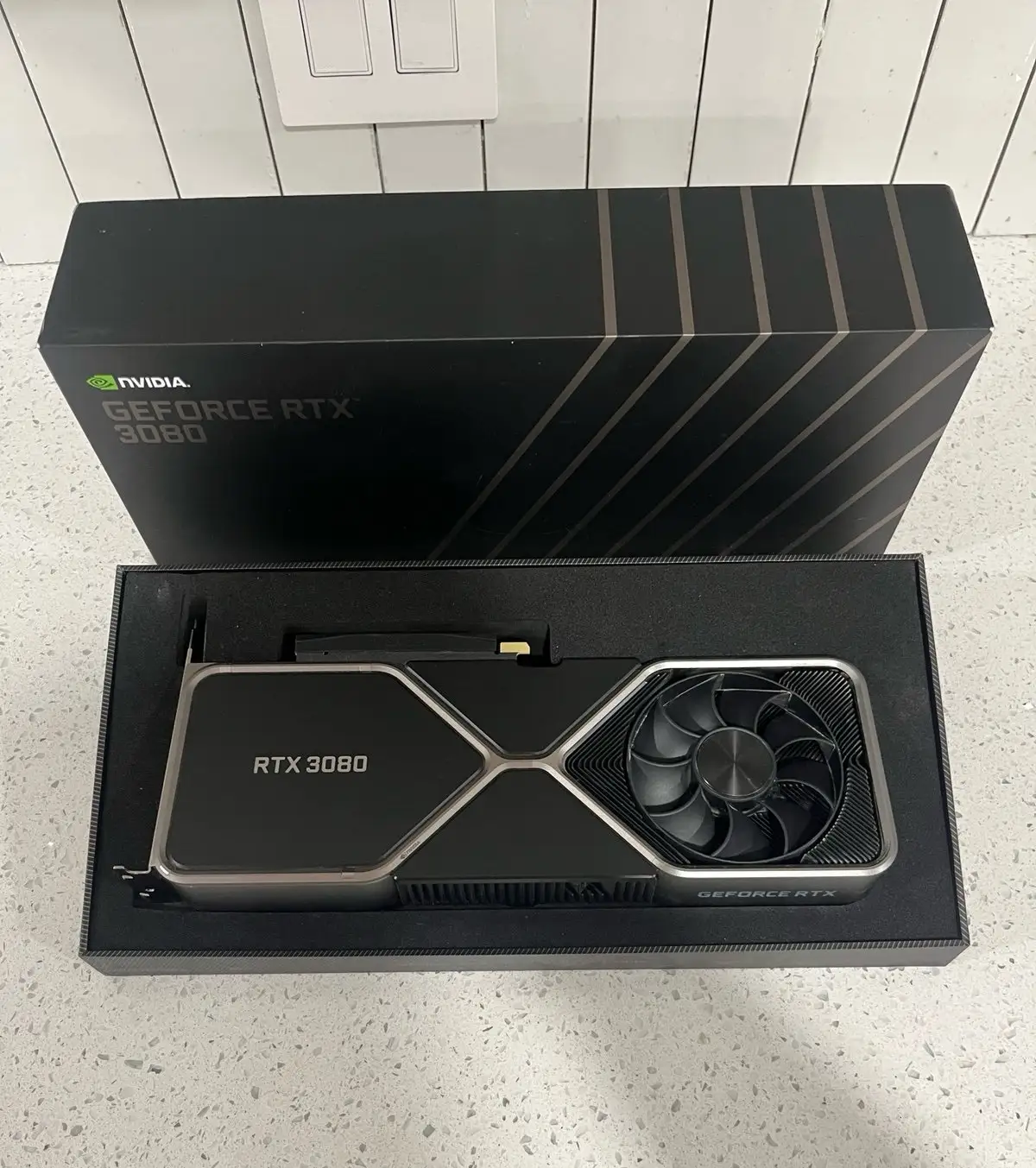
Another point of praise is the FE’s compact design compared to most aftermarket triple-fan models. Builders with ITX or tight cases can still deploy this level of performance without dimension compromises. Multiple Reddit users mention pairing it with small-form builds and appreciating the case-friendly footprint.
Common Complaints
Thermals top the complaint list. While some owners control temps through undervolting—often achieving ~270W power draw and just 2 FPS loss—others encounter persistent 80°C+ readings in games. PCPartPicker user experiences reveal VRAM hotspots in the 90s, making thermal pad replacements a common mod.
Coil whine is another recurring theme. While not universally disruptive, several buyers mention it’s audible without headphones. Overclocking potential is modest; PCMag’s tests eked out only ~5% real-world gains before hitting stability limits.
The 10GB VRAM cap frustrates enthusiasts pushing heavy RT workloads or using high-resolution texture packs. NotebookCheck pointed out instances of “RT performance clearly gimped despite improved RT cores” in some recent benchmarks.
Divisive Features
Power consumption at 320W splits the crowd. High-refresh 4K players accept the draw as necessary, while efficiency-minded buyers compare it unfavorably to AMD’s RDNA2 perf/watt. Twitter debates over perf/watt show some seeing “+2030% performance from 2080 Ti” while others call it “weak for a full node increase.”
The FE’s dual axial cooling design impresses many for aesthetics and quiet operation, but skeptics note potential CPU heat soak from the rear exhaust design. PCMag addressed this concern, saying liquid-cooled CPUs mitigate the impact.
Trust & Reliability
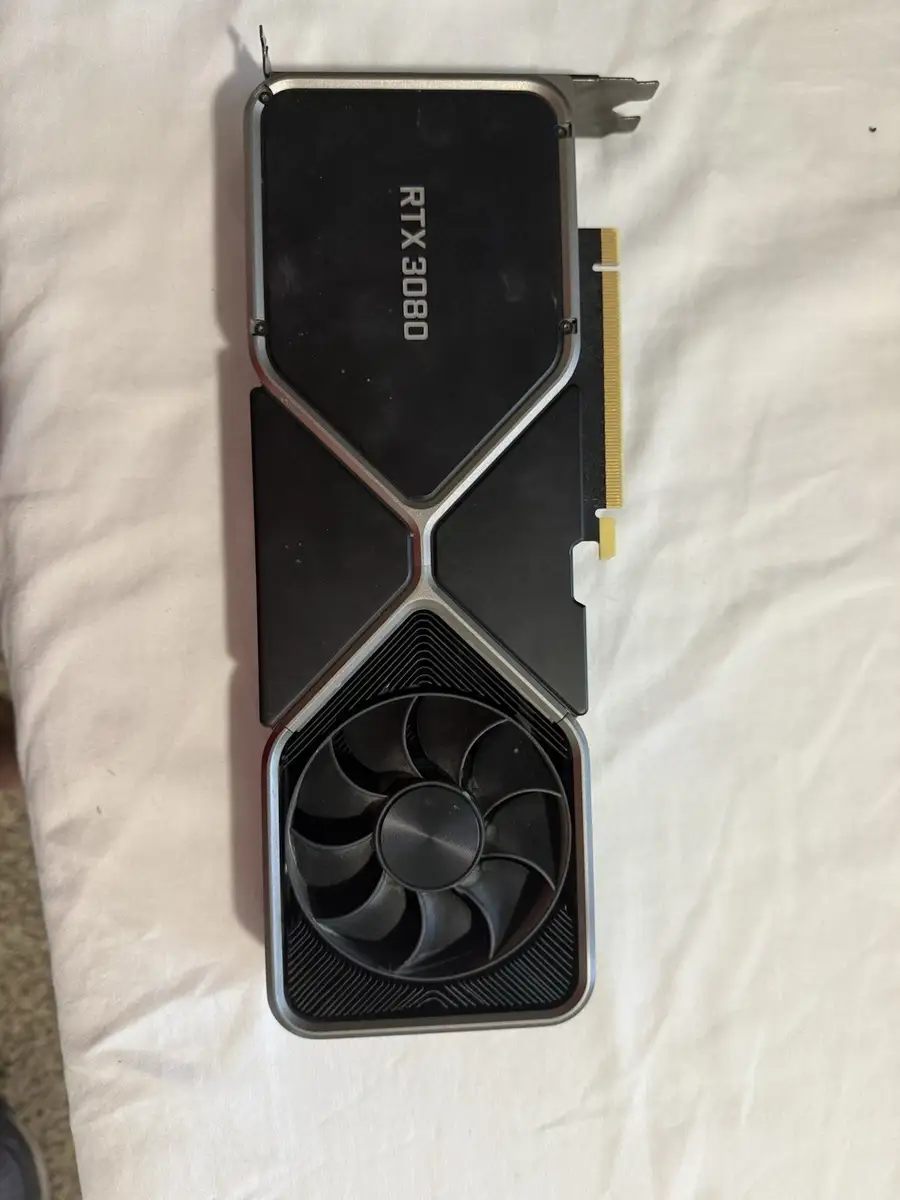
Renewed units generate predictable buyer caution. On eBay, listings for “excellent – refurbished” FE cards hover around $400–$450, often with one-year warranties. Community tips stress inspecting fan condition and considering thermal paste/pad refreshes, especially for ex-mining units. One PCPartPicker user who bought an ex-mining 3080 FE reported, “Came pretty dusty… fans might not have much life left… configured with slight undervolt to keep heat down.”
Durability stories are generally positive—several owners report flawless operation past the two-year mark, with temps steady after maintenance and performance still competitive. The simplicity of the FE design and lack of rear PCB memory chips (compared to some 3080 Ti models) are noted for longevity.
Alternatives
With AMD’s Big Navi launch after the 3080, the RX 6800 XT offered competitive rasterization performance but trailed in RT/DLSS equivalents. Reddit discussions often frame the 3080's value as “only 5% slower than 3080 Ti but $500 cheaper” at MSRP, making Ti models harder to justify. At current inflated prices, some Quora contributors advocate considering newer 40-series cards for better perf/$, though recognizing that for existing 3080 owners, upgrading is rarely urgent.
Price & Value
The launch MSRP was $699 USD—considered “fantastic value” in Reddit’s MSRP sentiment threads. Today, renewed FE units on eBay average $419–$450, with some auctions dipping below $310 for well-used cards. However, Canada/UK listings still exceed $800 CAD/GBP, and brand-new stock is rare.
Value retention remains robust: compared to other 2020 GPUs, the 3080 FE commands higher resale due to its design, strong performance, and relatively compact size. Buyers aiming for the $400–$450 range can still secure a card that handles today’s 1440p/4K loads, especially with DLSS-enabled games.
FAQ
Q: Is the renewed Nvidia 3080 Founders Edition good for 4K gaming?
A: It handles 4K60 in most modern titles, especially with DLSS, but 10GB VRAM can limit ray tracing performance in some high-memory-demand games.
Q: How hot does the FE run under load?
A: Reports range from 70°C with tuned fan curves to 80°C+ under default profiles, with VRAM hotspots in the 90s on intensive loads.
Q: Is undervolting worth it on the 3080 FE?
A: Many owners undervolt to ~850mV for quieter operation and lower temps, sacrificing just ~2 FPS versus stock in typical games.
Q: How does it compare to the RTX 3080 Ti?
A: Performance difference is ~5%, but Ti costs ~$500 more at MSRP, making the FE better value for most buyers.
Q: Can the FE fit in a small-form PC case?
A: Yes, its compact length fits tighter builds, with multiple SFF users reporting successful installations.
Final Verdict
Buy if you’re a 1440p or 4K gamer who values DLSS longevity, compact FE design, and can manage high thermals through tuning or case airflow. Avoid if heavy RT workloads with high VRAM demand are your priority, or if energy efficiency is critical. Pro tip from community: undervolt early, replace thermal pads if temps trend high, and target renewed units around $400–$450 for the best value.





