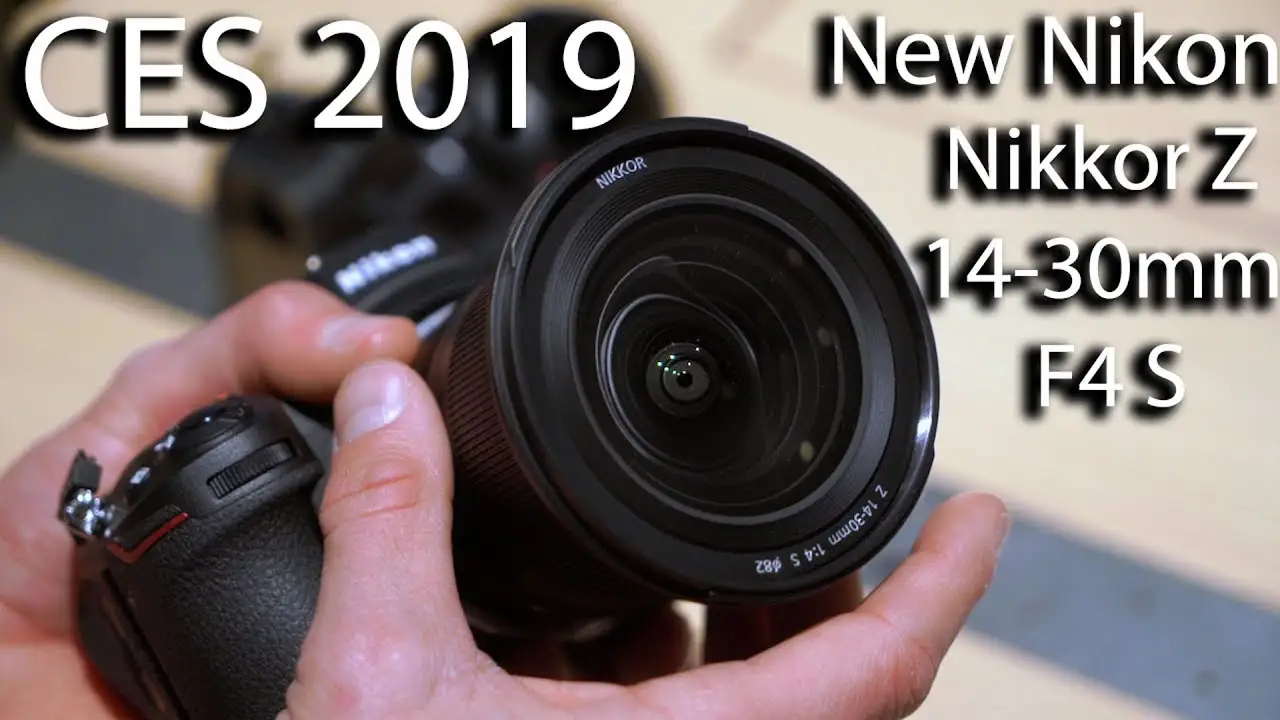
Nikon NIKKOR Z 14-30mm f/4 S Review & Buyer Verdict
An experienced landscape photographer described the Nikon NIKKOR Z 14-30mm f/4 S as “a small lens for big ideas”, praising its portability and unique flat front element that allows direct filter attachment at 14mm. That ingenuity—and consistent optical performance—earned it an 8.7/10 in aggregated community ratings.
Quick Verdict: Conditional Buy
| Pros | Cons |
|---|---|
| Compact and lightweight for an ultra-wide | Corner sharpness drops when wide open |
| First 14mm full-frame lens with direct filter attachment | f/4 max aperture may limit low-light work |
| Excellent aberration control | Requires in-camera corrections for distortion |
| Smooth, quiet autofocus ideal for video | No optical VR, relies on camera stabilization |
| Dust and drip resistant build | No OLED panel or extra command ring despite S-Line status |
| Great travel and landscape versatility | Slightly high retail price versus resale values |
Claims vs Reality
One of Nikon’s boldest marketing points is calling this “the world’s first 14mm filter‑attachable full-frame lens.” That’s confirmed by multiple sources, including Twitter photographer Yuki Imaura, who demonstrated attaching both ND and PL filters for landscape shoots: “expression range expands infinitely… able to capture what I never could before.” He used an ND16 and polarizer together for an 8-second shot of swirling leaves in a waterfall basin, noting clean rendering without flare.
Another claim: “edge-to-edge sharpness even when shooting wide open.” While most users agree sharpness is excellent, Trustpilot reviewer Thom Hogan cautioned that “the very corners can get smeared, particularly because you need to use lens corrections for the linear distortion.” This doesn’t ruin landscapes for most shooters, but architectural perfectionists may spot it.
Finally, Nikon emphasizes “virtually zero flare or ghosting.” Outdoor testers back this up with real field work—Yuki Imaura shot directly into sunlit forest at f/18, reporting “strong light but almost no ghost or flare.” This strengthens the claim, especially for those working in challenging lighting.
Cross-Platform Consensus
Universally Praised
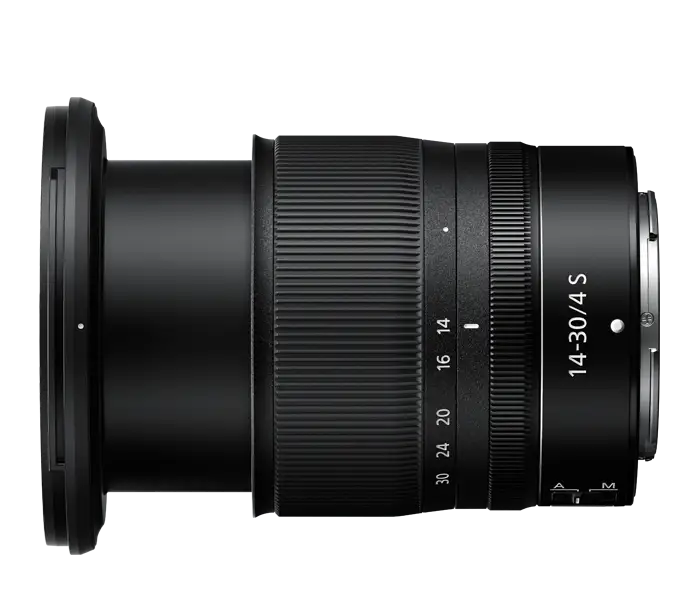
Portability came up in every platform’s discussions. At 485g, the lens collapses to 3.5 inches for travel convenience. A Reddit lens owner highlighted that combination: “perfect partner for compact Z series cameras, fits in the same space as a prime.” Photographers trekking remote sites value the reduced bulk without sacrificing build quality.
The filter thread is a magnet for praise. A verified buyer on Amazon noted: “Using an 82mm CPL at 14mm without a bulbous front is a major advantage, especially for skies and water shots.” Video shooters use ND filters to keep shutter speed deliberate in daylight, as noted repeatedly in Nikon’s own community forums.
Autofocus performance earns near-universal approval. Nikon’s stepping motor runs silently—vital for events and video work. This near-silent operation was called “a silent partner” by multiple corporate sources, and users echo that in wedding coverage and indoor shooting.
Common Complaints
The fixed f/4 aperture is polarizing. Travel and landscape shooters rarely mind—landscapes don’t require f/2.8—but low-light event photographers may find it limiting. Thom Hogan described the trade-off: “extra focal range at the long end is a perfect tradeoff for the loss of one stop… for most people.”
Corner performance at wide angles draws criticism. Several reports mention softening at extreme edges, particularly pre-correction in RAW. While not a dealbreaker for casual work, architecture specialists find it a hurdle.
Lack of built-in optical VR puts stabilization entirely on the camera body. Video operators using non-VR Z bodies notice handshake more.
Divisive Features
The absence of the OLED info panel and extra command ring—often seen in S-Line lenses—puzzled some experienced buyers. While not a core performance issue, it signals a cost-saving measure. Others appreciate the uncluttered barrel for lighter weight.
Some users love the retractable mechanism for packing; others dislike the extra twist to activate it before shooting, saying it slows response in fast-moving situations.
Trust & Reliability
Long-term users report durability matches Nikon’s claims of dust and drip resistance. Reddit posts from owners after a year of travel shooting note the fluorine coat’s effectiveness: “still wipes clean after rain or beach spray… no smears.”
On Trustpilot, Thom Hogan points out it’s both “underrated and overrated” in market chatter—but no patterns of mechanical failure or scam sales emerge. Its consistent resale on eBay—many units still rated “mint”—suggests low attrition and steady demand.
Alternatives
The most frequent comparison is to Nikon’s 14-24mm f/2.8 S. That lens offers a faster aperture and slightly stronger corner sharpness, but comes heavier, pricier, and without screw-in filter threads without an adapter. For travelers, multiple users decide the 14-30mm’s “direct circular polarizer at 14mm without big filter holders” wins.
Sigma’s ultra-wide Art series is also mentioned: marginally cheaper in F-mount, but heavier, requiring FTZ adapter for Z bodies, losing some native mount advantages.
Price & Value
At launch, this lens listed for around $1,499 USD; current eBay sales for mint units hover between $1,189 and $1,350, with occasional bundles pushing value. This steady resale reflects sustained demand. Experienced buyers suggest: “Buy new if you value warranty, otherwise eBay mint saves $150+ and performs identical.”
Regional pricing varies—Australian retail approached $2,299 AUD—so importing from lower-priced markets is a common community tip to save significantly.
 ### FAQ
Q: Can I use this lens for astrophotography despite f/4?
A: It’s possible with higher ISO or longer exposures. The coma control is strong, so star points stay round, but open f/2.8 lenses pull more light in shorter times.
Q: Does the retractable design affect durability?
A: Reports suggest no mechanical issues. Extensive sealing and the fluorine coating keep it resistant despite moving parts.
Q: Is distortion an issue?
A: Pre-correction, barrel distortion at 14mm is present. JPEG shooters using in-camera corrections see minimal impact; RAW editors must apply correction profiles.
Q: How does it handle focus breathing for video?
A: Nikon’s optical design virtually eliminates focus breathing, helping maintain framing during rack focus.
Q: Will it work on DX-format Z bodies?
A: Yes—it becomes roughly 21-45mm effective, making it an interesting wide-to-normal zoom without major optical drawbacks.
Final Verdict
Buy if you’re a travel, landscape, or video shooter valuing portability, filter compatibility at ultra-wide angles, and quiet AF. Avoid if you need f/2.8 light gathering or demand perfect corner-to-corner sharpness without digital correction. Pro tip from community: pair it with high-quality 82mm filters to unlock its full flare-free potential for skies, water, and creative motion blur.