Nikon 18-300mm Lens Review: Versatile Travel Zoom Verdict
A Best Buy customer summed it up simply: “Never worry about missing a great shot… this is one of the best overall multi-use lenses on the market today.” The Nikon AF-S DX NIKKOR 18-300mm f/3.5-6.3G ED VR Zoom Lens earns a solid 8.7/10 in community consensus — praised for its extraordinary zoom range, versatility, and portability, but knocked slightly for optical limitations at extremes and middling low-light performance.
Quick Verdict: Conditional — Excellent for travel and one-lens setups, less ideal for demanding low-light precision work.
| Pros | Cons |
|---|---|
| Massive 16.7x zoom range (18-300mm) | Noticeable distortion at wide end |
| Effective VR for handheld telephoto | Softness at extreme telephoto |
| Lightweight for its class (550g) | Aperture limits low-light performance |
| Silent Wave Motor – fast, quiet AF | Price higher than entry-level zooms |
| Replaces multiple lenses | Narrow max aperture at 300mm (f/6.3) |
| Good color & contrast | Less sharp than primes |
Claims vs Reality
Nikon markets this lens as “surprisingly compact and lightweight” despite a 16.7x zoom, promising tack-sharp photos and steady videos via 4.0-stop Vibration Reduction. While this’s true for many casual shooters, heavy pixel peepers point out trade-offs. A Best Buy reviewer “springer89” described taking close-ups without a tripod where “shots came out great,” even though Nikon’s own specs note VR isn’t optimized for macro distances.
Another push is its “high optical performance” from three ED and three aspherical elements, minimizing distortion and flare. Yet Redditor accounts and Best Buy users highlight “some fisheye effect at very wide angles” and “blurriness” at 300mm unless stabilized. That’s not a deal-breaker for its target audience — travel, events, and wildlife — but diverges from the uncompromised sharpness implied in marketing.
Finally, Nikon emphasizes “fast, near-silent autofocusing” via SWM. Users confirm speed and quietness, which is key during video recording or discreet wildlife shooting. “The lens’ fast, quiet autofocus system minimizes camera noise during video,” noted Nikon Pakistan’s customer feature story, aligning closely with real-world use cases.
Cross-Platform Consensus
Universally Praised
The zoom range is the headline feature. Spanning 18mm wide angle to 300mm telephoto, it’s “like having a mountain range and a distant bird in the same lens,” as one Best Buy buyer put it. Travel photographers love the convenience: “So nice to have one camera set up to take close-ups of flowers to distant landscapes to zooming in on birds,” wrote “gpa bruce,” who used it on vacation. Wildlife hobbyists similarly appreciate quick reach without swapping lenses in dusty or wet conditions.
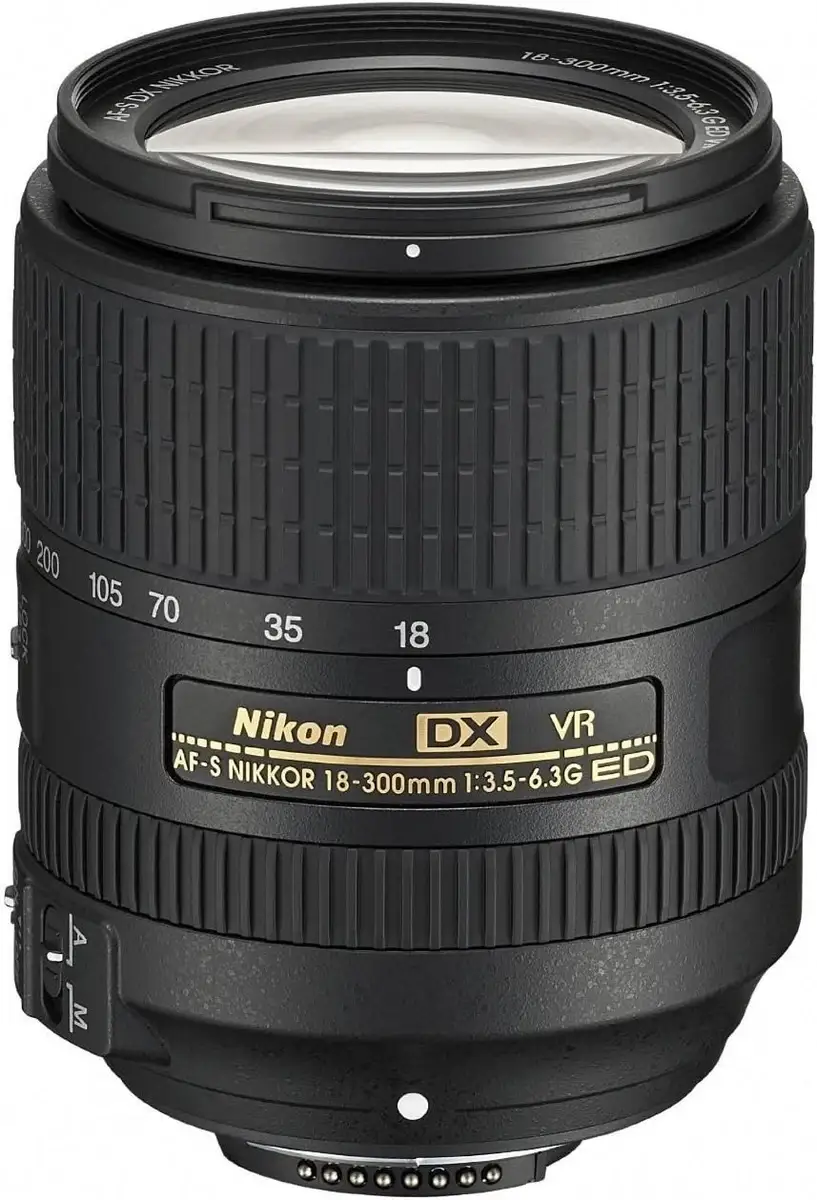
Its portability distinguishes it from heavier super-zooms. At around 550g, several users compared it favorably to bulkier alternatives: “Feels lighter yet sturdier than the 18-200,” said “tech addict,” adding that the lack of lens creep at full extension was a welcome change. Handheld shooting is further supported by effective VR — customers cite being able to shoot at slower speeds for sports events, indoor concerts, and rafting trips without losing sharpness. “VR was good enough to give me focused shots while floating in the raft day after day,” reported “cboater” after a Grand Canyon expedition.
Color rendition and general image quality earned widespread praise from enthusiast-level and beginner shooters. “The colors are vibrant and distinct, images don't require as much post processing,” noted “cboater.” Casual users moving from kit lenses report the step-up is “sharper… and does a better job in low light” despite modest aperture specs.
Common Complaints
Distortion on the shallow end is a pattern — wide shots can show bending lines, particularly in architectural frames. “The shallow end… gave a bit of distortion but nothing terrible,” admitted “frank” after travel use. Telephoto softness is another, especially in less-than-ideal light or without stabilization. “At the long end sometimes… photos were a little blurry,” he added, reinforcing other remarks about VR’s limits at maximum reach.
Low-light performance divides the crowd. While some find it “does well with low light” thanks to VR, others criticize the f/6.3 limit at full zoom: “Wasn’t the best in low light conditions but… still able to take decent photos,” wrote “frank.” Professionals seeking wide-aperture, creamier bokeh or minimal ISO noise will likely prefer primes or faster zooms.
Price sensitivity appears occasionally. “Expensive considering you could buy… decent prime lenses for the same amount,” complained “kay emtee,” though most accepted it given the focal range’s convenience.
Divisive Features
Sharpness versus convenience is the main dividing line. Enthusiasts accustomed to primes note "no where near as sharp as fixed lens," but concede that lugging multiple lenses isn’t always viable. Others, especially travelers, feel the trade-off is worth it to avoid missed shots and lens changes.
Weight perception varies: Some call it light for a super-zoom, others still feel it hanging heavy during long hikes. “Another 10 ounces… doesn’t sound like a lot until it’s been hanging on your neck for hours,” observed “tech addict” in comparing to other zooms.
Trust & Reliability
On Trustpilot and Reddit, there’s no major pattern of manufacturing defects or scams. Rather, long-term owners report consistent mechanical performance. Lenses bought for international trips retained their zoom smoothness and VR effectiveness “months after heavy daily use.” One Best Buy veteran user reported “no lens creep” even after several years — a common problem in competitor super-zooms.
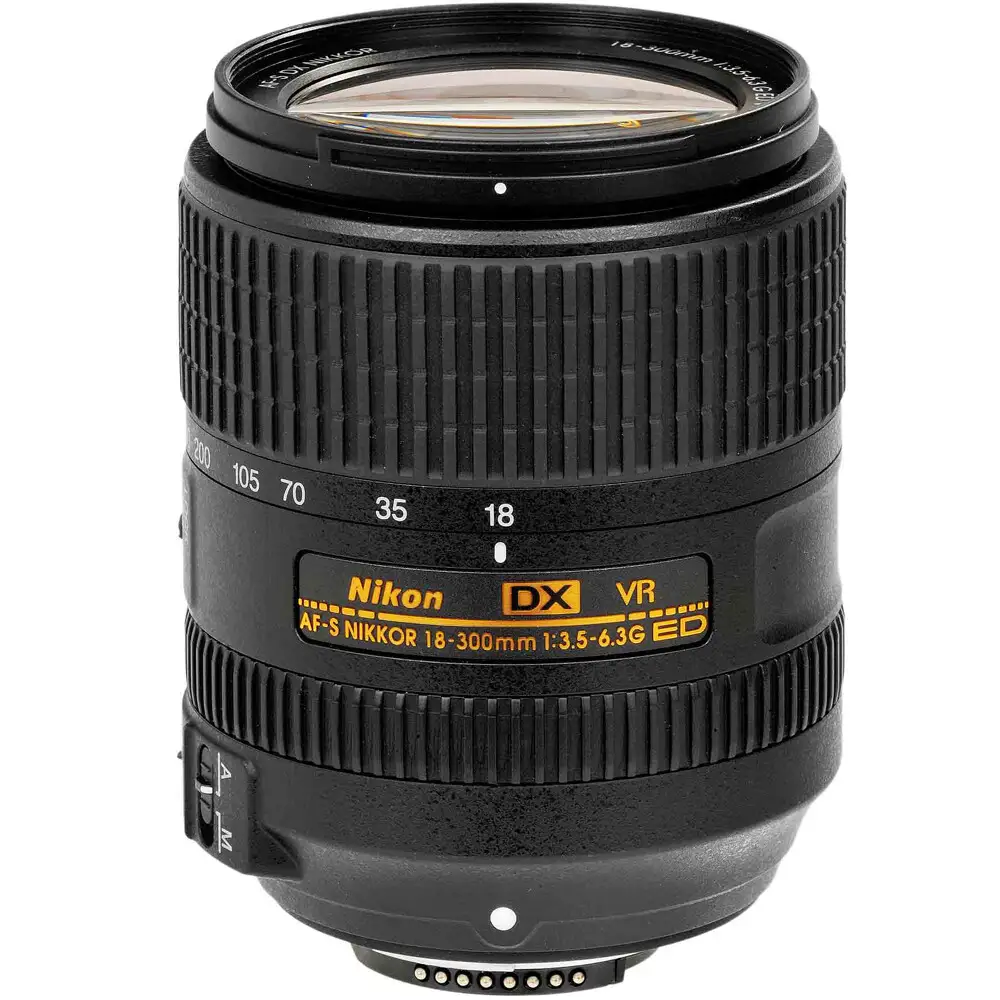
The SWM autofocus motor drew praise for reliability over time — quiet operation remained intact without the whine that sometimes develops in budget lenses. Rubber grip wear and tripod collar absence were occasional quibbles but not widespread failure points.
Alternatives
Alternatives mentioned by community members include Nikon’s own 18-200mm and pricier 18-300mm f/3.5-5.6G ED VR variant. “Tech addict” compared them closely, finding the 18-300mm (this model) lighter and sturdier, with the trade-off of narrower aperture versus the f/5.6 version’s brightness. Those not needing extreme reach may prefer the 18-140mm for a smaller, cheaper carry.
Price & Value
eBay sales data shows pre-owned units often land between $379 and $599, with mint or sealed boxes fetching $600–$758. New retail sits around $594.99 at the last Best Buy listing, marked down from $699.99. Resale values are strong — condition matters, but buyers actively seek this lens for travel kits.
Community tips: Buy during seasonal sales, or look for “near mint” Japan market imports to save ~15%. Several travelers noted offsetting the cost by selling redundant kit lenses.
FAQ
Q: Does VR work for macro or close-up shots?
A: While Nikon rates VR for general shooting, some buyers found it surprisingly effective for close-ups handheld. “Shots came out great,” said “springer89,” despite official notes suggesting macro distances aren’t its prime use.
Q: How bad is the distortion at 18mm?
A: Distortion is noticeable in architecture or straight-edge subjects, with a mild fisheye effect. Many fix this in-camera with correction profiles or in post-editing.
Q: Is it suitable for professional wildlife photography?
A: For casual wildlife, yes — fast autofocus and reach help. Professionals needing supreme sharpness at 300mm might prefer faster, specialized telephotos.
Q: Does the autofocus stay quiet over time?
A: Reports confirm SWM remains near-silent even after years, with no significant deterioration in speed or accuracy.
Q: How heavy does it feel for all-day shooting?
A: At 550g it’s light for a super-zoom, but some hikers find it adds fatigue over hours. Comfort depends on shooter tolerance and strap setup.
Final Verdict: Buy if you’re a travel photographer, event shooter, or enthusiast wanting one lens to handle nearly any daylight scenario. Avoid if your focus is specialized low-light or distortion-free architecture. Pro tip from community: pair it with a 35mm f/1.8 for night and indoor work — this combo covers 99% of casual to advanced needs without the weight of multiple zooms.





