Netgear Nighthawk MR1100 Review: Strong LTE but Risky
When the Netgear Nighthawk MR1100 Mobile Hotspot Router hit the market, it promised “world’s first gigabit class LTE” speeds, up to 1Gbps downloads, and the ability to connect 20 devices on the go. Yet, real-world user stories reveal a split verdict: for some, it’s the key to freedom from slow home ISPs; for others, it’s an expensive gamble with mixed signal reliability. Overall score from compiled feedback: 7.2/10.
Quick Verdict: Conditional buy — great for rural users with strong LTE coverage or travelers needing multi-device connectivity, but risky if relying on inconsistent carrier bands.
| Pros | Cons |
|---|---|
| Can deliver 90–300 Mbps under ideal conditions | Frequent speed drops with certain carriers or bands |
| Works with up to 20 devices simultaneously | Locked behavior with some carrier firmware |
| External antenna ports improve reception | Firmware updates can break features |
| Strong build and portable form factor | Shorter battery life than advertised for non-stop usage |
| Ethernet offloading extends use beyond hotspot | Poor performance in low-signal areas |
| Flexible data plan compatibility | NAT type issues affecting gaming |
| Better reception than some smartphones with antenna mod | Not truly “unlocked” in all cases |
Claims vs Reality
Netgear markets the MR1100 as capable of up to 1Gbps download speeds, LTE Cat 16 with 4-band carrier aggregation, and dual-band concurrent Wi-Fi. On paper, this positions it as a premium mobile router for home backup, travel, or rural connectivity.
Digging deeper into user reports, the speed claim holds true only in environments with strong carrier aggregation and matching bands. Reddit user Jonathan*** shared: “On 5.8 GHz, I typically get up to 90 mbit down… but my iPhone 6s beats it every time during my commute.” This suggests that while technically capable of gigabit LTE, everyday performance is often far below the marketing peak.
Another core promise was superior reception compared to smartphones, but several AT&T users found the opposite. A verified buyer noted: “Decent cell service on my iPhone X with 25 Mbps or more down… can’t get more than 2–3 Mbps on the Nighthawk.” Conversely, some users did report noticeable reception gains when pairing the MR1100 with Bingfu antennas, especially in rural or fringe areas.
Battery life also faced scrutiny. While Netgear advertises “up to 24 hours,” community feedback showed more modest results. One Trustpilot reviewer described upgrading to external antennas for better throughput, but mentioned no improvement in longevity — heavy continuous use drops endurance closer to 11–13 hours.
Cross-Platform Consensus
Universally Praised
One of the strongest accolades goes to the MR1100’s ability to serve as a home internet replacement in regions plagued by poor DSL or cable service. A Reddit user enthused: “Paying less a month for 4 times the internet speed I had before.” For remote workers, the ability to connect up to 20 devices simultaneously was cited as a lifeline during outages.
Travelers appreciated its Ethernet offloading capabilities, especially those running mobile businesses. A verified buyer on Amazon noted: “Allows more users, is fast, and has an Ethernet port.” When paired with public Wi-Fi or hotel ethernet, it can save mobile data while maintaining a secure network.
External antenna compatibility also earned high marks. Reddit user the_djxx explained: “I use Bingfu whip antennas… in my car, I use Bingfu 8dbi antennas. They boost speed and reception quality significantly.” This is especially important for RV travelers and boaters who regularly park outside optimal signal zones.
Common Complaints
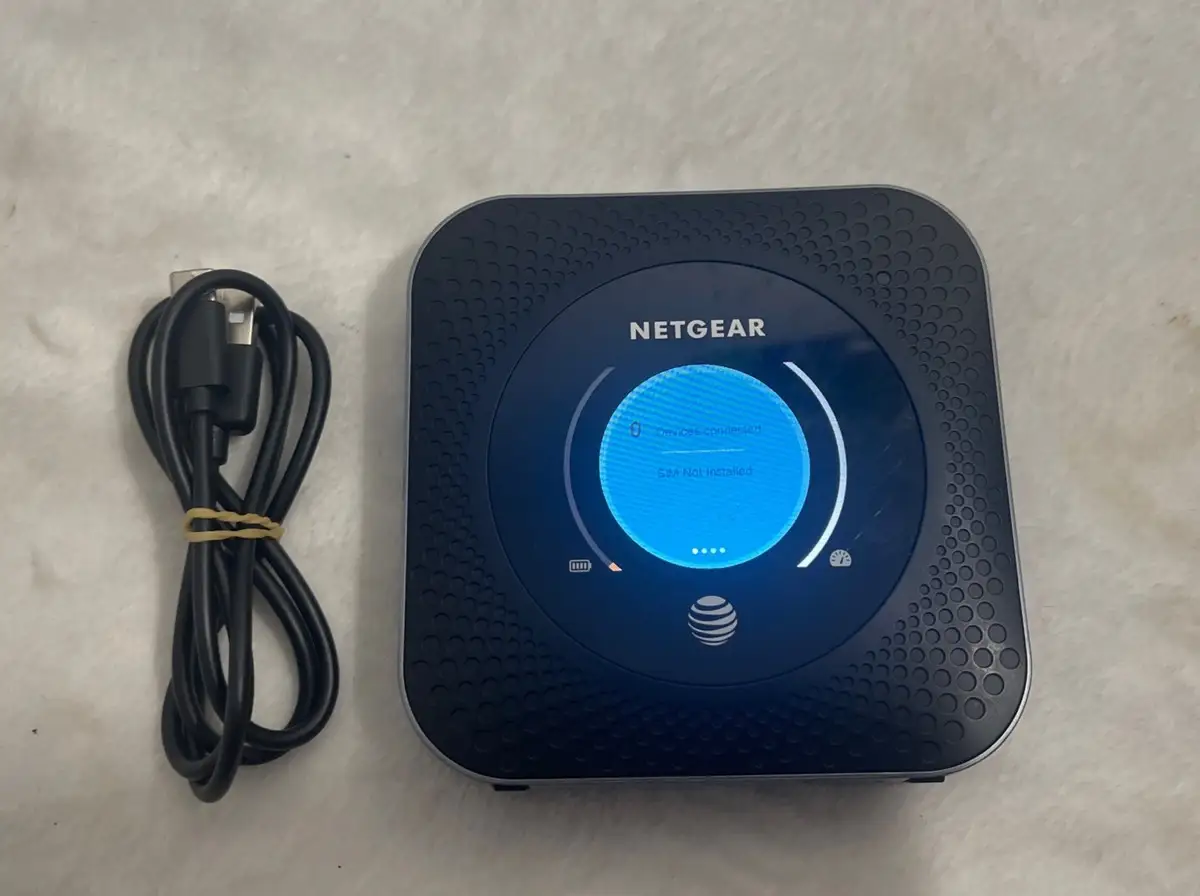
Poor performance on certain LTE bands is a recurring grievance. Multiple AT&T customers echoed the frustration of receiving single-digit Mbps speeds, even while smartphones on the same network pulled 20–40 Mbps. These issues persisted across both 2.4 GHz and 5 GHz Wi-Fi modes, as well as Ethernet fallback.
Carrier firmware restrictions caused additional headaches. One international user, operating in Kuwait, found their Telstra variant restored full features after a second update, but their AT&T unit degraded after firmware changes — losing data usage tracking and suffering flickering battery indicators.
Gaming was another specific sore point. NAT type limitations proved “dreaded” for PlayStation 4 owners using this hotspot, with Reddit threads seeking but failing to provide a reliable fix. For competitive online players, this alone may be a deal-breaker.
Divisive Features
The “unlocked” label generated debate. On Twitter, customers complained: “Don’t buy this if you have AT&T!… The description says it’s unlocked — well it isn’t!” Others countered that unlocked factory units worked fine with alternate carriers, provided APN settings were manually configured.
Battery life perception also divided the crowd. Some praised days-long standby, while heavy data users found they needed to recharge by evening. This skew often depended on whether the MR1100 was used for light browsing or continuous streaming.
Trust & Reliability
Trustpilot narratives and Reddit histories reveal mixed trust in Netgear’s firmware support. Firmware updates sometimes restored full functionality — as with the Telstra variant in Kuwait — but others degraded performance. The AT&T version’s update that led to incorrect data tracking and reduced speeds illustrates the potential downside of manufacturer-driven changes.
Durability earns better marks. Several Amazon Renewed buyers reported devices arriving in “very well condition” and surviving months of outdoor travel. Antenna ports and removable batteries provide a degree of longevity rarely seen in sealed modern hotspots.
Concerns about resale value often hinge on carrier lock status; fully unlocked units hold value better, as seen on eBay with prices around $179 for clean used models, versus under $80 for locked units.
Alternatives
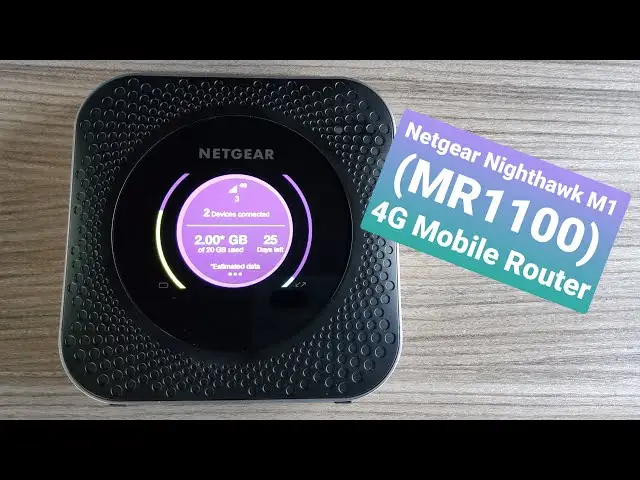
Community discussions point to the AT&T Velocity 2 as a cheaper alternative delivering similar speeds with “better stability, better Wi-Fi range, and a tough screen,” according to Reddit’s Jonathan***. For those prioritizing absolute speed, the Netgear Nighthawk M5 (MR1500) offers 5G capability but is “a lot harder to find and find at a cheaper price,” noted the_djxx.
These alternatives illustrate a trade-off: the MR1100 balances wide compatibility and proven LTE performance with occasional firmware and band-related pitfalls.
Price & Value
Amazon listings for renewed units hover around $175–$189, with new stock often above $280. eBay shows pre-owned unlocked units selling between $119–$179, while locked versions dip below $80. The community’s buying tip is clear: verify carrier compatibility and unlock status before purchase to avoid paying for restricted hardware.
For rural users with confirmed LTE coverage on optimal bands, the MR1100 can replace costly, slow home broadband, making the value proposition strong. For urban or band-restricted areas, however, the risk of underperformance narrows its appeal.
FAQ
Q: Does the MR1100 work internationally with local SIM cards?
A: It can, but firmware and carrier variant matter. Some overseas users reported losing features or seeing speed drops with non-original carriers unless updates restored compatibility.
Q: Can I improve signal quality on the MR1100?
A: Yes. External TS9 antennas — especially MIMO-capable ones — can raise reception and speeds in poor coverage zones. Placement and separation matter for optimal performance.
Q: Is it truly “unlocked” out of the box?
A: Not always. Factory-unlocked models generally accept any SIM, but some “unlocked” units from carriers retain firmware limitations or require APN changes.
Q: What’s the realistic battery life?
A: Heavy continuous use often yields 11–13 hours, versus the advertised 24 hours. Light use with idle periods can extend closer to 20+ hours.
Q: Does it fix NAT type issues for gaming?
A: No reliable fix exists within the MR1100 itself; NAT type for consoles is frequently “strict,” complicating online play.
Final Verdict: Buy if you’re a rural resident, traveler, or mobile business owner with strong LTE coverage on compatible bands — especially if you’re ready to invest in external antennas. Avoid if you’re a competitive gamer or in a weak-signal zone reliant on a single problematic carrier band. Pro tip from the community: Always verify the unit’s unlock status and firmware before purchase, and consider APN adjustments for global use.





