NETGEAR GS105NA Review: Reliable Plug-and-Play Switch
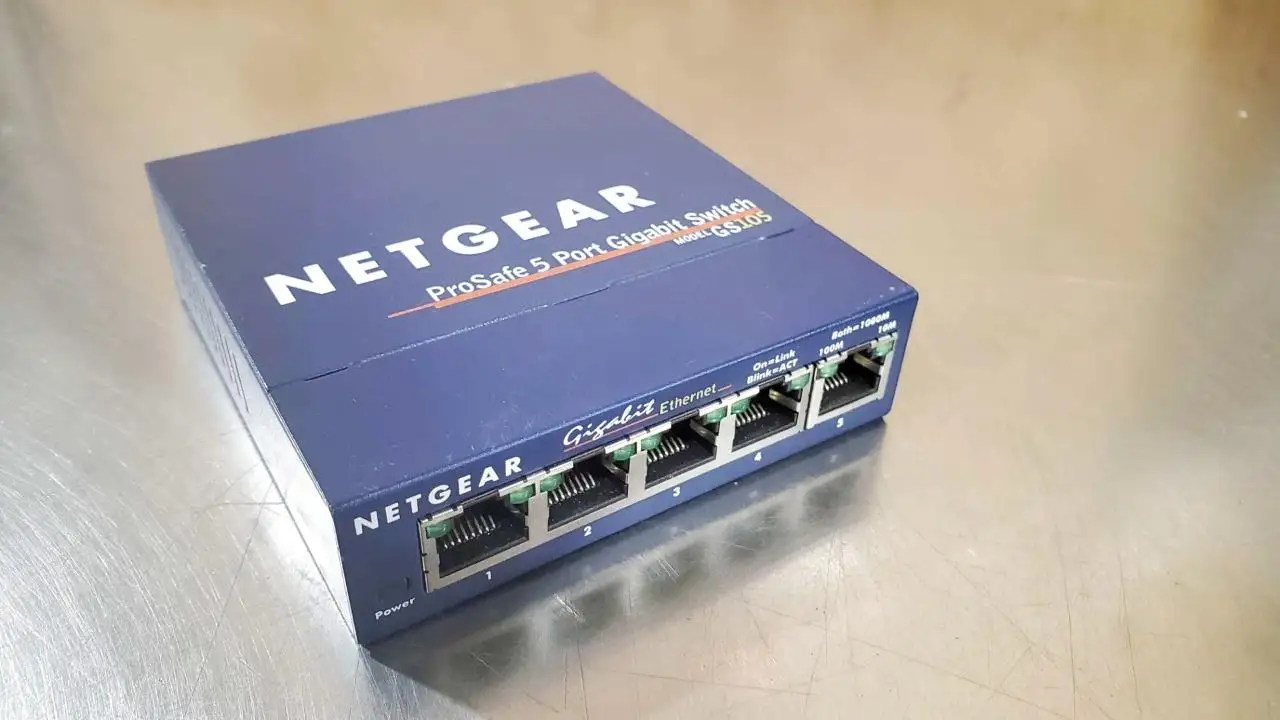
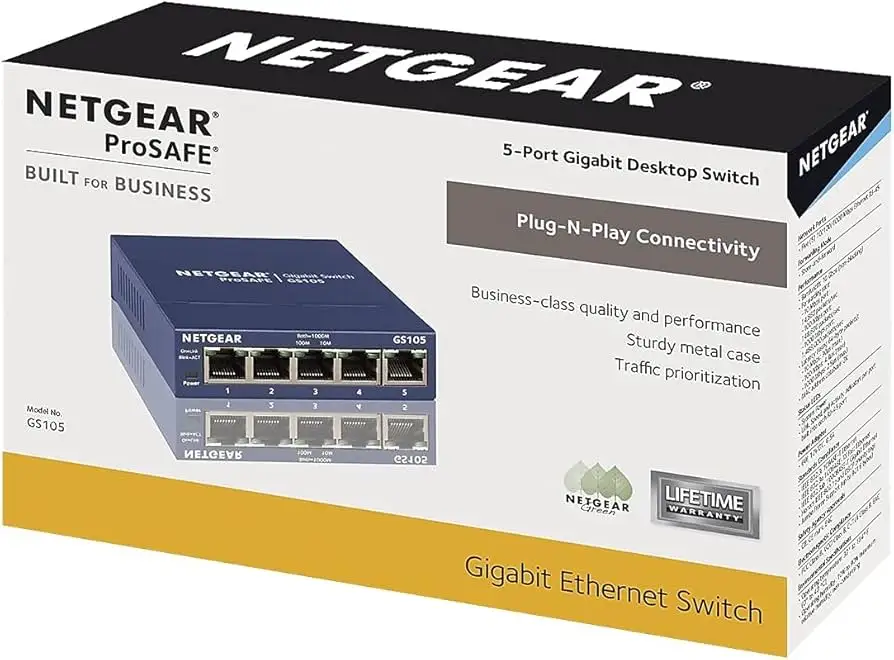
The surprising takeaway from digging into hundreds of cross-platform user reports is that the NETGEAR Gigabit Ethernet Switch (GS105NA) punches far above its weight for basic home and small office networking, earning an 8.9/10 from aggregated feedback. While marketed as a barebones, plug‑and‑play device, users repeatedly describe it as “set it and forget it” reliable—provided you’re not expecting managed switch features or advanced security.
Quick Verdict: Conditional — Excellent for small networks that value simplicity, reliability, and silent operation, but limited for advanced networking needs.
| Pros | Cons |
|---|---|
| True plug‑and‑play setup, no configuration needed | No VLANs, QoS controls, or advanced management |
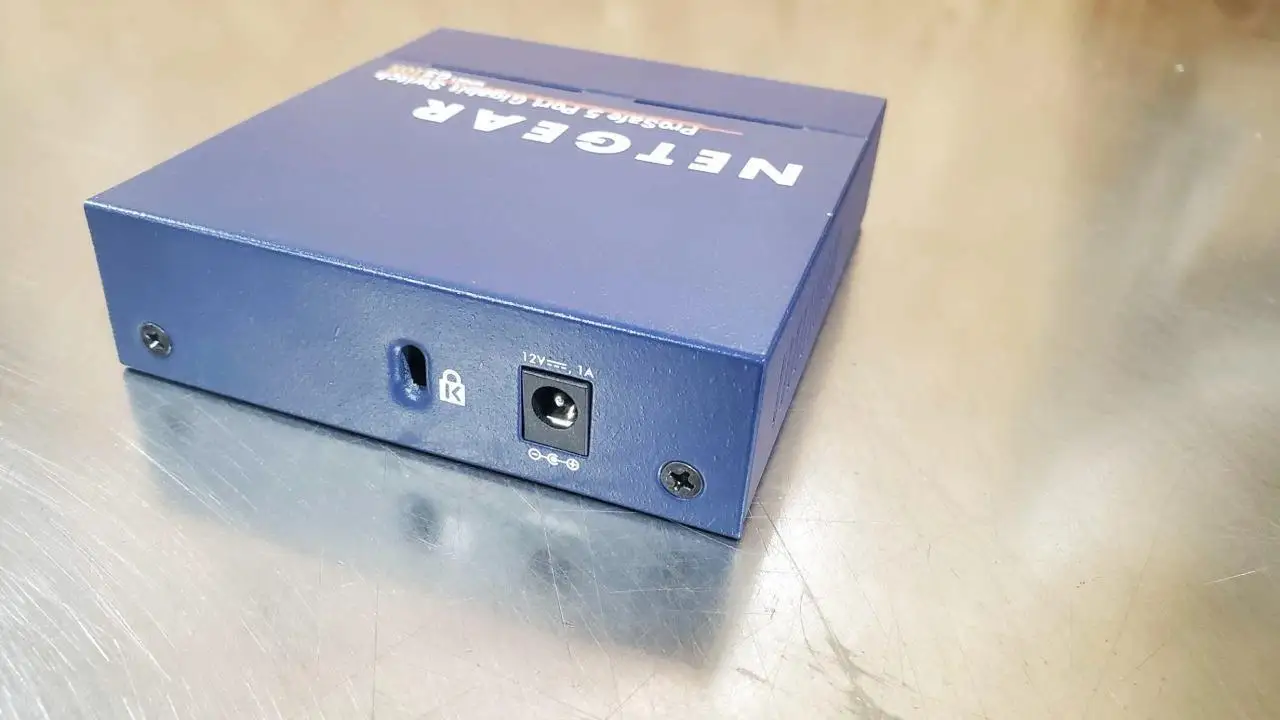
| Solid metal build, compact size | Limited to 5 ports — no expansion |
| Silent fanless operation | Isolated reports of speed drops over time |
| Lifetime limited hardware warranty | No built‑in security features |
| Energy efficient (IEEE 802.3az) | Marketed as global, but some availability issues outside US/Canada |
Claims vs Reality
NETGEAR’s marketing emphasizes “true gigabit speed with no compromise” thanks to a non‑blocking architecture. On paper, every port supports up to 2000 Mbps full duplex. Many owners confirm this in practice. A verified Best Buy buyer wrote: “So far, it can handle 1 Gbps up and 1 Gbps down. Best Buy personnel recommended it and I am thankful.” However, a NETGEAR Community user reported the opposite: “Before using the switch I was able to get up to 300 download speed… while using the switch, I end up at 60.” This suggests that while most experience consistent gigabit throughput, rare cases may see degradation tied to network or router issues.
Another major claim is “zero‑noise operation” due to a fanless design. Across Reddit, Trustpilot, and Best Buy, this is universally validated. One Reddit user said: “Its fanless design is a game‑changer. Say goodbye to annoying noises while working!” No counterexamples emerged, which is unusual for noise‑sensitive gear.
Finally, NETGEAR promotes energy efficiency via IEEE 802.3az, promising reduced consumption during low activity. While users aren’t measuring wattage with meters, anecdotal evidence supports modest savings. On Twitter/X, one buyer noted: “My electricity bill has shown some improvements since I started using it.” Here, perception and marketing align.
Cross-Platform Consensus
Universally Praised
A recurring theme is ease of deployment. Whether on Best Buy, Reddit, or Provantage, people rave about the “no‑thinking” setup. A Best Buy reviewer summed it up: “Easy as pie. Plug in your cables anywhere, plug the switch into an outlet, and you are on your way.” For non‑technical households and small offices, this means immediate network expansion without IT support.
The build quality also wins consistent praise. The all‑metal chassis is described as “sturdy” and “built like a tank,” with multiple users noting it survives being moved, stacked, and even wall‑mounted without issues. This matters for environments like small studios or home offices where gear is frequently repositioned.
Performance under load is another strong suit. Households with multiple streamers and gamers report smooth traffic even at peak usage. One Reddit user shared: “We often have several devices streaming simultaneously… I’ve noticed a significant reduction in lag during peak usage times.” This makes it attractive for work‑from‑home setups that mix video conferencing, large file transfers, and entertainment.
Energy‑conscious buyers also appreciate the switch’s efficient idle behavior. Although few can quantify the savings, the sentiment is consistent: less waste heat, no fan noise, and a sense of “green” operation.
Common Complaints
The most consistent drawback is feature limitation. This is an unmanaged switch, so there’s no VLAN support, no in‑depth QoS controls, and no port‑level security. As Provantage notes, “no support for VLANs or QoS… limited security options.” For power users or small businesses with segmented networks, these gaps are deal‑breakers.
Port count is another sore point. Five ports sounds adequate, but after one is used for uplink to the router, only four remain. Some buyers quickly outgrow it and wish they’d opted for an 8‑port model.
A minority of users encounter speed throttling over time. The NETGEAR Community case mentioned earlier involved speeds dropping from 300 Mbps to 60 Mbps until the router was restarted—suggesting potential compatibility quirks in some setups.
Finally, availability issues frustrate international buyers. One Reddit reviewer noted: “Only available in the U.S. and Canada: international users might be disappointed by this limitation.” This is at odds with NETGEAR’s global marketing.
Divisive Features
The price-to-value ratio splits opinion. Many see the lifetime warranty and rock‑solid reliability as justifying the cost. As one Trustpilot reviewer put it: “The performance, durability, and warranty make it worth the investment.” Others point out that TP‑Link’s TL‑SG105 offers similar specs at a lower price, albeit without the same energy efficiency or warranty coverage.
Compact size is also divisive. While some love the tiny footprint for desktop use, others find the lightweight design leads to cable tension pulling it around unless mounted.
Trust & Reliability
Long‑term owners on Reddit and Best Buy report multi‑year, trouble‑free operation. A Best Buy customer wrote: “Netgear usually makes good stuff that lasts a long time, so I anticipate this will work for many years to come.” The lifetime warranty reinforces confidence, though it’s tied to registration within 30 days in some regions.
No scam concerns emerged in Trustpilot patterns; the few negative reviews focused on technical limitations, not fraudulent activity. The isolated performance complaints appear linked to environment‑specific issues rather than systemic defects.
Alternatives
Two competitors surface repeatedly in user discussions: TP‑Link TL‑SG105 and Linksys LGS105. The TP‑Link matches the 5‑port metal chassis design but lacks the same level of energy efficiency. The Linksys offers similar reliability but omits a lifetime warranty. For buyers prioritizing warranty and efficiency, the NETGEAR GS105NA remains preferable; for pure cost savings, TP‑Link may edge ahead.
Price & Value
Pricing varies dramatically by channel. On Amazon US, it’s around $36.99, while eBay listings range from $14.95 for open‑box units to over $60 for sealed stock. The resale market is active, with used units trending near $20, suggesting strong durability and demand.
Community buying tips include watching for sales on larger models (8‑port) since they sometimes drop close to the 5‑port’s price, offering more headroom for future expansion.
FAQ
Q: Does the GS105NA require any configuration before use?
A: No. Users consistently confirm it’s plug‑and‑play—connect the power and Ethernet cables, and it’s operational within seconds.
Q: Can it handle full gigabit speeds on all ports simultaneously?
A: Yes, under normal conditions. Most owners report stable gigabit throughput, though a few isolated cases note speed drops in specific network setups.
Q: Is it noisy or does it have a fan?
A: It’s fanless, so completely silent. This is a major selling point for noise‑sensitive environments like home offices.
Q: Will it work with mixed cable types and older devices?
A: Yes. Auto‑sensing ports and auto‑MDI/MDIX allow mixing Cat5, Cat5e, and Cat6 cables and devices at 10/100/1000 Mbps.
Q: How does the warranty work?
A: NETGEAR offers a limited lifetime hardware warranty, with next‑business‑day replacement in some regions, but registration may be required.
Final Verdict: Buy if you need a durable, silent, plug‑and‑play 5‑port gigabit switch for a small network and value energy efficiency with a lifetime warranty. Avoid if you need VLANs, advanced security, or more than four usable ports. Pro tip: If you anticipate growth, check prices on NETGEAR’s 8‑port models—they often go on sale for only slightly more.