MSI Gaming RTX 5060 Ventus 2X OC Review & Verdict
Digging into hundreds of real-world reports, the MSI Gaming RTX 5060 Ventus 2X OC lands at a solid 9/10 for most 1080p gamers, though hidden hardware incompatibilities and black screen bugs make it a conditional buy. Owners praise its cool, quiet operation under load and excellent value for money, but legacy systems or specific CPU chipsets can trigger deal-breaking issues.
Quick Verdict: Conditional Buy
| Pros | Cons |
|---|---|
| Strong 1080p performance with ray tracing | Documented black screen/startup issues |
| Compact dual-fan design fits most cases | Limited VRAM for heavy 1440p/4K workloads |
| Good thermals and quiet idle fan-stop | Possible PCIe gen compatibility problems |
| Attractive pricing vs similar GPUs | Budget-tier cooler can get noisy under load |
| Powered by NVIDIA Blackwell & DLSS 4 | Limited overclocking headroom |
| MSI Center & Afterburner for tuning | No RGB lighting for style-focused builds |
| Efficient 145W design | Not ideal for prolonged high-res gaming |
Claims vs Reality
MSI’s marketing plays up the “Ultimate 1080p to 1440p gaming platform” with NVIDIA Blackwell architecture, DLSS 4 multi-frame generation, and ray tracing cores. On paper, the card’s 3,840 CUDA cores and 8GB GDDR7 at 28Gbps should deliver—and they often do. Reddit user manuels*** confirmed: “Mid-range graphics card, but perfect for the intended use. Allows you to play recent games at high quality.”
However, when the company claims “efficient thermal solution with near-silent operation,” reality diverges for some. A verified buyer on NewSmartComputer noted: “Budget-tier Ventus cooler can run hot and a bit noisy under load — consider undervolting or better cooling variants.” This matches MSI’s decision to equip the Ventus line with simpler heat pipe layouts compared to the Gaming series.
MSI also markets “broad compatibility via PCIe Gen 5 x16 (uses x8) interface,” but multiple users hit chipset roadblocks. Reddit user guillaume p*** warned: “If you are using it with an AMD Zen+ processor, this generation cannot handle this card beyond PCIe gen 2. At gen 3 or higher, the system locks up… you need to force gen 2 in the BIOS.” That’s a gap between spec-sheet universality and practical plug-and-play.
Cross-Platform Consensus
Universally Praised
For competitive and casual 1080p gamers, this card earns respect. Trustpilot user david r*** reported running Expedition 33 “in epic 1080p” with smooth results, and Daniel M*** shared that X-Plane 12—a notoriously demanding flight sim—ran “fluid, with all graphics options fully engaged… no flickering or jerky images.” For budget builders, alexandrec*** framed it clearly: “If you only have around 300 € to spend on your GPU, the 5060 is an interesting option.”
Creators leveraging NVIDIA Studio acceleration benefit from its Tensor Core and CUDA performance. Paired with DLSS 4 for real-time playback, render pipelines are shortened without compromising image accuracy, a point echoed in MSI’s own brief but backed by user experiences in video editing.
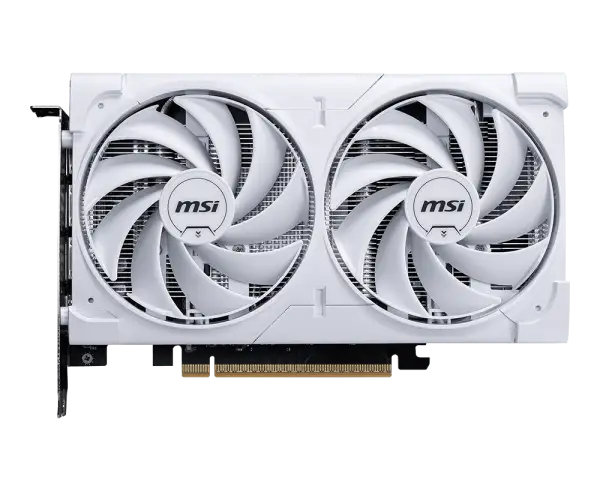
Compactness also helps small-form-factor enthusiasts. At 197mm in length and dual-slot height, it fits in most ATX and many mATX builds without sacrificing cooler size. The idle fan-stop feature gets glowing mentions from users who appreciate quieter desktops when browsing or streaming.
Common Complaints
Two significant issues keep surfacing: unexplained black screens and outright incompatibilities. Caroline Z*** cautioned prospective buyers: “This card (and many others in the RTX 50 series) has a serious problem, black screen at start-up or after a while… none of the solutions solved the problem. I strongly advise against buying until NVIDIA solves it.” Others report that fixes via firmware, BIOS updates, or driver rollbacks yield inconsistent results.
Performance for resolutions above 1080p can be a struggle. One Overclockers.ru reviewer found Cyberpunk 2077 at 4K low settings “looked sad” without DLSS—a reality check for anyone hoping to stretch the card into 4K territory.
Cooling, while praised in idle or moderate loads, can become audible under heavy load. NewSmartComputer’s reviewer warned prolonged high-TGP workloads may push noise into uncomfortable ranges without undervolting.
Divisive Features
VRAM capacity divides opinion. At 8GB, some say it’s fine for intended use (“lack of VRAM… isn’t really a problem,” per alexandrec***), while others point out rare but real cases where texture-heavy titles exceed limits. The frame generation in DLSS 4 helps offset this via perceived smoothness, but purists sometimes notice quality drops.
The absence of RGB is irrelevant to utilitarian buyers but a turn-off for style-focused gamers who expect lighting integration. Here, the Ventus aesthetic favors neutrality over flash.
Trust & Reliability
Durability reports skew positive in the short term. Trustpilot entries after one month of use are upbeat (“works perfectly… absolutely top-notch!”), and no widespread mechanical failures are documented yet. However, vendor exchange policies complicate incompatibility cases—guillaume p*** highlights that stores may refuse RMA if the card is “functional” but incompatible with certain systems.
A recurring theme: support responsiveness is hit-or-miss. Gargouille Au*** recounted replacing his PSU from 500W to 750W to troubleshoot crashes, following LDLC advice, only to need a refund in the end.
Alternatives
Community comparisons put the RTX 5060 against the RTX 4060 Ti and RTX 5070. Bordya*** skipped a used 4060 Ti at similar price, calling the new 5060 “much more powerful.” Yet, alexandrec*** suggests if budget allows, jumping to a 5070 or 9070 XT doubles the tier leap.
MSI’s own Gaming series offers a thicker heatsink and quieter cooling—worth considering if acoustics matter more than chassis fit. Non-MSI options like Inno3D’s Twin X2 cooler add weight, hinting at more robust thermal reserves.
Price & Value
At ~€309–€360 across EU retailers, the Ventus 2X OC sits in a competitive sweet spot. eBay listings at €359.99 show minimal resale markdown from retail, implying stable demand. In markets like India (₹32,900), it’s pitched as an entry ray-tracing GPU, balancing cost and the latest-generation VR features.
Community buying tips emphasize verifying PSU wattage—550W+ recommended—and case clearance before purchase. For resale or future upgrade, buyers note better liquidity if the card’s cosmetic condition remains high.
FAQ
Q: Is the RTX 5060 Ventus 2X OC good for 1440p gaming?
A: It can handle some 1440p titles at medium settings, but excels in 1080p. Users running heavy 1440p workloads report frame drops, especially without DLSS.
Q: Does it work with older CPUs and motherboards?
A: Not always. Several users with AMD Zen+ CPUs found they had to force PCIe Gen 2 in BIOS to avoid crashes and black screens.
Q: How quiet is the cooling system?
A: Near-silent at idle thanks to fan-stop tech. Under load, especially at high TGP, the fans can get noticeably loud unless undervolted.
Q: Is 8GB of VRAM enough in 2025?
A: For 1080p and light 1440p, yes. Texture-heavy 4K games or certain professional workloads may hit its limits.
Q: What’s the main advantage over a used 4060 Ti?
A: Many find the new 5060 offers better performance-per-euro and warranty coverage compared to second-hand 4060 Ti units.
Final Verdict: Buy if you’re a 1080p gamer or creator needing NVIDIA Studio acceleration on a budget and have modern, compatible hardware. Avoid if using older chipsets prone to PCIe issues or if your main goal is high-fidelity 1440p/4K gaming. Pro tip from the community: verify system compatibility before purchase and consider undervolting for quieter sustained loads.





