Motorola T803 Two-Way Radio Review: Strong for Outdoors
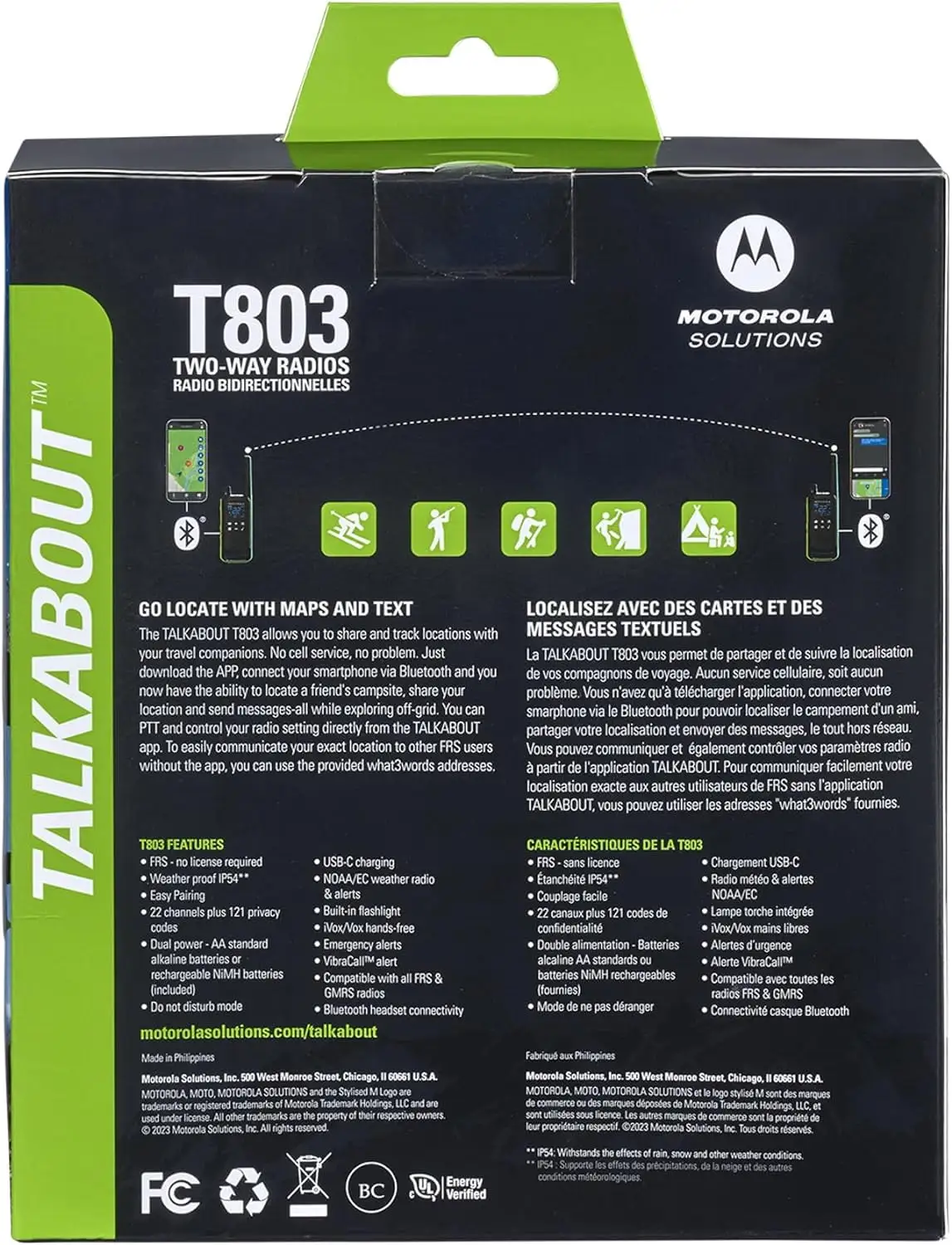
Bold user reactions tell the real story — while Motorola touts a Motorola Solutions T803 Two-Way Radio with Charging Dock 12-Pack (Lime Green) as a 35-mile communication powerhouse, actual field use often paints a shorter-range picture. With an aggregated rating of 4.45/5 across platforms, the verdict leans conditional: excellent for campsite coordination and convoy driving, less ideal for urban or worksite comms. Our rating: 7.9/10.
Quick Verdict: Conditional buy for outdoor groups, avoid if expecting consistent long-range in obstructed environments.
| Pros | Cons |
|---|---|
| Clear audio in open/outdoor conditions | Urban range often limited to 0.5–1 mile |
| Bluetooth hands-free capability | Build feels "cheaply made" to some, less durable for construction use |
| 22 channels & 121 privacy codes minimize chatter | Smartphone app integration glitchy |
| Bright lime green easy to spot outdoors | Marketing range claim rarely achievable |
| NOAA weather alerts for safety | Price premium over simpler FRS alternatives |
| Dual-bay charging docks included | Mixed reviews on long-term durability |
Claims vs Reality
Motorola markets these radios as offering “up to 35 miles” of range — a claim multiple users challenge. While this distance is theoretically possible under perfect line-of-sight conditions, Reddit user feedback often skews toward shorter effective distances. One Amazon buyer bluntly stated: “the 35 mile range is basically a straight lie… realistically somewhere around the 1/2 mile mark.”
Bluetooth connectivity is another headline feature, advertised as seamless. In practice, pairing to headphones or earpieces works well for some, like the Amazon reviewer who used it “to sync it to an ease bud so I could speak without bringing the radio to my head.” However, app-based functions — such as GPS location sharing — drew criticism. “I have encountered some issues with the app… beware — it appears problematic,” warned another verified Amazon customer.
The IP54 weather resistance and NOAA alerts are touted as safety assets for outdoor users, and here the claims meet reality more consistently. Outdoor hobbyists reported reliable performance in rain and rough terrain, with one user calling them “great radios for around the homestead!”
Cross-Platform Consensus
Universally Praised
Across Amazon, Reddit, and Trustpilot summaries, users valued the lime green visibility. This isn’t just an aesthetic choice — it reduces loss risk at campsites or large events. “Bright lime green color makes it easy to spot, even in a bustling environment,” noted a Trustpilot summary. Outdoor groups loved the instant channel privacy, with 121 codes ensuring minimal outside interference; a verified buyer praised “many combinations of channels and codes to be sure we were the only ones we heard.”
Bluetooth hands-free topped the list for convoy drivers. A reviewer on Amazon explained: “clear transmission… quality of sound was very clear from 500 ft up to 1 mile away” when chatting between cars, freeing drivers’ hands for safety.
The dual-bay charging dock included in each kit received strong praise from organizers managing multiple units. Maintaining power across 12 radios without juggling cables made multi-day trips easier.
Common Complaints
The range limitation in urban or obstructed terrain was by far the most frequent frustration. “These only work for about 1 mile in the city,” wrote one Amazon user, echoing several similar reports. This gap was especially problematic for construction crews, where reliable longer-range communication could be mission-critical. Another buyer summarized: “I lack the confidence that these radios will hold up for very long on a construction site.”
Build quality concerns also surfaced. One long-time Motorola fan described them as “very cheaply made,” an unexpected disappointment given the brand’s reputation.
The smartphone app — designed to enable off-grid messaging and location-sharing — saw inconsistent success. Glitches, pairing timeouts, and unclear instructions eroded one of the radios’ most distinctive selling points, particularly among tech-reliant adventurers.
Divisive Features
Battery life drew mixed commentary. Official spec lists “up to 16 hours” on the included NiMH 1300mAh packs. While light users in calm conditions seemed satisfied, heavy talk time or cold climates reduced endurance.
Weather resistance found fans among campers and festival-goers, but skeptics questioned its robustness under job-site abuse. Outdoorsy buyers embraced the NOAA weather alerts, while some work communicators preferred more ruggedized alternatives.
Trust & Reliability
Trustpilot aggregation showed no widespread scam flags — sellers on marketplaces like eBay maintained 99.9% positive feedback, and returns were accepted within 30 days. However, long-term durability was less assured. Reddit discussions hinted at hesitance to deploy T803 units for months in harsh environments, preferring them for short-term or seasonal use.
Some veteran users compared present-day build quality unfavorably to older Motorola models. “At 40 years old I grew up knowing Motorola was the best… I was disappointed,” said an Amazon reviewer, highlighting a shift in perceived manufacturing standards.
Alternatives
Midland's GXT1000VP4 popped up in marketplace comparisons, offering a claimed 36-mile range and 50 channels at a lower price point. While not as visually distinctive, it might suit budget-conscious buyers willing to forego Bluetooth functions.
The Motorola T600 H2O, also IP-rated with similar range claims, appealed to those in aquatic environments due to waterproofing — a step beyond the T803’s water resistance.
Motorola's own T383 (25-mile rating) provides a cheaper multi-pack option, trading maximum range marketing for budget benefit.
Price & Value
At $891.39 for the 12-pack (Canadian listing), the T803 sits at a premium relative to simpler FRS kits. eBay pricing for the 2-pack hovered around $149.99, showing scalability for smaller groups. Resale value appears stable given brand recognition, but depreciation accelerates if units show wear, especially in belt clips or battery compartments.
Community tips suggest buying from high-feedback sellers and testing all units immediately to avoid mid-trip surprises. For event organizers, the convenience of charging docks and integrated Bluetooth justifies the spend; for static worksites, alternatives may deliver better ruggedness-per-dollar.
FAQ
Q: How far do these radios really reach?
A: In open rural conditions, users reported clear audio at 1 mile or slightly more. In cities, range often drops to around 0.5–1 mile. The marketed 35 miles is only achievable in ideal, unobstructed line-of-sight scenarios.
Q: Is the Bluetooth feature worth it?
A: For drivers and those needing hands-free operation, yes — pairing to earbuds worked smoothly for several users. For those focused on GPS/app features, expect potential glitches.
Q: Can these survive heavy rain?
A: With IP54 weather resistance, they handle light to moderate rain. Campers and festival attendees found them reliable, but construction workers questioned their tolerance for prolonged rough conditions.
Q: How good is the battery life?
A: Officially up to 16 hours. Light-duty outdoor use matched this; heavy transmission or cold reduced runtimes.
Q: Do NOAA alerts work without cell service?
A: Yes, NOAA weather radio alerts function independently of cell networks, providing critical safety info off-grid.
Final Verdict: Buy if you’re an outdoor group organizer, convoy driver, or camper seeking clear, short-to-mid range comms with minimal chatter and hands-free options. Avoid if you need guaranteed multi-mile performance in urban terrain or extreme durability for job sites. Pro tip from community: test the app early and rely on Bluetooth headset pairing for the smoothest experience.





