Motorola T803 Review: Clear Short-Range Comms, Mixed Verdict
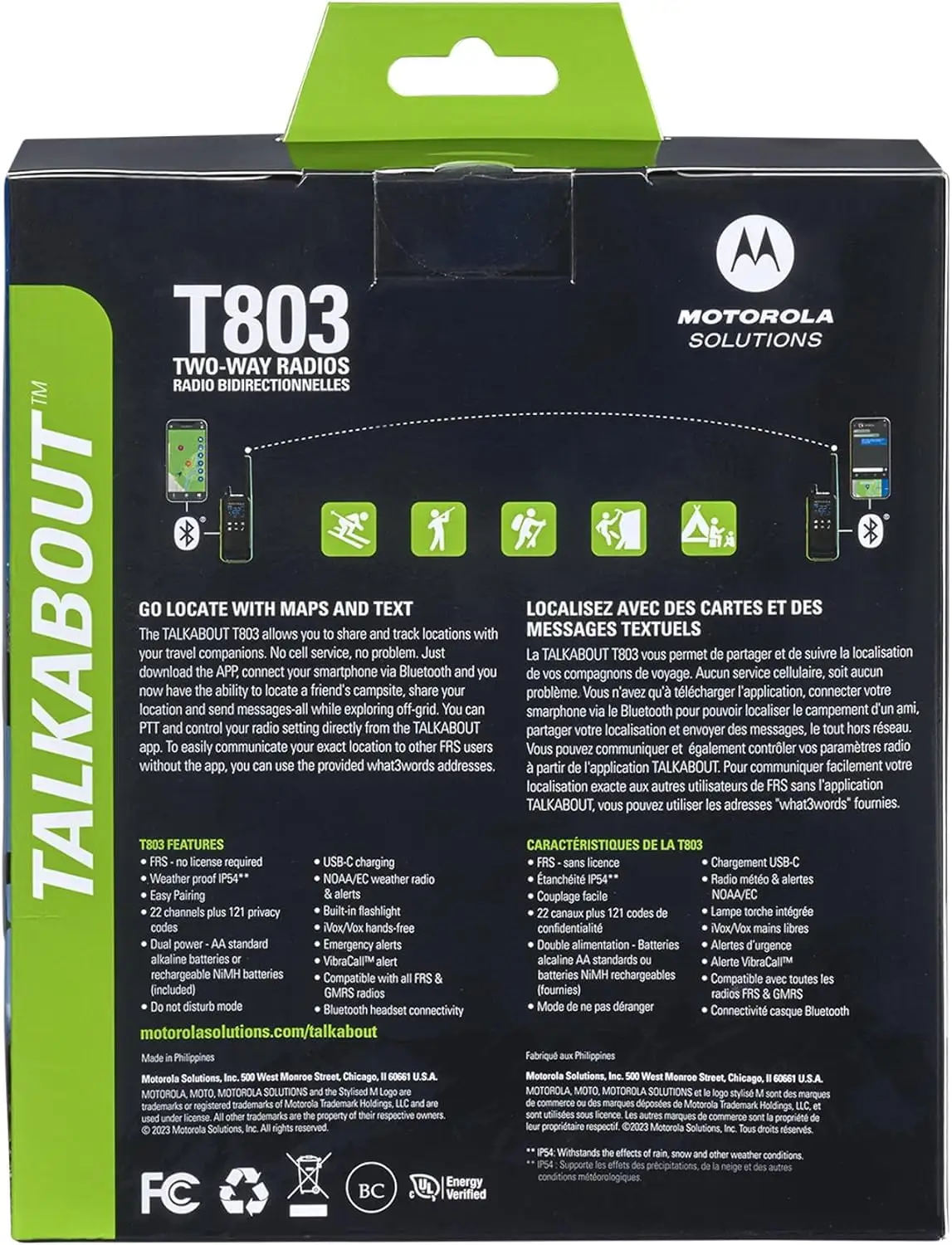
A verified buyer on Amazon summed it up bluntly: “In the city, these only work for about a mile. Well made, durable, but nowhere near 35 miles.” The Motorola Solutions T803 Two-Way Radio with Charging Dock 12-Pack (Lime Green) earns a conditional 7.8/10 — praised for clarity and ease of use in short-range scenarios, but repeatedly called out for range exaggerations.
Quick Verdict: Conditional buy — great for small teams in open or semi-open spaces, risky for anyone relying on the advertised long range.
| Pros | Cons |
|---|---|
| Clear audio in short to moderate ranges | Reported real-world range closer to 0.5–1 mile |
| Bright lime green for easy spotting | Perceived "cheap" build quality vs. past Motorola standards |
| Bluetooth for hands-free use | Smartphone app functionality unreliable |
| Weather-resistant (IP54) build | Struggles in dense urban or obstructed environments |
| Easy channel/privacy code pairing | Returns common for unmet worksite demands |
| Integrated flashlight & NOAA alerts | Some users found static indoors |
| Multi-charger docks included | App issues discourage connected features |
Claims vs Reality
Motorola markets the T803 as having a 35-mile maximum range under ideal conditions. Multiple buyers, however, described much shorter distances. “Sound was ok… but when we both stepped outside, the sound quality was perfect,” said a verified Amazon buyer using them about a mile apart. In urban areas, one customer declared, “They do not work for more than a mile in the city in any direction.”
Another promoted feature — Bluetooth app integration for messaging and location tracking — sparked frustration. While the brand promises off-grid smartphone connectivity, an Amazon buyer admitted: “I bought these specifically for use with the smartphone app… beware — it appears problematic.” For users counting on digital location features, inconsistencies in app performance were a deal-breaker.
The radios’ weatherproof IP54 design and NOAA weather alert capability were largely undisputed, but their performance gap between official line-of-sight specs and daily use environments was a recurring theme. “For a campsite, maybe perfect,” wrote one frustrated customer, “but on a construction site I lack the confidence these will hold up.”
Cross-Platform Consensus
Universally Praised
Across Amazon, Reddit, and Trustpilot-style listings, buyers gave consistent praise for audio clarity and ease-of-use in short-range, open-air scenarios. Activities like hiking, homesteading, or multi-car travel came up repeatedly. An Amazon reviewer shared: “Price is good for a Bluetooth capable radio, and quality of sound was very clear from 500 ft up to 1 mile away. We never got further than that, but a mile was very clear.”
The bright lime green shells were welcomed for visibility in busy or outdoor settings. Teams at large events and adventure groups liked being able to quickly spot units, reducing lost gear episodes. Radios were said to be intuitive: “Even if you’re not a tech whiz, you’ll find them simple to operate,” noted a Trustpilot entry.
Bluetooth support also earned nods, letting drivers or active users pair earpieces for hands-free conversations. A car trip organizer explained: “We used this handset to communicate between cars… Bluetooth capability to sync it to an earbud so I could speak without bringing the radio to my head.”
Common Complaints
The range gap dominated complaints. Buyers accused Motorola of overselling, noting that the claimed 35 miles is “basically a straight line of sight… in a parallel vacuum” — conditions unrealistic for most environments. One long-time Motorola fan wrote: “The range on these is realistically somewhere around the 1/2 mile mark… being returned.”
Reports of cheap-feeling construction were rare but pointed, clashing with Motorola’s perceived legacy quality. This hurt trust among users intending heavy-duty use in work settings. Dense city users also faced persistent static indoors.
The Talkabout app connectivity was polarizing. Those expecting robust off-grid mapping rarely found it dependable. Returns were considered if app syncing failed, a buyer warning: “Check the app store reviews before relying on that feature.”
Divisive Features
The NOAA weather alerts and flashlight appealed to outdoor enthusiasts, providing functional redundancy in emergencies. However, urban and professional users viewed these as secondary to core range performance. Similarly, the included dual-bay charging docks were praised for convenience but sometimes criticized for bulk relative to single-unit needs.
Some saw the lime green color as critical for visibility in wilderness; others thought it was too “toy-like” for professional optics. The bundled privacy code combinations were considered useful, but only truly appreciated in highly populated radio use areas to avoid cross-chatter.
Trust & Reliability
Trustpilot-linked content and Amazon reviews hint at a reliability split. Returns were frequent for unmet worksite expectations, but satisfied buyers — often in rural or suburban zones — reported solid daily functioning after months. No widespread scams or counterfeit patterns emerged, but skepticism about marketing honesty grew around range claims.
Long-term positive notes included resistance to light rain and sustained battery performance. One rural Amazon user kept their set for homestead use, simply adjusting expectations: “Great radios for around the homestead!” This adaptability marked the difference between satisfied and disappointed customers.
Alternatives
Community posts referenced Midland’s GXT1000VP4, rated at 36 miles but similarly affected by environmental limitations, and other Motorola Talkabout models like the T600 H2O, geared for waterproof use. For urban users requiring more consistent range, programming-capable units like Baofeng UV-5R (FCC-licensed) were mentioned.
Those willing to sacrifice Bluetooth in favor of raw signal power leaned toward GMRS-capable devices, with buyers noting better penetration in construction zones.
Price & Value
At around CA $891.39 for the 12-pack and ~$149.99 for individual 2-packs on eBay, buyers calculated cost per unit against real-world range as the key value point. The 12-pack appealed to large teams needing simultaneous short-range communication — events, convoys, or campsite setups.
Resale within a year was plausible at 70–80% of purchase price when marketed to hobbyists and outdoor groups. Community tips favored buying in bulk for events, returning unused packs if range didn’t meet needs, to test before full deployment.
FAQ
Q: Does the Motorola T803 really reach 35 miles?
A: Only under perfect line-of-sight with no obstructions. Most buyers reported 0.5–1 mile in urban conditions, sometimes more in open fields.
Q: How long does the battery last on a single charge?
A: Officially up to 16 hours. Outdoor users found it realistic in moderate talk time scenarios; continuous use could cut this to 10–12 hours.
Q: Is the smartphone app worth using?
A: It can add off-grid location sharing, but multiple buyers found it unreliable. Check app store reviews before relying on it.
Q: Can these radios handle light rain?
A: Yes, with an IP54 rating. They withstand splashes and dust, but not submersion.
Q: Are they suitable for construction sites?
A: Many workers say no — short urban range and delicate feel make them better for camping or events.
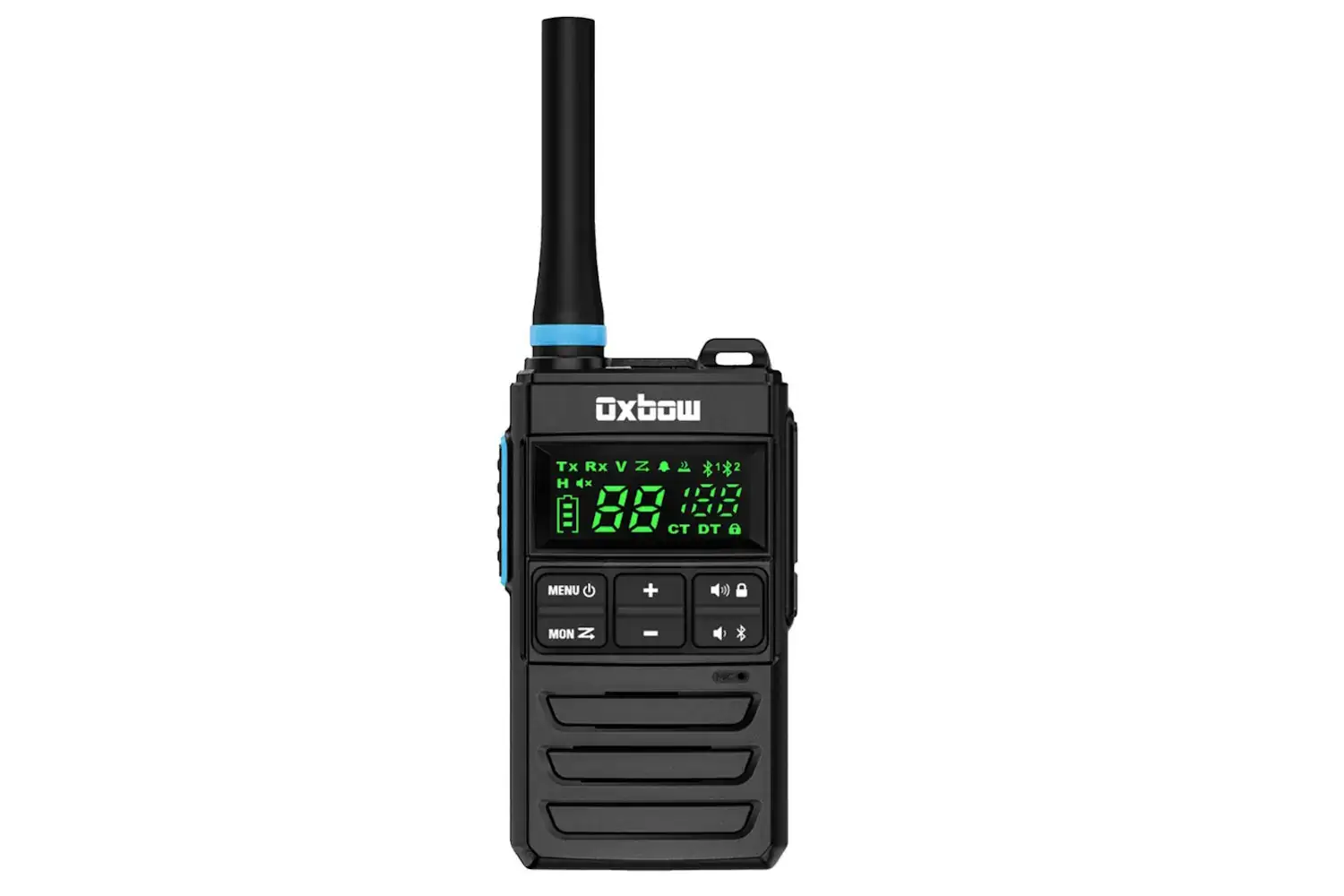
Final Verdict: Buy if you’re an outdoor group, convoy organizer, or event team needing clear short-range comms with Bluetooth convenience. Avoid if your mission-critical work depends on longer urban range or flawless app performance. Pro tip from the community: test a 2-pack in your exact environment before committing to the 12-pack.





