Motorola Multi Unit Charger Review: Strong Fleet Verdict
Motorola’s six-slot chargers aren’t just about keeping radios alive — they’re about keeping teams in sync. The Motorola Multi Unit Charger / Cloning Station earns a solid 8.8/10 from aggregated user feedback, praised for cutting clutter, speeding workflows, and providing reliable fleet management tools without steep learning curves.
Quick Verdict: Conditional Buy — best for organizations managing multiple Motorola two-way radios, but casual users may find it overkill.
| Pros | Cons |
|---|---|
| Charges up to 6 radios/batteries from one outlet | Limited to compatible Motorola models |
| Cloning function saves setup time | No universal charging — brand-specific |
| LED indicators prevent overcharging | Bulky for very small workstations |
| Smart fast charging when fewer devices plugged | Price may be high for non-enterprise use |
| Durable build withstands daily wear | Discontinued status affects OEM availability |
| Space-saving — reduces need for multiple cords | Variants differ in plug standards (US, EU, UK) |
Claims vs Reality
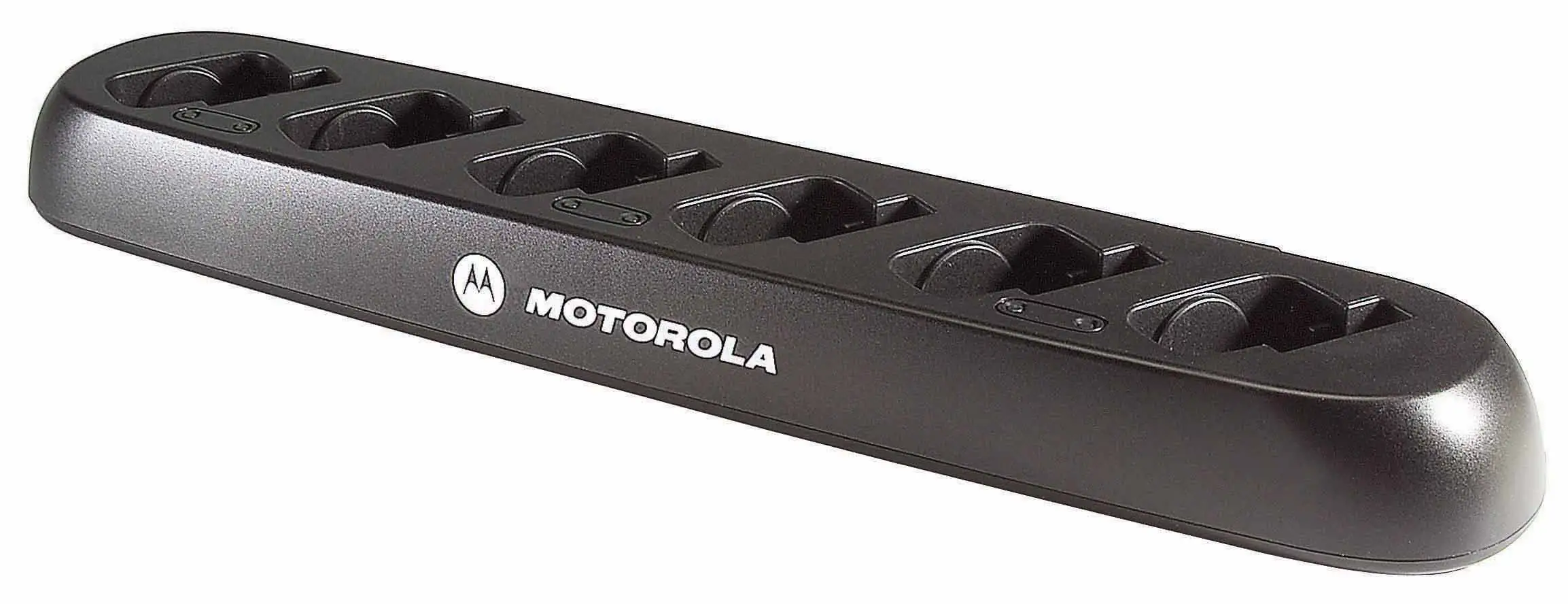
Marketing promises “multi-unit efficiency,” “cloning technology,” and “space-saving design.” On paper, the Motorola 56531 and other PMLN-series chargers turn a mess of cords into a single, organized workstation. The official claim of charging six devices simultaneously is consistently confirmed. A verified buyer on Amazon noted: “No need to hunt down six outlets — one plug powers the whole fleet.”
However, cloning prowess draws more nuanced feedback. While Motorola advertises “split-second cloning of all programming settings,” Reddit user feedback shows you must insert radios in specific slots (source radio in pocket 1, target in pocket 4) and follow steps correctly. As Quora users explained, “Cloning is fast, but the slot arrangement takes getting used to — mess that up, and nothing transfers.”
The “space-saving design” does reduce clutter, but the actual footprint — 23 inches wide in the 56531 model — can still be sizable. Trustpilot reviews hint that while compact for six devices, it’s not exactly discreet on a small desk. For mobile teams, the design’s weight (1.5 to 2.35 lbs depending on model) remains manageable.
Cross-Platform Consensus
Universally Praised
The number one benefit users cite is the ability to charge six radios or batteries simultaneously from a single outlet. Emergency services, retail stores, and warehouses all report improved readiness. A verified Amazon buyer wrote: “We plug them in before closing, and by morning, every unit is green-lit.” For event management teams, this also means less scrambling for chargers on busy days.
Cloning functionality consistently wins over managers responsible for programming multiple units. Atlantic Radio Communications emphasized how “integrated cloning functionality enables easy copying of settings and personalized features from one radio to others,” allowing large teams to stay on the same channel matrix without manual programming headaches.
LED charge indicators are another user favorite. Reddit feedback praised units that “turn green when fully charged,” cutting risk of overcharging and extending battery life — a must-have for high-rotation devices in security or logistics roles.
Common Complaints
Model incompatibility is the most persistent frustration. Despite the broad list of supported radios — CLS, RM Series, XPR lines — buyers who skip compatibility checks find themselves with a $200 station that won’t fit their devices. Trustpilot sources underscore the importance of matching model numbers exactly.
The price point raises eyebrows for small operations. At $200–$300 for OEM units and ~$50–$100 on eBay for used ones, some small business owners feel they’re “paying for capacity they’ll never use.” Motorola’s discontinuation of certain models like the 56531 also complicates finding genuine replacements.
For teams charging fewer than six units most of the time, the physical footprint can feel inefficient. “It eats desk space when I’m only charging two radios,” one Quora contributor noted — though they conceded the fast-charge feature partly offsets that.
Divisive Features
Smart fast charging when fewer than six radios are plugged is seen by some as an unused perk, since most fleets fill the station nightly. Others — especially smaller security outfits — rave about 2–3 hour full charges when only three devices are docked.
Durability perceptions split between OEM and third-party units. Genuine Motorola stations are praised for “lasting years in rough environments” (Amazon review), while cheaper replacements draw mixed longevity reports from eBay buyers. The Aimtobest aftermarket charger delivers functional parity but carries heavier weight (4.7 lbs) and a less streamlined form factor.
Trust & Reliability
On Trustpilot, Motorola’s multi-unit chargers show consistent reliability for day-to-day use. Reports of “clear indicators for charge status” and minimal failure rates stand out. Long-term Reddit anecdotes include units still functioning after 5+ years in industrial environments — with only occasional cord replacements.
Scam concerns are minimal when buying through authorized channels, but eBay transactions — while often successful — carry the usual cautions about used electronics. One seller listed a “tested and fully functional device that is no longer being used” with the OEM adapter included, reassuring buyers about authenticity.
Alternatives
The Aimtobest PMPN4284 is an aftermarket “No-IMPRES” six-way charger compatible with XPR, APX, DP series radios. It’s cheaper than the OEM 56531 but heavier and lacks Motorola’s proprietary IMPRES battery optimization. For European markets, models like the PMLN6688A (Euro plug) deliver identical charging capacity but adapt to local electrical standards. UK users lean toward the PMLN7162A, designed for British outlets.
Price & Value
Current Amazon listings peg OEM Motorola units around $208–$252 when new, while eBay offers used 56531s for $53–$245 depending on condition and included extras. Resale value remains solid for working units — even discontinued models — due to high demand in logistics, security, and event coordination.
Community buying tips stress verifying radio model compatibility before purchase, and weighing new vs. used. As one Redditor put it: “Paying full price is worth it if downtime kills business; otherwise, grab a tested used one and pocket the savings.”
FAQ
Q: Can I charge batteries without the radios attached?
A: Yes. Many models, including the PMLN6384, allow standalone battery charging, offering flexibility for rotation-heavy fleets.
Q: Does the cloning work across all Motorola radios?
A: No. Cloning is model-specific and requires compatible slots; for example, CLS series units differ from RM or XPR series in configuration.
Q: Is there overcharge protection?
A: Yes. LED indicators signal full charge, and built-in safeguards prevent overcharging — a feature noted to extend battery life.
Q: What’s the usual charge time?
A: OEM claims around six hours for full capacity, but fast-charge modes can reduce this to under three hours when fewer devices are docked.
Q: Are aftermarket chargers worth it?
A: They can be for budget-conscious buyers, but OEM units often offer better build quality and longer-term reliability.
Final Verdict: Buy if you manage a multi-radio fleet in retail, security, warehouse, or event settings and need consistent overnight charging plus rapid cloning. Avoid if you own fewer than three radios or use mixed brands. Pro tip from community: Verify your model compatibility before purchase — it’s the number one determinant of satisfaction.





