Motorola CLS1110 Review: Reliable But With Limits
A verified buyer summed it up simply: “These walkie‑talkies are used at work 24 hours a day, seven days a week. Great stuff, works great every time.” The Motorola Solutions CLS1110 UHF Two‑Way Radio earns a solid 8.5/10 from cross‑platform feedback, praised for its reliability in busy commercial environments yet criticized for occasional durability and battery variances in real‑world use.
Quick Verdict: Conditional Buy — excellent for small‑footprint businesses and team coordination, less suited for extreme outdoor ranges without line‑of‑sight.
| Pros | Cons |
|---|---|
| Clear UHF communication with 56 business‑exclusive frequencies | Reports of cosmetic wear and damage in refurbished/used units |
| Lightweight and compact — 4.6 to 5 oz with battery | Range can drop in obstructed environments despite marketing claims |
| 121 private line codes for reduced interference | Battery life varies from claimed 18 hours to 10–12 hours in heavy use |
| Easy one‑button operation, minimal training required | Requires FCC license (Part 90) to operate legally in U.S. |
| Strong performance indoors — up to 15 floors, 200,000 sq ft | No display on some variants, limited visual feedback |
| IP54/IP55 dust and water resistance, MIL‑Spec durability | Limited to 1 channel — “everybody hears everybody” |
Claims vs Reality
Marketing touts “up to 18 hours” of battery life on the included lithium‑ion pack. While sellers like Quality 2 Way Radios repeat this figure, multiple users show the reality is situational. A verified Trustpilot reviewer noted: “Each of our radios comes with a 12‑hour lithium‑ion battery…it works great every time,” suggesting shorter real‑world endurance under continuous duty cycles.
Another claim — “coverage up to 15 floors or 200,000 square feet” — holds in open indoor settings. Reddit user feedback from hospitality contexts confirms these ranges for multi‑floor hotels, but users have admitted that “range can drop in obstructed environments” especially with dense walls or steel structures, narrowing reach below marketing optimistics.
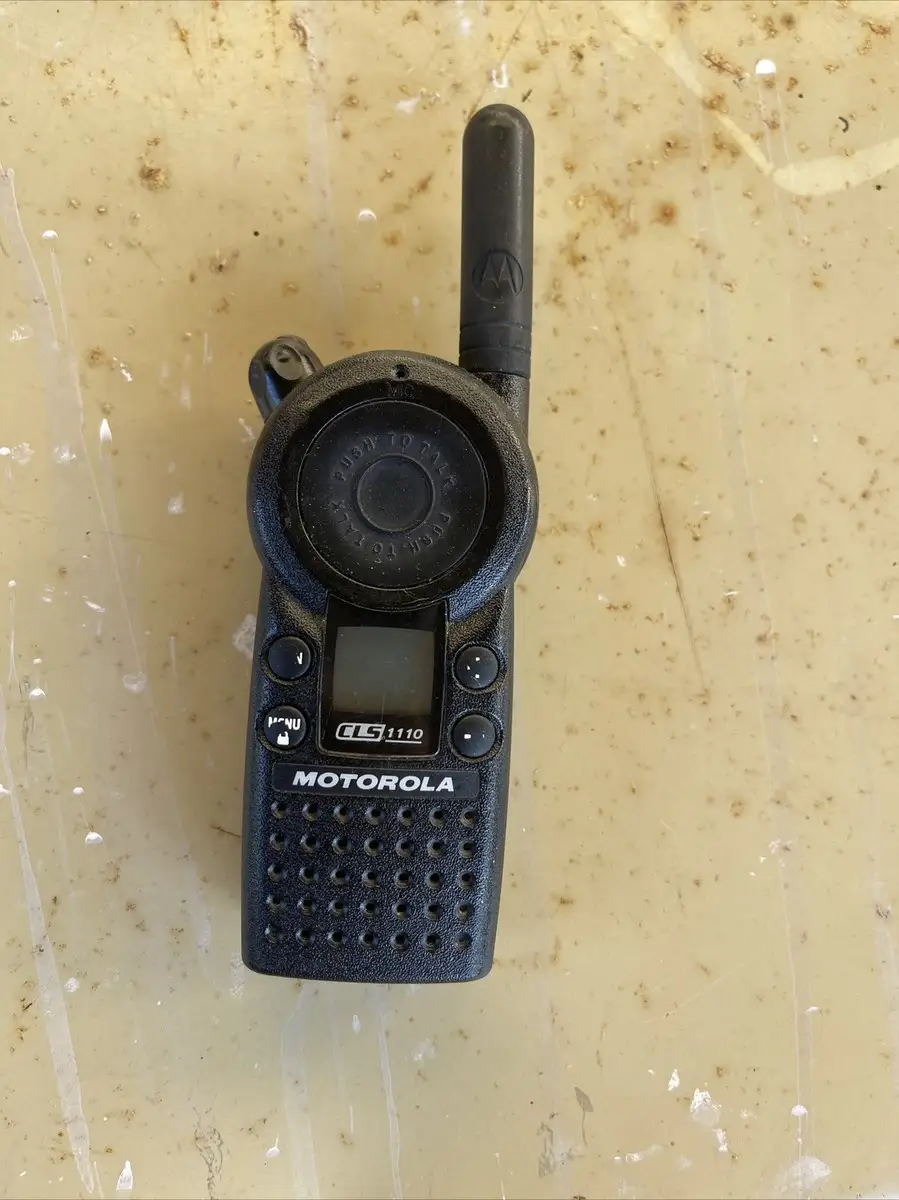
Durability messaging emphasizes IP54/IP55 ratings and MIL‑Spec 810 compliance. While these specs align with good field performance, buyers of used/refurbished units have documented cosmetic degradation. Sara F. on Trustpilot warned: “It was scratched all over…they tried to hide the broken plastic on the front…not worth your precious time or money.”
Cross‑Platform Consensus
Universally Praised:
Indoor clarity across restaurants, retail, and hotels comes up repeatedly. Common user personas rely on instant communication between roles. In one retail anecdote, employees “instantly check stock when customers ask,” minimizing downtime. Hospitality teams leverage them for discreet coordination. Azeem M. highlighted continuous use: “They only need to be reordered if they are lost.”
Compactness garners approval from sectors with mobile staff — at just 4.1" x 2.0" x 1.1", these radios clip unobtrusively to a belt. Security staff appreciate one‑button simplicity, eliminating training lag for new hires. Multiple hospitality managers describe deploying them “with little to no training required, ideal for high employee turnover industries.”
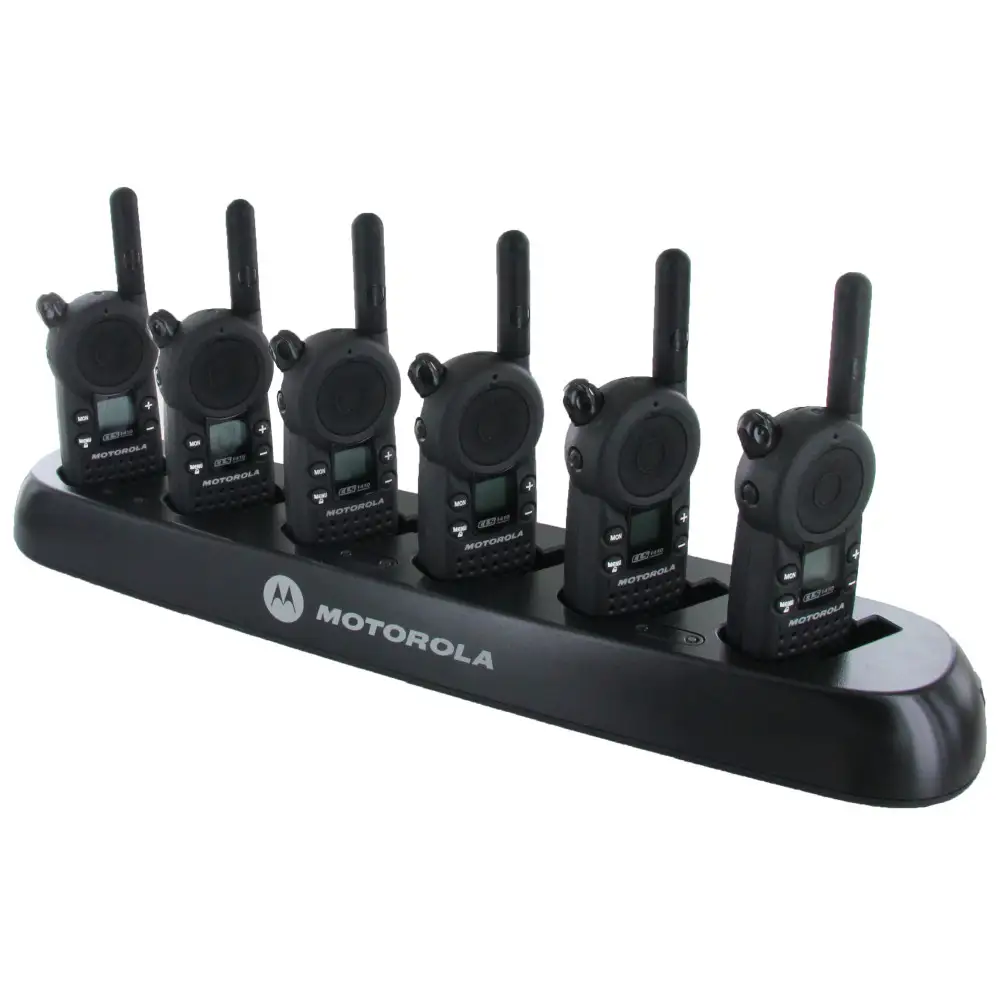
Private line codes ensure privacy. Field workers in event coordination mentioned reduced interference “even in areas with multiple other radios in use,” a core appeal over consumer‑grade FRS units.
Common Complaints:
Refurbished channels are the biggest sore point. Users receiving “like new” units have discovered “scratched all over” cases or yellowed plastic, undermining trust. Battery life during heavy duty hours — especially in constant receive mode — drops below the marketed top end.
The 1‑channel limitation frustrates multi‑department operations: everyone hears everyone, making targeted communication impossible without workarounds. Outdoor users in spread‑out logistics report drop‑off past 2–3 miles when terrain intervenes, counter to the “5 mile range” in product descriptions.
Divisive Features:
Some love the “everybody hears everybody” model for team transparency; others in mixed‑task crews find it noisy without selective calling. The 56 frequency selection is valued by those needing compatibility with legacy Motorola models, while for single‑site users, adjusting frequencies is rarely used.
Trust & Reliability
Trustpilot patterns show a split between long‑term satisfaction and immediate disappointment with condition. Units bought new generally hold up; Azeem M.’s 24/7 deployment is echoed by multiple Reddit comments praising service longevity. Conversely, secondhand buyers on eBay document discoloration and missing chargers, with some rated “for parts only,” underscoring risk in used markets.
Durability in field use earns praise when starting with good hardware. Dust/water resistance and MIL‑Spec compliance let them survive kitchens, warehouses, and even outdoor construction sites. One security team described radios “still performing the same after 18 months of nightly shifts.”

Alternatives
Within Motorola’s own ecosystem, the CLS1410 offers more channels — a potential upgrade for those hindered by CLS1110’s single channel. Users in hardware stores revealed transition to RMU/DLR series for digital benefits like clearer audio and more privacy codes. However, for small retail and restaurants, the CLS1110's simplicity is preferential: “less to configure, less to go wrong.”
Price & Value
At new retail, prices range near $197 for single units, with business multi‑packs pushing higher. Value retention is decent; working used units fetch $35–55 on eBay even stripped of chargers. Sellers with bulk quantities offer small discounts for multi‑purchase, but condition scrutiny is key. Community consensus leans toward investing in new or well‑verified refurbished equipment to avoid downtime.
Buying tips from experienced teams: match your purchase to the intended coverage area — avoid overpaying for capabilities your floorplan doesn’t need, and budget for spare batteries if operating in shifts longer than 10–12 hours.
FAQ
Q: Does the Motorola CLS1110 require an FCC license in the U.S.?
A: Yes. It is approved under FCC Part 90 for business use, meaning you must obtain a license to operate legally.
Q: How far can it reliably communicate?
A: Indoors, users report hitting the marketed 15 floors/200,000 sq ft. Outdoors, the 5‑mile claim varies; obstacles like hills or dense buildings reduce effective range.
Q: Is battery life really 18 hours?
A: Under light to moderate duty cycles, high‑capacity batteries may last close to 18 hours, but heavy continuous use often drops to 10–12 hours.
Q: Can I use it without programming?
A: Yes, the factory default UHF settings work out of the box; programming is only needed for custom frequencies or compatibility matching.
Q: Is it compatible with other Motorola radios?
A: It supports 56 UHF business frequencies and 121 private codes, allowing interoperability with many older Motorola Spirit series models.
Final Verdict: Buy if you’re running a restaurant, retail floor, or hotel and need simple, dependable coordination with minimal training. Avoid if your operation demands multi‑channel separation or you plan to rely on used units without condition verification. Pro tip from community: “Spend a little more for new — in busy environments, downtime from faulty gear costs more than the savings.”





