Monoprice TRS Premier Series Cable Review: Worth Buying?
Boasting a staggering 4.7 out of 5 stars from over a thousand verified buyers, the Monoprice 1/4-Inch TRS Cable – Premier Series has earned a reputation for delivering pro‑grade audio connections at a fraction of the typical cost. While Monoprice markets this as a rugged, noise‑rejecting cable suited for studio and stage, user experiences reveal how its build, sound consistency, and price point have made it a quiet workhorse in setups ranging from touring guitar rigs to home production suites.
Quick Verdict: Yes – strong buy for most audio users who need reliable TRS connections without overspending.
| Pros | Cons |
|---|---|
| Durable 16AWG pure copper conductors | Occasional noise if cable is moved during use |
| Gold‑plated connectors resist corrosion | One‑off manufacturing defects reported |
| Excellent noise rejection via 97.5% braided shielding | Connectors can feel “cheap” to some users |
| Versatile – works as balanced mono or unbalanced stereo | Not “ultra‑low noise” for high‑end recording |
| Affordable compared to Monster/Mogami equivalents | Delivery issues cited occasionally |
| Sturdy strain relief for long-term use | No spring relief on angled connectors |
| Widely available in multiple lengths and connector angles |
Claims vs Reality
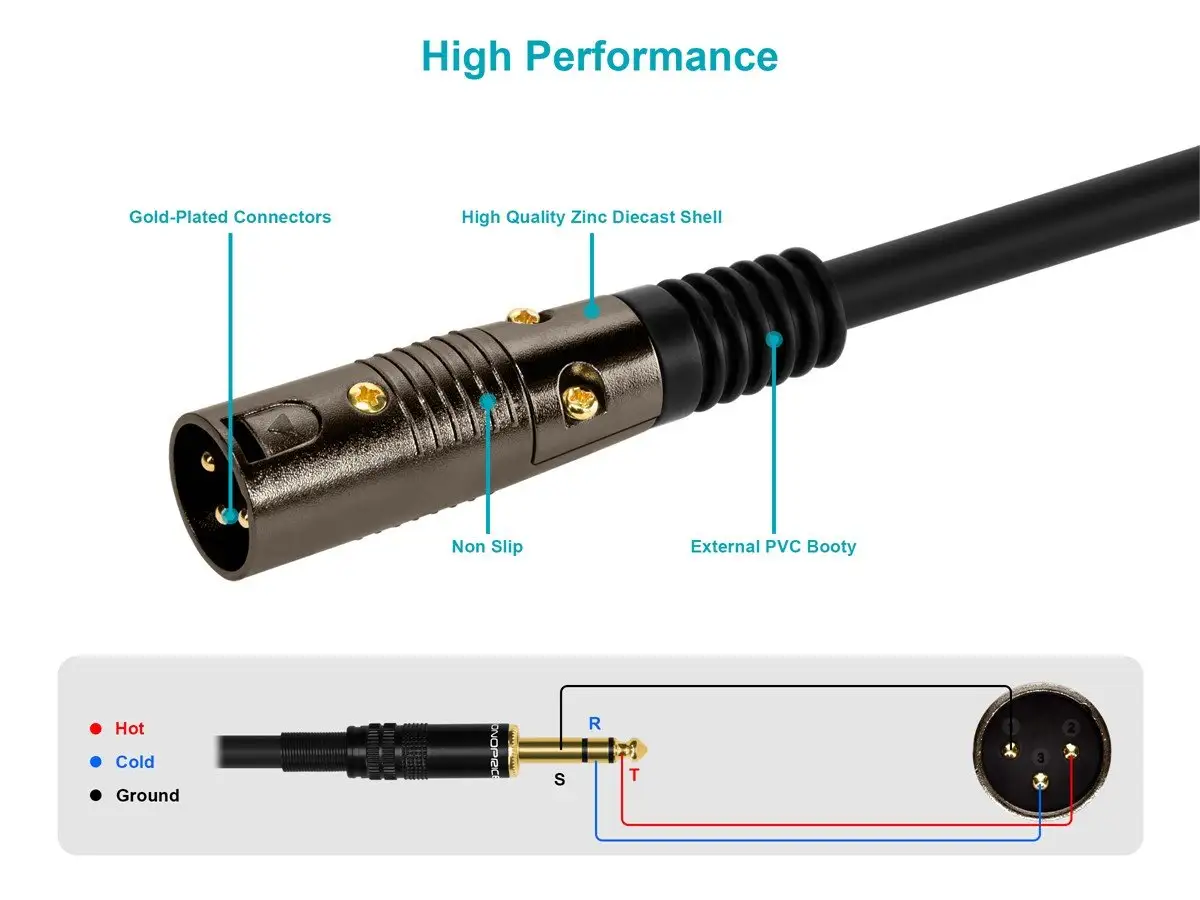
Monoprice advertises these Premier Series TRS cables as offering “noise‑free connections” thanks to impedance‑balanced lines and a separate braided shield. Digging into user reports, most agree the shielding is highly effective. A verified Amazon buyer noted: “They reject sound very well, and have great quality sound… well built and durable.” For everyday studio use, users consistently describe reduced hum and interference compared to budget cables.
The brand also claims gold‑plated connectors deliver “maximum electrical conductivity.” Several musicians back this up in practice, with Trustpilot testimonials comparing Monoprice’s sound quality to far pricier Monster and Mogami cables. However, Amazon feedback shows occasional caveats: one buyer praised the sleek finish but admitted “if they move a little, they might cause some noise, I have to readjust them about twice a week.” This suggests the physical connection is generally solid, but movement during operation can introduce intermittent noise for certain setups.
A final claim is versatility – marketed as usable for unbalanced stereo patching or balanced mono runs. This checks out in the field; Reddit and Quora contributors reported seamless use between mixers, pedalboards, and XLR converters. Quora’s Lisa said: “This cable made my mixer and headphones the best of friends… zero static noise.” For users juggling multiple types of gear, that kind of flexibility appears to be a real selling point.
Cross‑Platform Consensus
Universally Praised
Durability emerges as the single most consistent praise point. TapeOp’s Joseph Lemmer highlighted robust soldering, thick molded internals, and metal‑spring strain relief on straight connectors as superior to typical cables in this price range. Touring musicians on Trustpilot confirmed these cables survive heavy daily use: “I tour a great deal… no problems whatsoever.” The 16AWG conductors provide a reassuring heft, as one Amazon reviewer put it: “Certainly an improvement over my previous cables… they retain sufficient heft to install confidence.”
Noise rejection wins similar acclaim. Both Reddit and Amazon users referenced the 97.5% copper braid shielding as highly effective against EM and RF interference. A home studio buyer on Amazon wrote: “Noise rejection was improved… this was an upgrade from [mixed-brand cables] used for a few years.” In busy electronic environments, this shielding often means cleaner tracks from the start.
Affordability is the third universal praise point. Across PrimeCables, Trustpilot, and eBay, buyers repeatedly stress they can kit out entire studios or tour rigs for the price of a single “premium” brand cable. TapeOp’s verdict was telling: “At these prices, you can carry spares… a no-brainer for home studio use.”
Common Complaints
Some users encounter minor quality control slips. Fakespot captured a report of a defective unit: “Of the two pack, one was broken… male connector broken inside my device after its first use.” While such cases are rare against the overall volume sold, they reinforce the value of Monoprice’s lifetime cable warranty.
Connector design draws mixed reviews. On PrimeCables, one feedback line reads: “Very convenient layout but the connectors feel cheap.” This criticism typically comes from those accustomed to ultra-high-end pro cables, where connector housings have heavier machining or tighter tolerance fits.
Movement-induced noise is another recurring note, albeit from a smaller subset of buyers. An Amazon review warned: “If they move a little, they might cause some noise… I have to readjust them about twice a week.” Static-free performance appears optimal when the cable is fixed or minimally handled during use.
Divisive Features
Right‑angle connectors split opinion. For pedalboard owners, they’re described as a “lifesaver” (Lisa on Quora: “Fits perfectly… no more tangled mess!”), but TapeOp noted angled ends lack the spring relief found on straight versions, potentially shortening their gigging lifespan. Studio users tend to prefer them for space‑saving setups, while heavy tourers sometimes prioritize durability over compactness.
Trust & Reliability
Trustpilot patterns show long‑term loyalty. One musician wrote: “They are the best cables I’ve used thus far… I tour a great deal… no problems whatsoever.” Even multi‑year customers have had consistent performance, with rare issues promptly resolved: “On the two occasions we have had a problem with an order… customer service provided prompt resolution without any red tape.”
Durability stories on Reddit and TapeOp highlight that many owners stop DIY‑building cables once they switch to Monoprice. The solder joints are typically clean, protected by shrink tubing or molded shells, and strain relief keeps repeated bends from breaking conductors prematurely.
Alternatives
Two main competitors mentioned in discussions are Monster and Mogami. Trustpilot feedback equates Monoprice’s performance to these brands but at a fraction of the cost. TapeOp acknowledges subtle sonic differences in blind tests but dismisses cables as the “bottleneck” for most studios, advocating Monoprice for everyday reliability over boutique build.
Oldboytech Aux cables appear in Fakespot as a cheaper option, but one buyer reported an early mechanical failure. For scenarios demanding long‑term durability and balanced TRS capability, Monoprice earns preference despite slightly higher pricing.
Price & Value
Amazon currently lists the 1.5‑foot TRS cable at $7.07, down from $9.61, making it accessible for bulk purchasing. Longer runs, such as the 35‑foot version, trend around $22.50 before bulk discounts. eBay and Monoprice direct offer similar volume price breaks, encouraging outfitting multiple channels at once.
Community tips stress buying in bulk to save – touring bands and studios often order 10+ units for redundancy. As Reddit users point out, there’s effectively no resale market for cables in this tier, so the value is in heavy use over time rather than resale potential.
FAQ
Q: Can the Monoprice Premier Series TRS cable be used for stereo connections?
A: Yes. With two separate conductors plus a common shield ground, it works for unbalanced stereo runs or balanced mono connections, giving flexibility across different gear setups.
Q: Does the gold plating make a real difference?
A: Users report improved corrosion resistance and smoother plugging/unplugging. While the sound improvement is minimal compared to bare metal, longevity is where gold plating shows its value.
Q: How does it handle interference in busy electronic environments?
A: The 97.5% copper braid shielding is widely credited with cutting RF and EM interference. Many studio owners notice cleaner recordings versus generic cables.
Q: Is it suitable for touring?
A: Straight connectors with spring relief are highly durable for gigging. Some caution that angled connectors lack this extra reinforcement, so may wear faster under heavy travel.
Q: What’s Monoprice’s warranty policy on these cables?
A: Monoprice offers a lifetime warranty, and several customer stories confirm hassle‑free replacements on the rare occasions defects occur.
Final Verdict: Buy if you’re a musician, studio engineer, or AV tech seeking rugged, clean‑sounding TRS connections without boutique prices. Avoid if you require ultra‑low‑noise performance for critical mastering or want high‑machined connector housings. Pro tip from the community: order in bulk, label them, and keep spares – they’re cheap insurance for keeping the show going.





